This Means War
"Love is a battlefield. Surveillance is just a bonus."
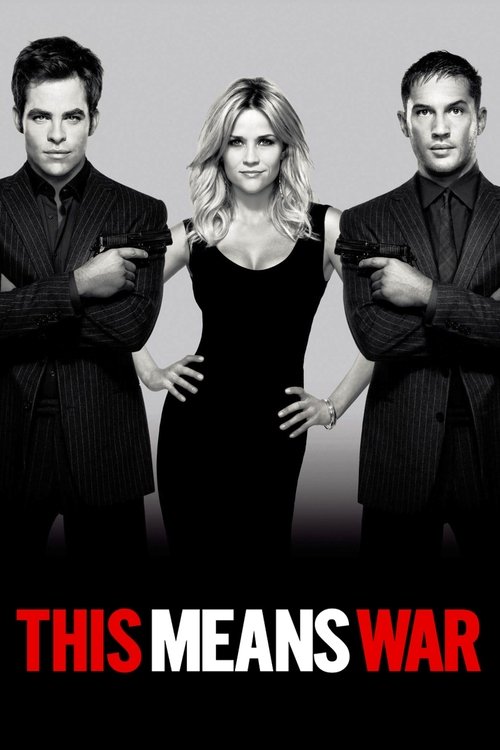
Imagine a board meeting at 20th Century Fox in 2011. A suit stands up and says, "What if we took the two fastest-rising leading men in Hollywood, gave them the keys to the CIA's most invasive surveillance technology, and let them use it to stalk Reese Witherspoon?" In any other decade, that’s a pitch for a psychological thriller. In 2012, under the direction of McG (the man who gave us the high-gloss, hair-flipping chaos of Charlie’s Angels), it was a $65 million romantic comedy.
I actually watched this on a laptop while recovering from a wisdom tooth extraction, and the Percocet really helped the logic gaps slide right by. Looking back at This Means War, it sits in that weird cultural pocket where "high-concept" meant taking a premise that is fundamentally terrifying—state-sponsored stalking—and painting it with enough neon light and upbeat pop-rock to make it feel like a Saturday night out.
Spy Games and Stalking for Beginners
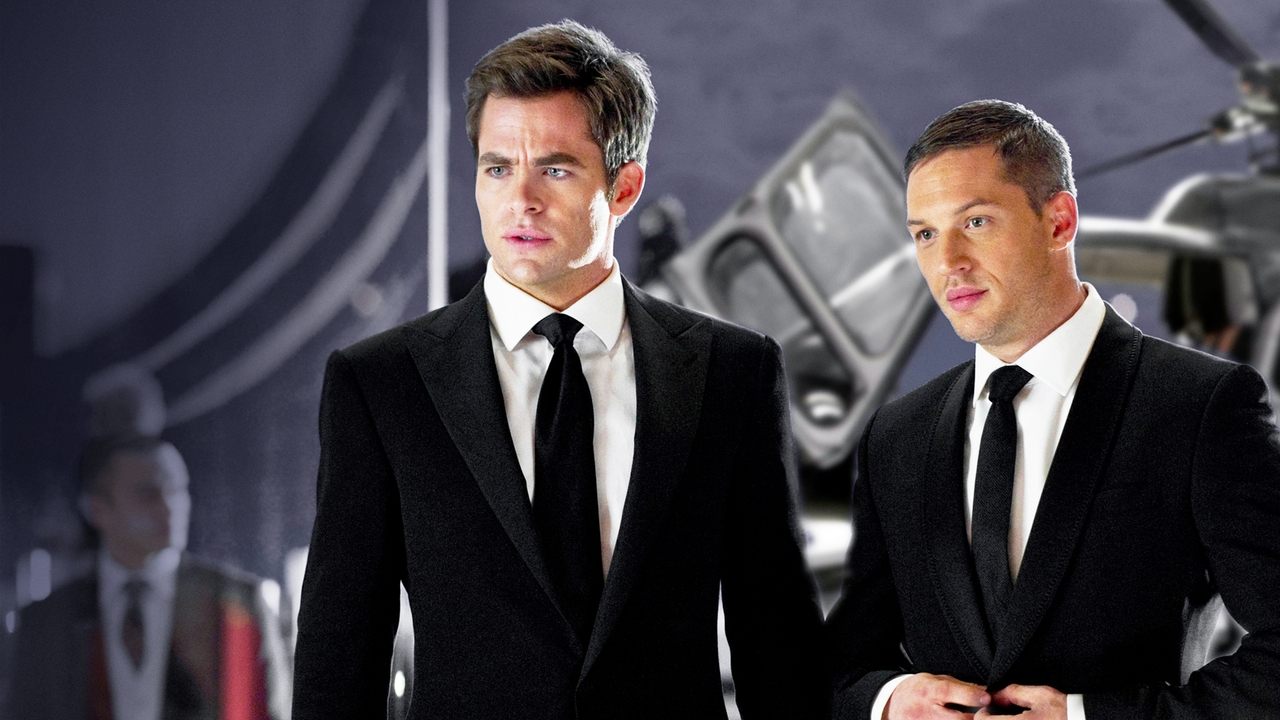
The plot is as thin as a cocktail napkin but just as functional for a party. Chris Pine (FDR) and Tom Hardy (Tuck) are elite CIA operatives and best friends who accidentally fall for the same woman, Lauren (Reese Witherspoon). Instead of, you know, talking about it like adults, they declare "War." This involves drones, wiretaps, and tactical teams used to sabotage each other’s dates.
It is arguably the most unethical use of taxpayer money ever depicted on screen, and the movie treats the Bill of Rights like a suggestion at a casual brunch buffet. But that’s the charm of the 2010s action-comedy; it exists in a hyper-reality where privacy laws don't exist, and every apartment looks like a showroom for high-end Swedish furniture.
Reese Witherspoon does a lot of heavy lifting here. She has the impossible task of playing a character who is dating two guys simultaneously without coming across as the villain, and her natural "America's Sweetheart" energy makes it work. Meanwhile, Chelsea Handler pops up as the "cynical best friend" Trish, delivering the kind of raunchy advice that was mandatory for every rom-com of this era.
Pine, Hardy, and the McG Gloss
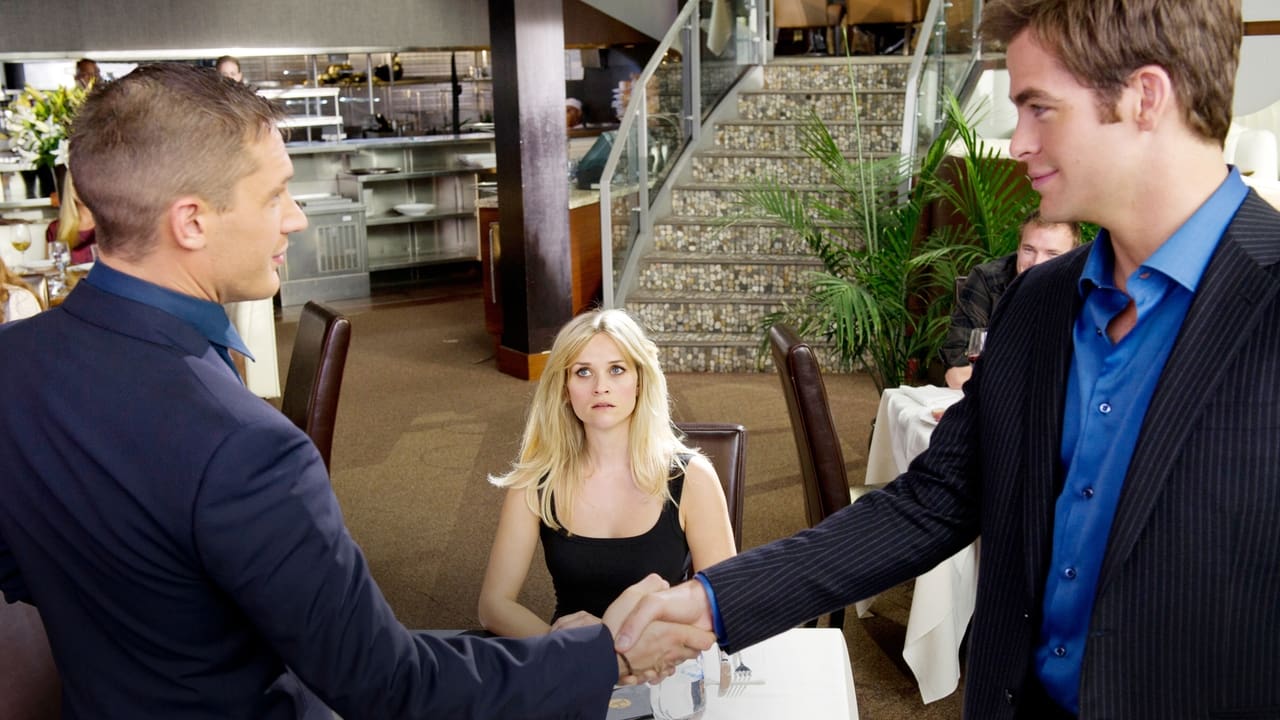
The real draw, especially a decade later, is seeing the contrast between the two leads. Chris Pine was fresh off Star Trek (directed by J.J. Abrams), playing the cocky, blue-eyed playboy with a smirk that could power a small city. Then you have Tom Hardy, who was just about to become the muffled voice of the decade in The Dark Knight Rises.
It’s fascinating to watch Tom Hardy in this. He’s clearly the "sensitive" one—the divorced dad who wants a real connection—but he looks like he’s physically vibrating with the urge to snap someone’s neck. Apparently, Hardy wasn't a huge fan of the experience; he later mentioned in interviews that he felt "out of place" doing a rom-com. It shows, but in a way that actually helps the movie. He feels like a real human being who accidentally wandered onto a movie set made of candy and lens flares.
McG directs this with his signature "more is more" approach. The cinematography by Russell Carpenter (who shot Titanic!) is so bright and saturated it practically glows. The action sequences, particularly the opening rooftop shootout and a mid-movie paintball skirmish, have that slick, music-video energy where everyone looks impeccable even while dodging bullets.
A Time Capsule of Pre-Streaming Excess
There’s a lot of "what if" history attached to this film. Bradley Cooper (of The Hangover fame) was originally attached to star, and at various points, actors like Sam Worthington and Seth Rogen were in the mix. It feels like a movie made by a committee that was terrified of losing the audience's attention for even a second.
One of the cooler details for the DVD collectors out there is that McG actually filmed two different endings. In one version, Lauren picks FDR; in the other, she picks Tuck. There was even a rumored third "bromance" ending where the two guys realize they’re better off with each other. They eventually settled on the theatrical cut we have now, but the existence of those alternates proves how much the studio was trying to hedge its bets with test audiences.
The film also features Til Schweiger (the "Bear Jew" from Quentin Tarantino’s Inglourious Basterds) as the villain, Heinrich. He’s a standard-issue international arms dealer who exists solely to provide an action-packed finale so the movie can justify its "Action" tag. He’s fine, but he’s essentially a human MacGuffin designed to get everyone in the same room for the climax.
Ultimately, This Means War is a glossy relic of a time when movie stars were enough to carry a nonsensical premise. It’s a loud, silly, and deeply problematic fantasy that works because the three leads are just too charismatic to dislike. It’s the cinematic equivalent of a high-calorie appetizer: you know it’s not a full meal, and it’s probably bad for your heart, but you’re going to enjoy it while it’s in front of you.
If you’re looking for a deep dive into the ethics of surveillance or a gritty spy procedural, you are in the wrong neighborhood. But if you want to see Captain Kirk and Mad Max use a Predator drone to ruin a date at a bistro, this is exactly the kind of beautiful nonsense the 2010s did best. Put it on, turn your brain to "low power mode," and enjoy the spectacle of three very talented people having a very expensive mid-career crisis.

Keep Exploring...
-
Charlie's Angels
2000
-
Killers
2010
-
Just Like Heaven
2005
-

The Bounty Hunter
2010
-

Rush Hour 3
2007
-
Bedtime Stories
2008
-
Get Smart
2008
-
Night at the Museum: Battle of the Smithsonian
2009
-
The A-Team
2010
-

The Green Hornet
2011
-

Tower Heist
2011
-

Brave
2012
-

Men in Black 3
2012
-
2 Guns
2013
-
RED 2
2013
-
R.I.P.D.
2013
-
The Mexican
2001
-
Terminator Salvation
2009
-

Just Go with It
2011
-

Journey to the Center of the Earth
2008