Welcome to the North
"High-stress Milan meets low-speed Salerno."
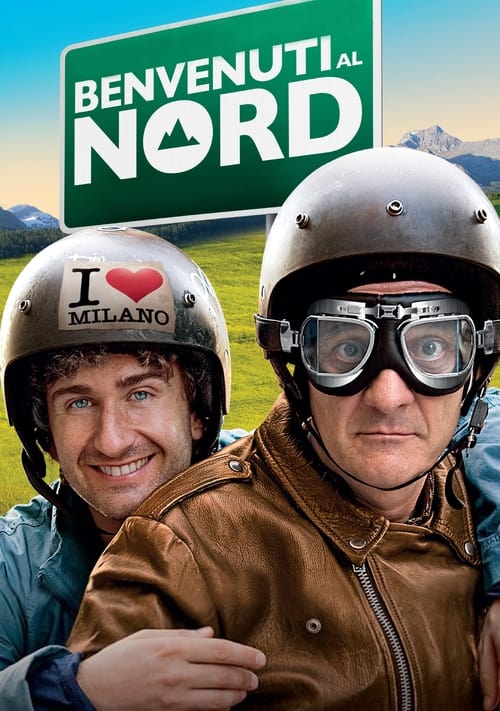
It’s a peculiar thing when a remake of a remake becomes a national phenomenon, yet remains almost entirely invisible once you cross the Alps. In 2010, Italy fell head-over-heels for Benvenuti al Sud, a beat-for-beat translation of the French mega-hit Bienvenue chez les Ch'tis. But by 2012, the training wheels were off. Director Luca Miniero and screenwriter Fabio Bonifacci didn't have a French blueprint to follow for the sequel. They had to invent their own North-South friction, and the result, Welcome to the North (Benvenuti al Nord), is a fascinating time capsule of an Italy caught between old-world stereotypes and the cold, digital efficiency of the early 2010s.
I watched this while trying to fix a leaky faucet in my kitchen with a wrench that was slightly the wrong size, and for some reason, the mounting frustration of my own domestic incompetence made the film’s obsession with "efficiency" programs feel incredibly personal.
The Fog of Productivity
The premise flips the script: this time, the "outsider" is Alessandro Siani’s Mattia, the lovable, terminally relaxed postal worker from Castellabate who finds himself shipped off to the gray, industrial heart of Milan. He’s greeted by Claudio Bisio’s Alberto, who has transitioned from the terrified Northerner we met in the first film into a full-blown corporate drone. Alberto is obsessed with "ERMES," a new productivity system for the Italian Post that looks exactly like the kind of soul-crushing software we all remember from the early days of the digital workplace transition.
The film captures that 2012 aesthetic perfectly—lots of brushed steel, blue-tinted office windows, and the constant chime of early smartphones. It’s a movie about the anxiety of moving too fast. While the first film was about breaking down prejudices, this one is about the suffocating weight of modern ambition. Claudio Bisio plays the "Milano" stereotype with a frantic, caffeine-fueled energy that anyone who has ever survived a corporate "restructuring" will recognize with a shudder. He’s great at physicalizing stress; his eyes look like they haven't seen a full night's sleep since the euro was introduced.
A Masterclass in Mismatched Chemistry
Comedy lives or dies on the "straight man" dynamic, and the Bisio/Siani pairing is essentially the Italian version of a high-speed collision between a Ferrari and a Vespa. Siani brings a Neapolitan theatricality that occasionally threatens to derail the plot into pure slapstick, but he’s grounded by Valentina Lodovini, who plays his wife, Maria. She’s often the secret weapon of these films, providing the emotional stakes that prevent the movie from floating off into a series of "Look how cold it is in Milan!" jokes.
Speaking of jokes, the humor here is a bit of a mixed bag. The "North is cold and productive, South is warm and lazy" trope was already aging by 2012, and some of the gags—like the obsession with the "mists" of the North—feel like they were pulled from a 1950s playbook. However, when the film leans into the absurdity of the corporate world, it shines. There’s a sequence involving a "productivity-enhancing" office chair that is legitimately hilarious, mostly because it looks like a torture device designed by Steve Jobs on a bad day.
Why It Vanished (and Why to Find It)
Despite raking in a staggering $35 million at the Italian box office—outperforming almost every Hollywood blockbuster that year—Welcome to the North basically evaporated outside of the peninsula. Part of that is due to the sheer cultural specificity of the humor. If you don't know the deep-seated rivalry between Milanese "productivity" and Southern "philosophy," some of the nuances are lost. It also suffered from being part of the Medusa Film stable during a period of massive transition in how European films were exported to the nascent streaming giants.
But looking back, it’s a better film than the critics gave it credit for at the time. It’s a sequel that actually tries to say something about how we live. It’s not just about "North vs. South"; it’s about the way the modern world tries to turn humans into spreadsheets. The cinematography by Paolo Carnera (who would later go on to do the gritty, beautiful Gomorrah TV series) gives Milan a cold, sleek beauty that contrasts sharply with the earthy, warm tones of the scenes in Castellabate. It’s a visually literate comedy, which is more than you can say for most of its contemporaries.
If you’re looking for a deep, soul-searching exploration of the Italian psyche, you’re in the wrong theater. But if you want a breezy, well-acted comedy that captures the specific weirdness of the early 2010s—and features a cast that clearly enjoys each other's company—this is a hidden gem. It’s a loud, frantic, and ultimately sweet reminder that no matter how many efficiency programs we install, humans will always find a way to be gloriously inefficient. Grab a coffee (or a Limoncello, depending on your longitude) and give it a shot.
Keep Exploring...
-
Welcome to the South
2010
-

The Santa Claus Gang
2010
-
What a Beautiful Day
2011
-

Sun In Buckets
2013
-
The Invisible Boy
2014
-

American Pie Presents: Beta House
2007
-
Big Stan
2007
-
Dan in Real Life
2007
-

Good Luck Chuck
2007
-
Hot Rod
2007
-

License to Wed
2007
-
No Reservations
2007
-

Penelope
2007
-
Shoot 'Em Up
2007
-
Sydney White
2007
-
Taxi 4
2007
-

The Nanny Diaries
2007
-

TMNT
2007
-
Be Kind Rewind
2008
-

Drillbit Taylor
2008