Adore
"Paradise found, boundaries lost, and sons swapped."

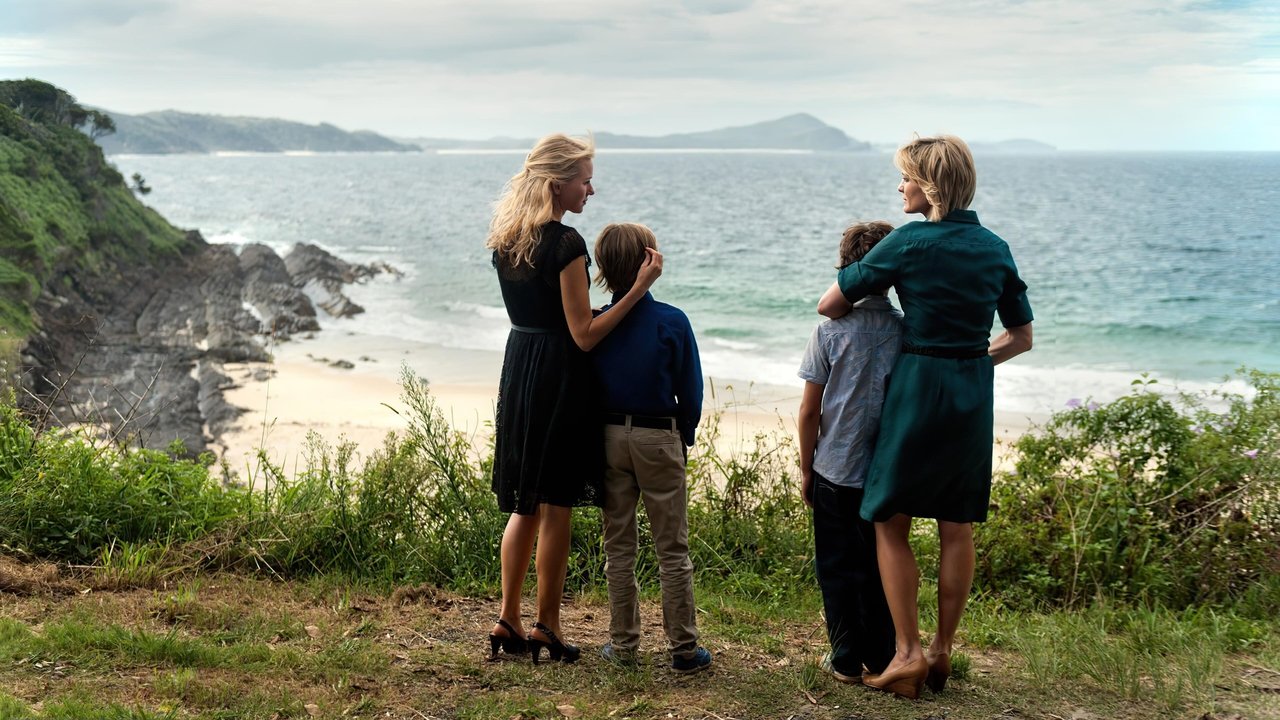
Imagine, if you will, the most beautiful beach you’ve ever seen. The sand is blindingly white, the water is a sapphire dream, and the sun seems to hit everything with a permanent golden-hour filter. Now, imagine two of the most talented actresses of their generation—Naomi Watts and Robin Wright—deciding to blow up their lives in this paradise by sleeping with each other’s teenage sons. It sounds like the plot of a late-night cable movie you’d find at 2:00 AM, yet Adore (initially titled Two Mothers) carries the pedigree of a literary adaptation and the visual lushness of a high-end travelogue.

I actually watched this film for the first time while sitting on a spectacularly itchy wool blanket that my aunt gave me for Christmas, and I’ve always wondered if that physical prickliness made me more receptive to the movie’s skin-crawling social dynamics. It’s a film that exists in a strange limbo: it’s too beautifully shot to be "trash," but its premise is too fundamentally "wrong" for it to ever be comfortable prestige drama. In the landscape of 2013, it was a box-office ghost, haunting the fringes of the indie circuit before disappearing into the "wait, did that actually happen?" bin of cinema history.
A Sun-Drenched Bubble of Taboo
The story centers on Lil (Naomi Watts, fresh off her harrowing turn in The Impossible) and Roz (Robin Wright, right as House of Cards was cementing her as the queen of icy composure). They aren't just friends; they are soulmates who have spent their entire lives in a secluded Australian coastal enclave. Their sons, Ian (Xavier Samuel) and Tom (James Frecheville), have grown up together like brothers, bronzed and beautiful, spending their days surfing and their nights having dinner with their mothers. It’s an insular, idyllic world that feels completely disconnected from the rest of the planet.
The trouble begins—or the "happiness," depending on your level of moral flexibility—when Ian initiates a physical relationship with Roz. When Tom finds out, he doesn't call the police or a therapist; instead, he retaliates by pursuing Lil. What follows isn't a brief lapse in judgment, but a decade-long arrangement where these four people form a closed-loop family unit that defies every social convention in the book.
Director Anne Fontaine (who gave us the excellent Coco Before Chanel) approaches this with a deadly seriousness. There’s no winking at the camera. By treating this scandalous setup as a genuine, almost tragic romance, she creates a viewing experience that is essentially a high-fashion perfume ad directed by a provocateur. You keep waiting for the "lesson" or the "punishment," but the film is more interested in the intoxicating, selfish comfort of the bubble they’ve built.
The Power of Performance vs. The "Yuck" Factor

If this were cast with lesser actors, it would be unwatchable. But Robin Wright and Naomi Watts bring an incredible amount of interiority to roles that could have been caricatures. Wright, in particular, has this way of looking at Xavier Samuel that conveys a mix of predatory hunger and genuine maternal warmth that is—frankly—terrifyingly complex. She makes you believe that Roz isn't a monster, just a woman who has found a way to stop time in a world that usually discards women of a certain age.
The sons are a bit more difficult to parse. Xavier Samuel (who many remember from the Twilight saga) has the soulful eyes to pull off the "obsessed youth" trope, but James Frecheville (the breakout star of the much grittier Animal Kingdom) feels a bit stiff. Then there’s Ben Mendelsohn, playing Roz’s husband Harold. This was right before Mendelsohn became the go-to villain for every major franchise, and seeing him here as the "normal" guy who just wants to move to the city for a job feels like a weirdly grounded anchor in a movie that is floating off into the ether of moral ambiguity.
The cinematography by Christophe Beaucarne is the real star here. Every frame makes you want to sell your house and move to New South Wales. The way the camera captures the rhythmic crashing of the waves mirrors the repetitive, cyclical nature of these relationships. It’s a gorgeous film to look at, which only makes the underlying "wrongness" feel more subversive.
The Mystery of the Vanishing Act
Why did Adore disappear? For starters, it was released in that 2010s window where mid-budget dramas were losing their theatrical foothold. But more importantly, it’s a film that refuses to judge its characters. In an era where we often want our stories to have clear moral messaging, Adore offers the weirdest double date in cinematic history and asks you to just sit with it.
The film is based on a novella by Doris Lessing, a Nobel Prize-winning author, which explains the "literary" feel of the dialogue. It’s not interested in the tawdry mechanics of an affair; it’s interested in the idea of "The Grandmothers" (the original title) and how we try to cling to youth and intimacy. Looking back a decade later, the film feels like a relic of a time when we still took big, weird swings with A-list talent without worrying about how the "discourse" would shred it on social media.
Is it a masterpiece? No. There are moments where the pacing drags like a surfboard in low tide. But is it fascinating? Absolutely. It’s a beautifully shot, exceptionally acted fever dream that dares to be deeply uncomfortable. If you’re tired of the same three plot structures on your streaming feed, this is the kind of oddity that reminds you how weird movies can actually be.
Adore is the kind of film that works best if you view it as a dark fairy tale rather than a grounded drama. It requires a massive suspension of disbelief and a willingness to follow two great actresses down a very questionable rabbit hole. It’s beautiful, baffling, and undeniably unique—a sun-soaked anomaly that proves even paradise has a very strange dark side.
***


Keep Exploring...
-
Coco Before Chanel
2009
-
Black Sea
2014
-

The Rover
2014
-

The Water Diviner
2014
-
Appaloosa
2008
-

Be Kind Rewind
2008
-
Blindness
2008
-
Defiance
2008
-
Ghost Town
2008
-

Lakeview Terrace
2008
-

Nick and Norah's Infinite Playlist
2008
-
Passengers
2008
-

Pride and Glory
2008
-

Street Kings
2008
-

The Duchess
2008
-
The Eye
2008
-
Two Lovers
2008
-
Untraceable
2008
-
Wild Child
2008
-
An Education
2009