Jobs
"Before the legend, there was the garage."
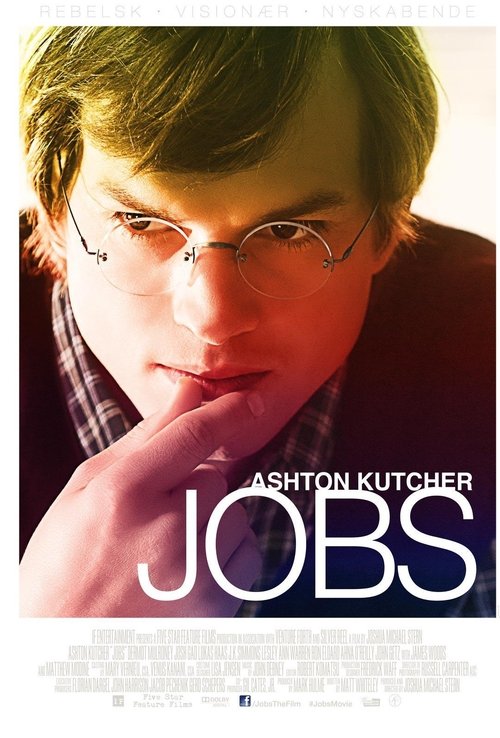
I remember the collective groan that rippled through the internet when Ashton Kutcher was announced as the man to play the Silicon Valley messiah. It was 2012, Steve Jobs had only been gone for a year, and the guy from That '70s Show—the king of the "Punk'd" era—was stepping into the black turtleneck. I watched Jobs for the first time on a lazy Tuesday afternoon while ignoring a pile of laundry that smelled faintly of old gym socks, which felt oddly appropriate for a movie about a man who famously refused to shower during his Atari days.
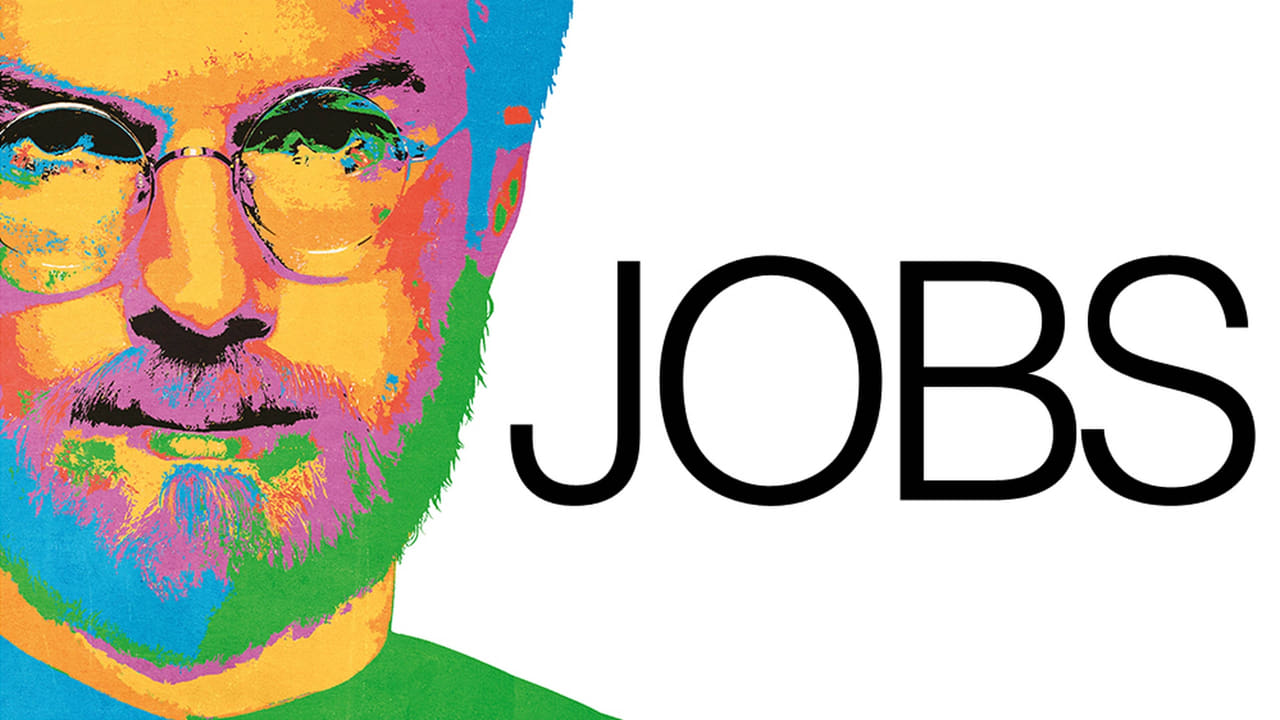
Looking back at this 2013 biopic, it’s a fascinating time capsule of a very specific moment in cinema. We were right at the tail end of the "Indie Film Renaissance" where digital cameras were finally becoming indistinguishable from 35mm, yet the industry was obsessed with "Great Man" narratives. Jobs arrived with the weight of expectation and the shadow of a much bigger, Sorkin-penned project looming over it. But does it hold up as a piece of history, or is it just a high-budget Wikipedia entry?
The Man in the Uncanny Valley
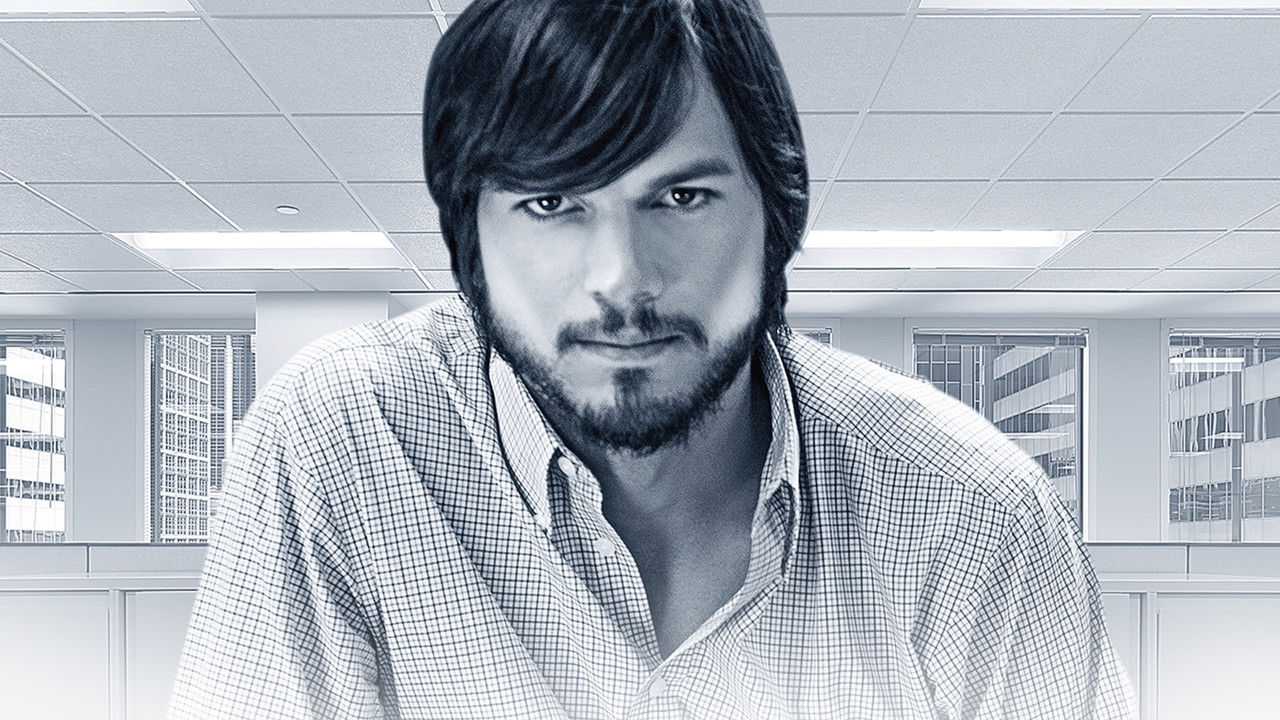
The first thing I noticed—and it’s impossible to miss—is how much Ashton Kutcher actually looks like young Steve Jobs. It’s uncanny. He nailed the hunched-over, predatory walk and the way Jobs used his hands like a magician trying to distract you from the fact that he was stealing your watch. There’s a scene where he’s walking through the Apple offices to the tune of Bob Dylan, and for a second, I forgot I was watching the guy who played Kelso.
But here’s my first hot take: Kutcher’s performance is a weirdly successful impersonation trapped inside a standard-issue Lifetime movie. He’s trying so hard—bless him—that you can almost see the gears turning. Apparently, Kutcher went full "method," adopting Jobs’ infamous fruitarian diet to prepare for the role. It worked a little too well; he ended up in the hospital with pancreatic issues just two days before filming started. That’s the kind of dedication that usually wins Oscars, but here it feels like he’s playing "Greatest Hits Jobs" rather than a flesh-and-blood human.
The real soul of the film, for me, is Josh Gad as Steve Wozniak. While Kutcher is busy being a "visionary" (which in this movie mostly involves staring intensely at circuit boards while the music swells), Gad brings a much-needed groundedness. His "Woz" is the heart of the garage, the guy who just wanted to build cool stuff with his friends while Jobs was dreaming of world domination. Their chemistry feels authentic, even if the script treats their falling out with the subtlety of a sledgehammer.
Garage Dreams and Corporate Nightmares
The film’s strongest suit is its production design. Director Joshua Michael Stern managed to film the early scenes in the actual Los Altos garage where Apple was born. You can feel the cramped, dusty reality of that space. It’s a great reminder of a time before "the cloud," back when tech was something you soldered together in a space that smelled like motor oil and solder.
However, the narrative is where things get a bit messy. The film tries to cover everything from Jobs’ hippie days at Reed College (featuring Lukas Haas as Daniel Kottke) to the launch of the iPod in 2001. Because it tries to do so much, it often feels like a montage of "important moments" rather than a coherent story. We see Jobs being a jerk to his girlfriend, Jobs being a jerk to his employees, and Jobs being a jerk to the board of directors (including a very stiff Dermot Mulroney). We get it—he was a difficult genius.
What’s missing is the why. The script by Matt Whiteley stays on the surface, giving us the tech-pioneer equivalent of a rock star biopic where the "drugs" are just circuit boards. I found myself wanting more of the grit and less of the "Some see what’s possible" tagline energy.
A Tech-Era Curiosity
In the decade since its release, Jobs has developed a bit of a cult following among tech-history nerds and Kutcher defenders. It’s a "flawed but fascinating" artifact. While the 2015 Danny Boyle film Steve Jobs is objectively a better piece of filmmaking, there’s something charmingly earnest about this version. It doesn't have the cynical, fast-talking polish of a Sorkin script; it feels like it was made by people who genuinely worship the altar of the Mac.
Interestingly, the film was funded entirely by a private billionaire, Mark Hulme, who had never produced a movie before. He just really liked Steve Jobs. That explains a lot of the film's "fan-fiction" energy. It’s a movie made for fans, by fans, and that’s why it has survived in the cultural consciousness.
Turns out, Steve Wozniak himself wasn't a huge fan of the accuracy. He famously noted that many of the scenes—especially the ones where Jobs is "educating" Woz about the social impact of computers—never actually happened. In reality, Woz was often the one thinking about the tech's potential while Jobs was thinking about the price point. But hey, that's Hollywood.
If you’re a tech enthusiast or someone who still misses the click-wheel on their first iPod, Jobs is worth a look as a retrospective piece. It captures the transition from analog to digital with a lot of warmth, even if the character study at its center is a bit hollow. It’s the cinematic equivalent of an early-generation Apple product: visually striking, a bit buggy, and eventually replaced by a much more efficient model. Watch it for the "Woz" performance and the 1970s garage vibes, but don't expect it to change your world.
Keep Exploring...
-

The Other Boleyn Girl
2008
-
J. Edgar
2011
-
Public Enemies
2009
-
The Monuments Men
2014
-
Pompeii
2014
-

Alexander
2004
-
King Arthur
2004
-
Defiance
2008
-
The Way Back
2010
-
Contraband
2012
-
Kill the Messenger
2014
-
The Duchess
2008
-
Agora
2009
-

Red Riding Hood
2011
-
The Iron Lady
2011
-
Anna Karenina
2012
-

Never Back Down
2008
-

The Time Traveler's Wife
2009
-

Charlie St. Cloud
2010
-
Faster
2010