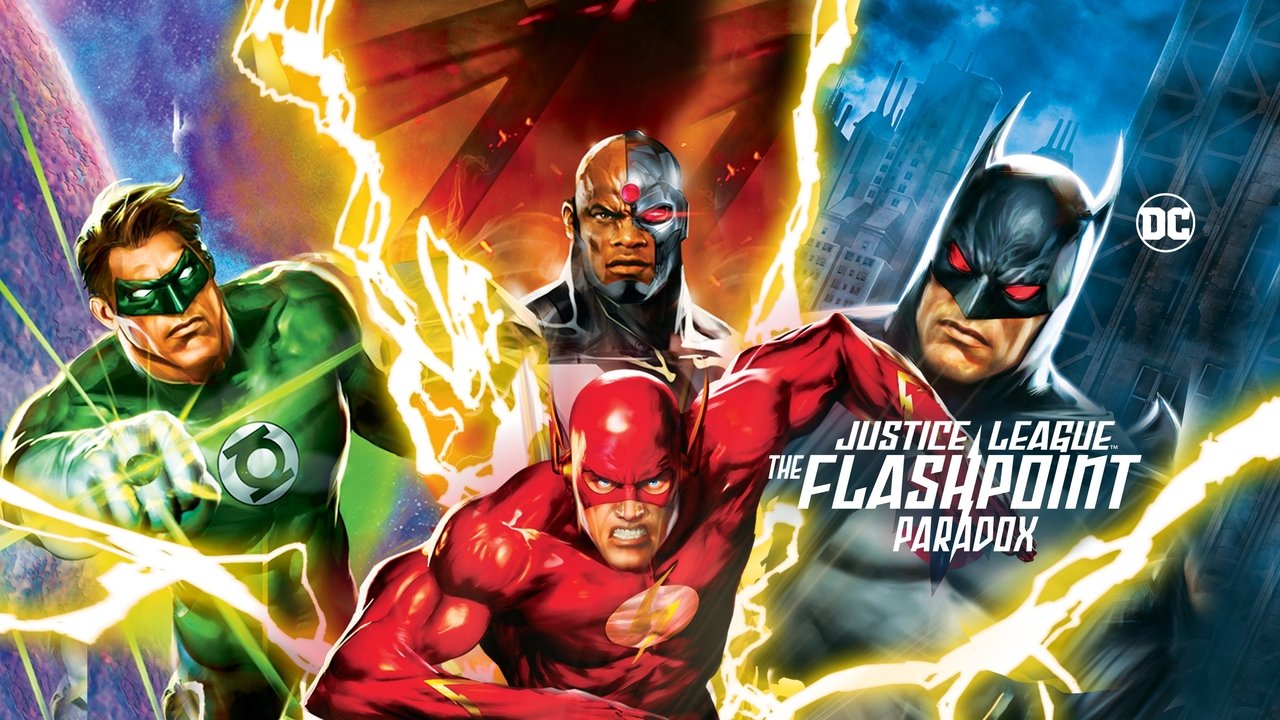
Justice League: The Flashpoint Paradox
"One small change. One world in ruins."
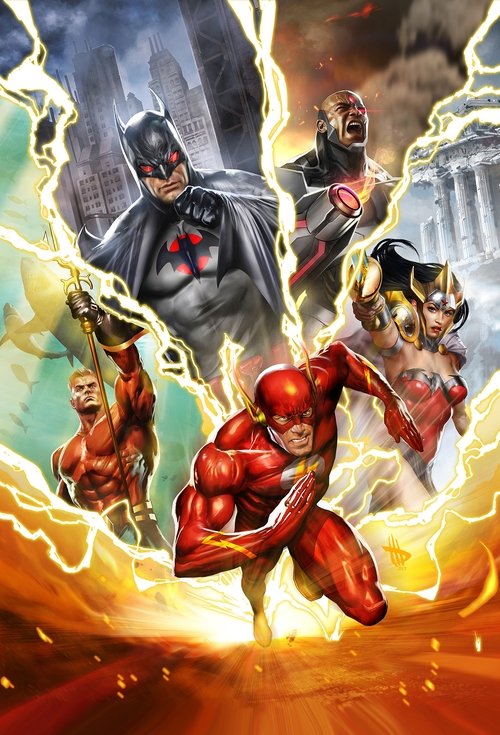
Forget the Saturday morning cartoons where the biggest threat was a giant monkey in a cape or a riddle-themed bank heist. When I first popped the Blu-ray for Justice League: The Flashpoint Paradox into my player in 2013, I wasn't expecting a psychological autopsy of grief disguised as a superhero brawl. This was the era of the "New 52," DC's massive comic book reboot, and while the live-action films were busy trying to find their footing in the shadow of Christopher Nolan, the animation department was quietly staging a bloody, high-stakes coup.
A Butterfly Flaps Its Wings and Everyone Dies
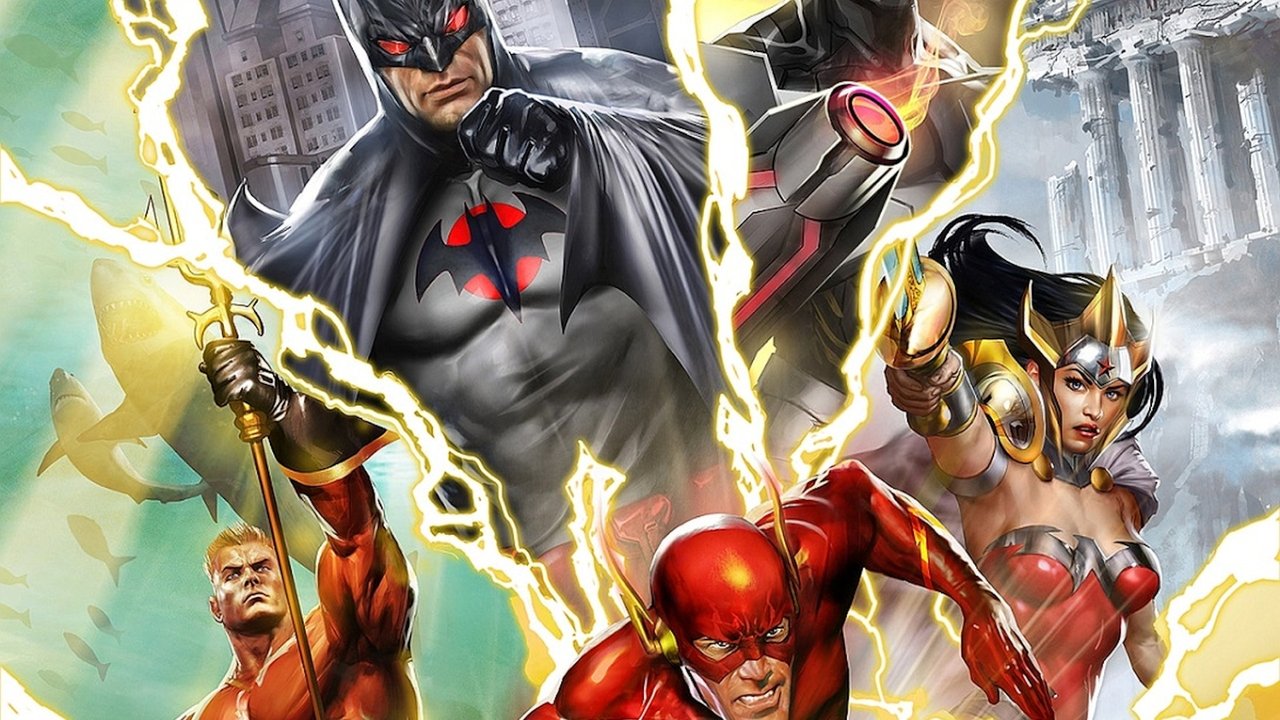
The premise is a classic "be careful what you wish for" nightmare. Barry Allen (Justin Chambers), the fastest man alive, finally cracks. Driven by the decades-old trauma of his mother’s murder, he uses the Speed Force to do the one thing every time-traveler is told not to do: he saves her. He wakes up in a world that is unrecognizable. It’s a 2013 spin on the butterfly effect that feels less like science fiction and more like a Greek tragedy. In this timeline, the Justice League doesn't exist. Instead, Wonder Woman and Aquaman are locked in a global war of attrition that has already swallowed Europe and is currently drowning the rest of the planet.
Director Jay Oliva, who previously gave us the two-part epic The Dark Knight Returns, brings a jagged, high-energy style that feels distinctly of its time. This was the peak of the "Direct-to-Video" renaissance, where budgets were tight—about $3.5 million here—but the creative freedom was limitless. I remember watching this while aggressively eating a bowl of cold cereal—Honey Nut Cheerios, if you must know—and nearly choking when Wonder Woman showed up on screen holding a decapitated head. It was a signal that the rules had changed. This wasn't just "dark"; it was a deliberate demolition of childhood icons to see what makes them tick.
The Gritty Transition of the Early 2010s
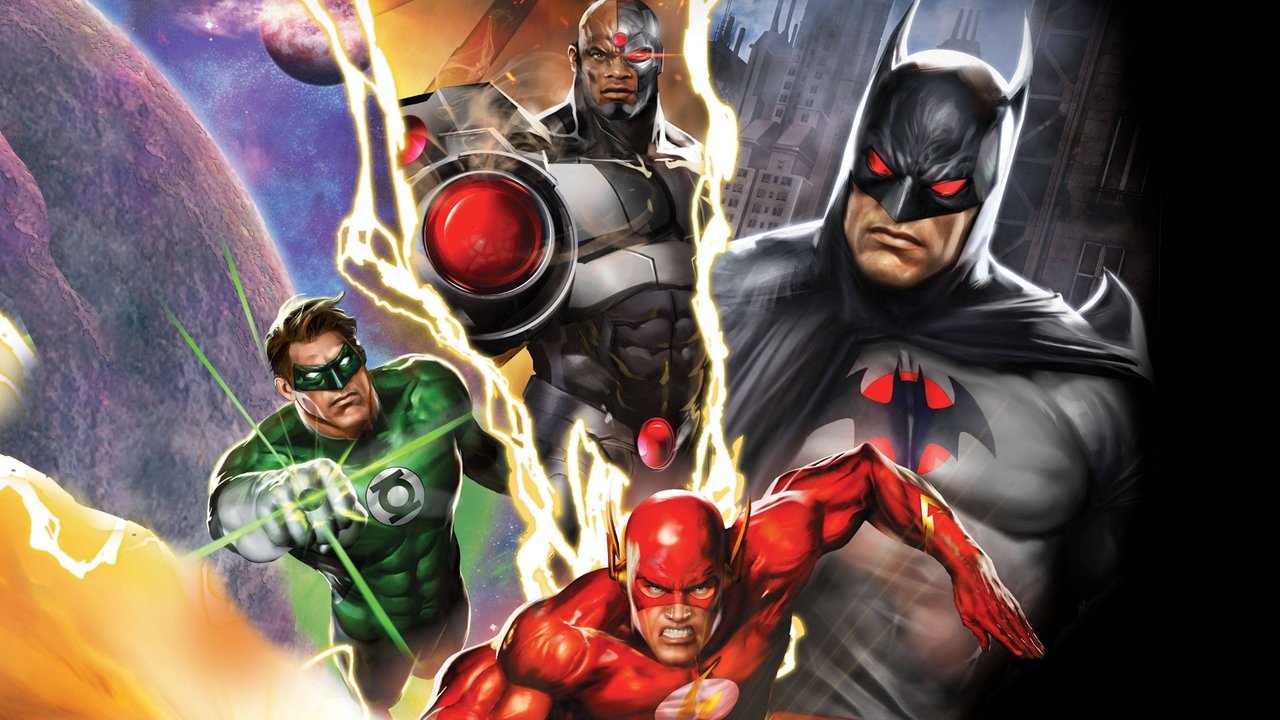
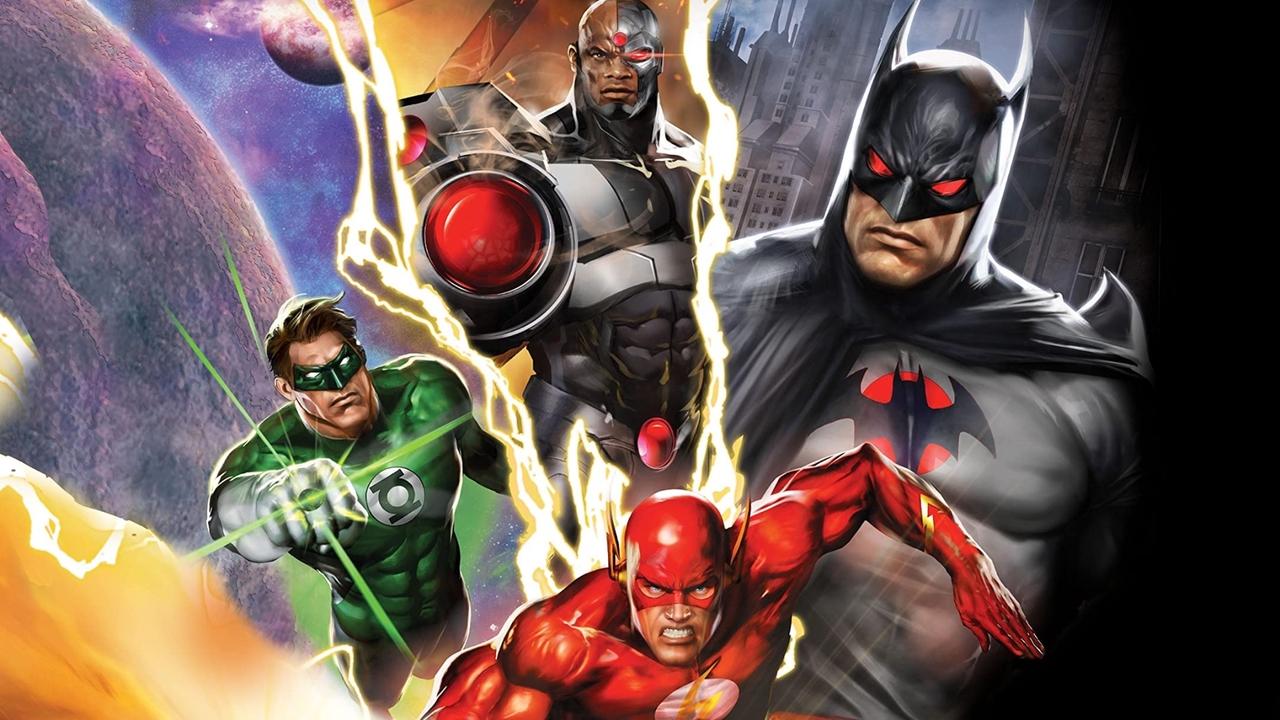
Looking back, The Flashpoint Paradox captures that specific 2010-2014 cultural obsession with "deconstruction." We were moving away from the campy fun of the early 2000s and into a space where every hero had to be broken before they could be redeemed. The standout here isn't actually Flash, but "Flashpoint Batman," voiced by Kevin McKidd (who you might know from Grey's Anatomy or Rome). In this reality, Bruce Wayne died in the alley, and his father, Thomas Wayne, became a gin-soaked, dual-pistol-wielding vigilante.
The Thomas Wayne Batman is essentially a middle finger to the 'no-kill' rule, and honestly, he’s the most compelling thing DC put on screen that decade. The chemistry between him and Justin Chambers’ increasingly desperate Barry Allen provides the film’s emotional spine. While the action is relentless, the movie lingers on the cost of "fixing" things. There’s a cerebral cruelty to the villainy of C. Thomas Howell as Professor Zoom. He doesn't just want to kill the Flash; he wants Barry to live with the knowledge that his one act of love destroyed the world. It’s a heavy, philosophical weight that pushes the film beyond a simple "stop the bad guy" plot.
Digital Craft and the New 52 Legacy
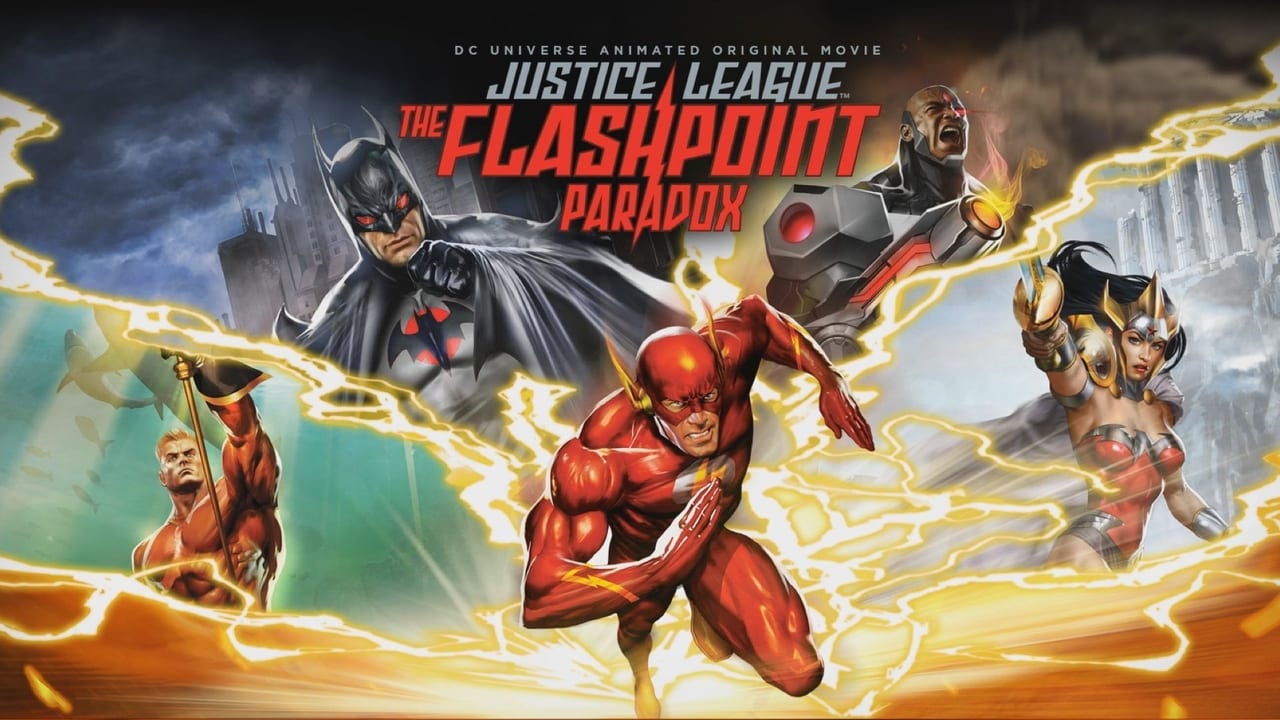
Technologically, this film sits right at the edge of the transition where digital animation started to mimic the weight of hand-drawn cells more effectively. The character designs by Phil Bourassa are polarizing—everyone looks like they’ve been hitting the gym for twenty hours a day—but they suit the aggressive, militaristic tone of the story. The voice cast is an interesting snapshot of the era, too. You’ve got a pre-megastardom Michael B. Jordan as Cyborg, putting in a solid, grounded performance as the last "true" hero in a world gone mad. And, of course, Kevin Conroy appears briefly as the "real" Bruce Wayne, providing that essential tether to the Batman we all grew up with.
The action choreography is where Jay Oliva truly shines. He treats the superpowers not as magic, but as weapons of mass destruction. When the Atlanteans and Amazons clash in the finale, it’s not a choreographed dance; it’s a meat grinder. The Flash is actually the greatest villain in DC history, he just has a better publicist and a red suit to hide the blood. Seeing the "heroes" we love commit war crimes is uncomfortable, and that’s exactly the point. It asks the viewer: if you could save the person you love most at the cost of the entire world’s peace, would you?
Justice League: The Flashpoint Paradox remains a high-water mark for DC’s animated output because it refuses to pull its punches. It’s a grim, thoughtfully executed exploration of the consequences of power and the permanence of loss. While the "New 52" aesthetic might feel a bit dated to some now, the core story is timeless. It’s a reminder that even the fastest man alive can’t run away from himself, and sometimes, the most heroic thing you can do is let go of the past. If you missed this one during the initial DVD boom, it’s well worth a revisit, even if you have to keep your cereal away from the screen during the more brutal bits.
Keep Exploring...
-

Justice League: War
2014
-

Justice League: Throne of Atlantis
2015
-
Batman vs. Robin
2015
-

Batman: The Dark Knight Returns, Part 2
2013
-
Justice League Dark
2017
-
Batman: Bad Blood
2016
-
Batman: The Dark Knight Returns, Part 1
2012
-
Final Fantasy VII: Advent Children
2005
-

Superman/Shazam!: The Return of Black Adam
2010
-
Justice League: Doom
2012
-
Final Fantasy: The Spirits Within
2001
-
Treasure Planet
2002
-
Justice League vs. Teen Titans
2016
-
Brave
2012
-
Batman: Assault on Arkham
2014
-
Evangelion: 2.0 You Can (Not) Advance
2009
-
9
2009
-
Avatar
2009
-
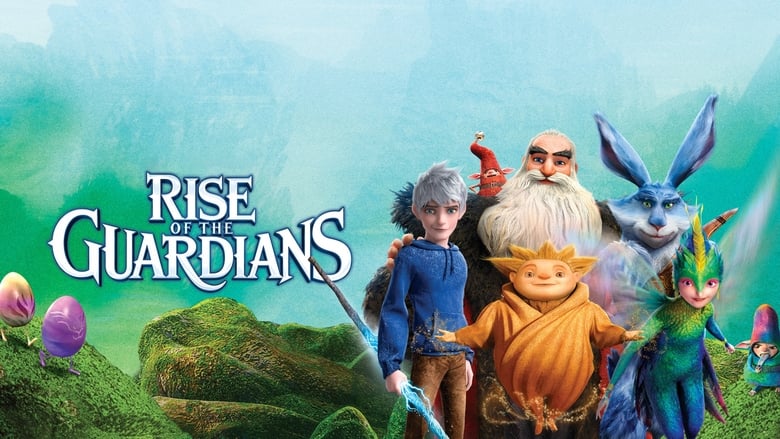
Rise of the Guardians
2012
-
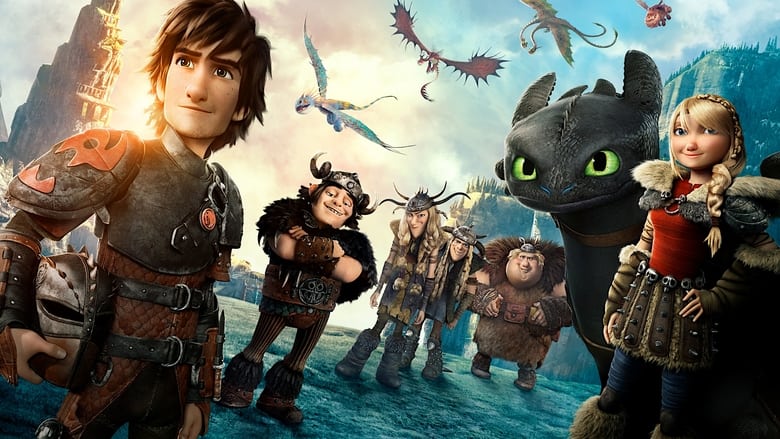
How to Train Your Dragon 2
2014