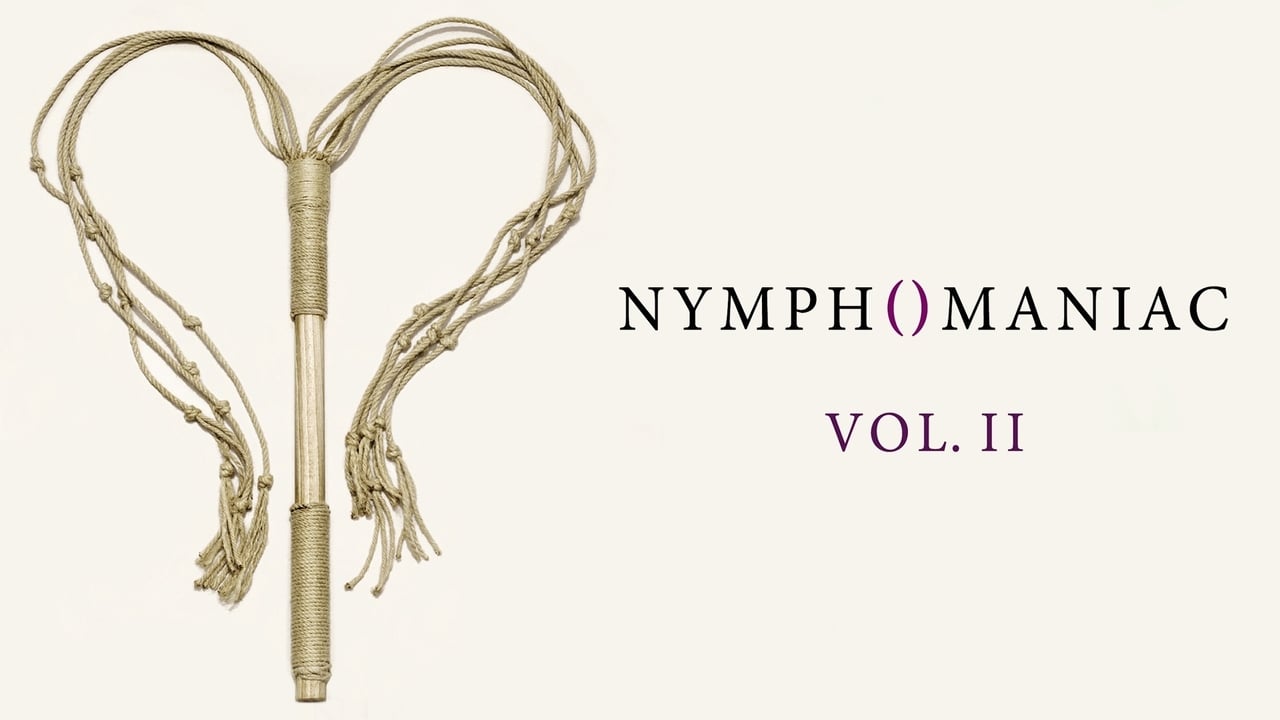
Nymphomaniac: Vol. II
"The punchline is a jagged edge."

I remember watching Nymphomaniac: Vol. II for the first time on a laptop in a darkened dorm room, frantically pausing whenever I heard footsteps in the hallway. I was eating a bowl of slightly burnt microwave popcorn, and at one point, during the particularly grueling "Chapter 6: The Eastern and Western Church (The Silent Star)," I jumped so hard at a sudden sound cue that I sent a handful of kernels flying into my laundry basket. That’s the Lars von Trier experience in a nutshell: you’re half-invested in a philosophical debate about fly-fishing and half-terrified that someone will catch you watching what looks like high-budget smut.

While Vol. I was almost playful—a series of quirky, intellectual digressions that felt like a dark romantic comedy—Vol. II is the hangover. It’s the part of the night where the music stops, the lights get way too bright, and you realize the person you’re talking to is actually bleeding. It’s a descent into the "numbness" that Joe (Charlotte Gainsbourg) faces as she loses the ability to feel anything at all.
The Anatomy of a Numb Heart
In this second half, Joe’s story shifts from a youthful quest for sensation to a desperate, adult struggle against biological and psychological apathy. Charlotte Gainsbourg is, quite frankly, a titan. She has this incredible ability to look both ancient and childlike at the same time, her face a map of every bad decision and traumatic encounter her character has endured. Unlike the younger Joe played by Stacy Martin in the first volume, Gainsbourg’s Joe is weary. She’s not looking for pleasure anymore; she’s looking for a spark of any sensation, which leads her into the dark, clinical world of sado-masochism.
The introduction of K (Jamie Bell, who is terrifyingly precise) brings the film into its most controversial territory. These scenes are difficult to watch, not because they are "sexy"—they aren't—but because they are so transactional. Von Trier uses the digital clarity of the early 2010s to strip away any cinematic glamour. The lighting is flat, the rooms are drab, and the sound of the whip is mixed so loudly it feels like it’s hitting the back of your own skull. It’s a far cry from the grainy, handheld energy of von Trier's Breaking the Waves days; here, the digital camera feels like a surgical tool.
Method Madness and CGI Skin

One of the most fascinating things about the Nymphomaniac production was the "Director’s Cut" vs. the theatrical release. Because this was 2013, we were in the middle of a weird tech transition where digital compositing allowed von Trier to do something wild: he used body doubles for the actual sex scenes and then digitally grafted the faces of his famous stars onto them. Shia LaBeouf famously took the "indie grit" angle to the extreme, reportedly sending the producers a real-life sex tape to prove his commitment.
Looking back, Shia LaBeouf as Jerôme is a strange, jarring presence, but it works. He represents the "love" Joe is trying to "forget" (per the tagline), and his transformation from a charming youth to a cold, distant adult mirrors the film’s own loss of warmth. Then you have Willem Dafoe showing up as a shadowy criminal figure named L. It’s peak "indie gem" casting—taking a bunch of A-listers and throwing them into a low-budget, high-concept Danish production that most Hollywood studios wouldn't touch with a ten-foot pole. I’m convinced Willem Dafoe could play a sentient piece of driftwood and still make it feel like a Shakespearean tragedy.
The Seligman Problem
The heart of the movie remains the bedside conversation between Joe and Seligman (Stellan Skarsgård). Seligman is the ultimate "armchair intellectual." For every horrific thing Joe confesses, he has a neat little analogy involving Bach, the Fibonacci sequence, or religious history. He is the audience stand-in, trying to "fix" Joe’s trauma by turning it into a textbook.

Seligman is basically every annoying Reddit philosopher rolled into one cardigan-wearing package. He wants to believe he’s "above" the base instincts Joe describes because he’s read enough books. This leads us to the ending—a conclusion so divisive that I’ve seen people nearly get into fistfights over it in the lobby of the IFC Center. Without spoiling it, I’ll say this: von Trier loves to pull the rug out from under you. If you think this is a movie about a woman finding redemption through storytelling, you haven’t been paying attention to who’s behind the camera.
The film reveals itself not as a mystery about Joe’s life, but as a cynical, biting commentary on the male gaze and the hypocrisy of "empathy." It’s mean-spirited, intellectually dense, and occasionally very funny in a way that makes you feel bad for laughing. Udo Kier makes a brief appearance as a waiter that provides one of those few moments of bizarre, absurdist levity that von Trier sprinkles in like poison sugar.
Ultimately, Nymphomaniac: Vol. II isn't a film you "enjoy" in the traditional sense. It’s a film you survive. It’s a massive, sprawling piece of independent filmmaking that proves you don’t need a $200 million budget to create an "epic"—you just need a director who is willing to be completely, shamelessly honest about the darkest corners of the human psyche. It’s the perfect capstone to the 1990-2014 indie era, pushing the boundaries of what we were allowed to see on screen before the age of the algorithm took over.
If you can stomach the brutality and the philosophical rambling, there’s a deeply human story underneath the provocations. Just maybe don't eat microwave popcorn while you watch it. You'll only end up cleaning it out of your carpet later.

Keep Exploring...
-

Nymphomaniac: Vol. I
2013
-
Breaking the Waves
1996
-

Melancholia
2011
-

Antichrist
2009
-

The Girl Who Played with Fire
2009
-
Buried
2010
-

Rubber
2010
-

Winter's Bone
2010
-

Frank
2014
-

Dancer in the Dark
2000
-

Dogville
2003
-
Pi
1998
-
Session 9
2001
-
Brick
2006
-

The House That Jack Built
2018
-
After.Life
2009
-

The Girl Who Kicked the Hornet's Nest
2009
-
The Secret in Their Eyes
2009
-

Blindness
2008
-

Changeling
2008