One Direction: This Is Us
"Five boys, one billion tweets, and a dream."

If you told a cinephile in 2004 that the man who nearly ate himself to death for Super Size Me would eventually direct a 3D concert film for a boy band, they’d have assumed the documentary genre had suffered a collective nervous breakdown. Yet, here we are with One Direction: This Is Us. I remember watching this for the first time on a laptop in a crowded airport terminal while accidentally sitting next to a woman wearing a "Zayn is My Husband" t-shirt, and the irony of the situation wasn't lost on me. It felt like watching a digital religious ceremony through the lens of a guy who usually specializes in deconstructing corporate greed.

The Spurlock Paradox
When Morgan Spurlock (known for The Greatest Movie Ever Sold) stepped behind the camera for the One Direction machine, he brought a surprisingly observational eye to what could have been a standard marketing fluff piece. Looking back from our current era of hyper-curated social media "authenticity," This Is Us serves as a fascinating transition point. This was 2013—the peak of the Tumblr era and the infancy of the "stan" culture that now dictates most of pop culture's oxygen.
Spurlock’s direction doesn't just focus on the high-octane concert footage at the O2 Arena (which, let’s be honest, looks incredible in its digital clarity); he hunts for the quiet, existential moments of the road. There’s a scene where the boys are camping by a lake, away from the screaming hordes, and they start contemplating the temporary nature of their success. It’s an almost philosophical detour into the transience of youth. Harry Styles—even then, possessing a magnetism that felt far too big for a boy band—muses about the "what if" of it all. It’s a rare moment where the film feels like it’s actually interrogating the phenomenon rather than just selling it.
The Architecture of a Global Crush
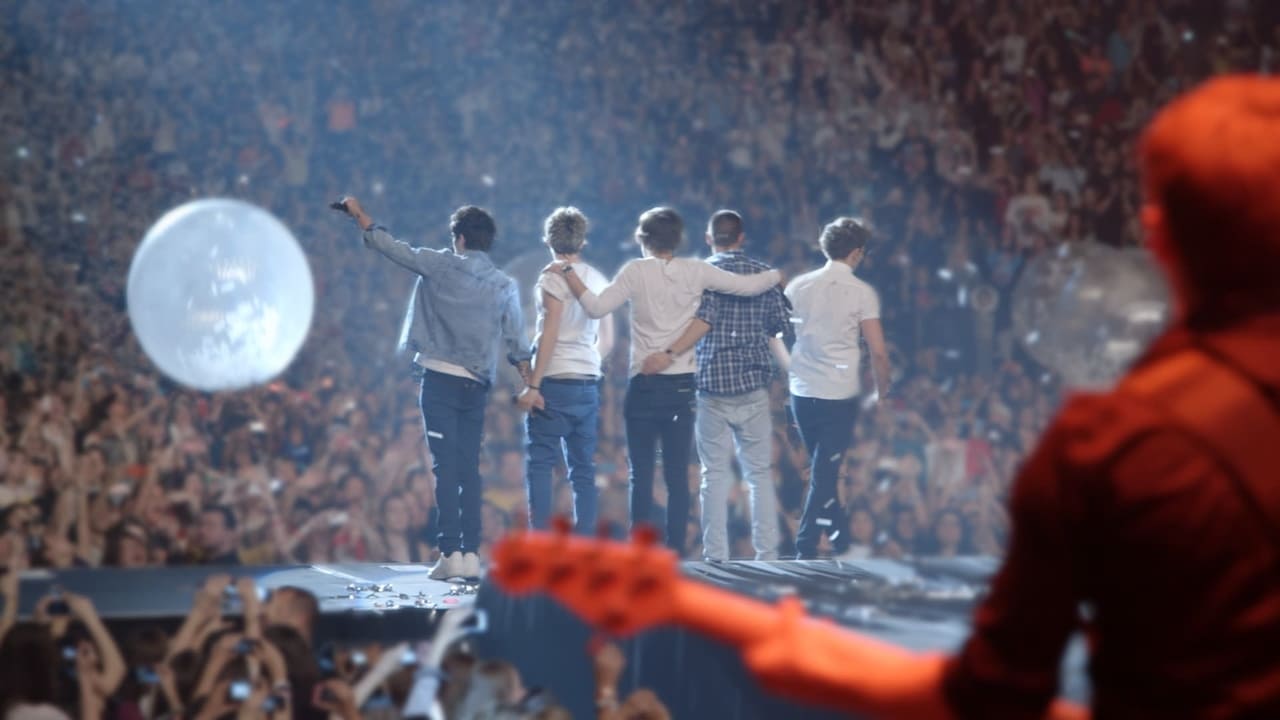
The film lives and dies on the chemistry of the quintet, and in retrospect, the dynamics are a masterclass in archetype casting. You have Harry Styles, the charismatic frontman-in-waiting; Liam Payne, the "sensible" one who keeps the gears turning; Niall Horan, the Irish ball of sun-drenched energy; Louis Tomlinson, the mischievous prankster; and Zayn Malik, the brooding introvert who looks like he’s constantly calculating the distance to the nearest exit.
Seeing Zayn Malik buy a house for his mother is the emotional heart of the film, and it’s arguably the most "drama" the documentary allows. It touches on the working-class roots of these boys who were plucked from obscurity by Simon Cowell—who appears here like a benevolent, high-waisted deity—and thrust into a life where their every movement is tracked by GPS and satellite. The film does a stellar job of conveying the sensory overload of fame. The editing by Guy Harding and Leigh Elson captures the frantic, breathless pace of a world tour, but it's the contrast with their humble hometowns that gives the narrative its weight. The film makes a convincing argument that these boys were basically kidnapped by fate and forced to become the world’s most popular roommates.
The Echo Chamber of 2013

Technologically, this was the era when 3D was still the "must-have" gimmick for concert films, following the trail blazed by Justin Bieber and Katy Perry. But while those films felt like extended commercials, This Is Us feels more like a time capsule of a specific digital moment. It’s a document of the Y2K-successor generation, where fame was no longer just about talent or luck, but about a recursive loop of internet interaction.
One of the most interesting trivia bits is that Morgan Spurlock actually spent over six months on the road with them, capturing over 500 hours of footage. He allegedly fought to keep more of the "grit" in, though the final cut definitely leans toward the aspirational. Another fun detail: the film’s budget was a relatively modest $10 million, but it pulled in nearly seven times that at the box office, proving that teenage girl enthusiasm is the most powerful renewable energy source on the planet. It captures that fleeting window before the band's eventual hiatus, before the solo careers, and before the inevitable wear and tear of the industry set in.
Ultimately, One Direction: This Is Us is a surprisingly thoughtful look at the industrial complex of joy. It manages to be both a celebration for the fans and a curious anthropological study for everyone else. Whether you know every lyric to "What Makes You Beautiful" or couldn't pick a Directioner out of a lineup, the film succeeds because it captures the universal, terrifying thrill of being young and suddenly owning the world. It’s a bright, loud, and occasionally moving artifact from the sunset of the boy band era.
Keep Exploring...
-

Searching for Sugar Man
2012
-

Exit Through the Gift Shop
2010
-

Blackfish
2013
-
Citizenfour
2014
-

Selena
1997
-
Senna
2010
-

Grizzly Man
2005
-

Amy
2015
-
Synecdoche, New York
2008
-

Nebraska
2013
-
Man on Wire
2008
-

Inside Job
2010
-

Lemonade Mouth
2011
-

The Muppet Christmas Carol
1992
-
Il Divo
2008
-

Evangelion: 2.0 You Can (Not) Advance
2009
-

My Name Is Khan
2010
-

A Separation
2011
-

Barbie: Princess Charm School
2011
-
Detachment
2011