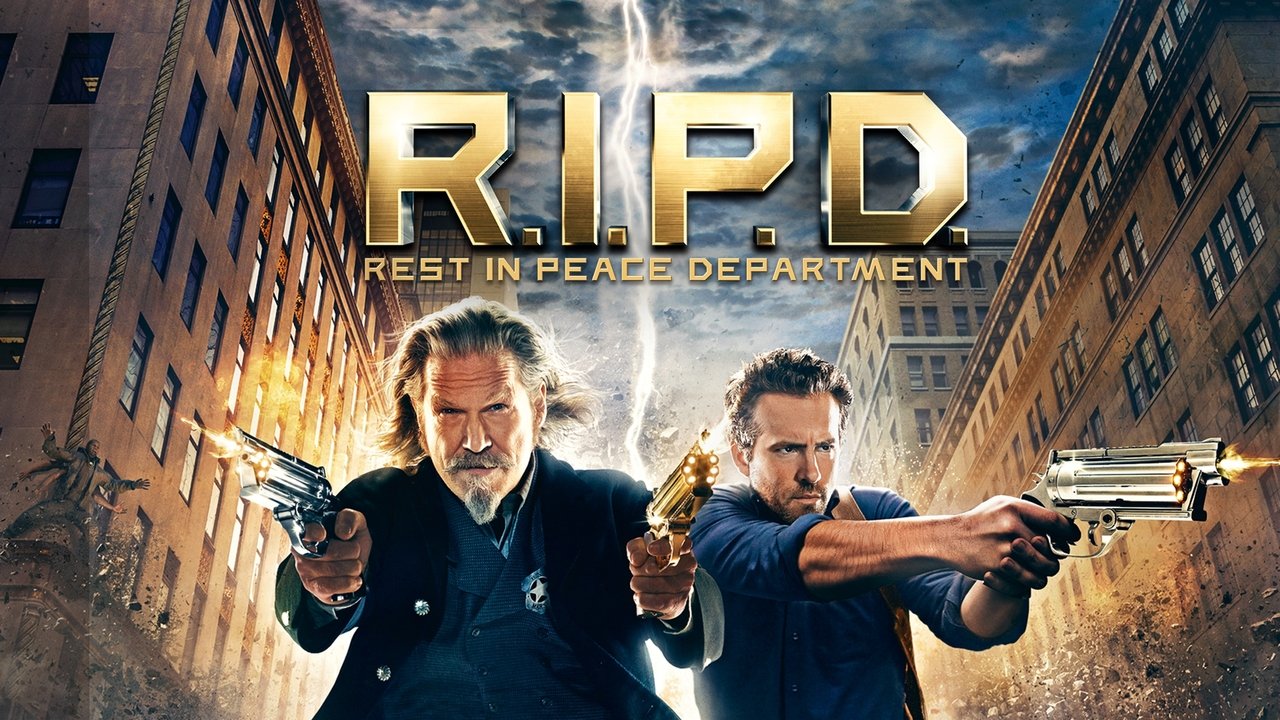
R.I.P.D.
"Ghostly cops, cosmic bureaucracy, and one very confused supermodel."
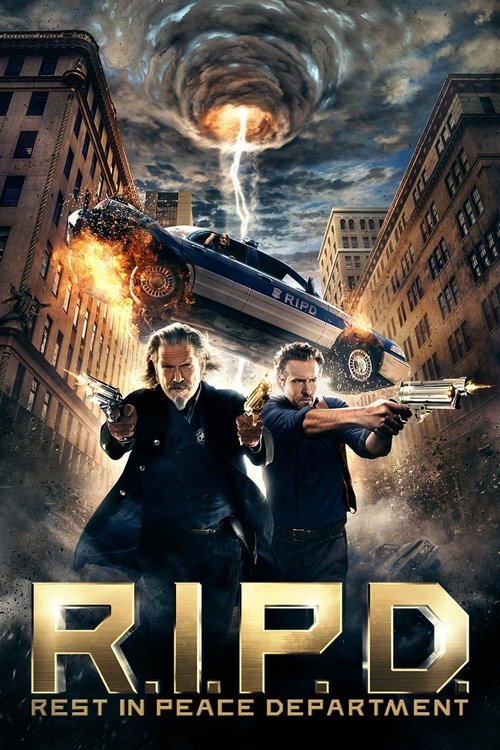
I once watched R.I.P.D. at two in the morning after a particularly grueling blind date that ended with me accidentally spilling an entire glass of Pinot Noir on my own shoes. I needed something loud, neon-soaked, and fundamentally undemanding to wash away the memory of a woman who spent forty minutes explaining her cat’s star chart. At that specific moment, watching an old Chinese man (James Hong) and a blonde supermodel (Marisa Miller) shoot glowing spirit-guns at bloated CGI monsters felt like the only logical thing left in the universe.

That is the natural habitat of R.I.P.D. It’s a film that exists in the "I can't believe they spent $130 million on this" category—a glorious, messy artifact from the tail end of the pre-MCU dominance, when studios were still throwing massive budgets at any comic book property that smelled even vaguely like Men in Black or Ghostbusters.
The Cowboy and the Straight Man
The premise is pure high-concept 2010s: Nick Walker (Ryan Reynolds) is a Boston cop who gets murdered by his corrupt partner, Bobby Hayes (Kevin Bacon, playing "charming sleazebag" with his usual effortless grace). Instead of the pearly gates, Nick finds himself in a sterile, white-tiled office that looks like a high-end DMV, where a sharp-tongued Proctor (Mary-Louise Parker, who is clearly having more fun than anyone else) recruits him into the Rest in Peace Department. His job? Hunting "deadoes"—souls who have escaped judgment and stayed on Earth, where they rot and cause "soul pollution."
Enter Jeff Bridges. If you thought his marble-mouthed delivery in True Grit was thick, his performance as Roy Pulsipher is basically Bridges attempting to speak while gargling a mouthful of honey and gravel. He’s a 19th-century U.S. Marshal who has been dead for centuries, and he views the modern world with the cranky disdain of a man who misses the era of dysentery and duels.
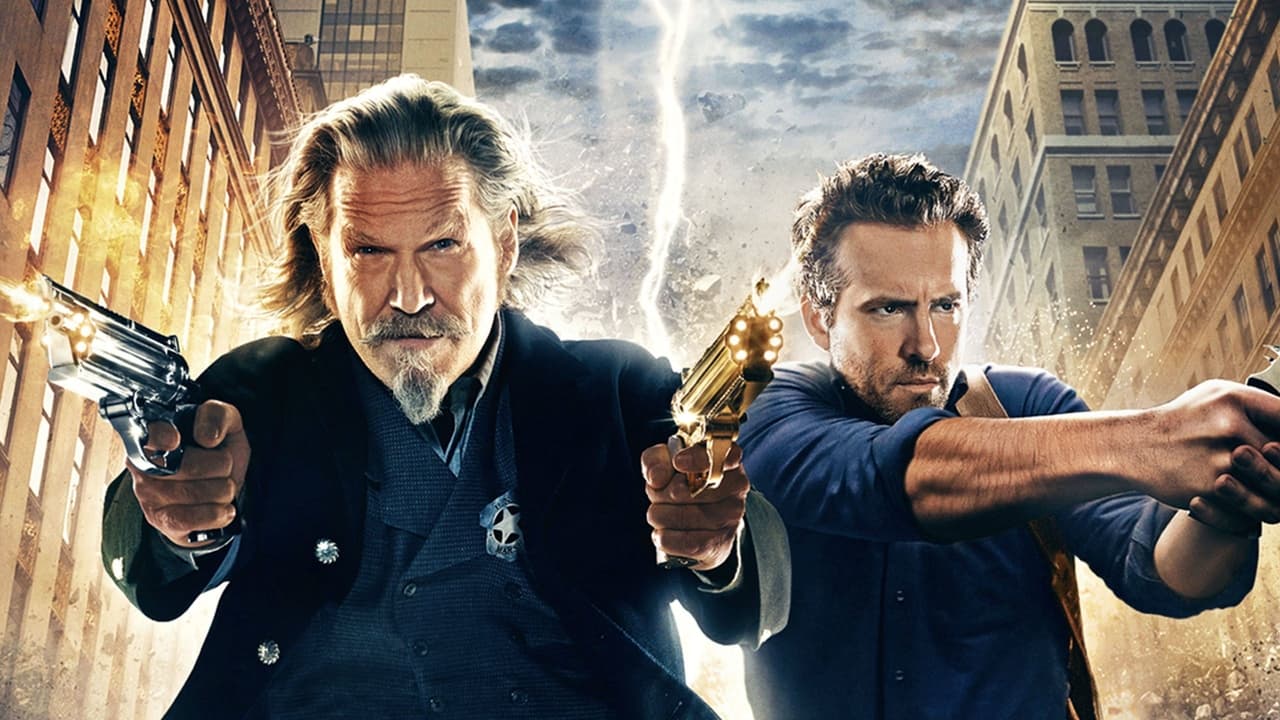
The chemistry here is... weird. Ryan Reynolds hadn't quite fully pivoted into the self-aware, Fourth-Wall-breaking Deadpool persona yet. He’s playing the straight man, and honestly, he’s a bit of a wet blanket compared to Bridges’ hams-and-yams routine. But that’s the charm. Watching Bridges describe his own death (he was eaten by coyotes) while Reynolds looks like he’s reconsidering his career choices is the backbone of the movie.
Digital Bloom and 2013 Chaos
Looking back from 2024, the CGI in R.I.P.D. is a fascinating time capsule. This was the era of "more is more," where digital effects weren't necessarily trying to look real, but rather trying to look loud. The "deadoes" look like caricatures—distorted, rubbery monsters that transform in ways that defy physics. It’s a far cry from the practical puppet mastery of the original Men in Black (1997), and while it lacks that physical weight, there’s a kinetic, cartoonish energy to director Robert Schwentke's (of Red and Insurgent fame) vision.
The action sequences are staged with a frantic, dizzying pace. There’s a scene where the duo falls through the air amidst exploding buildings and swirling debris that feels like a precursor to the "multiverse" visual style we see everywhere now. It’s chaotic, and the editing occasionally feels like it was done by a caffeinated squirrel, but you can't deny the ambition. They really wanted this to be a franchise. They even gave us a "world-ending MacGuffin" (The Staff of Jericho) and a ticking clock, sticking firmly to the 2010s blockbuster playbook.
The Avatar Gag and Cult Curiosities
The absolute best part of the movie—and the reason it has survived as a minor cult favorite—is the avatar system. To the living, the undead officers don't look like Bridges and Reynolds. Bridges looks like a statuesque blonde woman, and Reynolds looks like a diminutive, elderly Chinese man.
The sight of James Hong (the legendary actor from Big Trouble in Little China) running around with a banana in his hand to "threaten" someone while the film cuts back to Reynolds holding a gun is genuinely funny. It’s a bit of inspired absurdity that keeps the film from being just another procedural clone. Apparently, during filming, Bridges and Reynolds would often hang out with their avatar counterparts on set to sync their physical mannerisms, which explains why the physical comedy works as well as it does.
Despite its astronomical budget, R.I.P.D. bombed spectacularly at the box office, barely making half its money back. Critics were brutal, calling it a derivative mess. But in retrospect, it’s a lot more charming than the cookie-cutter action flicks we get today. It’s earnest in its weirdness. It’s a movie that asks you to accept that a soul’s "deado" status can be revealed by its allergic reaction to cumin.
Ultimately, R.I.P.D. is the cinematic equivalent of a gas station corn dog. You know it’s not "good" for you, you know exactly what’s in it, and it probably shouldn't have cost that much to produce—but in the right mood, at the right hour, it hits a very specific spot. It captures that transition period of cinema where we were still figuring out how to balance big digital spectacles with character comedy. If you’re looking for a masterpiece, keep moving. But if you want to see Jeff Bridges play a dead cowboy while a supermodel takes his place in the "real" world, you’re in for a treat.
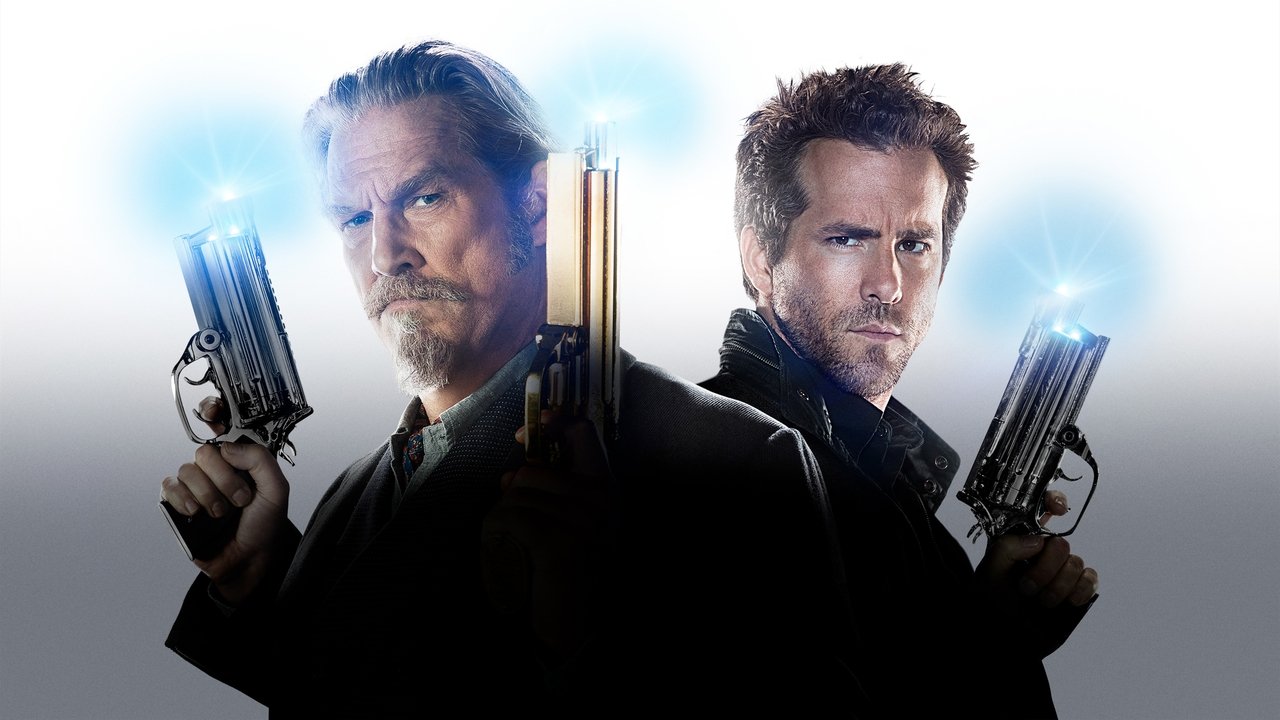
Keep Exploring...
-

RED
2010
-
Night at the Museum: Battle of the Smithsonian
2009
-
The Brothers Grimm
2005
-

Puss in Boots
2011
-
RED 2
2013
-

Brave
2012
-
Bedtime Stories
2008
-
Get Smart
2008
-
Killers
2010
-
The A-Team
2010
-

The Green Hornet
2011
-

Tower Heist
2011
-
Mirror Mirror
2012
-
This Means War
2012
-
2 Guns
2013
-
Night at the Museum: Secret of the Tomb
2014
-
Last Action Hero
1993
-

Mystery Men
1999
-

Night at the Museum
2006
-

Sinbad: Legend of the Seven Seas
2003