Sun In Buckets
"High grades, empty pockets, and the ultimate Italian bluff."
In the autumn of 2013, while the rest of the world was obsessing over the launch of the PlayStation 4 or wondering if Gravity was actually possible, Italy was experiencing a localized tectonic shift. A man named Luca Medici—better known by his stage name Checco Zalone—was busy shattering every box office record in sight with Sun In Buckets (Sole a catinelle). For those outside the Mediterranean boot, this film is a phantom; it’s a cultural juggernaut that somehow never cleared the hurdle of international distribution, making it a fascinating relic of a specific time and place.
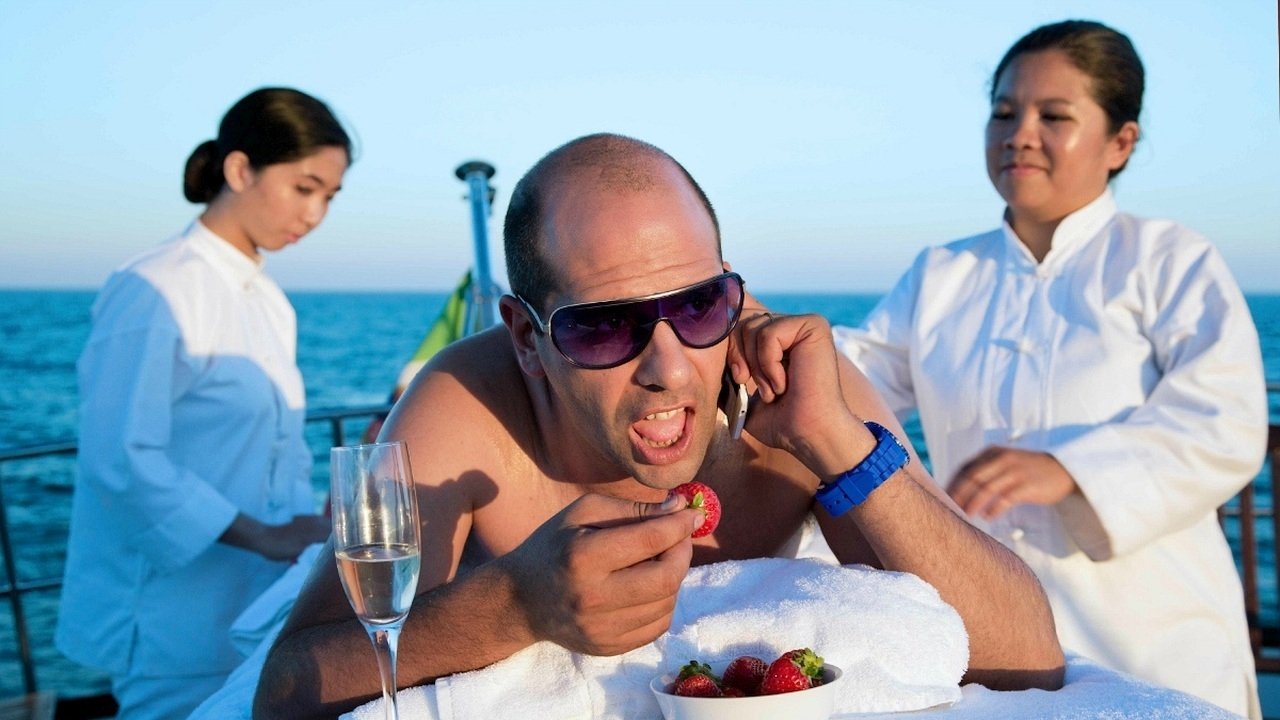
I watched this recently on a laptop with a screen so smudged with fingerprints it looked like I was viewing the film through a light coating of olive oil, which, in retrospect, added a certain je ne sais quoi to the Italian setting.
The Salesman of Broken Dreams
Directed by Gennaro Nunziante, Sun In Buckets is a road movie that captures the frantic, anxious energy of the post-2008 European economic crisis. Checco Zalone plays a version of himself: Checco, a high-octane optimist who sells vacuum cleaners door-to-door. He’s the kind of guy who buys everything on credit because he genuinely believes the next big commission is just one doorbell away. When his son Nicolò (Robert Dancs) pulls off a miracle and gets a report card full of straight A's, Checco is forced to deliver on a promise he can't afford: a dream summer vacation.
What follows is a chaotic trek from the dusty, forgotten corners of Molise (a region Italians joke doesn't actually exist) to the high-society villas of Northern Italy. The film’s genius lies in Checco’s total lack of a filter. He crashes a high-brow party of "radical chic" intellectuals and industrialists, and rather than being intimidated, he treats them with the same blustering, misplaced confidence he uses on his vacuum cleaner prospects. Checco is the human equivalent of a Windows 95 pop-up—annoying, persistent, but strangely nostalgic.
A Comedy of Economic Anxiety
Looking back, the film feels like a perfect time capsule of the early 2010s "Great Recession" aesthetic. It was shot digitally, and you can see that transition from the grainy filmic look of the 90s to the ultra-bright, almost clinical clarity of modern digital cameras. It gives the comedy a sitcom-like sharpness, but it also highlights the absurdity of the wealth on screen. When Checco and Nicolò end up rubbing elbows with the elite, like the industrialist Vittorio Marin (Marco Paolini) and the glamorous Zoe (Aurore Erguy), the contrast is stark.
Zalone’s brand of humor is hard to pin down if you haven't seen his earlier work like Cado dalle nubi (2009). He specializes in a type of "ignorant bliss" satire. He isn't trying to tear down the system; he just doesn't understand why the system is so complicated. There’s a scene where he tries to explain the financial crisis to his son that is both wildly incorrect and strangely poignant. The chemistry between Zalone and the young Robert Dancs is what keeps the movie from drifting into pure caricature. Nicolò is the straight man, the kid forced to grow up faster than his father, providing the emotional anchor for the rapid-fire gags.
Why It Stayed Home
It’s easy to see why this film didn't become a global hit like Life is Beautiful or The Great Beauty. Much of the humor is hyper-local. It relies on the friction between Italian dialects, the stereotypes of the "cheap" Southerner versus the "snobbish" Northerner, and very specific jabs at the Italian tax authorities. However, the physical comedy is universal. Whether it’s Checco trying to play golf with zero experience or his bizarre, improvised songs (Zalone actually wrote the score himself), the rhythm of the jokes is relentless.
The film’s obscurity outside of Italy is largely due to the "lost in translation" factor of Zalone’s wordplay. He speaks a mangled version of Italian that is grammatically chaotic but phonetically hilarious. For an international viewer, it's like trying to explain the appeal of Larry David to someone who doesn't understand social etiquette—you get the gist, but you miss the spice. Yet, if you can handle subtitles and a healthy dose of cringe, it’s a masterclass in how to make a movie about being broke look like a million bucks.
Turns out, the title itself is a bit of a linguistic joke; Sole a catinelle is a play on the Italian phrase for "raining buckets" (Piove a catinelle), suggesting that even when things are going well, Checco is doing it with an intensity that borders on a natural disaster. Apparently, the production was a family affair, with Zalone’s real-life partner and friends often appearing in minor roles, giving the set a relaxed, improvisational vibe that translates to the screen.
Sun In Buckets is a fascinating look at a comedian at the absolute height of his powers, commanding an entire nation’s attention during a period of deep uncertainty. It’s loud, it’s occasionally crude, and it wears its heart on its sleeve. While some of the visual gags feel a bit dated in the era of high-concept streaming comedies, the central relationship between a failing father and a hopeful son is timeless. If you can find a copy—legal or otherwise—it’s worth the 83-minute trip through the Italian countryside.
Just make sure to wipe your screen first.
Keep Exploring...
-
What a Beautiful Day
2011
-
Cado dalle nubi
2009
-
Where Am I Going?
2016
-
Welcome to the North
2012
-
The Invisible Boy
2014
-
Tolo Tolo
2020
-
Be Kind Rewind
2008
-

Drillbit Taylor
2008
-
Ghost Town
2008
-
Harold & Kumar Escape from Guantanamo Bay
2008
-
Made of Honor
2008
-
Nick and Norah's Infinite Playlist
2008
-
Nim's Island
2008
-
Sex Drive
2008
-
Wild Child
2008
-

I Love You, Beth Cooper
2009
-
I Love You, Man
2009
-
Little Nicholas
2009
-

LOL (Laughing Out Loud)
2009
-
OSS 117: Lost in Rio
2009