The Best Offer
"Every fake hides a piece of the truth."
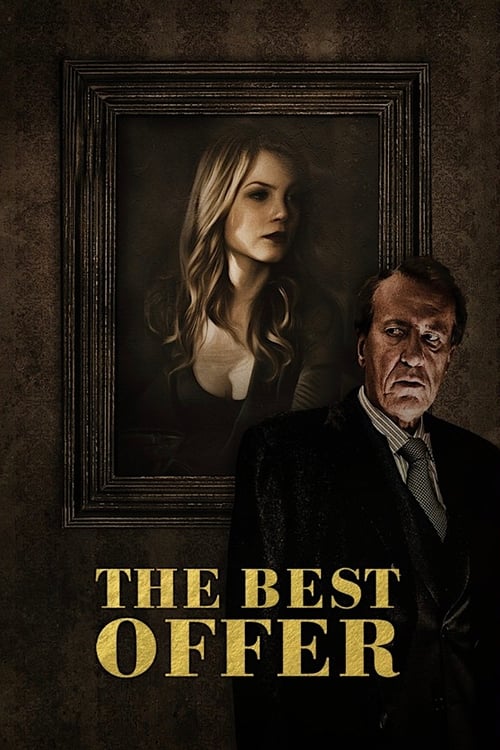
I first watched The Best Offer on a glitchy laptop screen while sitting in a drafty airport terminal in Berlin, nursing a lukewarm coffee and trying to ignore a toddler who was determined to use my suitcase as a drum kit. Despite the distractions, I found myself leaning so close to the screen I could practically smell the varnish on the canvases. There is something about Giuseppe Tornatore’s 2013 mystery-drama that demands an uncomfortably close look. It’s a film that functions like a high-end clockwork toy: precise, ornate, and slightly cold to the touch.
The Auctioneer of Empty Spaces
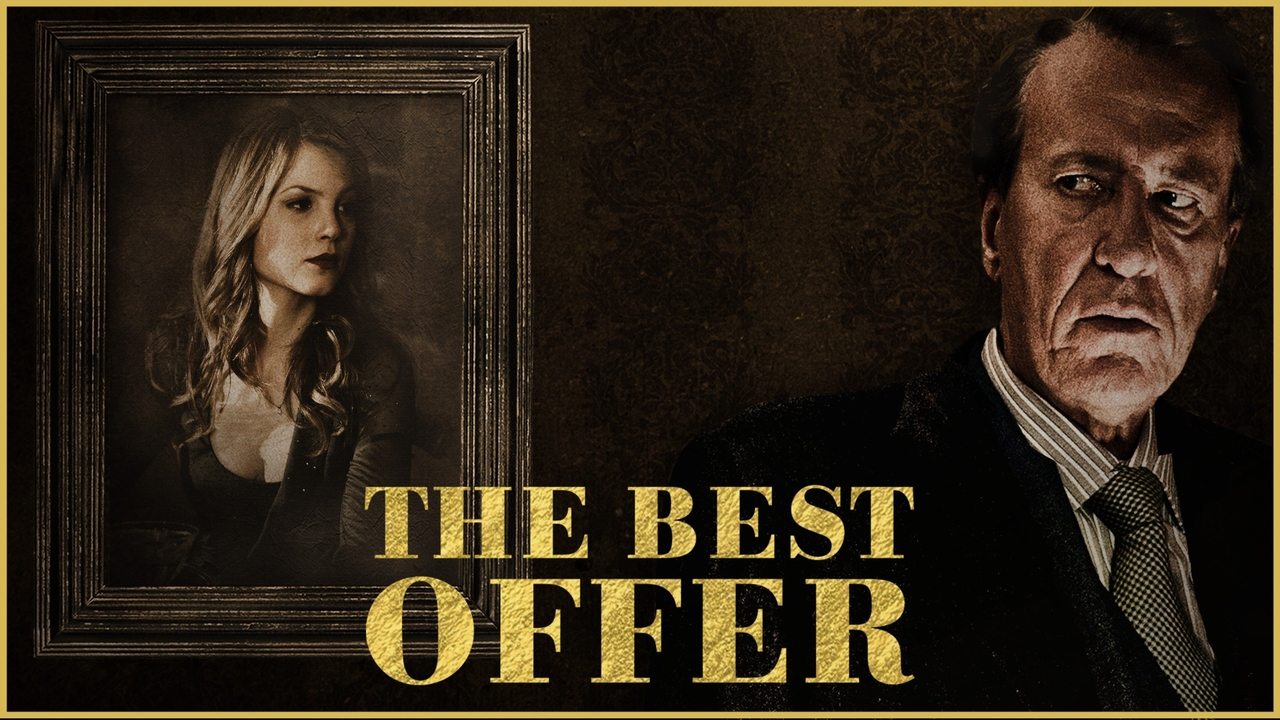
The story centers on Virgil Oldman, played with a brittle, magnificent arrogance by Geoffrey Rush (Shine, The King’s Speech). Virgil is a world-renowned auctioneer and art expert who lives his life behind a barrier of expensive leather gloves. He’s a man who despises the "messiness" of human contact, preferring the company of the hundreds of female portraits he has illicitly acquired over the decades. These women, painted by the masters, stare back at him from the walls of a secret, high-tech vault in his villa. It’s a literal and metaphorical "ivory tower," and Virgil's collection of women isn't romantic; it's a high-end hoarding problem.
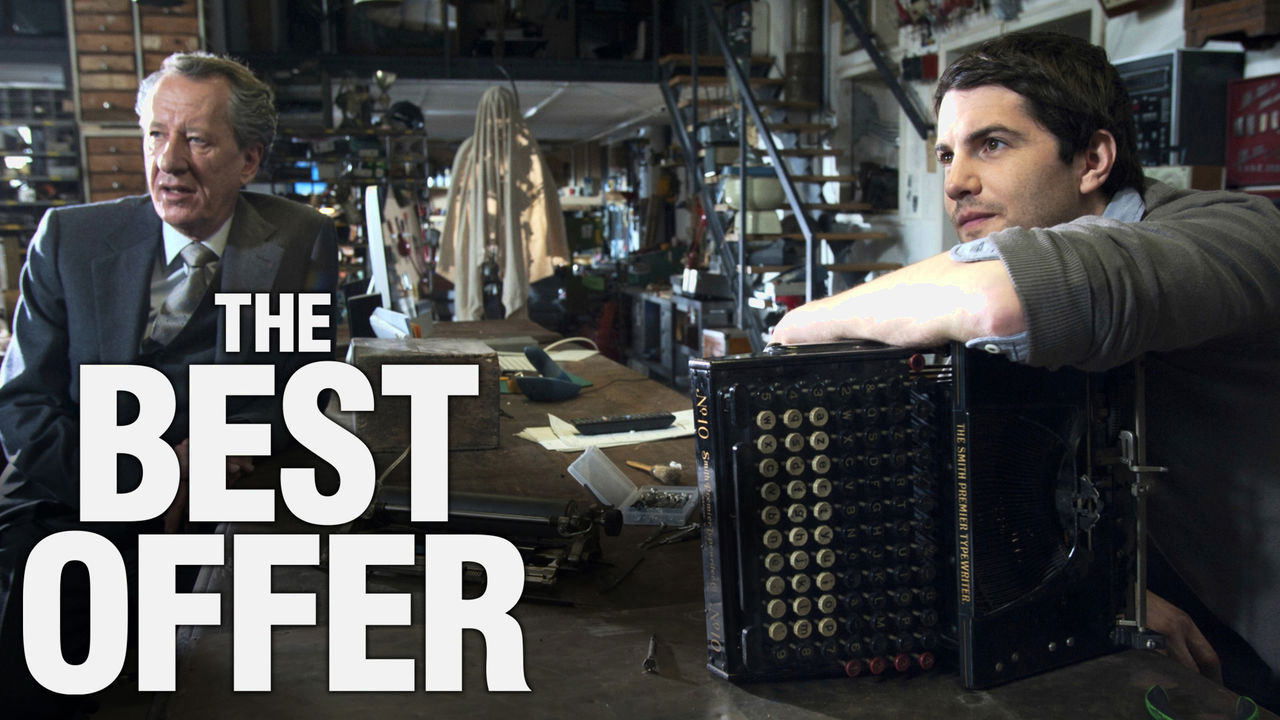
His sterile world is punctured when he’s hired by a mysterious heiress, Claire Ibbetson (Sylvia Hoeks), to auction off her family’s massive estate. Claire is a literal "ghost" in the machine—she suffers from extreme agoraphobia and communicates with Virgil only through a thick, rotting wall in her crumbling palazzo. As Virgil becomes obsessed with the woman behind the wall, he also begins collecting discarded gears and cogs found in the basement, which his young tech-whiz friend Robert (Jim Sturgess) identifies as parts of a legendary 18th-century automaton.
Clockwork Hearts and Painted Lies
What makes The Best Offer so captivating is how it mirrors the era it was born into. Released in 2013, it arrived at the tail end of a period where cinema was grappling with the death of the physical. Virgil is a man of the old world—wood, canvas, oil, and gears. Yet, the film utilizes the sleek, digital cinematography of Fabio Zamarion to make the antiques look both beautiful and eerily artificial. It captures that 2010s "prestige" aesthetic: everything is sharp, clean, and a little bit hollow.
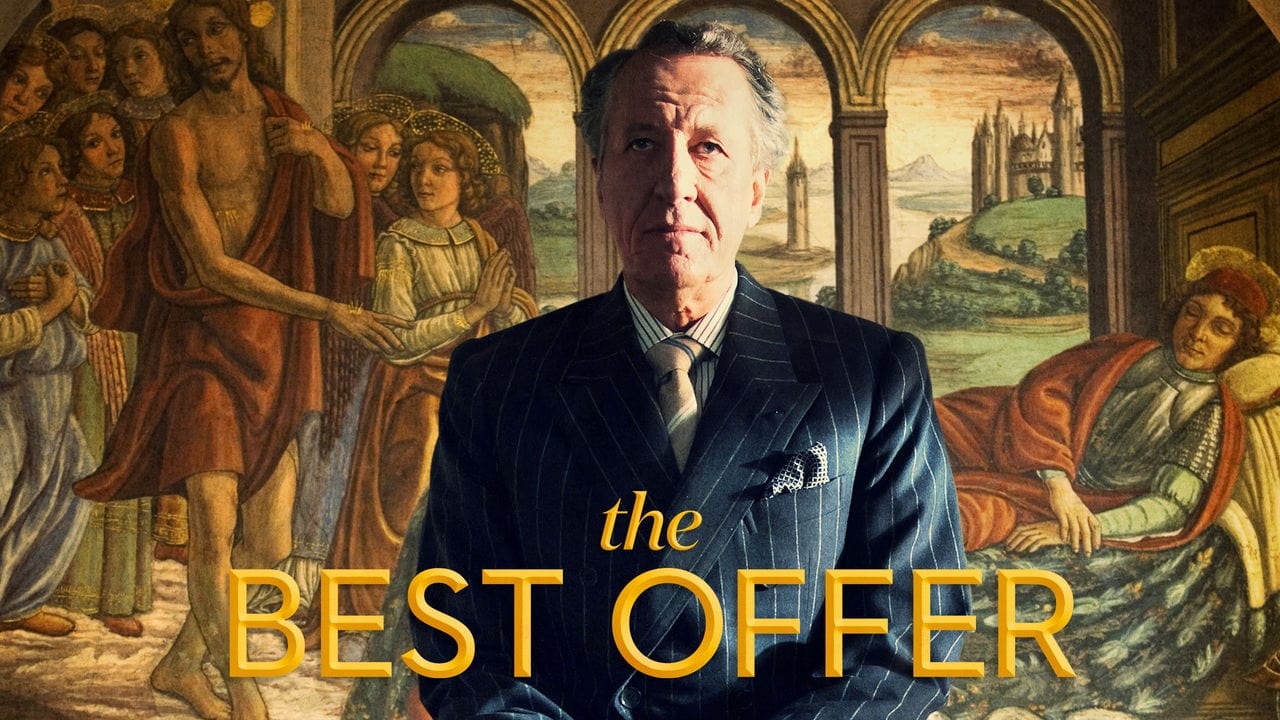
The chemistry—or lack thereof—between Geoffrey Rush and Sylvia Hoeks is the engine of the film. Rush plays Virgil’s slow-motion unraveling with heartbreaking precision. Watching a man who prides himself on spotting a forgery from across a room succumb to a passion he can’t verify is a masterclass in dramatic irony. Sylvia Hoeks, long before she was breaking necks in Blade Runner 2049, brings a fragile, feral energy to Claire. You’re never quite sure if you should pity her or fear her.
Then there’s Donald Sutherland. As Billy, Virgil’s "partner in crime" who helps him rig auctions to secure his portraits, Sutherland is a looming, mischievous presence. He represents the only "real" friendship Virgil has, yet even that is built on a foundation of professional deceit. It’s a reminder that in the art world—and in this film—authenticity is just a well-executed lie.
A Masterpiece of Misdirection
I’ve always felt that Giuseppe Tornatore is a bit of a romantic masquerading as a cynic. In Cinema Paradiso, he celebrated the magic of the movies; here, he dissects the tragedy of the collector. The film is paced like a slow-burn thriller, punctuated by a haunting, minimalist score by the legendary Ennio Morricone. It’s not the sweeping, Western-epic Morricone you might expect; it’s a repetitive, vocal-heavy soundtrack that feels like it’s circling a drain. It sticks in your head like a secret you wish you hadn't heard.
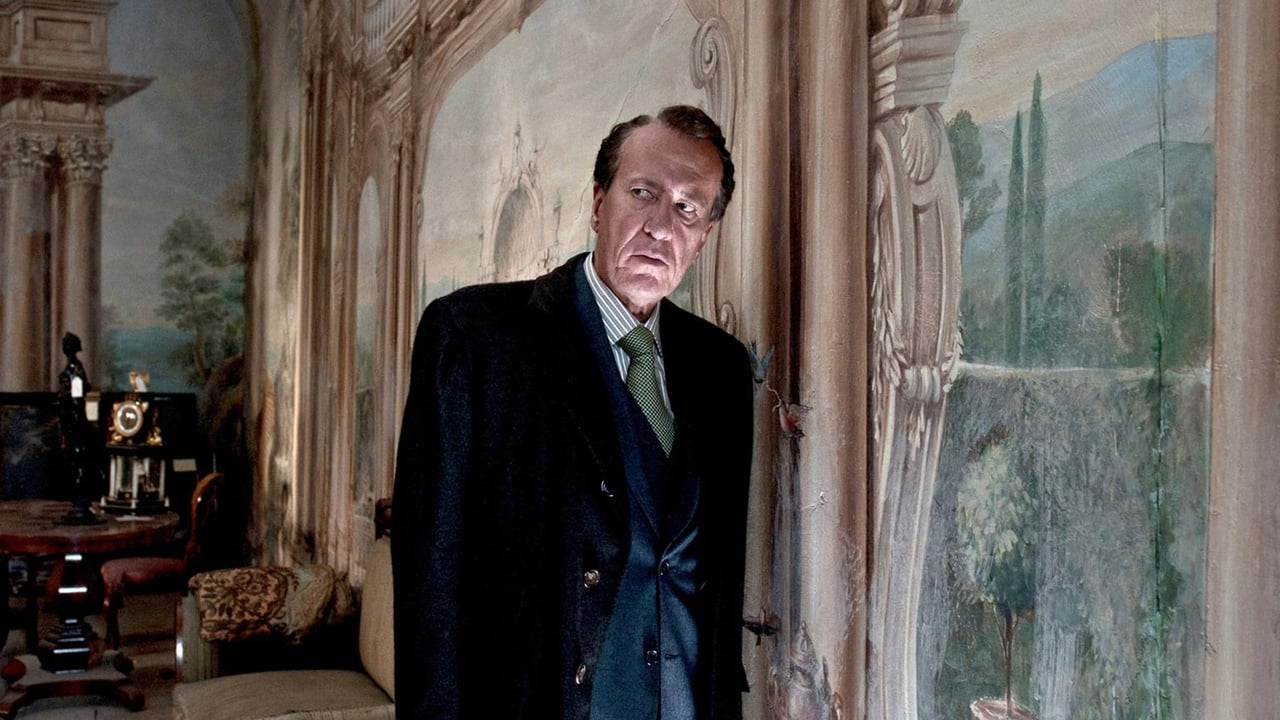
Looking back, The Best Offer feels like a "cult classic" in the making for people who miss the mid-budget adult thriller. It’s the kind of movie that found its real audience on DVD and early streaming platforms, where viewers could pause and zoom in on the paintings (most of which are incredibly high-quality replicas of real masterpieces). It invites a specific kind of obsession. Fans have spent years cataloging every painting in Virgil’s vault, from Raphaels to Renoirs, treating the film with the same forensic intensity that Virgil treats a 15th-century wood panel.
The ending—which I won’t spoil—is a polarizing gut-punch. It shifts the film from a mystery into something much darker and more existential. It asks a terrifying question: Is a fake emotion better than no emotion at all? Virgil’s own mantra is that "there is always something authentic hidden in every forgery." By the time the credits roll, you’re left wondering which part of his life was the authentic bit.
The Best Offer is a gorgeous, somber, and deeply intelligent film that rewards the patient viewer. It’s a movie about the things we own and the ways they eventually own us. If you’re in the mood for a drama that feels like a cold glass of expensive wine—sharp, intoxicating, and a little bitter—this is exactly what you need. Just don't be surprised if you find yourself checking the locks on your own doors afterward.
Keep Exploring...
-
The Next Three Days
2010
-
The Legend of 1900
1998
-
Malena
2000
-
Drive
2011
-
The Lincoln Lawyer
2011
-
End of Watch
2012
-
Lawless
2012
-
The Place Beyond the Pines
2013
-
Nightcrawler
2014
-
Batman: Mask of the Phantasm
1993
-

Changeling
2008
-

Law Abiding Citizen
2009
-
3-Iron
2004
-
Boyz n the Hood
1991
-
Thelma & Louise
1991
-
A Bronx Tale
1993
-

Falling Down
1993
-
True Romance
1993
-
Natural Born Killers
1994
-

Jackie Brown
1997