The Tale of The Princess Kaguya
"To be human is to hurt beautifully."

I first watched The Tale of The Princess Kaguya while nursing a cup of matcha that was so clumped with green silt it looked like a swamp. I spent half the movie trying to whisk away the lumps with a plastic fork, a futile effort that felt strangely in tune with the film’s central struggle: the desperate, messy attempt to find beauty in a world that is inherently unrefined.
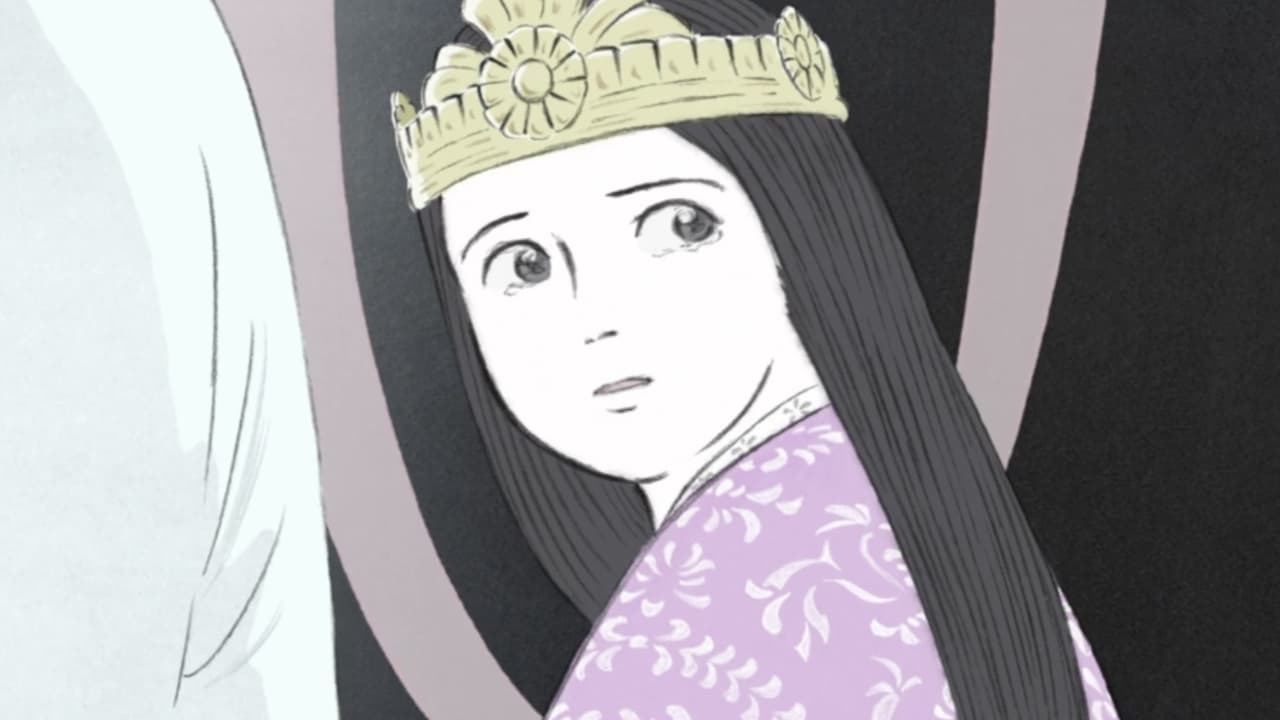
In the early 2010s, the animation world was fully intoxicated by the possibilities of digital perfection. Pixar was busy rendering every individual hair on a Scottish princess in Brave, and Disney was pivoting toward the sleek, crystalline aesthetic of Frozen. Amidst this rush toward photorealism, Isao Takahata—the co-founder of Studio Ghibli who gave us the soul-crushing Grave of the Fireflies—decided to spend eight years and nearly $50 million on something that looks like it might blow away if you opened a window.
The Rebellion of the Pencil Stroke
This isn't just "animation" in the way we’ve come to define it over the last thirty years. It’s a series of charcoal sketches and watercolor washes that feel alive because they are intentionally incomplete. Looking back at the film’s release in 2013, it feels like a radical protest against the "clean" look of the digital era. There are moments where the lines become frantic, blurring and jagged, especially during Kaguya's escape from her naming ceremony. It’s a sequence that still gives me chills; the background dissolves into raw, angry strokes of ink as if the very world is unraveling under the weight of her grief.
It’s a $50 million charcoal drawing that most people treated like a tax write-off, which is a tragedy of its own. By 2013, the box office was dominated by franchises and "sure things," leaving a slow-burn, hand-drawn folklore epic in a precarious spot. It flopped financially, making back barely half its budget, which perhaps explains why it remains one of the more "hidden" gems in the Ghibli vault compared to the heavy hitters like Spirited Away.
The Weight of Being Human
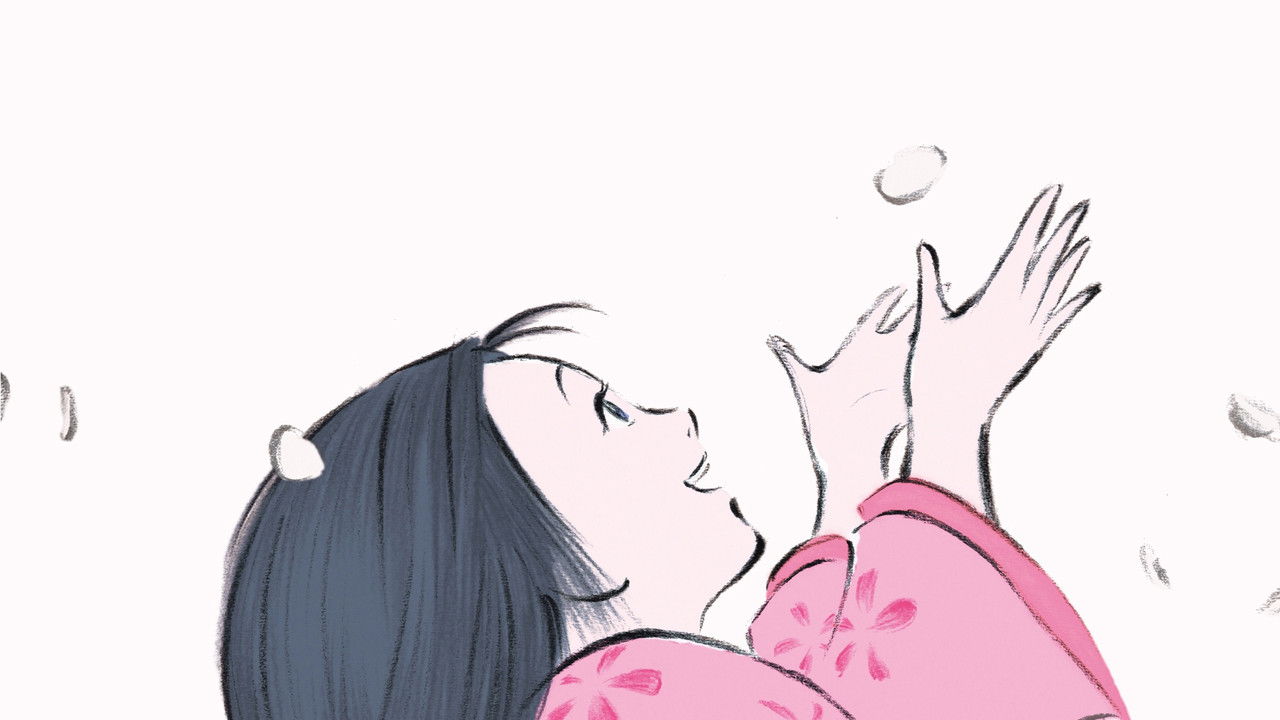
The drama here isn't found in a villain or a quest, but in the suffocating expectations of society. When the Bamboo Cutter, voiced with a heartbreakingly misguided earnestness by Takeo Chii, finds a tiny sprite in a stalk of bamboo, he assumes her "happiness" must be bought with gold and high-status robes. He drags her from the joyous, mud-caked life of the countryside to a gilded cage in the capital.
Aki Asakura provides the voice for Kaguya, and her performance is a marvel of restraint and sudden, piercing vulnerability. You feel the air being sucked out of the room as she is forced to blacken her teeth and pluck her eyebrows to fit the mold of a "proper" princess. The film asks a genuinely difficult philosophical question: Is a life of curated comfort worth the loss of your wild, authentic self? I found myself getting genuinely annoyed at the old man, but that’s the brilliance of the script—he loves her, he just doesn't know how to love her without trying to own her.
The supporting cast, particularly Atsuko Takahata as the rigid Lady Sagami and Nobuko Miyamoto as the steady, quiet mother, create a domestic tension that feels incredibly modern despite the ancient setting. They are people we recognize—the overbearing father, the enabler, the teacher who demands conformity.
A Legacy of Earthly Sorrow
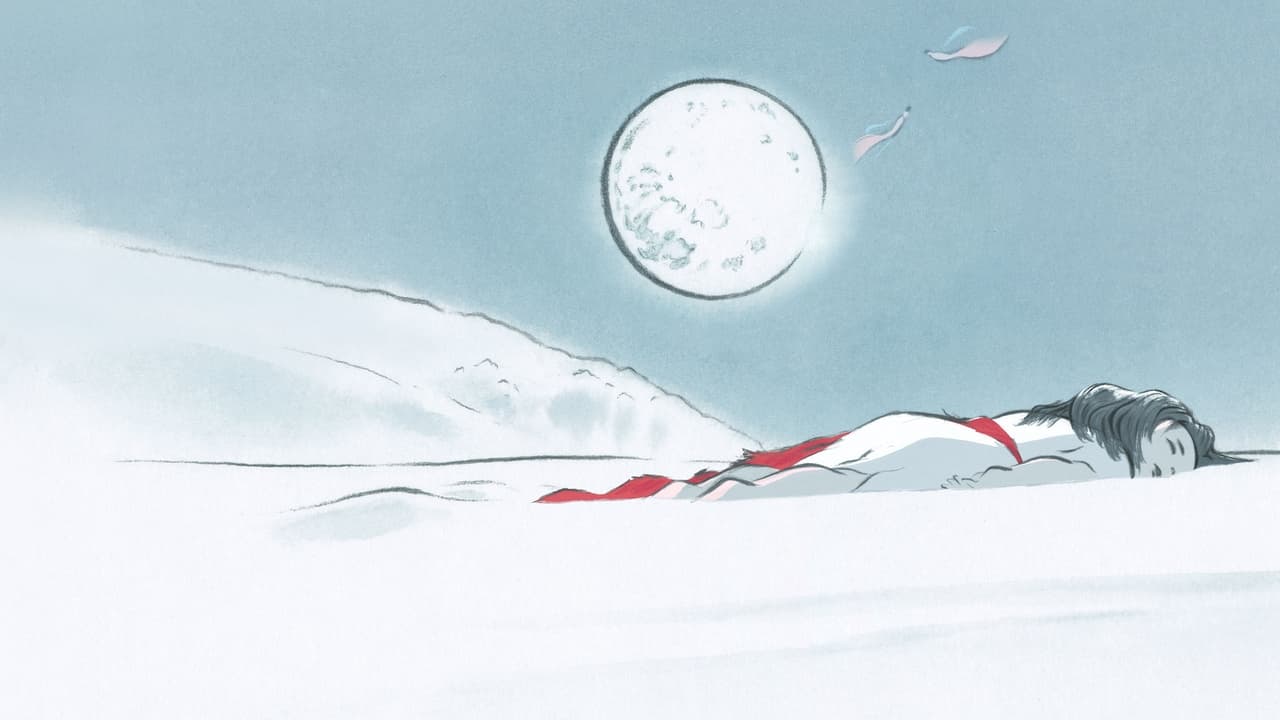
The score by Joe Hisaishi is a departure from his sweeping, orchestral work for Hayao Miyazaki. It’s more delicate here, relying on traditional instruments that emphasize the film’s connection to the 10th-century Tale of the Bamboo Cutter. It doesn't tell you how to feel; it just hums along with the inevitable tragedy of the plot.
The "crime and punishment" mentioned in the tagline refers to Kaguya’s exile from the Moon. Her crime was wanting to experience the Earth; her punishment was getting exactly what she wanted. The film posits that to feel joy, you must also be susceptible to the deepest agony. It’s a heavy theme for a "cartoon," but Takahata never treated animation as a medium for kids alone. He treated it as a way to capture the ephemeral nature of life itself.
It’s a bit of a mystery why this film hasn't stayed at the forefront of the cultural conversation. Perhaps the 137-minute runtime scared off the casual viewers, or maybe the ending is just too emotionally taxing for a Friday night popcorn flick. But in a decade defined by franchise expansion and CGI dominance, The Tale of The Princess Kaguya stands as a singular, handcrafted monument to the beauty of the temporary.
If you’re looking for a film that rewards your full attention and leaves you staring at the ceiling for twenty minutes after the credits roll, this is it. It is a demanding watch, but the payoff is a profound sense of gratitude for the very things we usually complain about—the noise, the mess, and the fleeting nature of the people we love. Just make sure your matcha is properly whisked before you sit down; you won't want to look away from the screen once the ink starts moving.


Keep Exploring...
-

Only Yesterday
1991
-
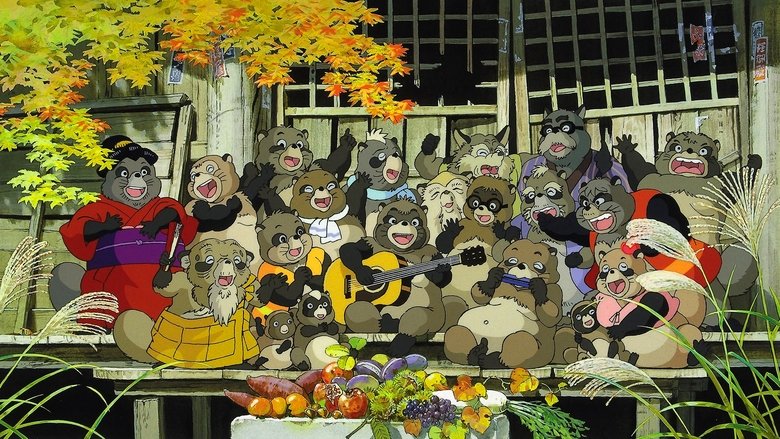
Pom Poko
1994
-
Neon Genesis Evangelion: The End of Evangelion
1997
-
Millennium Actress
2002
-
Wolf Children
2012
-
Evangelion: 2.0 You Can (Not) Advance
2009
-
From Up on Poppy Hill
2011
-

Hotarubi no Mori e
2011
-
When Marnie Was There
2014
-
The Girl Who Leapt Through Time
2006
-

Evangelion: 1.0 You Are (Not) Alone
2007
-
Justice League: The Flashpoint Paradox
2013
-
Song of the Sea
2014
-
The Boy and the Beast
2015
-
A Little Princess
1995
-

The Fall
2006
-
Ponyo
2008
-
The Secret World of Arrietty
2010
-

Evangelion: 3.0 You Can (Not) Redo
2012
-
A Dog's Will
2000