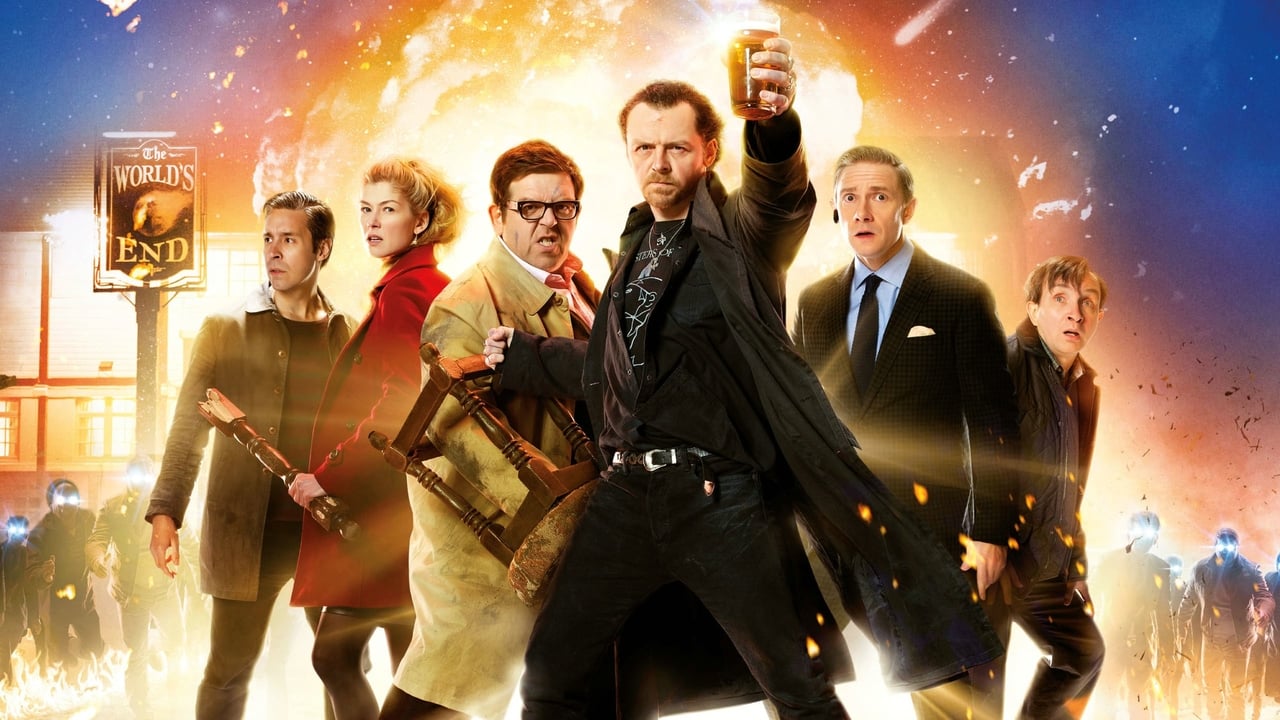
The World's End
"Twelve pubs. Five friends. One massive cosmic headache."
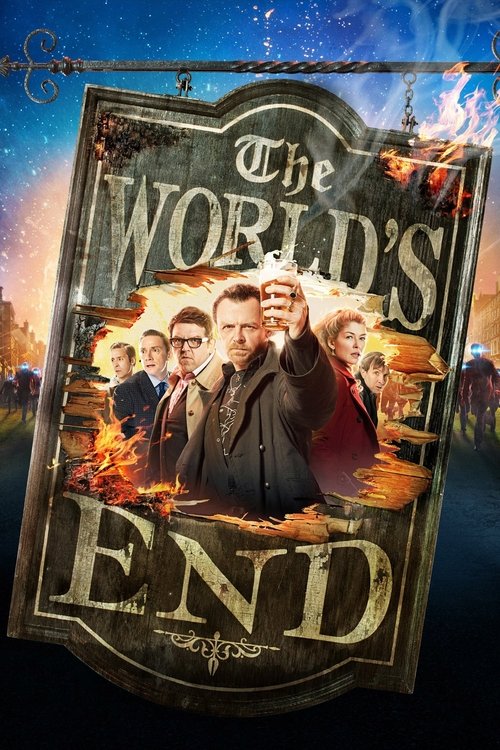
I first watched The World's End during a week when I was nursing a particularly nasty case of the flu, surviving entirely on lukewarm ginger ale and Saltines. There is something about being in a delirious, cold-sweat haze that makes the sight of glowing blue ink leaking out of a "Blank's" neck feel entirely reasonable. It was the perfect headspace for the final chapter of the "Three Flavours Cornetto" trilogy—a film that is far more bitter, bruised, and brilliant than its predecessors.

When Edgar Wright released this in 2013, the "Modern Cinema" landscape was shifting. We were deep into the "franchise-ification" of everything; the MCU was hitting its stride with Iron Man 3, and big-budget sci-fi was leaning heavily into the desaturated, "gritty" aesthetic. Wright, ever the rebel, decided to make a movie about the dangers of nostalgia that feels like a warm, booze-soaked hug before it proceeds to punch you squarely in the gut.
The Art of the Pub-Brawl Ballet
Action in an Edgar Wright film isn’t just about people hitting each other; it’s about rhythm. Looking back at his filmography, you can see the evolution from the "Don’t Stop Me Now" pool-cue choreography in Shaun of the Dead (2004) to the full-blown tactical absurdity of Hot Fuzz (2007). But in The World's End, the action takes a sharp turn into the "crunchy."
Wright brought on Brad Allan, a legendary member of the Jackie Chan Stunt Team, and you can feel that influence in every frame. The bathroom fight at "The Cross Hands" is a masterpiece of spatial awareness. Simon Pegg—playing Gary King, a man who is the human equivalent of a damp cigarette found in a gutter—manages to fight off four blue-blooded "Blanks" without ever putting down his pint. It’s a sequence that relies on long takes and incredibly intricate physical comedy rather than the "shaky-cam" chaos that plagued many 2010s action flicks.
The practical effects here are a joy. While CGI was used to polish the glowing eyes and the detachable limbs of the robotic invaders, the physicality remains grounded. When a head pops off, it feels like ceramic shattering. There’s a weight to the violence that makes the stakes feel real, even when our heroes are drunkenly arguing about the definition of the word "robot."
Bittersweet Nostalgia and the "Blue" Flavor
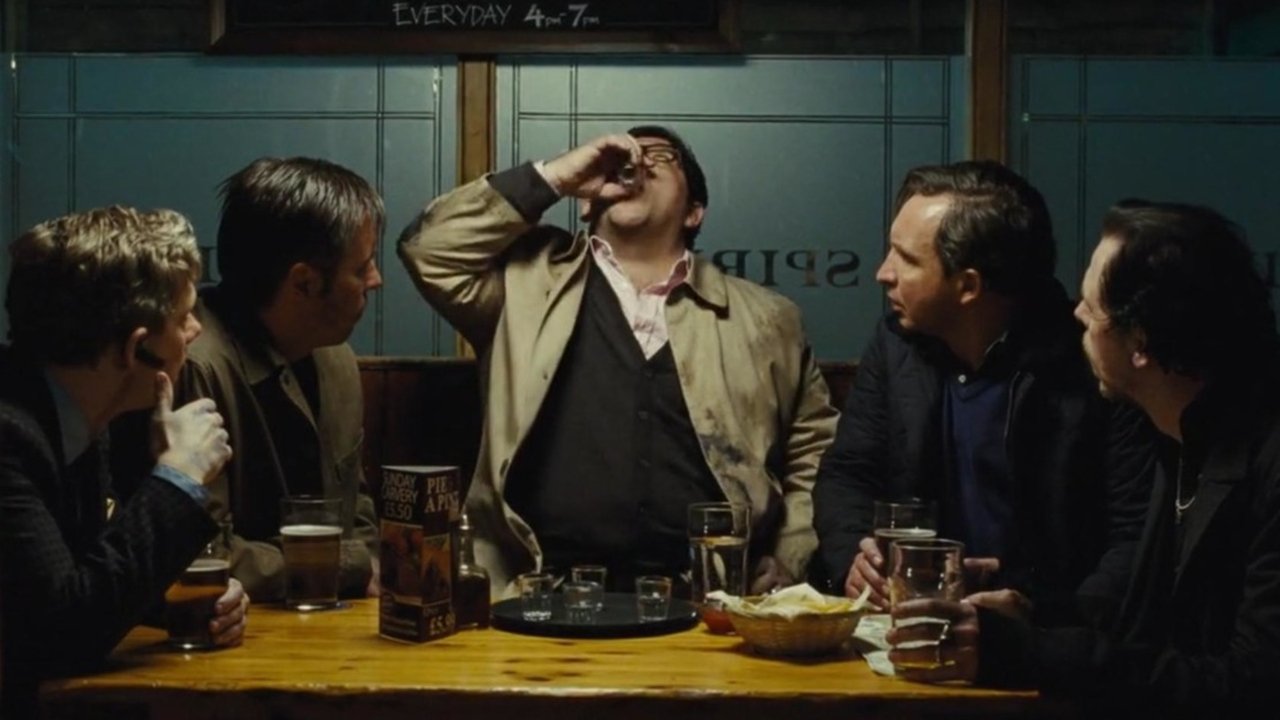
While Shaun was red (blood/horror) and Hot Fuzz was white (blue lights/action), The World's End is unapologetically blue. It’s the sci-fi entry, but it uses the genre to explore a very specific 21st-century anxiety: the "Starbucking" of the world. The "Network"—the alien entity trying to "improve" Earth—isn't interested in world domination through lasers; it wants to do it through high-quality infrastructure and consistent coffee.
Simon Pegg delivers what I honestly believe is his career-best performance here. Usually, the "lovable rogue" is a trope we're meant to cheer for, but Gary King is a toxic, stunted narcissist who would ruin your life for a free lager. Watching him drag Nick Frost, Martin Freeman, Paddy Considine, and Eddie Marsan through their old hometown of Newton Haven is painful. It’s a film about the realization that "the good old days" were actually kind of terrible, and that the person who peaked in high school is a tragic figure, not a hero.
The chemistry between the core five is electric. Nick Frost, playing the straight man for once as Andrew Knightley, is a revelation. When he finally snaps and engages in a "Hulk smash" style rampage with two barstools strapped to his arms, it’s one of the most satisfying action beats of the decade.
Stuff You Didn't Notice (The Deep Cuts)
If you’re a fan of Wright’s "DVD commentary culture" level of detail, this movie is a goldmine. Apparently, the names of the twelve pubs on the "Golden Mile" aren't just random; they explicitly foreshadow the plot of each segment. At "The Old Familiar," they get served by a lady who looks exactly like the server from 20 years ago; at "The Cross Hands," the first physical altercation happens; and at "The Hole in the Wall," a car literally drives through a wall.
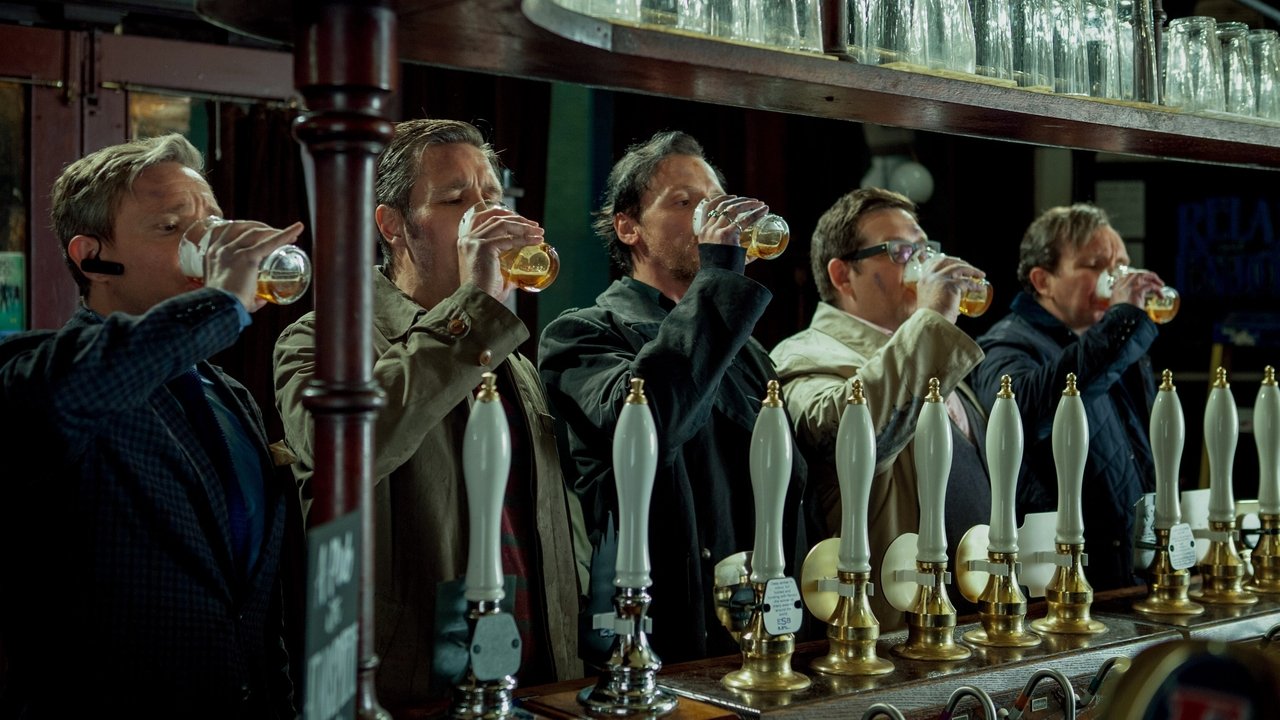
The stunt training was also famously grueling. Simon Pegg reportedly spent weeks learning how to move like a "drunken master," which is hilarious considering he was actually sober in real life during filming. Then there’s the cameo game: the voice of "The Network" is none other than Bill Nighy, and Pierce Brosnan shows up as a sinister schoolteacher, adding a layer of meta-commentary on the evolution of British screen icons.
One detail I love is that the "Blanks" don't have blood; they have blue goop. Wright did this not just for the aesthetic, but to bypass the censors and keep a fast-paced, high-impact action style without getting slapped with a rating that would keep the "Cornetto" target audience away. It’s a clever trick from the 90s/00s indie playbook that still works perfectly here.
The World's End is the smartest of the trilogy, even if it’s the hardest one to watch on a hangover. It tackles the corporatization of our culture and the tragedy of addiction while still making time for a scene where a man gets his head knocked off by a swing-set. It’s a film that has only aged better as we’ve moved further into an era of "legacy sequels" and forced nostalgia.
I’ll always defend this movie as the peak of the Pegg-Frost-Wright collaboration. It’s messy, it’s loud, and it’s deeply human. It reminds me that even if the world is ending and the aliens are winning, there's always time for one more pint—preferably a cold one, and definitely not one filled with blue ink.
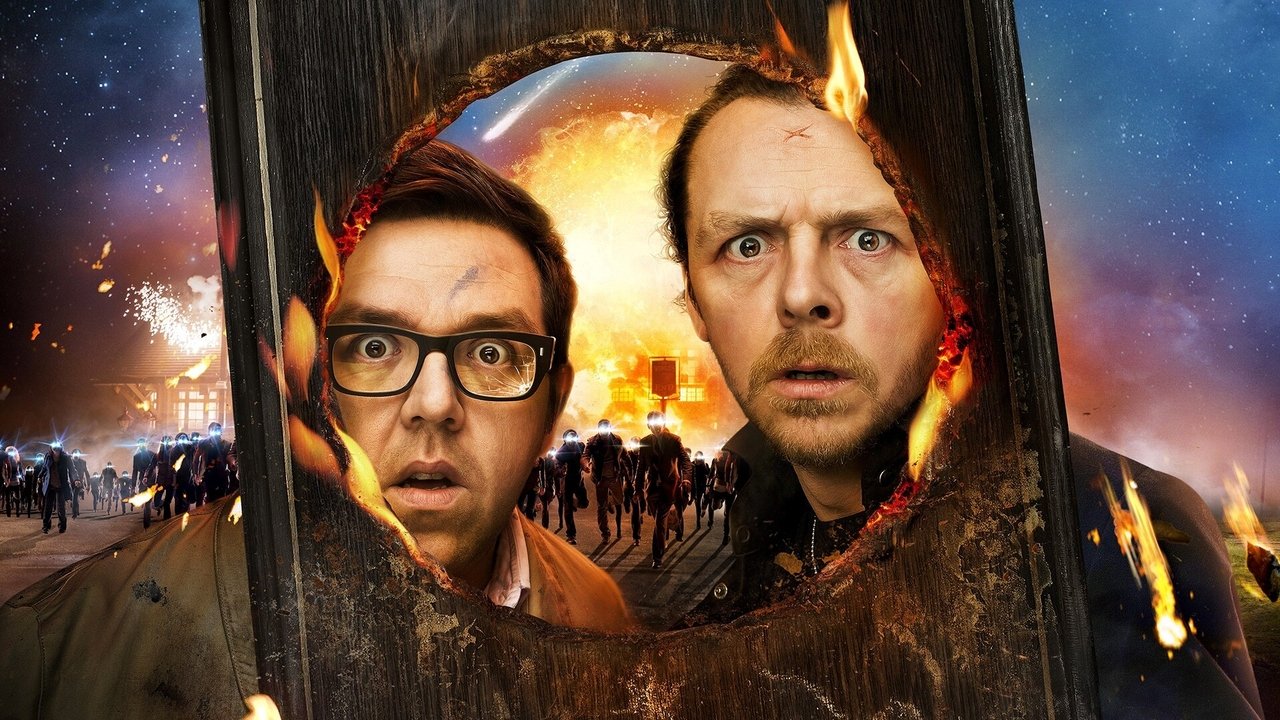
Keep Exploring...
-
Hot Fuzz
2007
-
Shaun of the Dead
2004
-
Scott Pilgrim vs. the World
2010
-
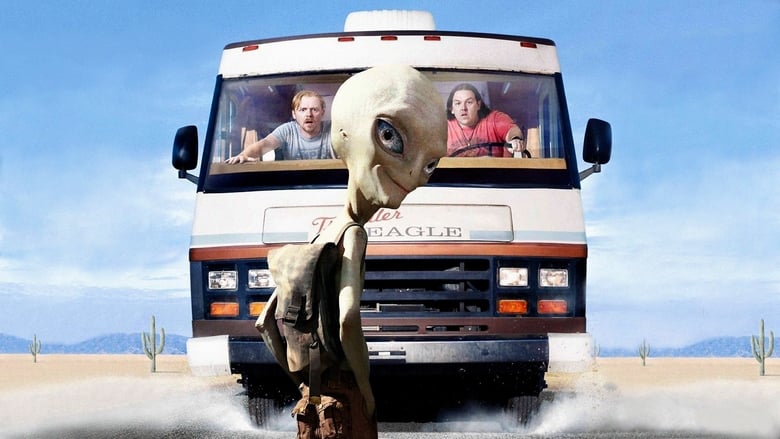
Paul
2011
-
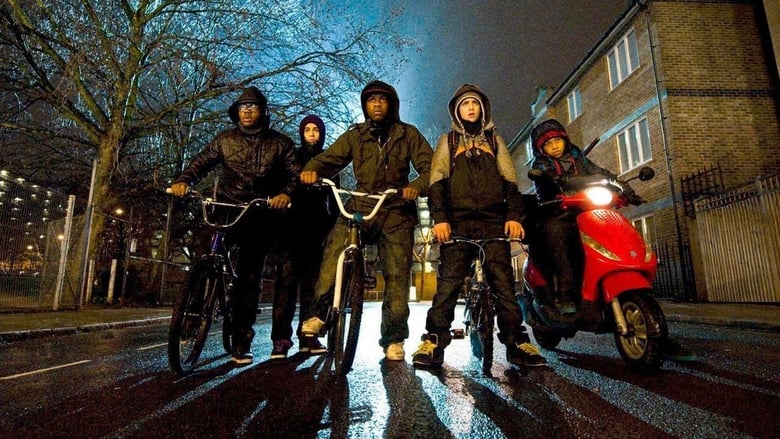
Attack the Block
2011
-
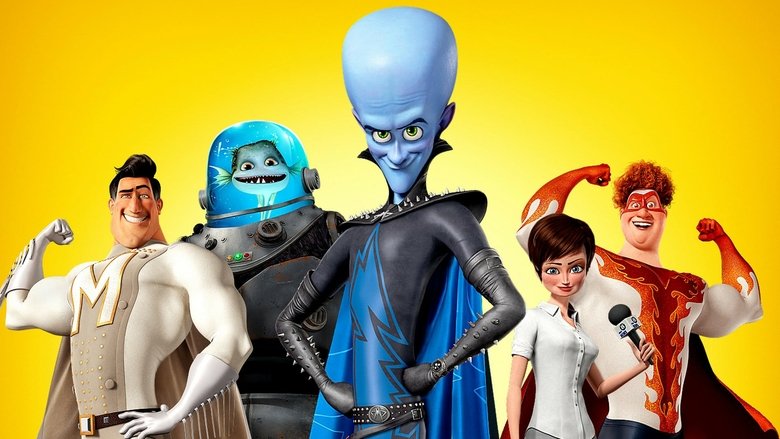
Megamind
2010
-

Men in Black 3
2012
-
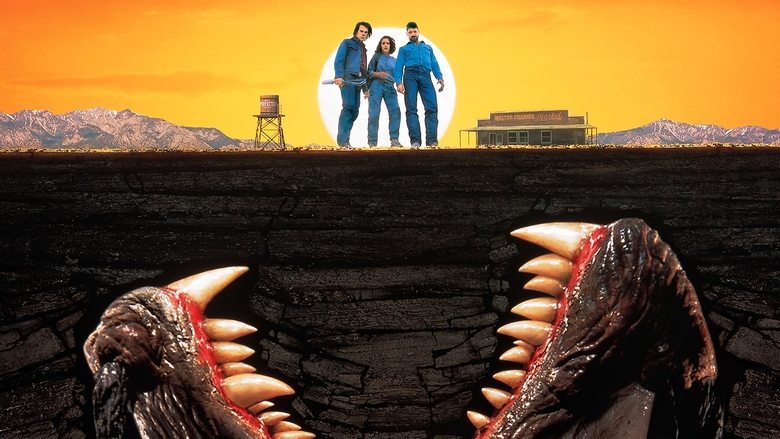
Tremors
1990
-
Small Soldiers
1998
-
Journey to the Center of the Earth
2008
-
Death Race
2008
-
9
2009
-
Pandorum
2009
-
Push
2009
-
Daybreakers
2010
-
Hot Tub Time Machine
2010
-
Machete
2010
-
Looper
2012
-

Pain & Gain
2013
-

Riddick
2013