The Young and Prodigious T.S. Spivet
"The biggest world belongs to the smallest genius."
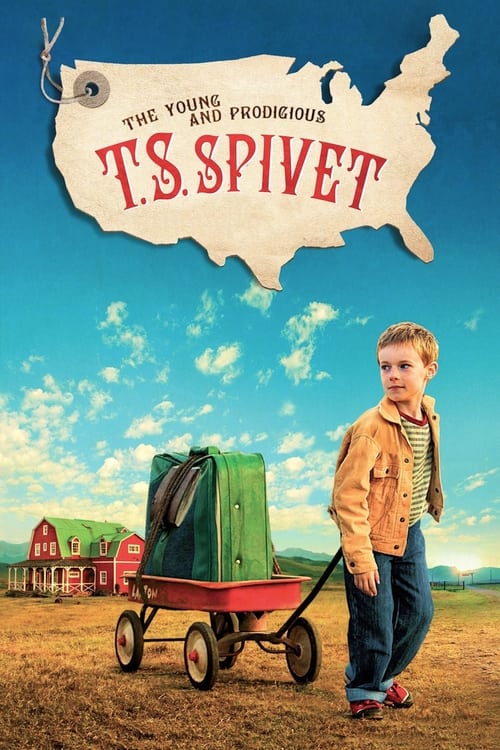
There is a specific kind of "Jeunet Blue"—that high-contrast, saturated cerulean that makes the Montana sky look like it was painted by a hyper-active god with a penchant for French postcards. If you’ve seen Amélie or A Very Long Engagement, you know the vibe. But seeing that aesthetic applied to the American West in The Young and Prodigious T.S. Spivet feels like a delightful glitch in the Matrix. It’s a film that looks like a pop-up book and feels like a secret, which is probably why almost no one in America actually saw it when it was released.
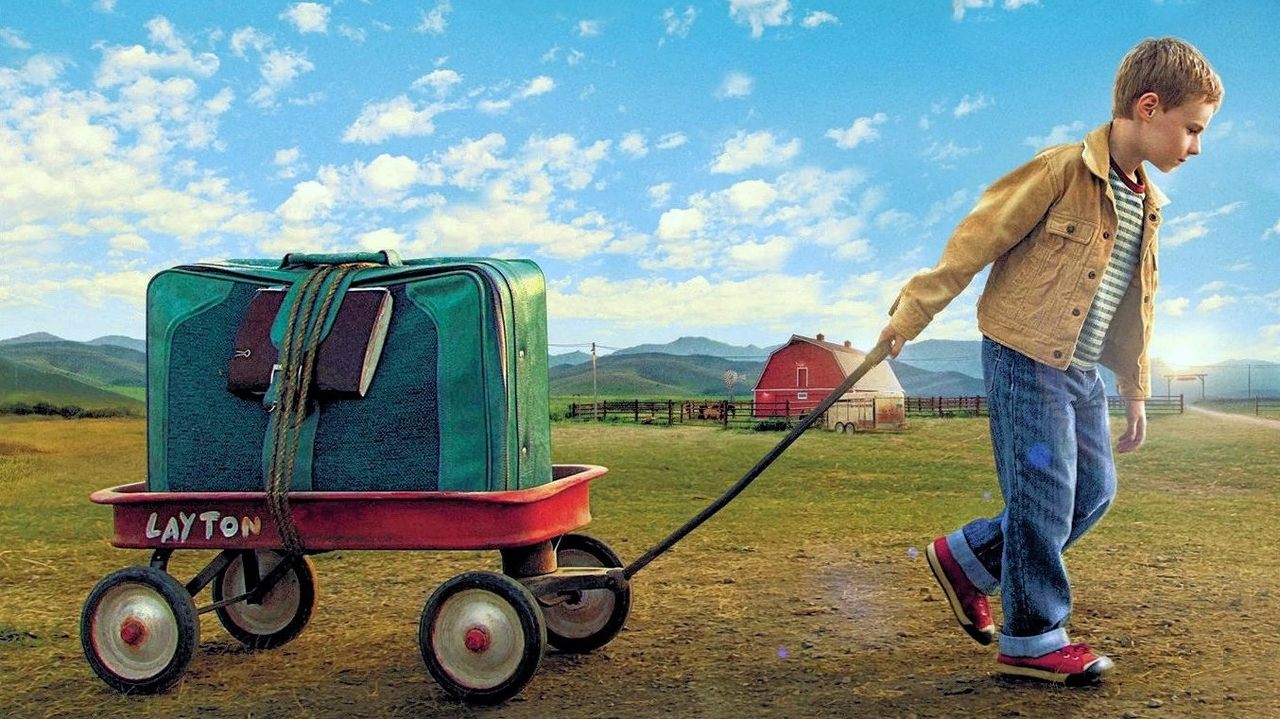
I watched this on a Tuesday night while eating a bag of slightly stale pretzels I found in the back of my pantry, and the dry crunching sounded exactly like the gravel under the protagonist’s boots. It’s a small, tactile movie that somehow feels massive, capturing that specific 2013 moment when filmmakers were still trying to prove that 3D could be an "artistic" tool rather than just a way to make more money off superhero sequels.
The Cowboy and the Scientist
At the heart of this diorama is T.S. Spivet, played by Kyle Catlett with a self-assuredness that puts most adult actors to shame. T.S. is a ten-year-old genius who maps the flight patterns of insects while living on a ranch that feels unstuck in time. His father, played by Callum Keith Rennie (who I always remember as the cynical Cylon from Battlestar Galactica), is a man born a century too late—a silent, weathered cowboy who communicates mostly through hat-tips. On the flip side, his mother, Dr. Clair (Helena Bonham Carter), is a beetle-obsessed scientist who seems to be living in her own private laboratory of the mind.
The family is fractured by a recent tragedy—the death of T.S.'s brother, Layton (Jakob Davies), in a gun accident. It’s heavy stuff for a "family" movie, but Jean-Pierre Jeunet handles it with a whimsical sort of melancholy. When T.S. gets a call from the Smithsonian telling him he’s won a prestigious award for his perpetual motion machine (they think he’s a grown man), he packs a suitcase and hops a freight train. It’s basically Wes Anderson’s aesthetic if it were allowed to breathe some actual Montana oxygen, trading the rigid symmetry for something a bit more sprawling and adventurous.
A Masterclass in Visual Marginalia
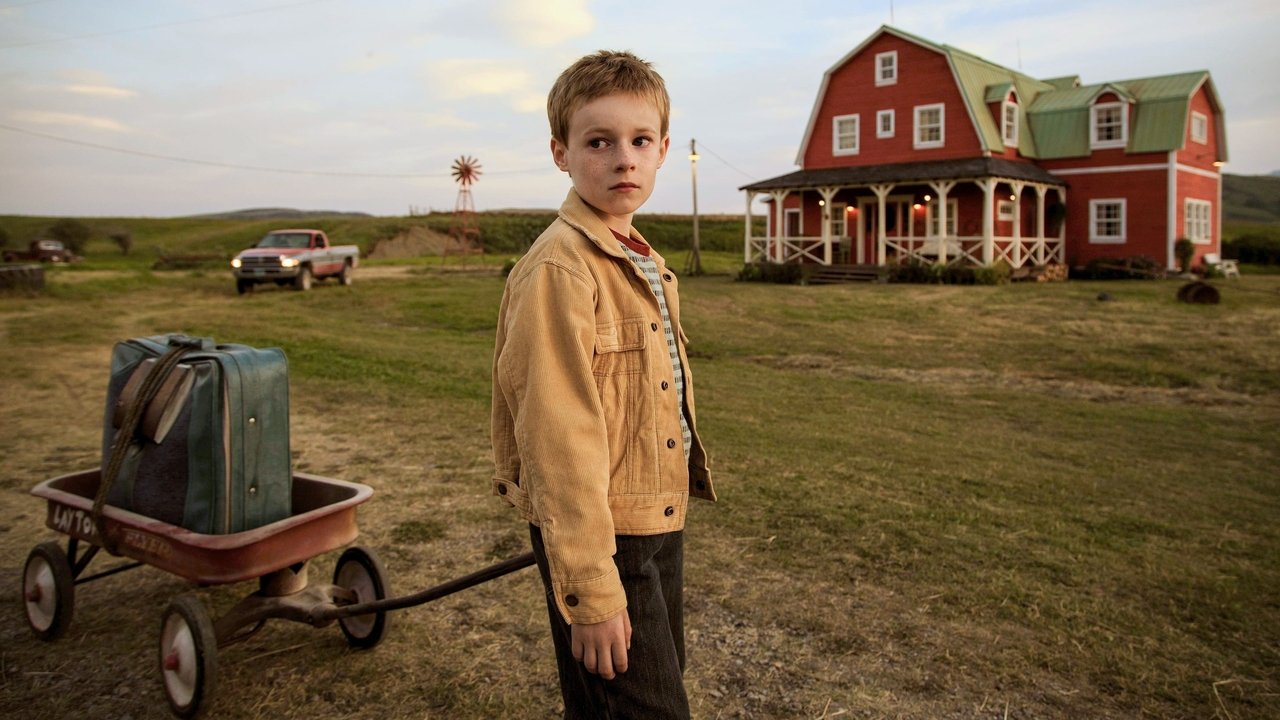
What makes this film stand out in the 1990-2014 era is how it treats the screen as a canvas for information. As T.S. travels, his thoughts literally manifest as diagrams and blueprints floating in the air. This was the tail end of the "augmented reality" trend in cinema—think the floating text in Sherlock or the heads-up displays in Iron Man. Here, however, it’s used for cartography and childhood wonder. It’s charming rather than high-tech.
The cinematography by Thomas Hardmeier is genuinely stunning. He won a César Award for it, and you can see why. Every frame is packed with detail, from the rusted textures of a grain elevator to the sterile, intimidating halls of the Smithsonian. When Judy Davis shows up as the museum’s overzealous PR head, the film shifts gears into a sharper, almost satirical look at how adults exploit childhood brilliance. Davis is reliably terrifying and hilarious, playing a woman who views a ten-year-old’s trauma as a fantastic marketing opportunity.
The Harvey Weinstein Vanishing Act
So, why haven't you heard of this? The behind-the-scenes drama is a classic "Modern Cinema" cautionary tale. The film was shot in native 3D—Jeunet actually obsessed over the depth of every shot—but when it came time for the US release, Harvey Weinstein (the distributor) reportedly demanded heavy cuts. Jeunet, being a visionary with a backbone, refused. In a move that was typical for the Weinstein Company at the time, they essentially buried the film in a limited release with almost zero marketing. Harvey Weinstein’s distribution strategy for this was basically a cinematic witness protection program.

It’s a shame, because this film captured a transition point in digital filmmaking. It used the Arri Alexa Plus, a camera that helped bridge the gap between the "plastic" look of early digital and the rich, film-like textures we see today. Watching it now, the CGI elements (like a CGI sparrow or some of the train backgrounds) have aged significantly better than the blockbusters from the same year because they are used to enhance a fairytale atmosphere rather than to provide "realism."
The film isn't perfect; the third act in Washington D.C. loses some of the magical momentum of the cross-country train journey, and the satire of the "fame machine" feels a bit broad compared to the intimate grief of the ranch. However, it remains a beautiful oddity. It’s a film about how we map our lives to find where we belong, and it’s well worth the effort of tracking it down on whatever streaming service or dusty DVD shelf it’s currently hiding on.
In a decade defined by the birth of massive, interconnected franchises, The Young and Prodigious T.S. Spivet stands as a reminder of the power of a single, weird, brightly colored story. It’s a movie that rewards people who still look at the world with a bit of a mathematical squint. If you’re in the mood for a road trip that feels like a dream you had after reading an old encyclopedia, this is your ticket. I suggest pairing it with a snack that has a good crunch—stale pretzels optional, but recommended.


Keep Exploring...
-
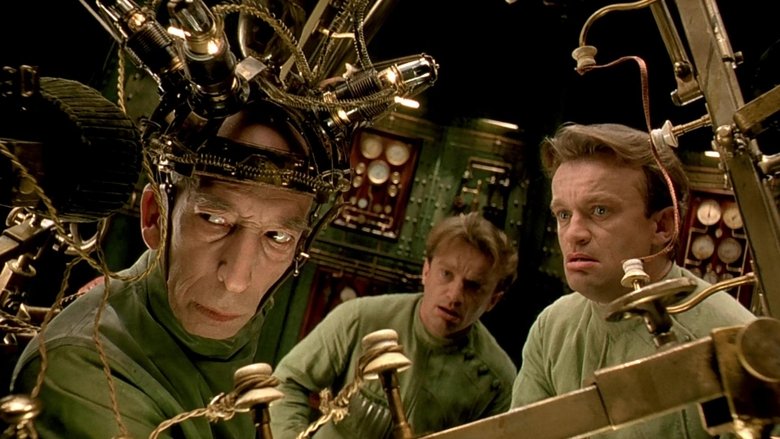
The City of Lost Children
1995
-

A Very Long Engagement
2004
-

Where the Wild Things Are
2009
-

Wizards of Waverly Place: The Movie
2009
-
Holes
2003
-

The Karate Kid
2010
-

The Nut Job
2014
-
The Spiderwick Chronicles
2008
-

Hugo
2011
-

Nim's Island
2008
-
Tinker Bell
2008
-
Valhalla Rising
2009
-

13 Assassins
2010
-
Centurion
2010
-
The Way Back
2010
-
A Monster in Paris
2011
-

Soul Surfer
2011
-
The Eagle
2011
-
Winnie the Pooh
2011
-

The Odd Life of Timothy Green
2012