Force Majeure
"In an avalanche, the first thing to go is the ego."
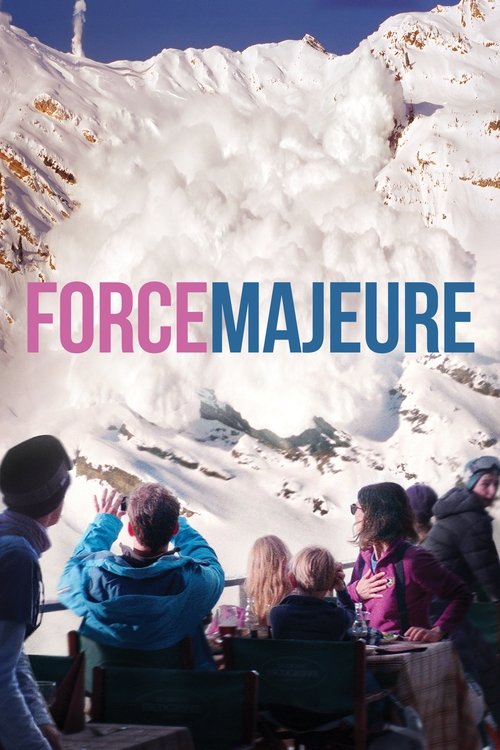
The most terrifying sound in Ruben Östlund’s Force Majeure isn't the roar of sliding snow. It’s the rhythmic, mechanical thump-thump-thump of snow cannons in the dark. It sounds like a heartbeat, or perhaps a ticking clock, counting down to the moment a "perfect" family unit realizes it’s built on a foundation of absolute horseshit.
I watched this while eating a bag of slightly stale pretzel sticks, and the crunch was so loud in my quiet apartment that I felt personally judged by the cinematography. That’s the Östlund effect: he makes you feel like you’re being watched through a microscope, and he’s not particularly fond of the specimen he’s found.
The Lunch That Ruined Everything
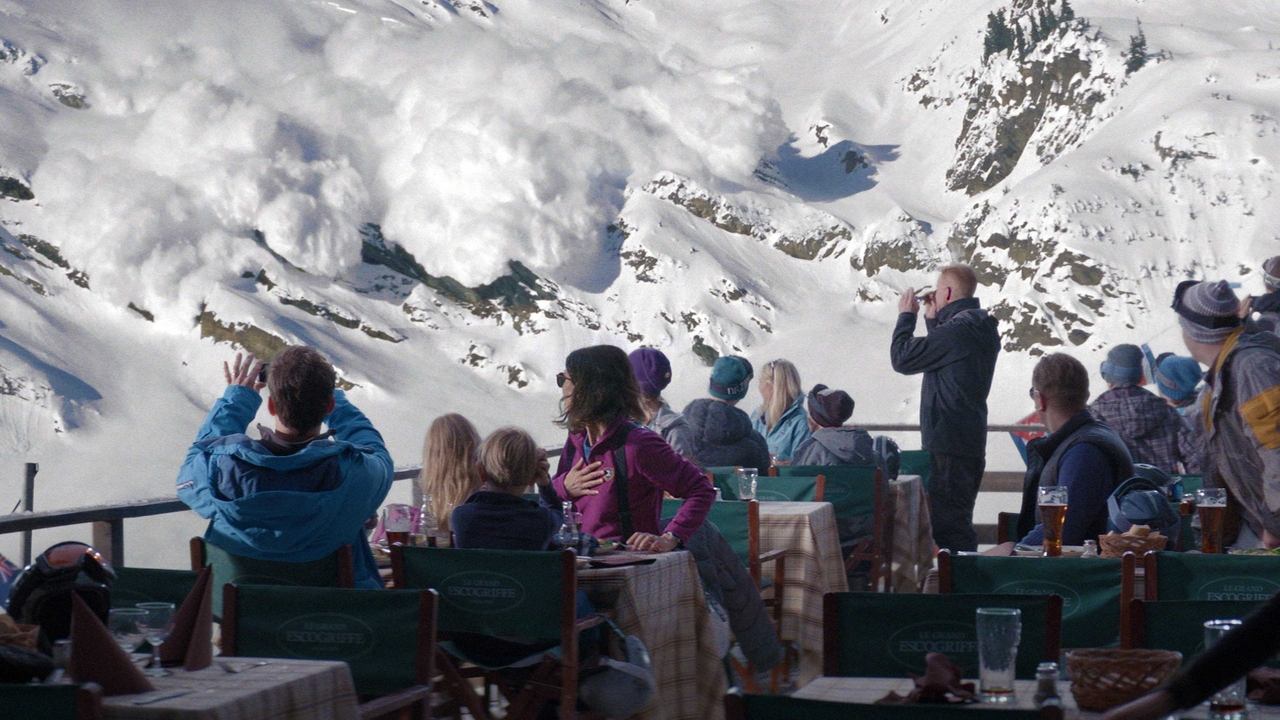
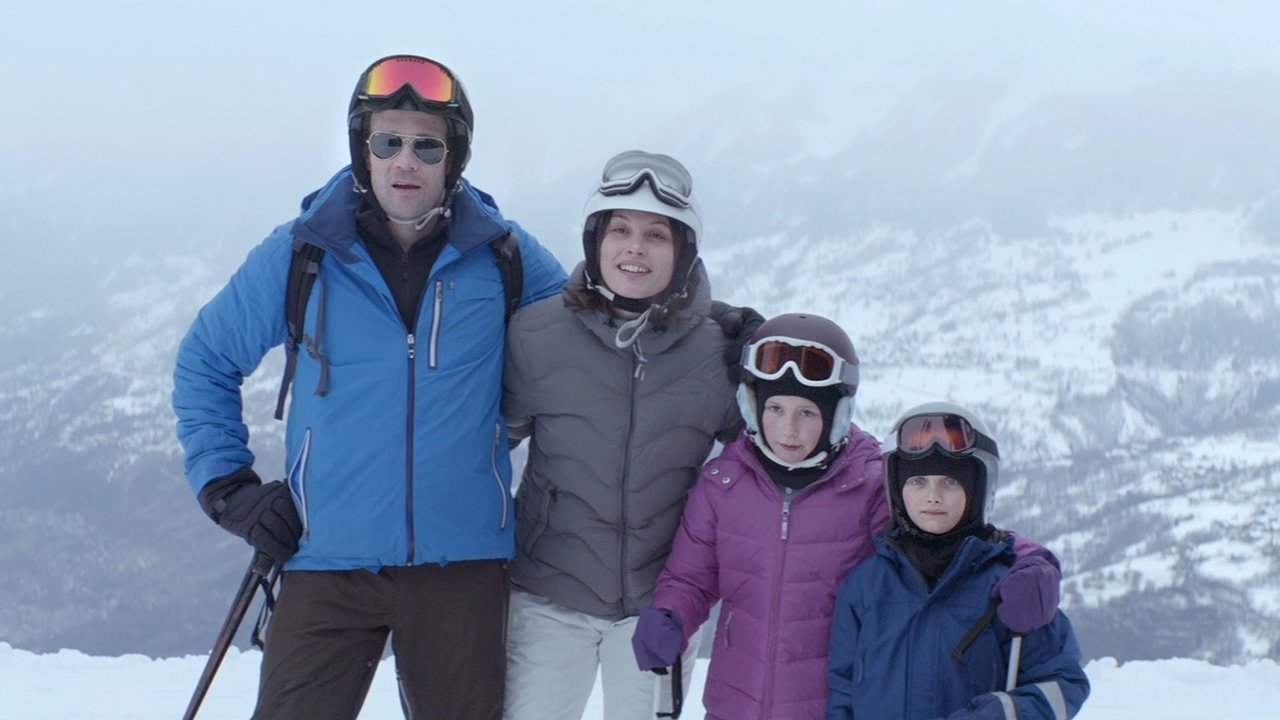
The setup is a masterclass in tension. A wealthy Swedish family—Tomas (Johannes Bah Kuhnke), Ebba (Lisa Loven Kongsli), and their two kids—are vacationing at a luxury resort in the French Alps. They are beautiful, they wear expensive fleece, and they look like an advertisement for a life without friction. Then comes the lunch on the deck. A "controlled" avalanche begins to tumble down the mountain. At first, it’s a spectacle. Then, it’s a threat.
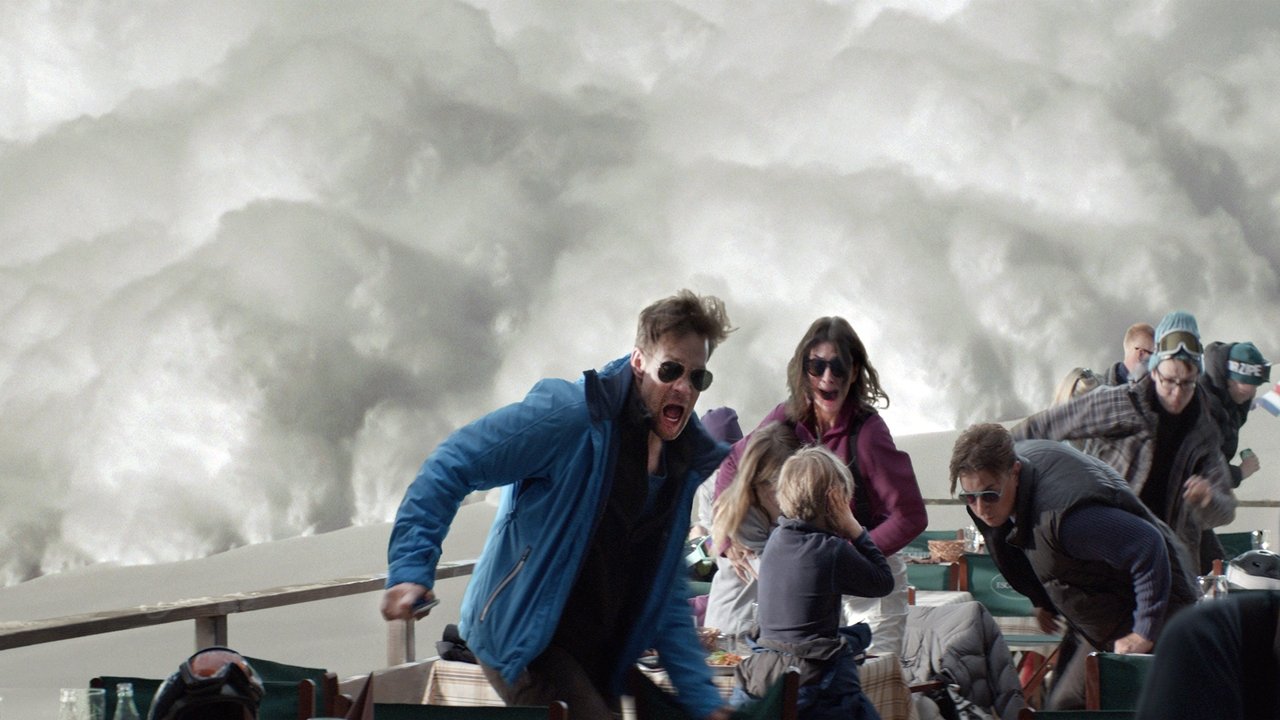
As the white wall rushes toward them, Ebba instinctively grabs the children. Tomas? Tomas grabs his iPhone and his gloves and sprints in the opposite direction.
He’s gone in seconds. The mist settles, no one is actually hurt, and Tomas sheepishly walks back to the table as if he’d just stepped away to check the scores. But the damage is done. The rest of the film is a slow-motion car crash of a marriage, where the primary victim is Tomas’s sense of manhood. It is a feature-length panic attack for anyone who’s ever lied to their spouse about who they’d be in a crisis.
The Beard and the Breakdown
What makes this a quintessential "Modern Era" drama is how it handles the deconstruction of the male hero. Released in 2014, it arrived just as the "prestige TV" anti-hero was peaking and the MCU was solidifying the idea of the "unflappable protector." Östlund takes that protector and turns him into a sniveling, weeping mess.

Johannes Bah Kuhnke is staggering here. He plays Tomas with a desperate, glassy-eyed denial that eventually collapses into one of the most pathetic—and hilarious—crying jags in cinema history. Opposite him, Lisa Loven Kongsli is the film’s moral compass, though her "righteousness" becomes its own kind of weapon. The chemistry isn't about love; it’s about the terrifying realization that you are sleeping next to a stranger.
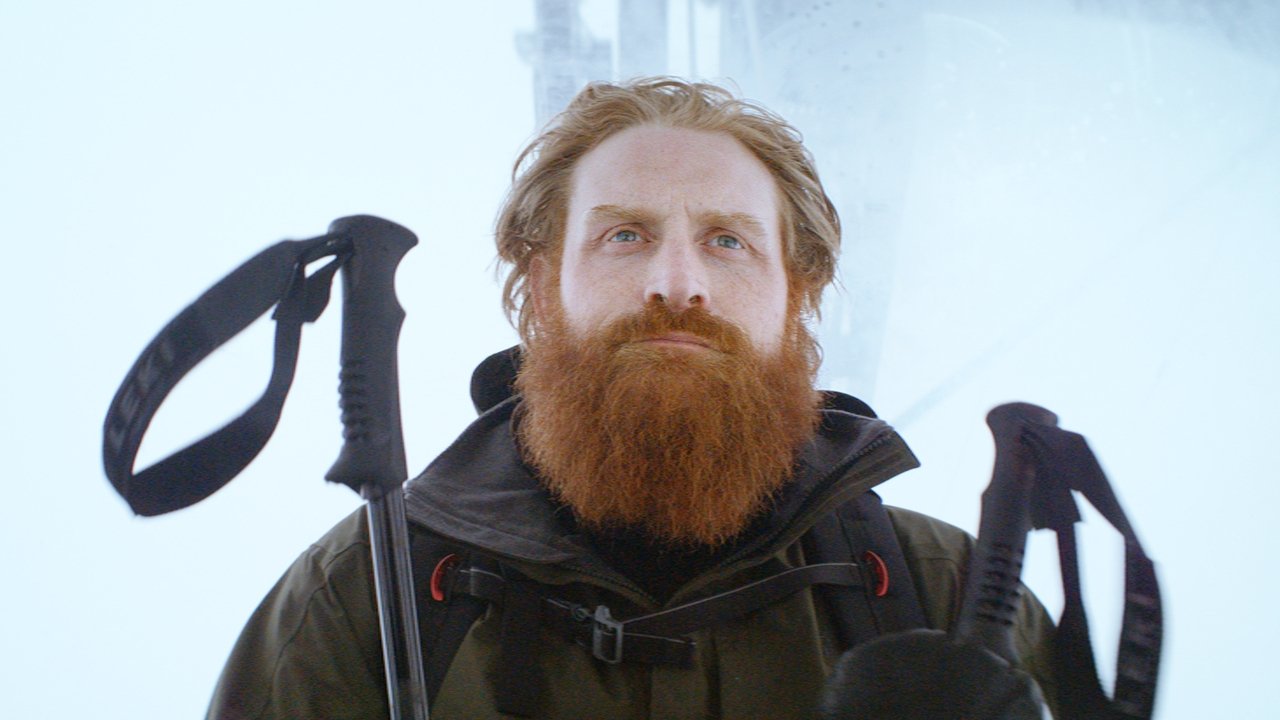
And then there’s Kristofer Hivju. Most of us know him as the wild-bearded Tormund from Game of Thrones, but here he plays Mats, a friend of the couple who spends an entire night trying to logically justify Tomas’s cowardice. It’s a brilliant bit of writing. Watching two grown men try to use "evolutionary biology" to explain why one of them abandoned his kids is peak dark comedy.
A Cold, Digital Precision
Looking back at 2014, we were fully entrenched in the digital revolution. Ruben Östlund and his cinematographer, Fredrik Wenzel, used the RED Epic camera to give the Alps a sharp, almost clinical look. There’s no film grain to soften the blow here. The symmetry of the hotel hallways and the repetitive motion of the ski lifts make the resort feel like a stylish prison.
The avalanche itself is a fascinating bit of trivia. Östlund didn’t just film a hill; it’s a composite of real footage and digital effects, inspired by a viral YouTube video the director obsessed over. Apparently, Östlund spent years scouring the internet for videos of "unrefined human behavior" during disasters. He wanted to see how people actually move when they’re scared. Turns out, we don’t look like Bruce Willis; we look like Tomas.
The film also captures that specific mid-2010s anxiety about our digital shadows. The fact that Tomas saves his phone but not his family is the ultimate indictment of the era. We are what we record, until the moment we have to actually be someone.
The Verdict on the Vacuum
Force Majeure is a "hidden gem" that isn't exactly hidden—it was a huge festival hit and eventually got a dismal American remake called Downhill—but the original Swedish version remains the only one worth your time. It’s uncomfortable, it’s beautifully shot, and it avoids the easy Hollywood ending.
Is it a drama? Yes. Is it a horror movie for married people? Absolutely. It’s the kind of film that makes you want to have a very long, very awkward conversation with your partner immediately after the credits roll. Just maybe don't watch it on a ski trip.
The final act of the film features a bus ride down a foggy mountain that serves as a perfect companion piece to the avalanche. It shifts the perspective, asking us if Ebba is any better than Tomas when the stakes are lowered but the panic is real. It’s a cynical, sharp, and deeply funny look at the masks we wear. By the time the screen went black, I realized I’d finished my pretzels and was just chewing on air. That’s the kind of tension Östlund builds—you forget to breathe, let alone snack.
Keep Exploring...
-
The Square
2017
-
The 100 Year-Old Man Who Climbed Out the Window and Disappeared
2013
-
Triangle of Sadness
2022
-

A Prophet
2009
-
A Single Man
2009
-
Agora
2009
-
An Education
2009
-
Bad Lieutenant: Port of Call - New Orleans
2009
-
Carriers
2009
-
Cell 211
2009
-
Coco Before Chanel
2009
-
Crazy Heart
2009
-
Evangelion: 2.0 You Can (Not) Advance
2009
-
Everybody's Fine
2009
-

Funny People
2009
-
Harry Brown
2009
-
I Killed My Mother
2009
-
Mother
2009
-
Precious
2009
-
The Informant!
2009