Heaven Is for Real
"Believe the child, or trust the world?"
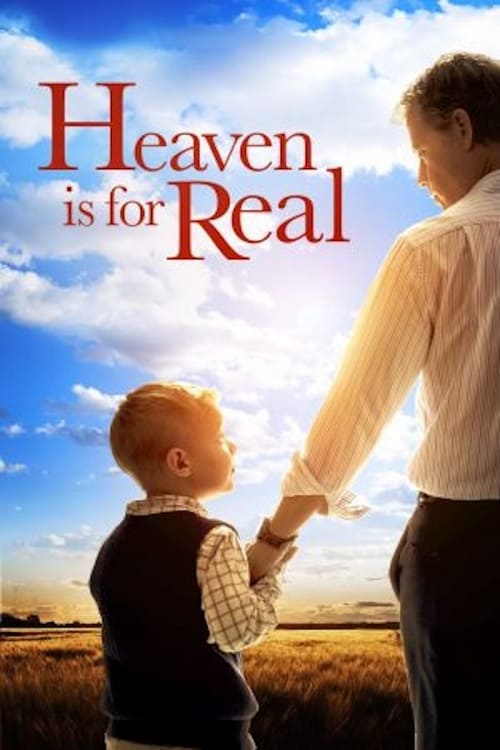
I watched this film while sitting next to a man at a suburban multiplex who was nursing a lukewarm Diet Coke that smelled like the syrup was running out, which, looking back, felt strangely appropriate. Heaven Is for Real is a movie caught in that exact middle ground: it’s trying to capture the infinite majesty of the afterlife while remaining firmly planted in the mundane, sometimes sticky reality of small-town Nebraska.

Released in 2014, right at the tail end of what we might call the "Faith-Based Gold Rush," this wasn't just a movie for the Sunday school crowd. It was a genuine, bona fide blockbuster. With a lean $12 million budget, it went on to rake in over $101 million domestically. To put that in perspective, it out-earned several major action tentpoles that year. It arrived at a moment when the "Indie Film Renaissance" of the 90s had pivoted into niche-targeting, and TriStar Pictures realized there was a massive, underserved audience hungry for stories that didn't involve superheroes or cynical anti-heroes.
The Everyman in the Pulpit
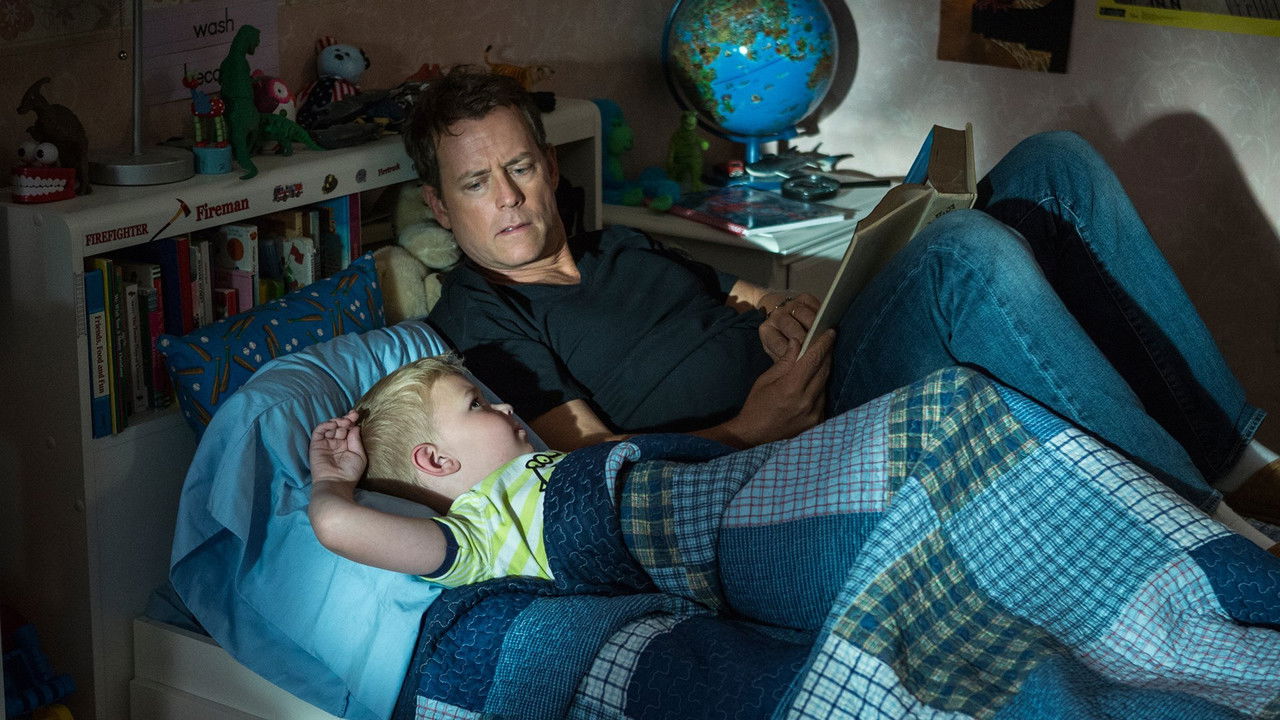
The only reason this film works as a piece of cinema and not just a sermon is Greg Kinnear. I’ve always had a soft spot for Kinnear; he has this "puzzled suburbanite" energy that made him so effective in As Good as It Gets (1997) and Little Miss Sunshine (2006). Here, as Todd Burpo, he’s a guy juggling three jobs, a mounting pile of medical bills, and a kid who just told him he met a long-lost relative in the clouds.
Kinnear plays Todd not as a zealot, but as a man who is deeply, profoundly inconvenienced by a miracle. Todd Burpo’s real struggle isn't with God; it's with his own church board, which is the most relatable part of the film. Watching him try to navigate the skepticism of his community—represented with a wonderful, weary dry-wit by Thomas Haden Church—is where the drama actually breathes. Church, who we all remember for his legendary turn in Sideways (2004), provides the necessary friction. He’s the friend who loves you but also thinks you might be losing your mind, and every drama needs that anchor.
A 2014 Digital Vision
The film was directed by Randall Wallace, the man who wrote Braveheart (1995) and directed We Were Soldiers (2002). You can feel that "Big Cinema" DNA in the way he frames the Nebraska landscapes. However, when we get to the actual "heaven" sequences, we run into a classic Modern Cinema era problem: the CGI transition.
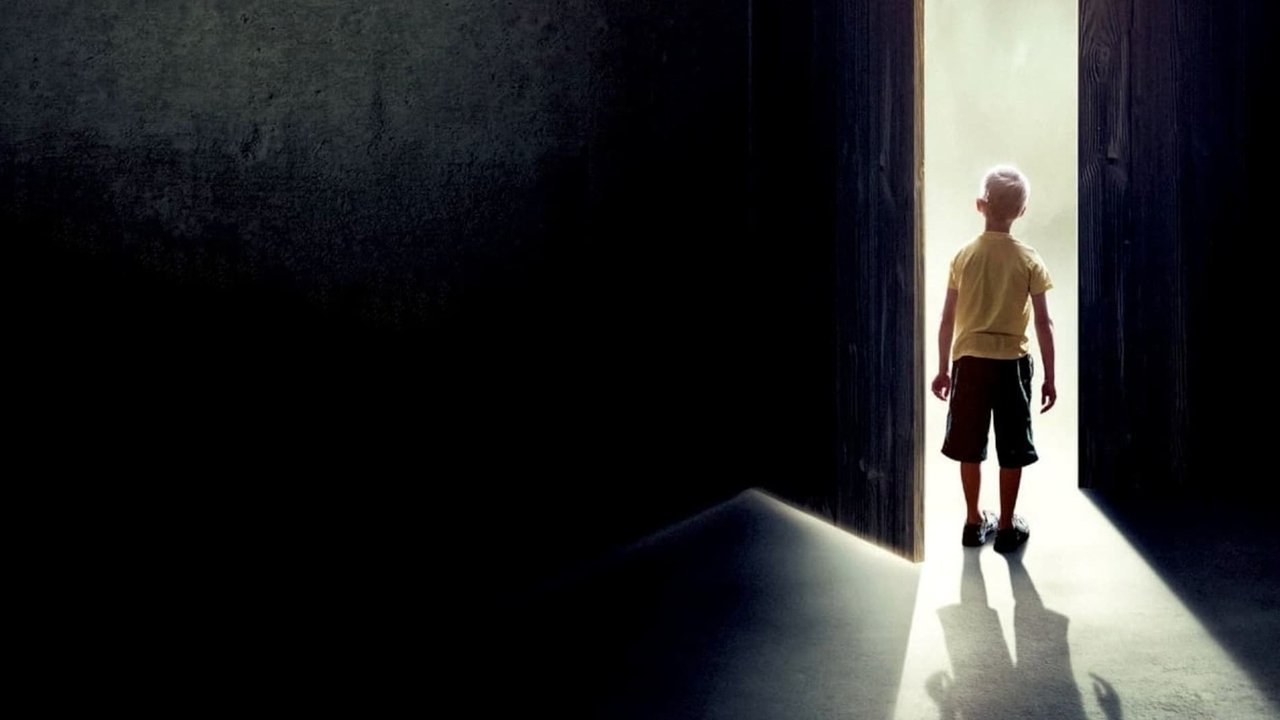
The depictions of Colton’s journey are rendered with a bright, gauzy digital sheen that was very popular in the early 2010s. The CGI heaven looks like the background of a mid-tier Christian karaoke video, or perhaps a very expensive screensaver. It’s a bold choice to actually show the afterlife, and while Connor Corum (as young Colton) is surprisingly naturalistic and non-cloying for a child actor, the visual effects don't quite have the weight of the performances. It’s a fascinating snapshot of a time when digital effects were becoming cheap enough for mid-budget dramas to use them for metaphysical sequences, even if the technology couldn't quite capture the "divine."
The Weight of the "True Story"
What keeps you engaged is the performance of Kelly Reilly as Sonja Burpo. Long before she was the terrifying Beth Dutton on Yellowstone, Reilly was bringing a grounded, pragmatic soul to roles like this. She’s the one asking the questions we’d actually ask: "How are we going to pay for this surgery?" and "Is our son’s imagination working overtime?"
The film deals with heavy themes—the death of a child, the fear of the unknown, the fragility of faith—but it does so with a soft touch. It’s an "earnest" film, a word that often carries a sting in film criticism, but here it feels earned. I found myself moved not necessarily by the theology, but by the portrait of a family trying to stay together while the world watches them through a magnifying glass.
Stuff You Didn't Notice
The cultural footprint of this movie was massive. It was based on the 2010 book which spent ages on the New York Times bestseller list, and the film’s success signaled to Hollywood that "heartland" stories were a goldmine. Interestingly, the film was shot mostly in Manitoba, Canada, despite being set in Nebraska. It’s a testament to the cinematography of Dean Semler—the guy who shot Dances with Wolves (1990) and Mad Max 2 (1981)—that he makes the Canadian prairies look like the quintessence of the American Midwest.
Another fun detail: the real Colton Burpo was actually involved in the production, ensuring that the "Blue-Eyed Jesus" depicted in the film matched the painting by Akiane Kramarik, which the real Colton claimed was the only accurate likeness he’d seen. It's those little specificities that turned this into a "watercooler" movie for a huge segment of the population.
Heaven Is for Real isn't trying to be The Tree of Life (2011). It’s a straightforward, well-acted drama that manages to be "about" faith without being purely "for" the faithful. While the visual depictions of the afterlife feel a bit dated by today’s standards, the chemistry between Kinnear and Reilly keeps the story grounded in a recognizable human reality. If you’re looking for a film that explores a massive "what if" through the lens of a struggling family, it’s a journey worth taking, even if you don't buy the ticket to the destination.

Keep Exploring...
-

The Man in the Iron Mask
1998
-

Flight
2012
-

We Were Soldiers
2002
-

17 Again
2009
-

Hannah Montana: The Movie
2009
-
He's Just Not That Into You
2009
-

The Blind Side
2009
-

The Girl with the Dragon Tattoo
2009
-

The Proposal
2009
-

Up in the Air
2009
-

Dear John
2010
-
Love & Other Drugs
2010
-
Step Up 3D
2010
-

The Karate Kid
2010
-

The King's Speech
2010
-
The Town
2010
-

Arthur Christmas
2011
-

The Artist
2011
-

The Descendants
2011
-
The Iron Lady
2011