Justice League: War
"Seven strangers, one god, and a lot of ego."
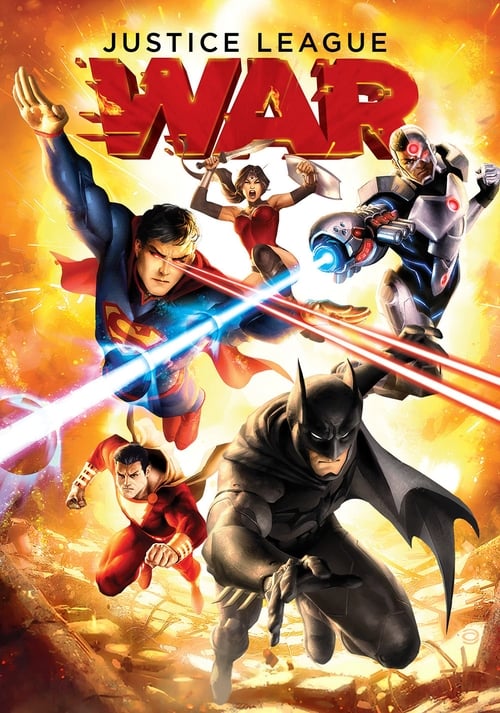
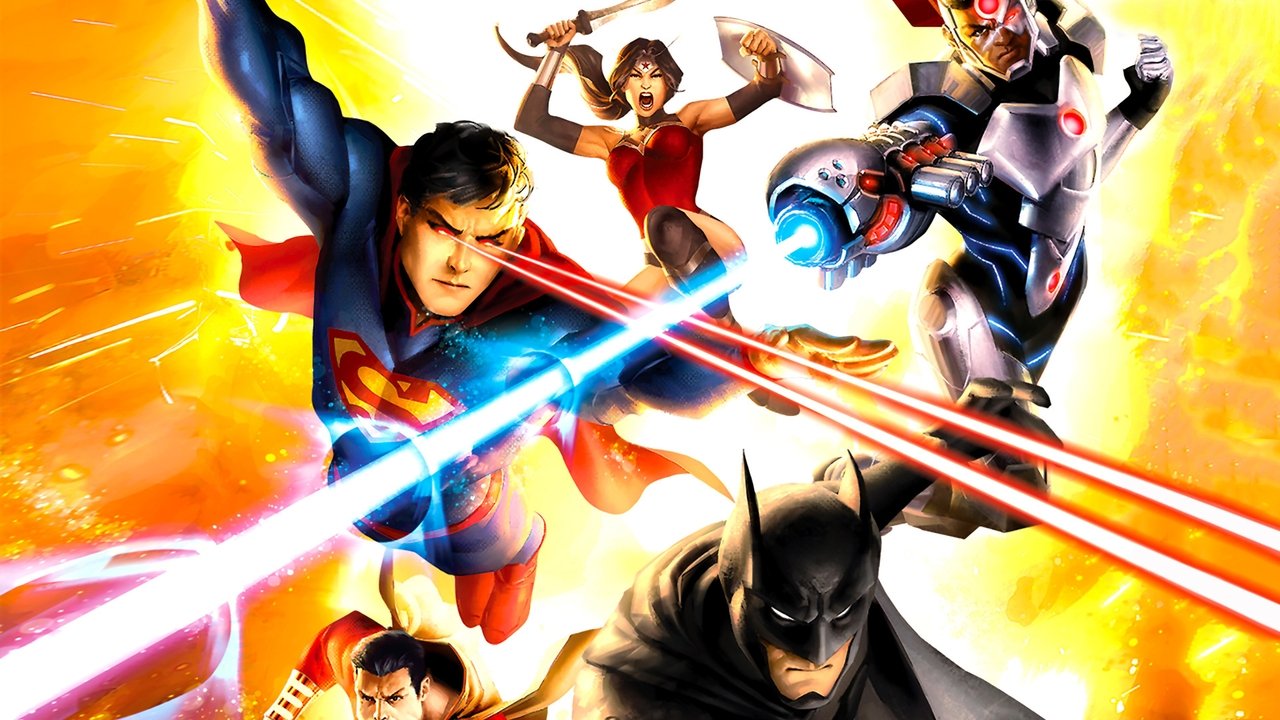
By 2014, the "shared universe" fever had officially broken the seal of live-action cinema and leaked directly into the ink and paint of Warner Bros. Animation. While the big-screen DC movies were still trying to find their footing in the wake of Christopher Nolan’s departure, the direct-to-video department decided to pull a "Ctrl+Alt+Delete" on their own continuity. Based on the New 52 comic relaunch, Justice League: War wasn't just another cartoon; it was the opening salvo of a decade-long experiment in serialized animated storytelling. It’s loud, it’s aggressive, and it’s unapologetically obsessed with the idea that superheroes should probably spend thirty minutes hitting each other before they bother to ask for a name.
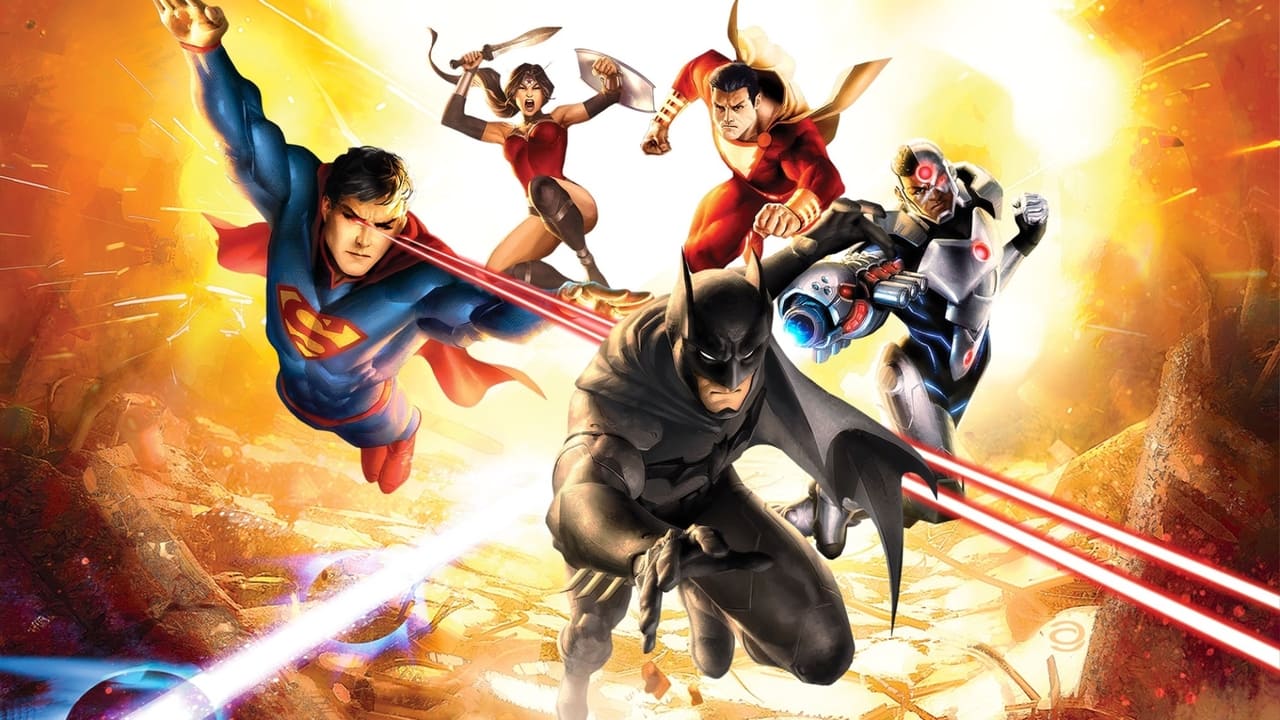
I watched this for the first time on a laptop while sitting in a dentist's waiting room, and I’m fairly certain the woman next to me thought I was watching a high-octane heavy metal music video. The film has that exact kind of energy. It doesn't breathe; it just reloads.
A Superpowered Meet-Cute (With Property Damage)
The setup is lean, almost to a fault. Parademons—Darkseid's bug-eyed, fire-breathing foot soldiers—are popping up in major cities like a bad case of interdimensional termites. This forces a collection of egos to cross paths for the first time. The fun here isn't in the plot, which is a standard "stop the invasion" treadmill, but in the friction between these personalities. Justin Kirk, channeling a snarky energy he perfected in Weeds, plays Hal Jordan/Green Lantern as a cosmic-tier frat boy who desperately needs an HR intervention. He spends the first act getting absolutely humbled by Alan Tudyk’s Superman, who, in this iteration, has the personality of a wet brick with a god complex.
Looking back, this era of DC storytelling was defined by "edginess." Everything had to be sharper, meaner, and more cynical. It’s a very specific 2014 aesthetic—the transition from the bright, hopeful tones of the Justice League Unlimited TV show to something that felt like it was trying to impress a teenager who just discovered Linkin Park. Yet, the action choreography by director Jay Oliva, who previously knocked it out of the park with The Dark Knight Returns, is where the film earns its keep. The way Wonder Woman, voiced with regal steel by Michelle Monaghan, carves through a horde of monsters is genuinely thrilling. There’s a weight to the punches that you didn't always get in earlier 2D animation.
Punching Through the Digital Gloom
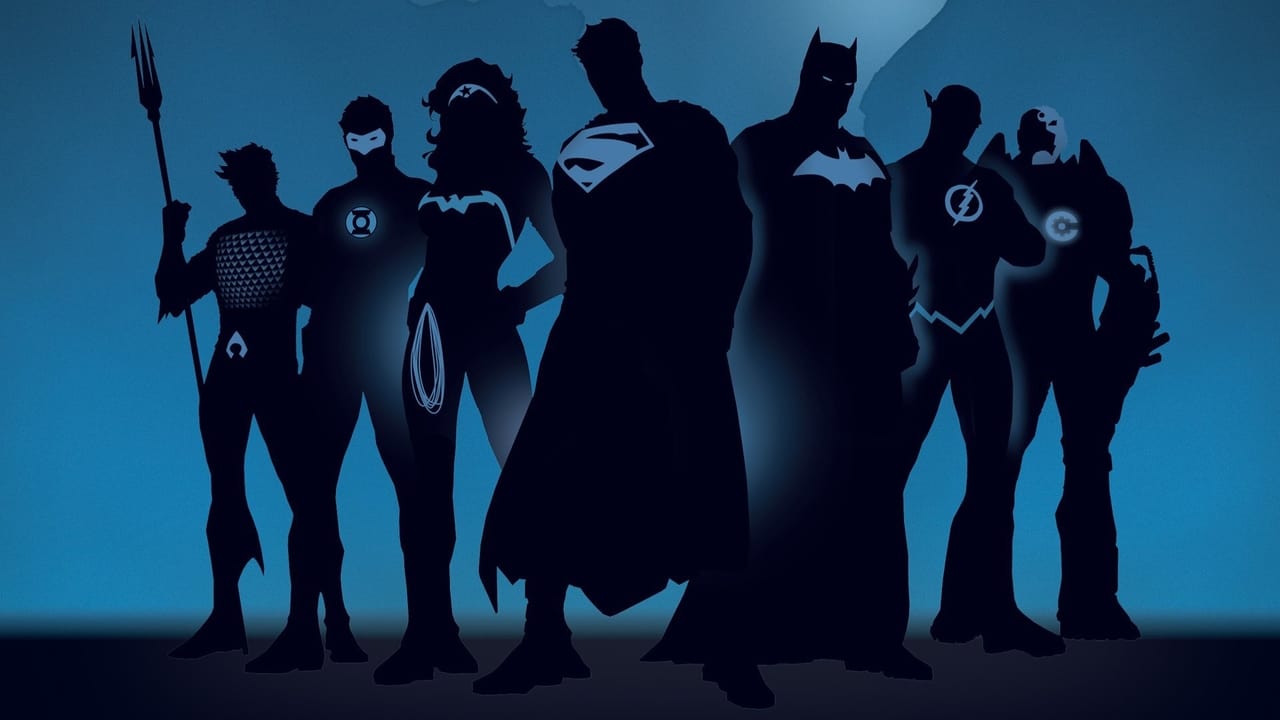
One of the more interesting aspects of Justice League: War is how it navigates the technical limitations of its $3.5 million budget. We were deep into the era of digital animation where characters started to look like they were made of polished plastic. While the backgrounds can occasionally feel a bit sterile, the fight sequences utilize "impact frames" and rapid-fire editing that keep the momentum from sagging. The sound design is particularly punchy; every time Shemar Moore’s Cyborg fires a sonic cannon, you feel the digital crunch. Cyborg’s origin story feels like a high-budget tech support nightmare, and the film doesn't shy away from the body horror of a teenager being fused with alien motherboard components.
Interestingly, this movie replaced Aquaman with Sean Astin’s Shazam for the core lineup. Apparently, the producers felt Shazam’s childish wonder (and the fact that he's a kid in a god's body) provided a better foil for the more dour members of the team. It’s a choice that still divides fans on forums today. Turns out, the script by Heath Corson thrives when it leans into that banter. The "Flash vs. Shazam" rivalry over who is the biggest fanboy is a rare moment of genuine warmth in a movie that otherwise feels like it was filmed in a burning warehouse.
The Sound of Seven Egos Clashing
The film’s greatest strength—and its biggest era-specific quirk—is its pacing. At 79 minutes, it’s essentially one long chase sequence followed by a three-act boss fight. It captures that post-9/11 action cinema anxiety where the destruction of a city is treated as an inevitable Tuesday afternoon. There's very little civilian perspective here; it's all about the titans. Christopher Gorham brings a much-needed lightness to Barry Allen, but even he is quickly swept up in the frantic need to punch Darkseid in his rocky face.

I once dropped a slice of pepperoni pizza face-down on my rug while watching the Batman/Green Lantern fight, and I just left it there until the credits because the rhythm of the brawling was so relentless I didn't want to break the spell. That’s the "War" in the title doing the heavy lifting. It isn't a deep dive into the human condition; it’s an animated demolition derby. It’s the kind of movie that flourished in the DVD/Blu-ray market, offering a "harder" alternative to the Saturday morning fare we grew up on.
Justice League: War is a fascinating artifact of its time—a bridge between the classic Bruce Timm era and the more serialized, "mature" animated movies that would follow. It’s far from perfect, and the character designs can feel a bit "samey" with their high collars and chin-lines, but it delivers exactly what it promises on the tin: a loud, colorful, and reasonably entertaining brawl. If you’re looking for high drama, look elsewhere, but if you want to see a billionaire in a bat suit tell a space cop that his glowing ring is "stupid," this is your holy grail. It’s a snapshot of a studio trying to find its voice in a crowded superhero market, and while it screams for more character development, it certainly knows how to throw a punch.
Keep Exploring...
-
Justice League: The Flashpoint Paradox
2013
-

Justice League: Throne of Atlantis
2015
-
Batman: Assault on Arkham
2014
-
Batman: The Dark Knight Returns, Part 1
2012
-

Batman: The Dark Knight Returns, Part 2
2013
-
Batman: Bad Blood
2016
-
Justice League Dark
2017
-
Batman vs. Robin
2015
-

Superman/Shazam!: The Return of Black Adam
2010
-
Batman: Year One
2011
-
Justice League: Doom
2012
-

Tangled Ever After
2012
-
Son of Batman
2014
-

Evangelion: 3.0 You Can (Not) Redo
2012
-
Resident Evil: Damnation
2012
-
Road to Ninja: Naruto the Movie
2012
-
Dragon Ball Z: Battle of Gods
2013
-
Resident Evil: Degeneration
2008
-
Titan A.E.
2000
-
Osmosis Jones
2001