Let's Be Cops
"Bad badges, worse decisions, and a whole lot of luck."
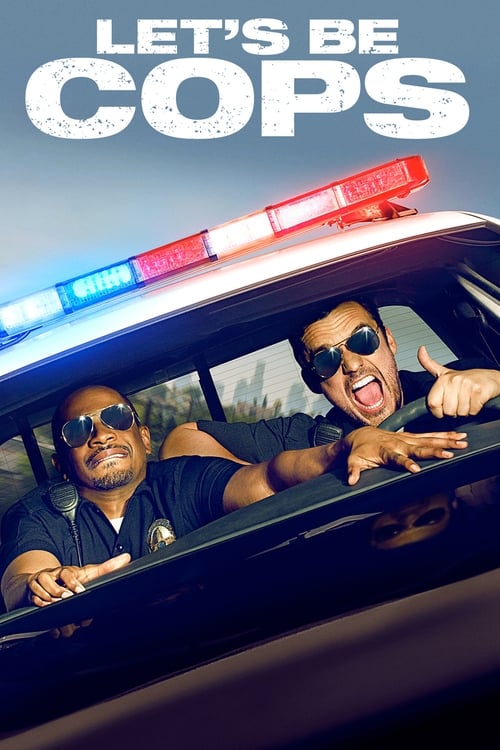
By the summer of 2014, the mid-budget R-rated studio comedy was gasping its final breaths before retreating almost entirely to the digital sanctuary of streaming platforms. It was a strange, transitional cultural moment where the "Apatow ripple effect"—that specific blend of improvised riffs and sentimental bromance—was beginning to curdle into something more formulaic. Yet, out of this late-stage era of the theatrical comedy came Let’s Be Cops, a film that looked like a generic bargain-bin throwaway on paper but somehow grossed over eight times its $17 million budget by tapping into a very specific, very reckless brand of wish fulfillment.
The "New Girl" Synergy and High-Concept Chaos
The heavy lifting here is done entirely by the chemistry between Jake Johnson and Damon Wayans Jr. If you spent any time watching New Girl during its peak, you already know these two speak a shorthand language of exasperation and insanity. In Let’s Be Cops, they play Ryan and Justin, two Los Angeles transplants who are staring down the barrel of thirty and realizing they’ve achieved exactly nothing. Ryan is an injury-sidelined athlete living off old glory; Justin is a soft-spoken video game designer whose bosses treat him like a footstool.
The movie kicks into gear when they mistake a "masquerade" party for a costume party and show up in high-end, realistic LAPD uniforms. I watched this film while eating a slightly-too-old cinnamon raisin bagel that was definitely more "stale" than "toasted," and there’s something about that experience that mirrors the film’s plot: it’s a bit messy, potentially a bad idea, but strangely satisfying in the moment. When the duo realizes that the uniform grants them instant authority, social status, and free appetizers, the "charade" escalates from a one-night gag into a full-blown lifestyle. Jake Johnson plays Ryan with a manic, unhinged energy that suggests his character might actually be a sociopath, while Damon Wayans Jr. provides the necessary moral anchor—even if that anchor is easily dragged along by the current of free booze and female attention.
A Relic of the Mid-Budget Theatrical Era

Looking back from our current vantage point of $200 million franchise tentpoles, Let’s Be Cops feels like a souvenir from a lost civilization. It’s a film that relies on the "hook" rather than the "IP." The cinematography by Daryn Okada (who also shot Mean Girls) doesn’t try to reinvent the wheel, but it captures that bright, saturated Los Angeles "comedy look" that was the industry standard before digital color grading became overly moody and dark.
The film's success was a bit of a fluke, becoming a massive sleeper hit during a year dominated by Guardians of the Galaxy and The LEGO Movie. It proved that audiences were still hungry for simple, R-rated premises that didn't require homework. However, the film also reveals the era's growing pains. Much of the humor feels like it was "found" in the edit, a hallmark of the 2010s comedy style where actors are encouraged to riff until the digital memory cards are full. Sometimes this results in gold—like Keegan-Michael Key’s wildly bizarre turn as Pupa, a terrifyingly eccentric gang informant—and sometimes it results in scenes that feel like they’re circling the drain of a joke that never quite lands.
The Tonal Whiplash of the Third Act
The most fascinating (and jarring) element of the film is its transition from a goofy "stolen valor" romp into a legitimate action-thriller. Enter James D'Arcy as Mossi, a brutal European mobster who seems like he wandered in from the set of a late-career Bruce Willis movie. Suddenly, the "fake" cops are dealing with real Uzis, dirty detectives, and actual stakes. The movie is essentially a live-action cartoon that accidentally wanders into a gritty Michael Mann film during the final twenty minutes.
While Rob Riggle shows up to provide some much-needed comedic grounding as a real cop who takes the guys under his wing, the shift from slapstick to shootout is enough to give you a mild case of cinematic vertigo. It’s a classic 2010s trope: the fear that "just being a comedy" isn't enough, so the third act must be bolstered by an explosion or two. It’s unnecessary, but the sheer commitment of the leads keeps the wheels from falling off entirely.
Let’s Be Cops isn't a masterpiece of the genre, but it’s a remarkably effective "bus-ride" movie—the kind of film that earns its keep through pure, unadulterated charisma. It captures a moment right before the "High Concept Comedy" became an extinct species in theaters. If you can move past the increasingly absurd logic of the plot, you're left with a hilarious exploration of what happens when two losers finally get to hold the remote control to their own lives. It’s a loud, silly, and occasionally dark testament to the power of a polyester uniform and a really bad idea.

Keep Exploring...
-

Something Borrowed
2011
-

The Girl Next Door
2004
-

21 Jump Street
2012
-
Dumb and Dumber To
2014
-

Rio 2
2014
-

17 Again
2009
-

Bride Wars
2009
-

Hannah Montana: The Movie
2009
-
He's Just Not That Into You
2009
-

Hotel for Dogs
2009
-
The Hangover
2009
-

The Proposal
2009
-

The Ugly Truth
2009
-

Zombieland
2009
-

Love & Other Drugs
2010
-

The Bounty Hunter
2010
-

Arthur Christmas
2011
-

Bad Teacher
2011
-
Bridesmaids
2011
-
Friends with Benefits
2011