Mommy
"Love is a square you can't escape."
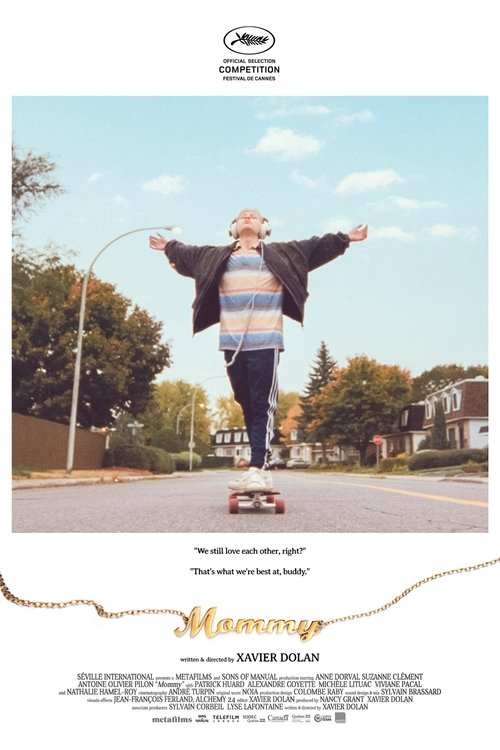
The first thing you notice isn't the screaming or the messy hair; it’s the box. Most films give us a wide-screen window to look through, but for Mommy, Xavier Dolan—the Quebecois wunderkind who was barely twenty-five when this premiered—decides to shove the entire story into a 1:1 square. It’s the shape of an Instagram post or an old Polaroid, and it feels like being trapped in a closet with three people who are all trying to breathe the last bit of oxygen. I once ate an entire bag of salt-and-vinegar chips during the first twenty minutes of this movie, and the stinging on my tongue felt like the only appropriate physical response to the dialogue.

Looking back at 2014, we were right at the tail end of that "indie darling" era where a film could still set the world on fire just by being aggressively, unapologetically stylistic. Mommy doesn't just ask for your attention; it hijacks your nervous system. It’s set in a fictionalized Canada where a new law (S-14) allows parents to drop off their "difficult" kids at hospitals with no legal fuss. Enter Die, played by the towering Anne Dorval, a widow in acid-wash denim who looks like she’s perpetually five minutes away from either a dance-off or a breakdown. She’s bringing her son, Steve (Antoine Olivier Pilon), home from a correctional center. Steve has ADHD, a hair-trigger temper, and a desperate, occasionally Oedipal devotion to his mother that is as terrifying as it is heartbreaking.
The Physics of the Frame
That 1:1 aspect ratio isn't just a hipster gimmick. It’s a psychological state. By lopping off the sides of the screen, Dolan focuses entirely on the face. There is nowhere for the characters to hide. When Steve gets violent, the frame feels like it’s bruising him. When Die feels the weight of poverty, the black bars on the side feel like they’re closing in to crush her. Actually, watching this on a modern wide-screen TV makes you feel like you’re suffering from a very specific type of cinematic claustrophobia.
But then, the miracle happens. There’s a scene where the characters experience a moment of pure, unadulterated joy, set to Oasis’s "Wonderwall." In a move that made festival audiences in Cannes literally gasp, Steve reaches out and pushes the edges of the frame. He physically widens the screen into a glorious 1.85:1 wide-screen format. It is one of the most earned bits of cinematic bravado I’ve ever seen. For a few minutes, the world is wide enough for them to exist. It’s a trick that only works because Dolan understands that cinema is a language of limits.
A Trinity of Raw Nerves
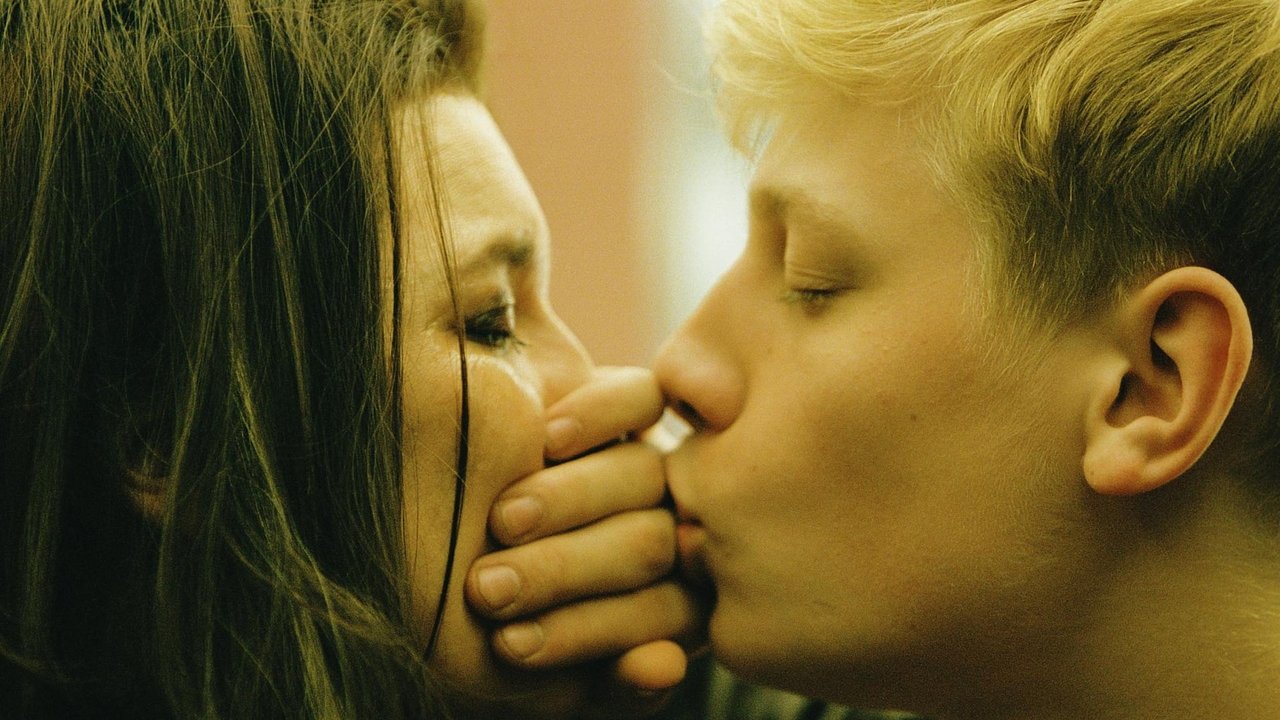
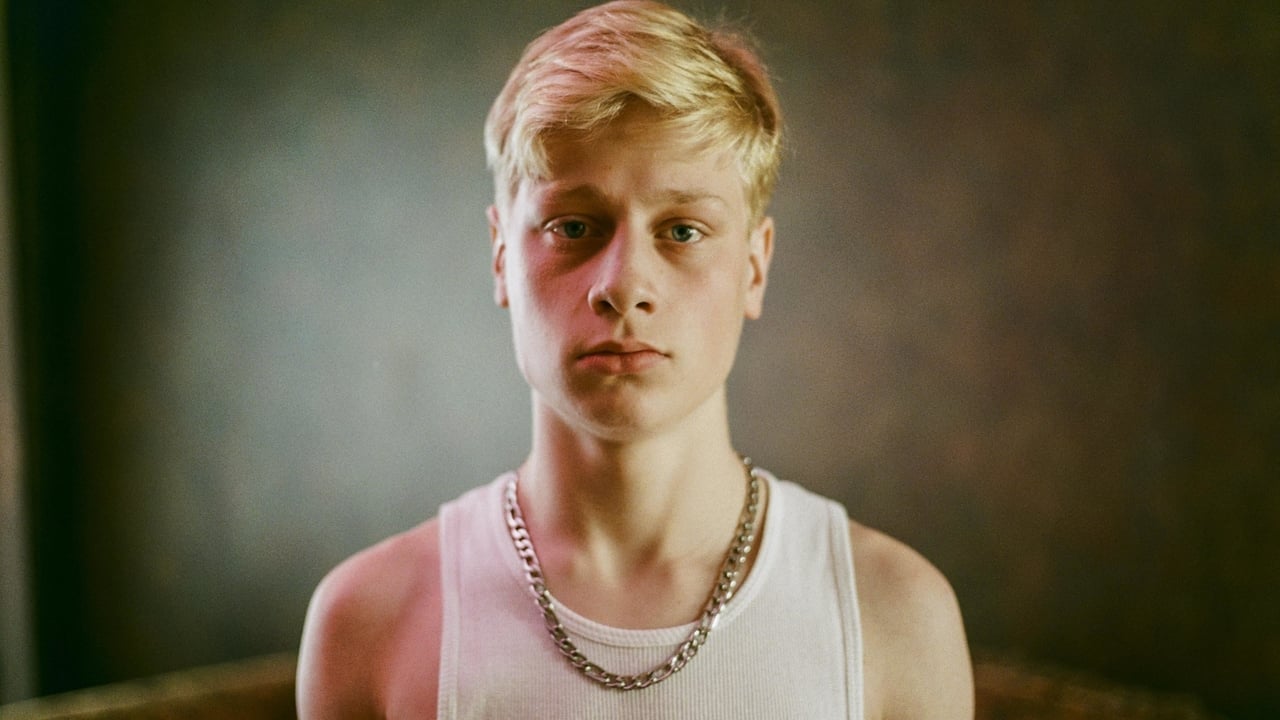
The film would fall apart if the acting weren't so high-decibel. Anne Dorval (who previously worked with Dolan on I Killed My Mother) is a force of nature. She plays Die as a woman who has weaponized her own tackiness to survive a world that wants her to disappear. Opposite her, Antoine Olivier Pilon is a revelation. He captures that specific, volatile teenage energy where a smile can turn into a headbutt in less than a second.
The stabilizer is Suzanne Clément, playing Kyla, a neighbor with a stutter and a mysterious past who becomes an unlikely third wheel in this dysfunctional family. Kyla is the audience surrogate, watching this mother-son duo with a mix of horror and envy. The chemistry between these three is electric; they move from hugging to hitting to singing Celine Dion with a speed that feels exhausting and entirely human. Suzanne Clément conveys more with a flinch than most actors do with a three-page monologue.
The Philosophy of the "S-14"
The film’s tagline is "Loving people doesn't save them," and Mommy spends two hours proving that thesis with brutal efficiency. It poses a question that many dramas shy away from: What do you do when the person you love most is someone you cannot safely live with? It’s a philosophical trolley problem wrapped in a vibrant, neon-lit aesthetic.
Dolan’s direction here shows his growth from a "stylist" to a "storyteller." While his earlier films like Heartbeats felt like they were trying too hard to be cool, Mommy uses its coolness to mask a deep, existential ache. The soundtrack is a curated playlist of late-90s and early-2000s radio hits—Counting Crows, Dido, Sarah McLachlan—which gives the whole thing a "looking back" quality, even though it’s set in the near future. It captures that feeling of being stuck in your own history.
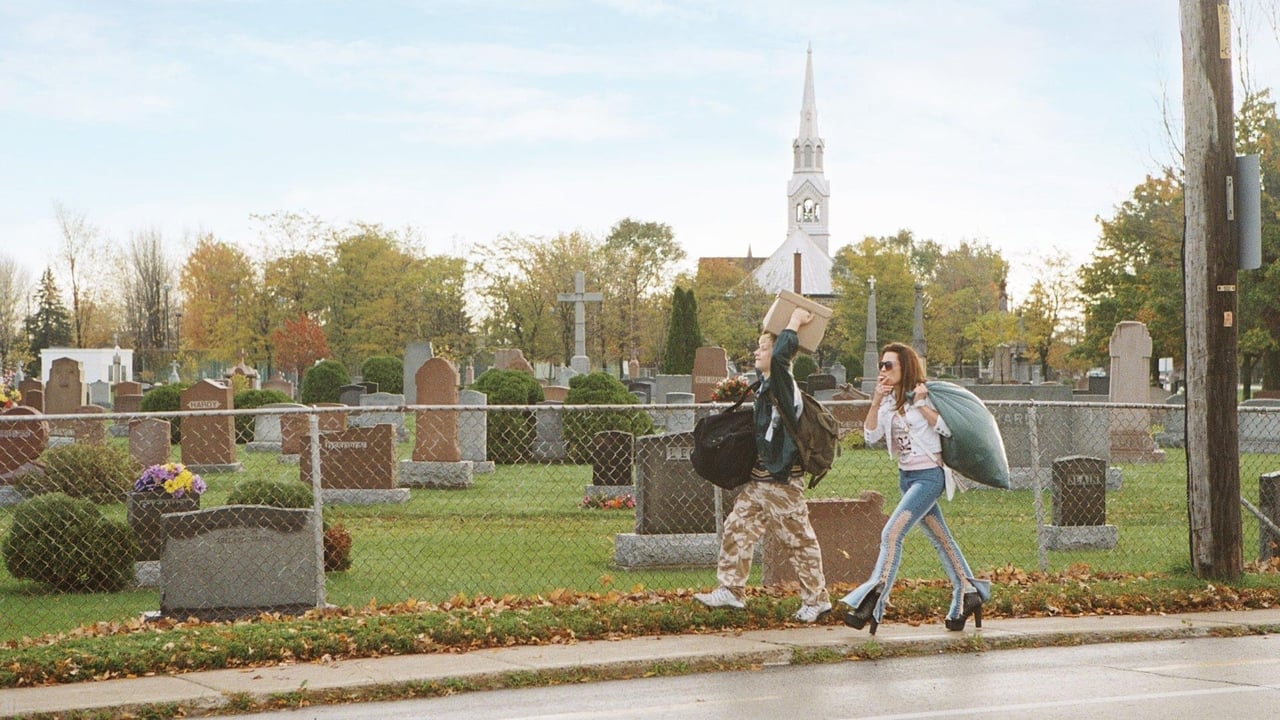
From a production standpoint, the film is a masterstroke of indie resourcefulness. Shot by André Turpin on 35mm, the colors are saturated and warm, making the drab Quebec suburbs look like a dreamscape. It’s a reminder of a time when indie film wasn't just about "minimalism," but about maximalism on a budget. Dolan famously got the idea for the square ratio from an album cover, proving that sometimes the best cinematic ideas come from looking at everything except cinema.
Ultimately, Mommy is a beautiful, loud, and deeply messy argument for the power of the human spirit—and a sobering look at its limitations. It’s the kind of film that leaves you feeling a bit battered, yet weirdly grateful for the experience. It captures the frantic energy of the 2010s indie scene perfectly, standing as a high-water mark for a director who wasn't afraid to be "too much." If you haven't seen it, prepare to have your personal space invaded in the best way possible.
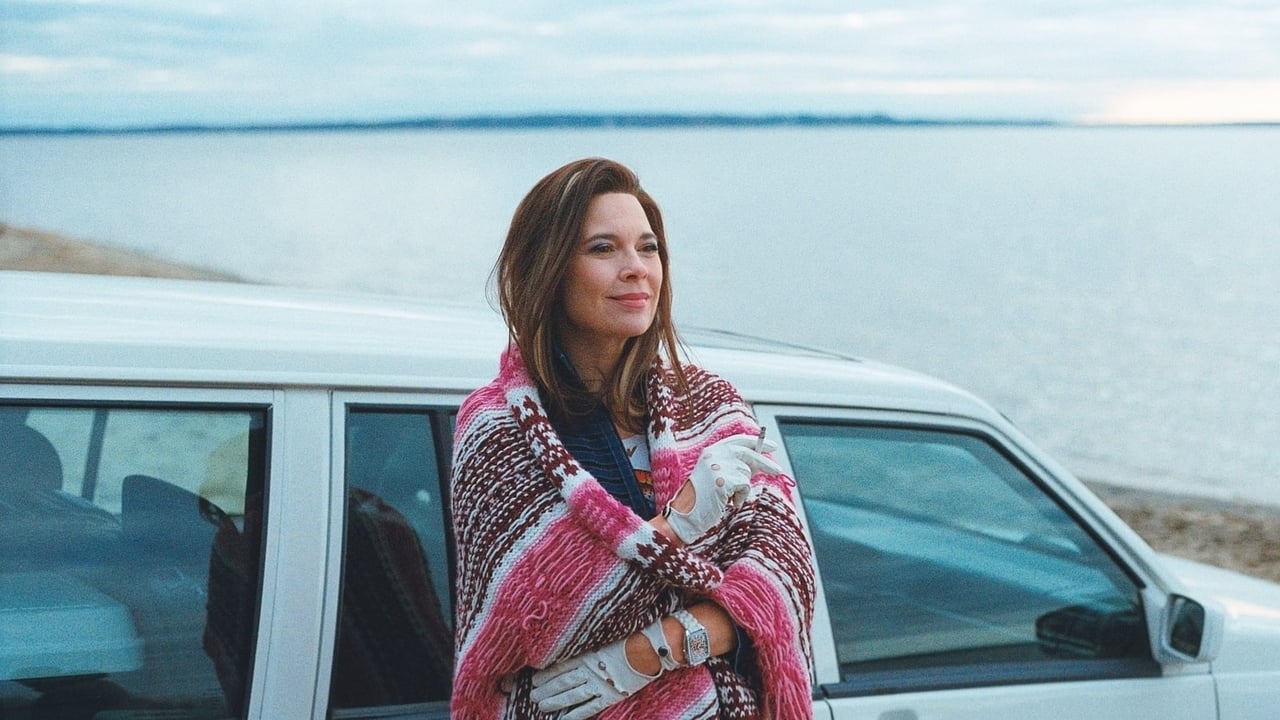
Keep Exploring...
-
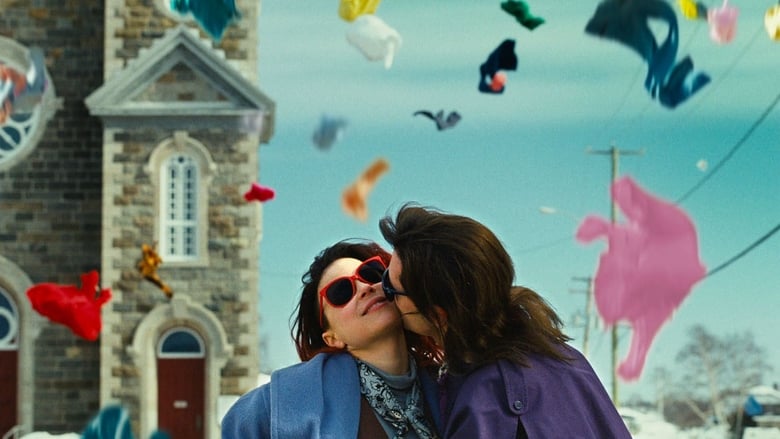
Laurence Anyways
2012
-
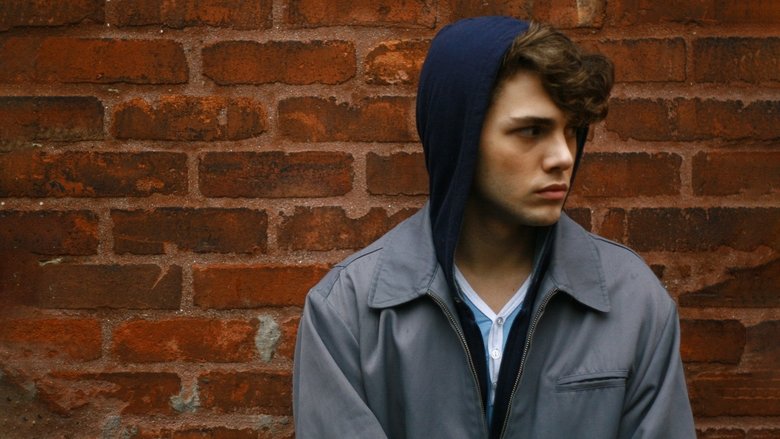
I Killed My Mother
2009
-

Heartbeats
2010
-
Before Midnight
2013
-

Short Term 12
2013
-
I Origins
2014
-
Night on Earth
1991
-
The Postman
1994
-
Central Station
1998
-
The Celebration
1998
-
Bowling for Columbine
2002
-
Good Bye, Lenin!
2003
-

Mysterious Skin
2005
-
Like Stars on Earth
2007
-
The Man from Earth
2007
-
It's Only the End of the World
2016
-
Mr. Nobody
2009
-
The Hunt
2012
-

Blood and Bone
2009
-
The Secret in Their Eyes
2009