Neighbors
"Nappies, Kegs, and Total War."
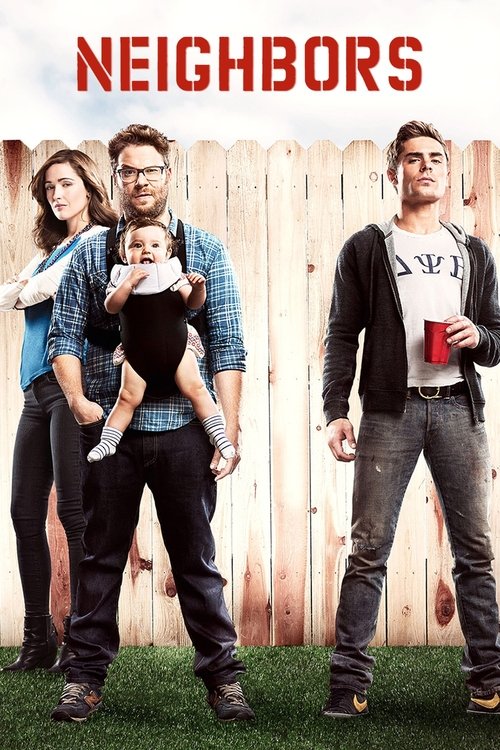
There is a terrifying moment in every person’s life where they realize they are no longer the person throwing the party, but the person wondering if it’s too early to call in a noise complaint. It’s a transition that usually happens quietly, over a few years of buying better-quality linens and caring about lawn maintenance. But in Neighbors, that realization hits Seth Rogen’s Mac Radner like a rogue airbag to the face. I watched this while my actual neighbor was leaf-blowing his driveway for three hours straight on a Saturday morning, and the irony of rooting for the "boring" parents while simultaneously resenting my own local noise pollution wasn't lost on me.
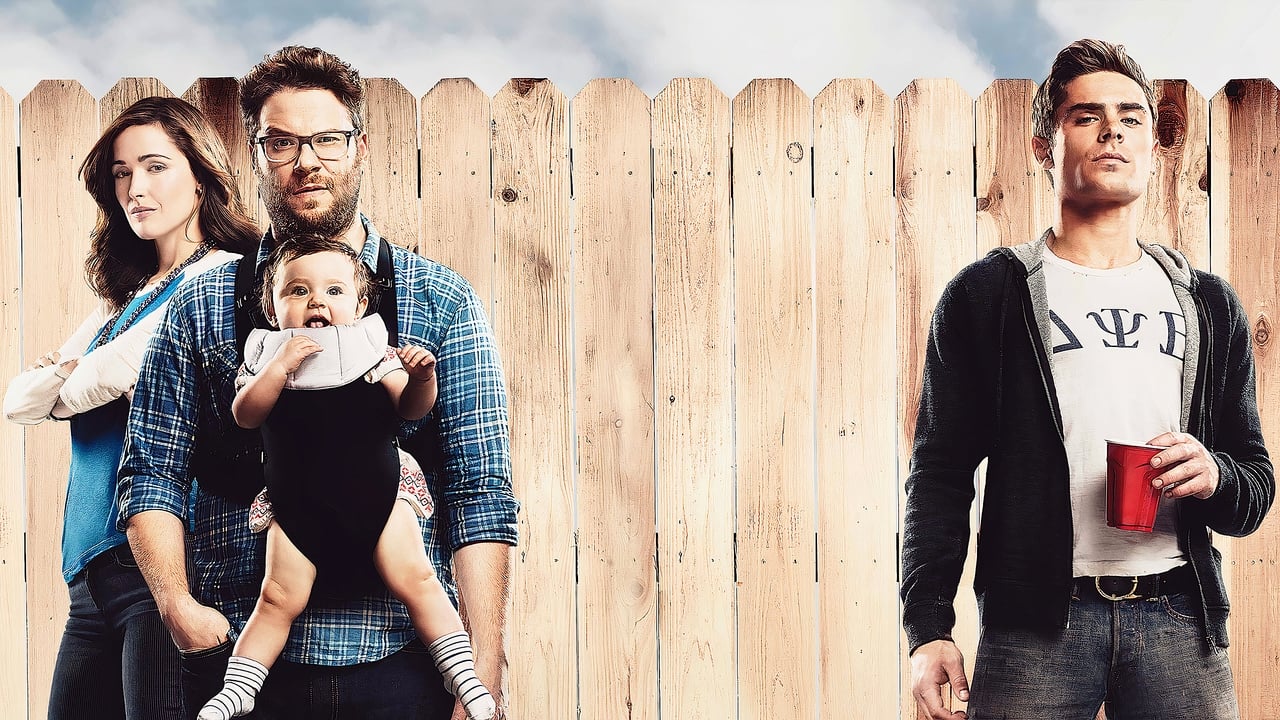
Released in 2014, Neighbors arrived at a fascinating crossroads for the R-rated comedy. The Judd Apatow-led "man-child" era was evolving into something a bit more domestic, and Seth Rogen—the patron saint of the bong-rip—was finally playing a dad. It’s a film that perfectly captures that weird, early-30s purgatory: you have the house, the baby, and the career, but you still want to believe you’re "cool" enough to hang with the frat boys next door.
The Secret Weapon in a Floral Dress
The biggest mistake a lesser comedy would have made is turning Rose Byrne’s Kelly into the "nagging wife" archetype—the fun-killer who exists only to roll her eyes while the boys behave badly. Looking back, the smartest move director Nicholas Stoller (of Forgetting Sarah Marshall fame) made was listening to Byrne herself. She famously pushed for Kelly to be just as irresponsible, competitive, and petty as Mac.
The result is the best comedic chemistry of the mid-2010s. When they decide to go to war with the Delta Psi Beta fraternity, they do it as a united, chaotic front. Whether they’re trying to navigate the logistics of an infant’s feeding schedule while "undercover" at a rave or engaging in a bizarrely tense "De Niro-off" during a costume party, they feel like a real couple that just happens to be spectacularly immature. Rose Byrne is the undisputed MVP here; her delivery of "Bring the heavy weaponry" while referring to a stash of illicit items is a masterclass in comedic escalation.
Abs, Airbags, and the 2014 Zeitgeist

Then there’s the opposition. Zac Efron as Teddy Sanders was a revelation at the time. He was still shaking off the High School Musical glitter, and Neighbors allowed him to lean into a specific kind of "beautiful-but-dim" intensity. Zac Efron looks like he was sculpted out of a single, very oily block of expensive marble, and the film knows exactly how to use that. Teddy isn’t a cartoon villain; he’s a guy who realized early on that his peak is happening right now, within the walls of a frat house, and he will defend that territory with everything he has.
The supporting cast is an embarrassment of riches from that specific comedy era. You’ve got Dave Franco leaning into his weirdly earnest charisma as the frat's "brains," Christopher Mintz-Plasse playing a character whose entire personality is a single biological anomaly, and a pre-stardom Jerrod Carmichael providing some of the best deadpan lines in the script. The "airbag prank" sequence, which was achieved with a mix of practical stunts and some clever digital stitching, remains one of the most effective physical gags of the last decade. It’s the kind of high-impact slapstick that demands a communal theater laugh, something that feels increasingly rare as these mid-budget comedies migrate to streaming.
A Financial Juggernaut in a Shifting Landscape
In retrospect, Neighbors was one of the last true "watercooler" comedies before the genre largely retreated from the box office. With a lean $18 million budget, it pulled in a staggering $270 million worldwide. That’s a 15-to-1 return on investment that would make a Marvel executive sweat. It was a massive cultural hit, partly because it arrived right as the "millennial vs. Gen Z" (though they weren't called that yet) friction was starting to heat up. It captured that Y2K-generation anxiety about losing one's identity to the suburban grind.
The production trivia reflects the scrappy, improvisational energy on set. The two houses used in the film were actually directly across the street from each other in a historic Los Angeles neighborhood, which allowed the crew to capture the genuine proximity that fuels the escalating conflict. Interestingly, the film had to be retitled Bad Neighbours in Australia and the UK to avoid confusion with the long-running Australian soap opera—a bit of trivia that always tickles me when I see the DVD imports. The "Robert De Niro" party was almost entirely improvised, with Seth Rogen and the cast riffing for hours to find the right balance of "terrible impression" and "genuine fanboy."
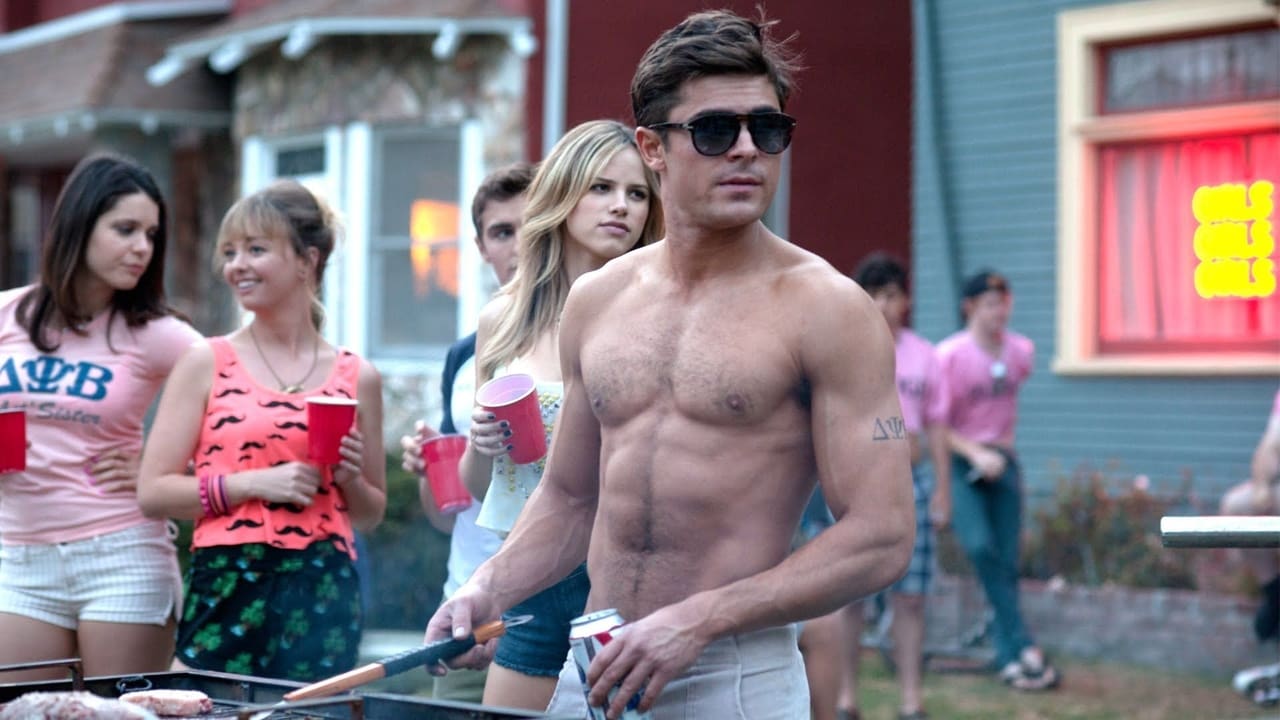
Neighbors isn’t trying to reinvent the cinematic wheel, but it executes its "Family vs. Frat" premise with a surprising amount of heart and a relentless joke density. It’s a film that understands that both sides of the fence are equally ridiculous: the frat boys are obsessed with a legacy that doesn't matter, and the parents are obsessed with a "coolness" they’ve already traded for a mortgage. It’s messy, frequently gross, and occasionally sweet—much like parenthood itself, only with more property damage and significantly more Zac Efron shirtless scenes. If you’re looking for a reminder of the era when the R-rated studio comedy was king, this is a top-tier choice.

Keep Exploring...
-
Neighbors 2: Sorority Rising
2016
-
Get Him to the Greek
2010
-

Forgetting Sarah Marshall
2008
-

The Five-Year Engagement
2012
-
Knocked Up
2007
-
Pineapple Express
2008
-
Bridesmaids
2011
-

21 Jump Street
2012
-

Warm Bodies
2013
-

17 Again
2009
-
Bride Wars
2009
-

Hannah Montana: The Movie
2009
-
He's Just Not That Into You
2009
-

Hotel for Dogs
2009
-
The Proposal
2009
-

The Ugly Truth
2009
-
Love & Other Drugs
2010
-

The Bounty Hunter
2010
-

Arthur Christmas
2011
-

Bad Teacher
2011