Predestination
"You are your own beginning and end."
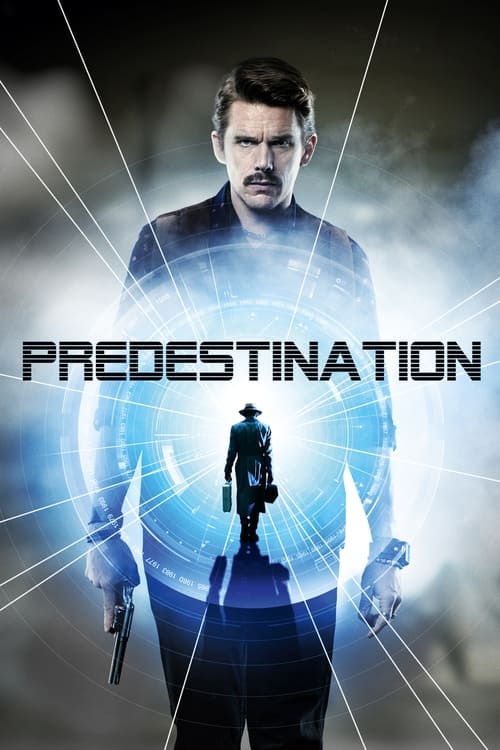
I first watched Predestination on a Tuesday night on my laptop while eating a bowl of cold, slightly soggy Corn Flakes because my microwave had finally given up the ghost. There was something about that specific brand of domestic patheticness that paired perfectly with the film’s opening act—a gritty, rain-slicked noir atmosphere that feels like a heavy wool coat soaked in stagnant water. By the time the credits rolled, I wasn't thinking about the microwave anymore. I was staring at my reflection in the black screen, wondering if I even existed in a linear fashion.
Released in 2014, right at the tail end of what we now consider the "pre-streaming dominance" era, Predestination is a peculiar beast. It’s a low-budget Australian sci-fi that managed to do more with $5 million than most Marvel movies do with $250 million. It’s an adaptation of Robert A. Heinlein’s short story "—All You Zombies—", a piece of writing long considered "unfilmable" because its logic isn't just a circle; it's a knot so tight it cuts off circulation to your brain.
The Most Impressive Magic Trick of 2014
The film starts in a bar. Ethan Hawke, playing a "Temporal Agent" disguised as a bartender, pours a drink for a man known as the Unmarried Mother. This man, played by a then-unknown Sarah Snook, begins to tell his life story. In any other movie, a twenty-minute monologue in a bar would be a death sentence for the pacing. Here, it’s the hook that sinks deep into your cheek.
Sarah Snook gives a performance that honestly should have bypassed the indie circuit and gone straight to the Oscars. She plays Jane—a woman recruited for a space program—and John, the man she becomes. The makeup and prosthetics are good, but it’s Snook’s physicality that sells the transition. She carries a specific kind of wounded masculinity that feels entirely lived-in. Watching her tell this tragic, sprawling story of abandonment and biological destiny is a masterclass in empathy. If you think her work in Succession is good, this is the foundation that house was built on.
Ethan Hawke, meanwhile, is the perfect anchor. By 2014, Hawke had fully transitioned into his "soulful, weathered professional" era. He plays the Bartender with a weary, flickering internal light, like a man who has seen the end of the world so many times he’s forgotten what the beginning looked like. He’s the audience surrogate, but as the film progresses, you realize he’s just as trapped in the machinery as anyone else.
Low-Budget Ingenuity vs. Narrative Ambition
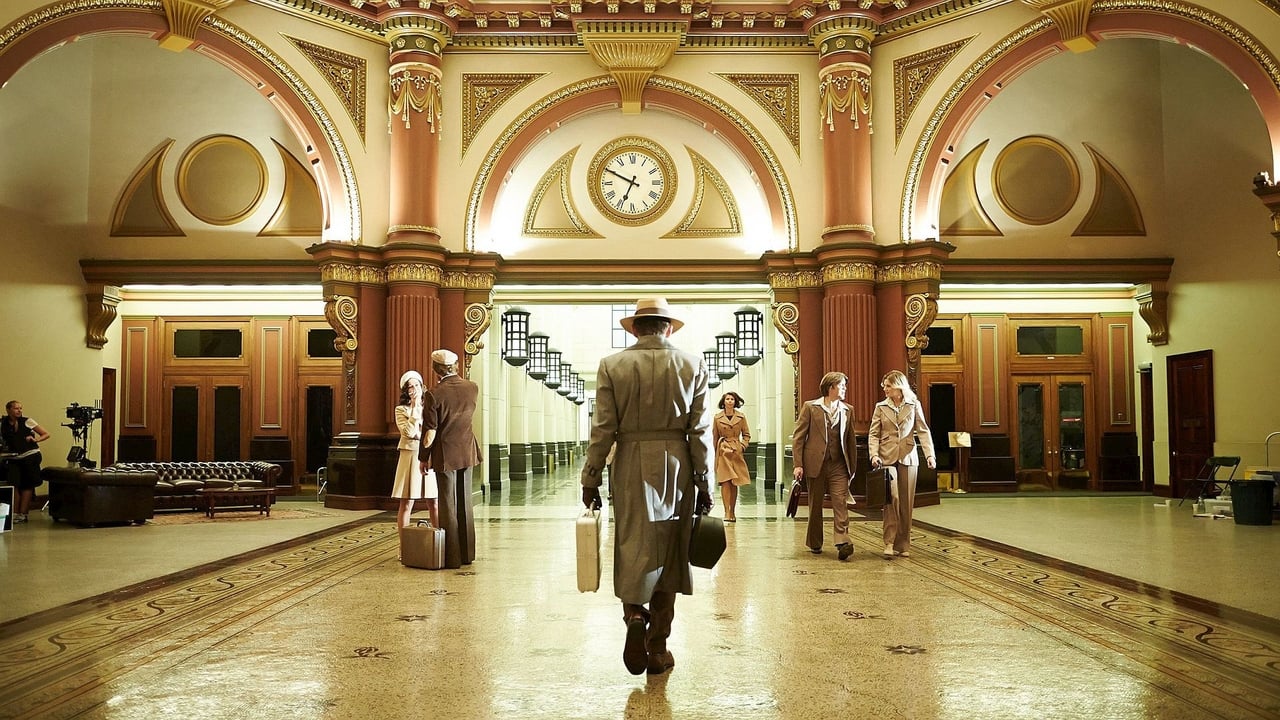
One thing I love about this era of science fiction—think Moon (2009) or Ex Machina (2014)—is how directors Michael and Peter Spierig use the "Indie Renaissance" toolkit to hide their lack of funds. They don't try to show you a sprawling future city with bad CGI. Instead, they give you a typewriter, a violin case that doubles as a time machine, and a lot of shadows.
The production design by Matthew Putland is exceptional. It captures a "retro-future" aesthetic that feels timeless. The 1970s look like the 1970s, but with a slight, oily distortion. This isn't the clean, sterile time travel of Star Trek; it’s messy, painful, and leaves physical scars. The Spierig brothers realize that sci-fi is always better when the technology looks like it was bought at a thrift store and repaired with duct tape.
The film’s central mystery involves the "Fizzle Bomber," a terrorist the Agent is obsessed with stopping. To be honest, the hunt for the bomber is the least interesting thing about a movie that is essentially an infinite narcissistic loop. The "thriller" elements are really just the scaffolding for a deeply philosophical, almost operatic exploration of identity. It asks a terrifying question: If you could meet yourself, would you love yourself, or would you kill yourself?
Why It Became a Cult Classic
Predestination bombed. Hard. It made less than its five-million-dollar budget back in its initial theatrical run. But like the best cult films, it found its life on DVD and early VOD platforms. It’s the kind of movie that demands you pause it, talk to your friend for ten minutes about the paradox you just witnessed, and then hit play again.
The fan community around this film is obsessed with the timeline. There are charts online that look like a plate of digital spaghetti trying to map out exactly when Jane becomes John and when the Bartender enters the loop. But you don't need a chart to feel the emotional impact. Unlike the intellectual coldness of Christopher Nolan’s Tenet, Predestination is a tragedy. It’s about the loneliness of being a "self-made man" in the most literal, horrifying sense of the term.
Apparently, the Spierig brothers were so committed to the look of the film that they shot it in only 32 days in Melbourne. You can feel that frantic energy in the edit. It’s tight, lean, and doesn't waste a second of its 98-minute runtime. In an era where movies feel bloated and terrified of leaving any plot point unexplained, Predestination trusts you to keep up. It hands you the pieces of the puzzle and watches with a smirk as you realize they all belong to the same corner of the board.
Predestination is the rare sci-fi film that manages to be both a mind-bending puzzle and a heartbreaking character study. It’s a film that rewards your attention without feeling like it’s lecturing you. Looking back from a decade later, it stands as one of the best examples of how "Modern Cinema" used digital intimacy to tell stories that would have been lost in the spectacle of the 80s or 90s. If you haven't seen it, clear your schedule, put your phone away, and prepare to have your brain rearranged. Just make sure your microwave works before you sit down.


Keep Exploring...
-
Daybreakers
2010
-
Gattaca
1997
-

28 Days Later
2002
-
Equilibrium
2002
-
The Butterfly Effect
2004
-
Serenity
2005
-

Starship Troopers
1997
-
Children of Men
2006
-

Paprika
2006
-

V for Vendetta
2006
-
Limitless
2011
-
Source Code
2011
-
The Maze Runner
2014
-
9
2009
-
Pandorum
2009
-
Looper
2012
-
Rise of the Planet of the Apes
2011
-

The Hunger Games
2012
-
Gravity
2013
-

The Flu
2013