The Monuments Men
"To save history, they’ll have to steal it."
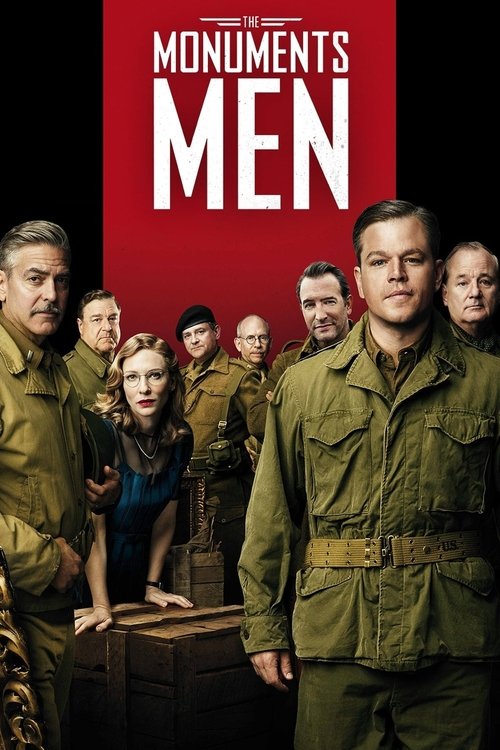
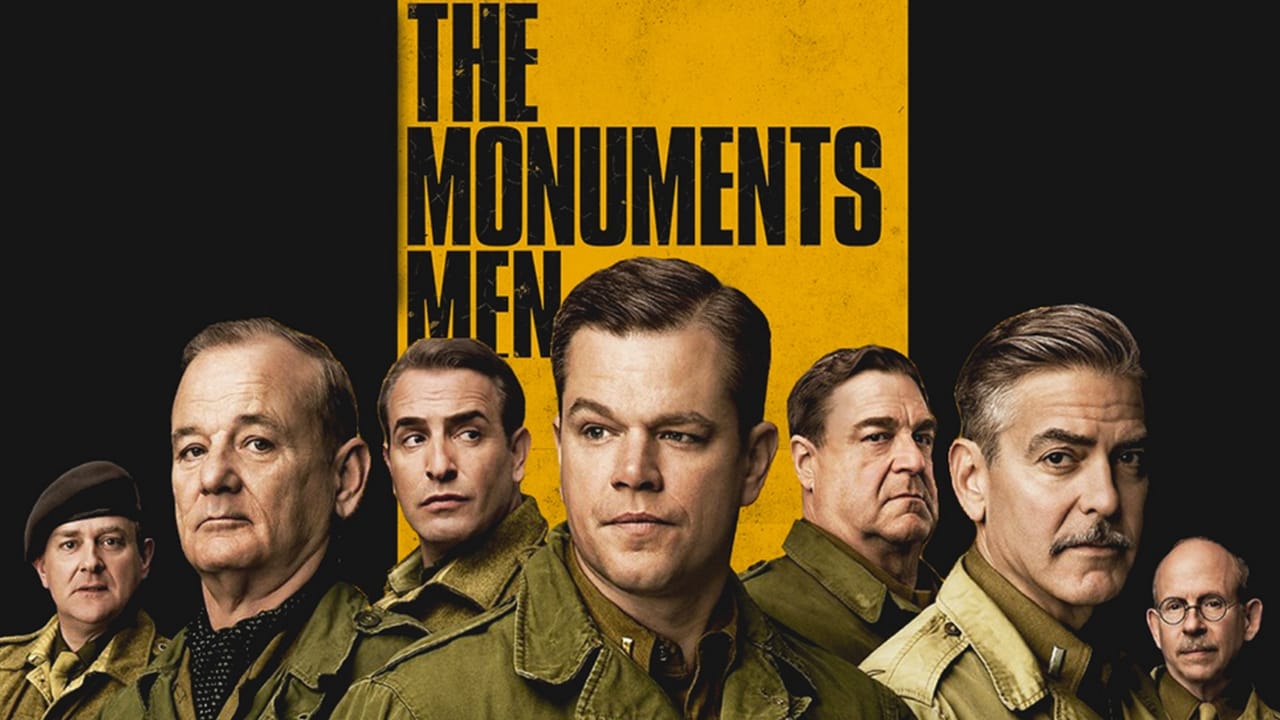
There was a peculiar moment around 2014 where it felt like George Clooney was single-handedly trying to keep the "Gentleman’s Ensemble" genre on life support. While the rest of Hollywood was busy duct-taping capes onto every available actor and building sprawling cinematic universes, Clooney gathered a group of his most charismatic friends to make a movie that felt like it had been cryogenically frozen in 1965 and thawed out for a modern audience. The Monuments Men is a strange creature—a World War II movie that refuses to be a "war movie" in the traditional sense. It’s a heist film where the loot is a five-hundred-year-old statue of the Madonna, and the thieves are middle-aged men with bad knees. I watched this on a Tuesday night while eating a bowl of cereal that had gone slightly soggy, and honestly, that damp, softened crunch matched the film’s pacing better than any theater popcorn ever could.
The Art of the Hangout Movie
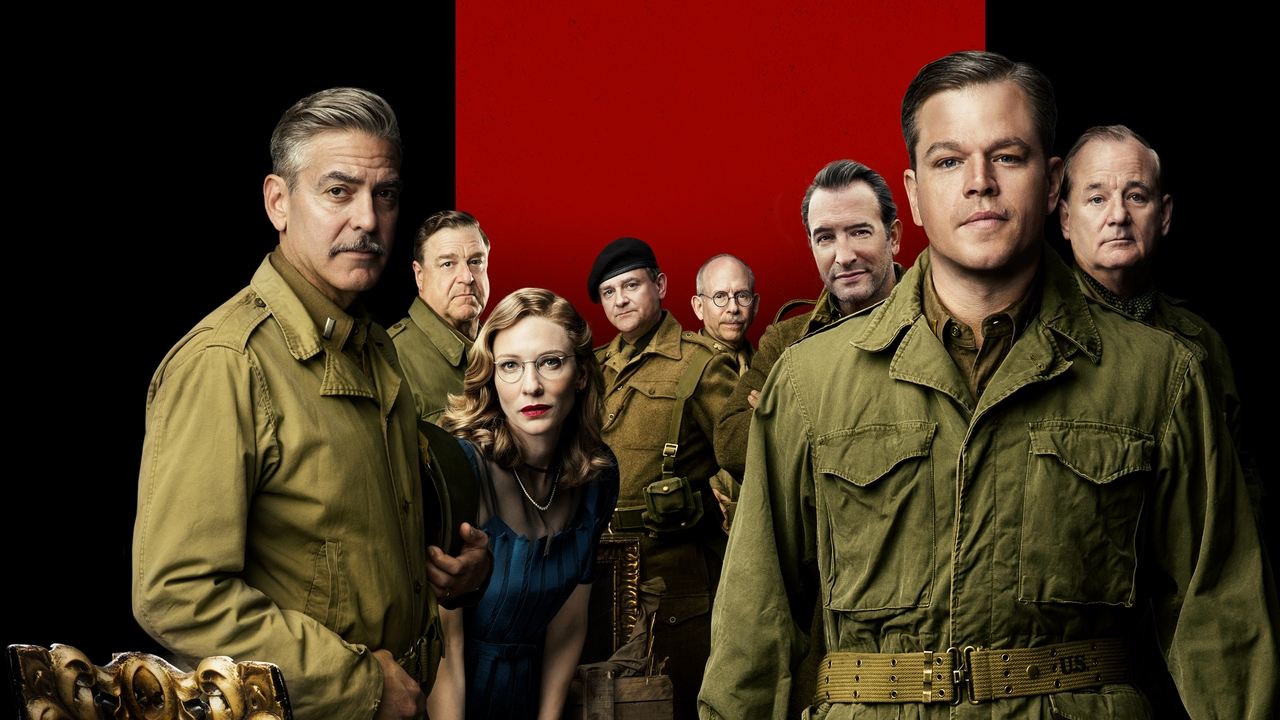
I’ve always been a sucker for the "recruitment montage," and George Clooney (The Descendants) knows exactly how to play those chords. He plays Frank Stokes, an art historian who convinces the government that if we win the war but lose two thousand years of culture, we’ve still lost. He rounds up a team including Matt Damon (The Bourne Identity), Bill Murray (Groundhog Day), and John Goodman (10 Cloverfield Lane). On paper, this is a dream team. In practice, it’s essentially an Oceans Eleven prequel where everyone is tired and the casinos are replaced by bombed-out cathedrals.
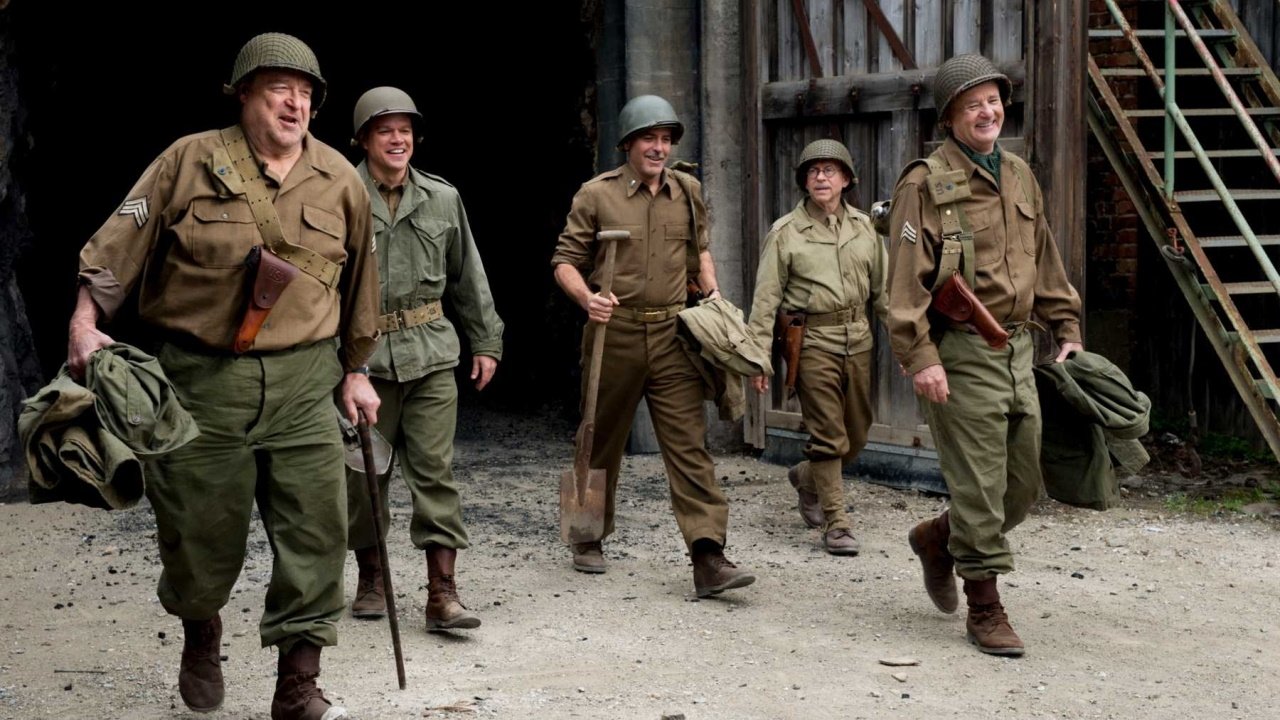
The film thrives on its chemistry rather than its combat. There’s a wonderful, low-stakes energy to seeing John Goodman and Jean Dujardin (The Artist) wandering through the woods, or Bill Murray and Bob Balaban (Moonrise Kingdom) sharing a quiet moment in a tent. Looking back from our current era of hyper-fast editing, the rhythm here feels surprisingly leisurely. It’s a "hangout" movie in army fatigues. Apparently, the real-life chemistry was just as laid back; Bill Murray reportedly showed up to set with no script and just asked Clooney what he needed to do. You can see that effortless, slightly improvised wit in every frame he’s in.
A War Film Without the War
If you go into this expecting Saving Private Ryan, you’re going to be frustrated. Clooney, who also directed and co-wrote the screenplay, makes a deliberate choice to keep the actual fighting on the periphery. This was a transition point for cinema; we were moving away from the gritty realism that dominated the post-9/11 war film era and back toward something more romantic and episodic. The action set pieces aren't about holding a bridge; they’re about figuring out how to move a massive painting without it getting shredded by shrapnel.
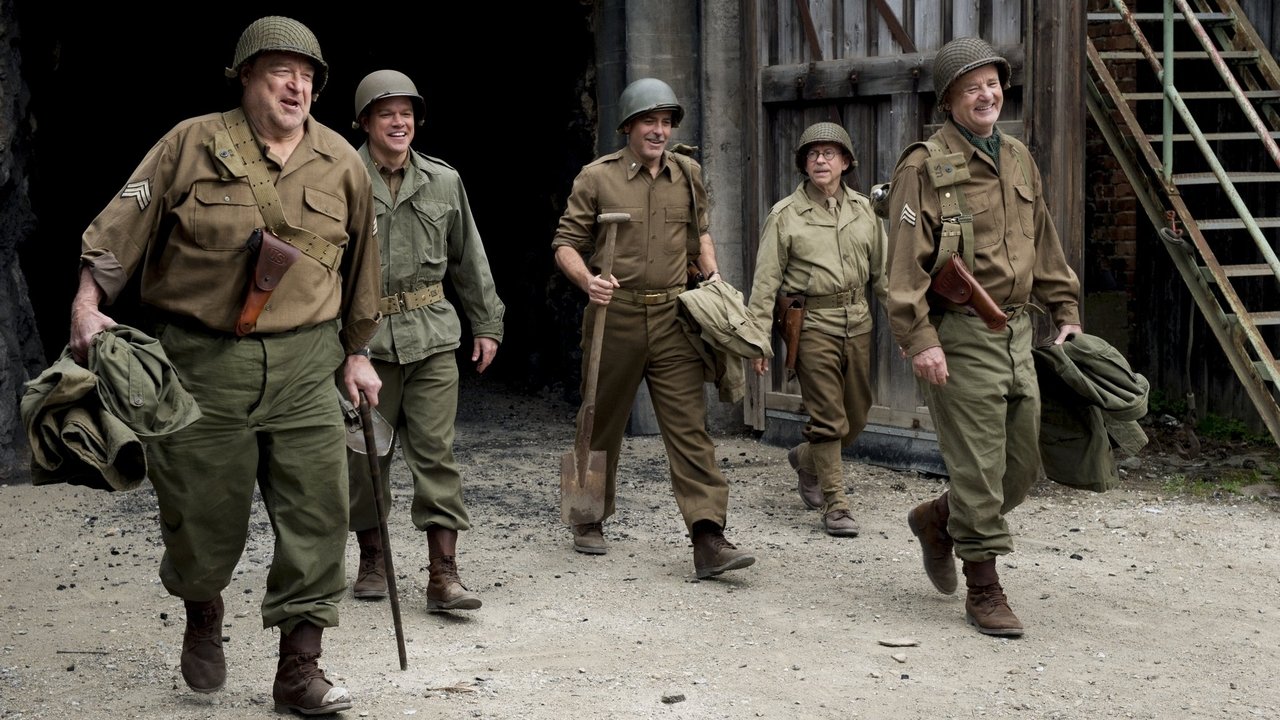
The cinematography by Phedon Papamichael gives the whole thing a warm, golden-hour glow that feels like a vintage postcard. It’s digital, but it’s trying desperately to evoke the look of 35mm film from the 1950s. This era of the early 2010s was a fascinating time for digital tech—we were finally getting cameras that didn't look like "video," and Clooney uses that to create a polished, almost sanitized version of the European front. Sometimes it works, making the art feel like the only thing that matters. Other times, the stakes feel less like a global tragedy and more like a very high-end storage unit dispute.
The standout, for me, is Cate Blanchett (The Aviator) as Claire Simone. Based on the real-life heroine Rose Valland, she provides the film’s only real sense of friction. While the men are playing at being soldiers, she is living the occupation, quietly documenting the Nazi theft of French treasures. Her performance is sharp and guarded, providing a necessary anchor to a movie that occasionally threatens to float away on its own charm.
Why It Occupies Your Dad’s DVD Player
Despite being a modest box office success, The Monuments Men didn't exactly set the critical world on fire. It was too soft for the history buffs and too slow for the action fans. Yet, it has developed a massive second life as a "Dad Movie" staple—the kind of film that is always playing on a loop on cable or sitting at the top of a streaming "Recommended" list. It’s comfort food. It’s a reminder of a time when we went to the movies just to see movie stars be movie stars.
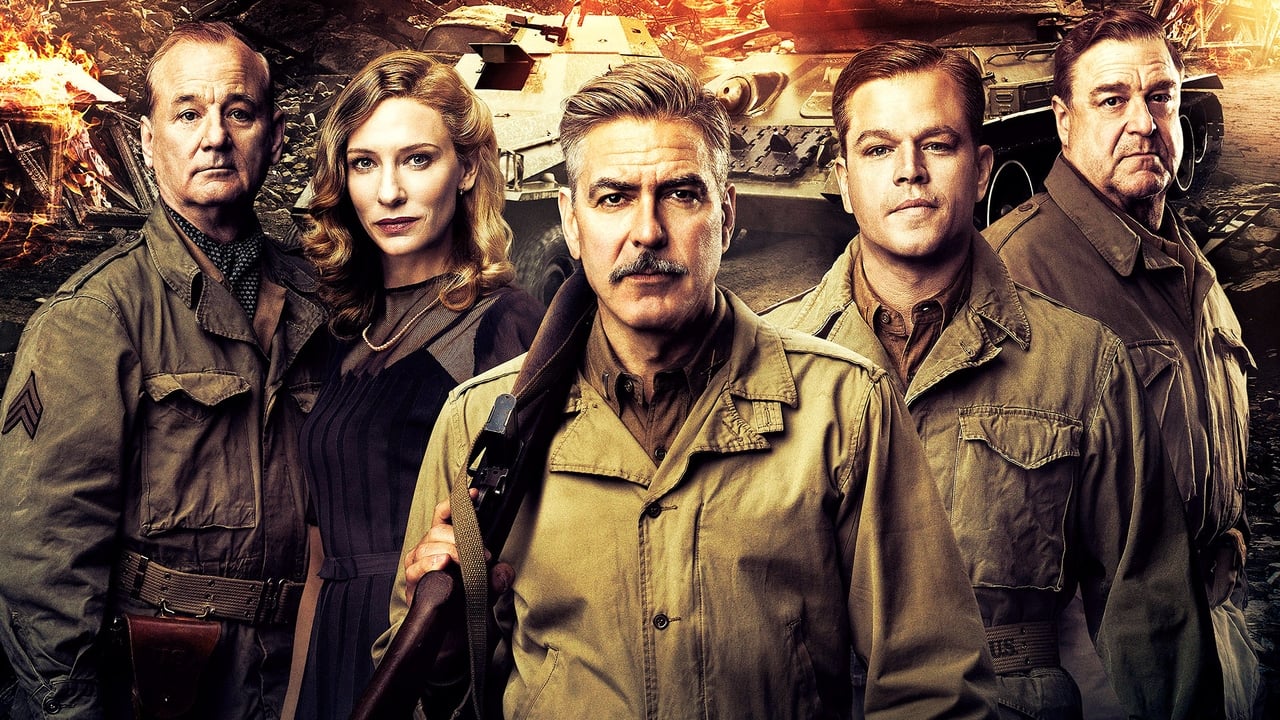
There’s a lot of trivia that makes the film more interesting in retrospect. The real Monuments Men actually recovered over five million pieces of art, a scale that the film barely scratches. Also, the real Harry Ettlinger (played by Dimitri Leonidas) actually visited the set and was moved to tears by the recreation of the salt mines. That connection to history is the film's strongest asset. While the pacing might stumble and the tone might be a bit too "jolly" for a war story, the core message—that art is worth dying for—is handled with a sincerity that I find hard to dislike.
I don't think George Clooney was trying to reinvent the wheel here; he was trying to make sure the wheel still worked. It’s a flawed, charming, and deeply old-fashioned piece of entertainment that feels like it belongs in a different decade. It’s not a masterpiece, but in a world of CGI explosions, there’s something genuinely refreshing about a movie where the climax involves finding a hidden stash of Michelangelo sculptures. It’s a film that asks for very little and gives you a pleasant, star-studded afternoon in return. If you haven't seen it since 2014, it’s worth a revisit, if only to see Bill Murray try to look serious in a helmet.
Keep Exploring...
-

Alexander
2004
-
King Arthur
2004
-
The Ides of March
2011
-
Green Zone
2010
-
Kingdom of Heaven
2005
-
The Patriot
2000
-
Pompeii
2014
-
The Messenger: The Story of Joan of Arc
1999
-
Defiance
2008
-
Tears of the Sun
2003
-
12 Strong
2018
-

The Perfect Storm
2000
-
Confessions of a Dangerous Mind
2002
-
Robin Hood
2010
-
300: Rise of an Empire
2014
-
Good Night, and Good Luck.
2005
-
'71
2014
-

Braveheart
1995
-
Public Enemies
2009
-

47 Ronin
2013