Walk of Shame
"One yellow dress. Zero bars. Infinite chaos."
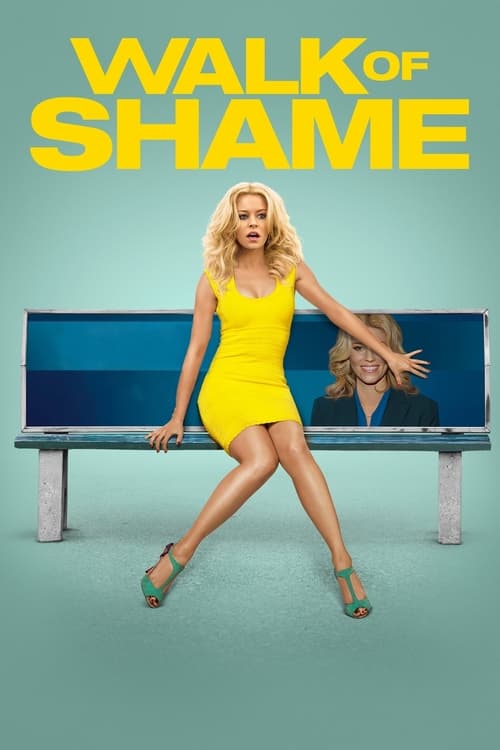
2014 feels like ten minutes ago until you watch a movie whose entire plot hinges on the absence of a smartphone. It’s a bizarrely specific historical window—a time when we were already biologically tethered to our iPhones, yet the safety net of ride-sharing apps hadn't quite blanketed every corner of the urban sprawl. Rewatching Walk of Shame today, I realized it functions as a frantic, neon-yellow time capsule of that exact moment. It’s a "one crazy night" farce that arrived just as the mid-budget studio comedy was beginning its slow crawl toward extinction.
I first caught this on a rainy Tuesday afternoon while trying to fold a fitted sheet—a task that, much like the protagonist’s journey, is defined by high blood pressure and a complete lack of logic. It’s the kind of movie that thrives in that low-stakes viewing environment. It doesn’t ask for your respect; it just wants to keep you stressed out for 95 minutes.
The Art of the High-Stakes Hustle
The premise is pure, unfiltered anxiety. Elizabeth Banks plays Meghan Miles, a buttoned-up news anchor in Denver (though the film is set in a very sweaty-looking Los Angeles) who loses out on a dream network job and a fiancé in the same afternoon. Her friends, played with delightful "bad influence" energy by Gillian Jacobs and Sarah Wright, drag her out for a night of tequila and regrettable decisions. One "on-the-rebound" hookup with a charming fiction writer (James Marsden) later, Meghan finds herself stranded in downtown L.A. at 5:00 AM.
She has no car, no phone, no ID, and no money. Oh, and she just found out the network job is back on the table if she can make it to the station for the 6:00 PM broadcast. What follows is a relentless gauntlet of misunderstandings, stereotypes, and physical comedy. Elizabeth Banks is essentially playing a human pinball in a canary-yellow bandage dress, and honestly, her commitment is the only thing keeping the movie from flying off the rails. She does a lot of heavy lifting here, managing to stay likable even when the script forces her into increasingly absurd tropes.
A Relic of the "Dumped" Release Era
Looking back, Walk of Shame is a fascinating case study in how the industry was changing. It was produced by Lakeshore Entertainment for a modest $6 million and was essentially "dumped" into a limited theatrical release and VOD simultaneously. In 2014, that was often a sign of a studio's lack of faith, but in retrospect, it was just an early tremor of the streaming earthquake.
The film feels like it was written in 1998 and polished in 2013. It relies on the kind of "urban panic" humor that felt a bit dated even at the time of release. Meghan’s encounters with a trio of crack dealers—who, in a subversion of the trope, turn out to be her biggest supporters and news fans—is the kind of "edgy" comedy that hasn't aged particularly gracefully, though the chemistry between the actors almost makes it work. There’s a certain charm to how small-scale it is. In an era where every comedy started feeling like a 150-minute Apatow improv session, Walk of Shame is lean, mean, and obsessed with its own ticking clock.
The Supporting Gallery of Chaos
While Banks is the engine, the movie is fueled by its weirdo supporting cast. James Marsden is chronically underused as the "nice guy" love interest, but he brings a certain "Disney prince who wandered into a noir" energy that balances the grime of the story. The real highlights, however, are Bill Burr and Ethan Suplee as two of the most incompetent police officers in cinematic history. Bill Burr’s signature "simmering rage" is perfectly calibrated here, especially as he spends the movie chasing a woman he’s convinced is a high-end prostitute rather than a stranded journalist.
The film's visual language is aggressively bright, a stark contrast to the gritty reality of the neighborhoods Meghan is traversing. The cinematography by Jonathan Brown treats the yellow dress like a beacon of hope (or a target) in every frame. It’s a movie that understands the geometry of a gag—how to frame a woman climbing a chain-link fence in five-inch heels so that you feel every potential twisted ankle.
I’ll be honest: the joke hit-to-miss ratio is about 60/40. Some gags land with a thud, and the plot requires Meghan to make some truly baffling decisions to keep the momentum going. But it’s basically 'The Odyssey' if Homer had a thing for spandex and crack dens, and there's something admirable about its dedication to the bit. It never tries to be a "prestige" comedy; it just wants to be a loud, colorful nightmare.
Walk of Shame is far from a masterpiece, but it’s a highly watchable relic of the final days of the mid-budget farce. It captures a specific anxiety of the early 2010s—the fear of being "off the grid" in a world that had just finished building the grid. If you’re looking for a breezy, slightly stressful 90 minutes anchored by a top-tier physical performance from Elizabeth Banks, you could do a lot worse than this forgotten yellow-dress odyssey. It’s the perfect movie for when you want to feel better about your own life choices, or at least your own cell phone battery life.
Keep Exploring...
-
Little Nicky
2000
-

Drillbit Taylor
2008
-
Mr. Deeds
2002
-
Death at a Funeral
2010
-

Stand Up Guys
2012
-
21 & Over
2013
-

The Mighty Ducks
1992
-
The Do-Over
2016
-

Hop
2011
-
Aliens in the Attic
2009
-
I Love You, Beth Cooper
2009
-
I Love You, Man
2009
-
The Informant!
2009
-

Youth in Revolt
2009
-
Cop Out
2010
-
Get Him to the Greek
2010
-
I Love You Phillip Morris
2010
-

Morning Glory
2010
-
Nanny McPhee and the Big Bang
2010
-
The Back-Up Plan
2010