Bridge of Spies
"A quiet man in a world of loud secrets."

The first ten minutes of Bridge of Spies are almost entirely silent, and for a modern blockbuster directed by the man who gave us the T-Rex roar and the beach landing at Normandy, that’s a hell of a flex. We watch a middle-aged man with a receding hairline paint a self-portrait, answer a phone, and retrieve a hollowed-out nickel from under a park bench. There is no pulse-pounding score, no frantic editing, just the methodical movements of a man who knows he is being watched. It is a sequence that demands your patience and rewards it with pure, uncut atmosphere.

I watched this film on a Tuesday evening while nursing a glass of lukewarm ginger ale that had lost its fizz, and honestly, that flat, slightly medicinal sting felt like the perfect accompaniment to the desaturated, chilly world Steven Spielberg builds here. This isn't the romanticized, James Bond version of espionage. It’s a movie about men in heavy wool coats negotiating in drafty rooms, where the most dangerous weapon isn't a silenced Walther PPK, but a well-worded legal brief.
The Standing Man and the Stoic Spy
At the heart of the film is the relationship between James Donovan, a Brooklyn insurance lawyer played with weary integrity by Tom Hanks, and Rudolf Abel, the Soviet spy captured in that opening sequence. Mark Rylance won an Oscar for playing Abel, and he earned every ounce of that gold by doing almost nothing. His performance is a masterclass in stillness. Every time Donovan asks him if he’s worried about his impending execution or the weight of his situation, Abel simply asks, "Would it help?"
It’s a line that could have been a "catchphrase" in a lesser movie, but here it feels like a profound philosophy of survival. Tom Hanks is, well, Tom Hanks. He does that thing where he makes being a "good man" feel like an exhausting, uphill battle rather than a superhero trait. Hanks plays Donovan as a man who isn't necessarily a hero by choice, but by a stubborn, almost annoying adherence to the Constitution. He’s the guy who insists on reading the fine print when everyone else just wants to sign the paper and go home. It’s basically a high-stakes movie about the beauty of paperwork and due process, and somehow, Spielberg makes that as tense as a ticking bomb.
A Coen-Flavored Cold War
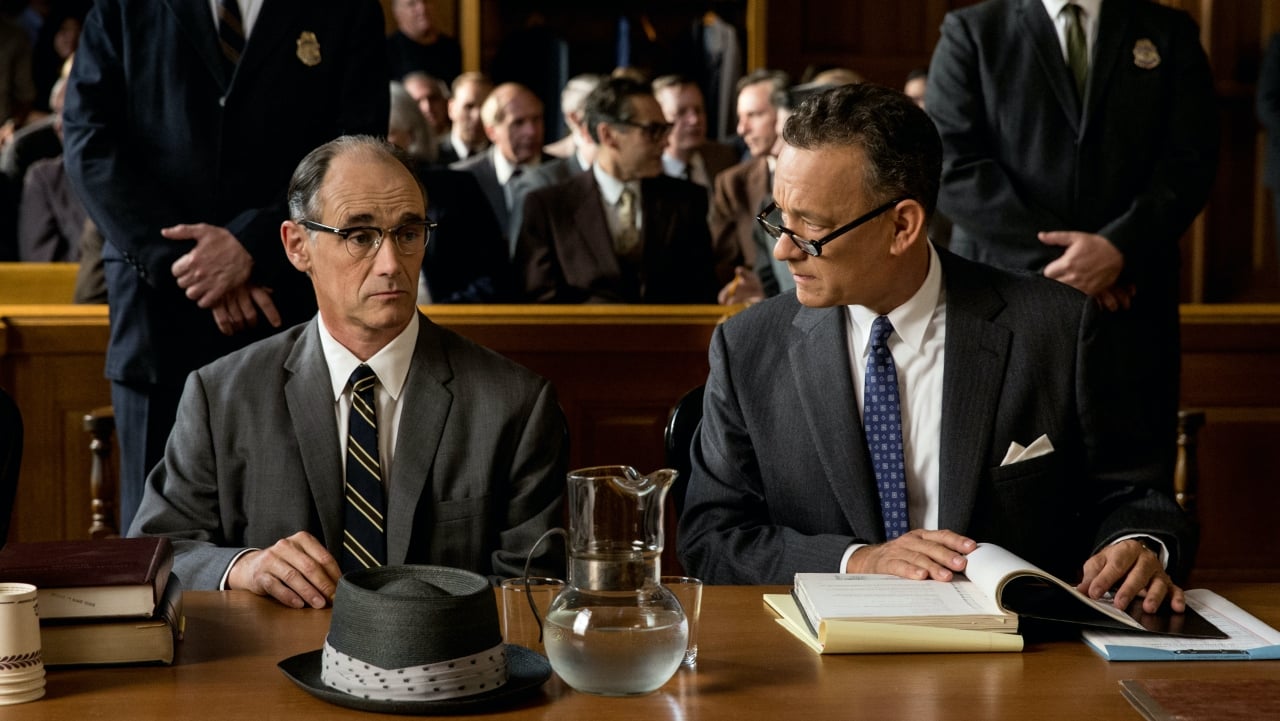
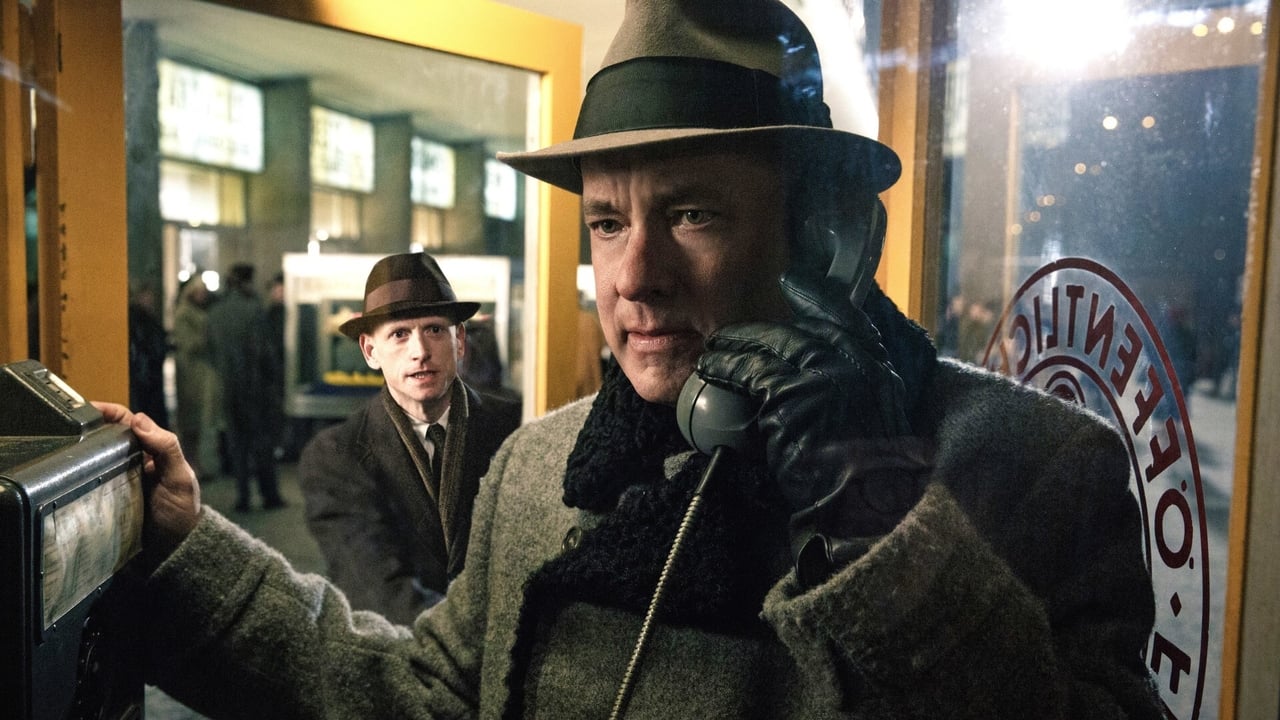
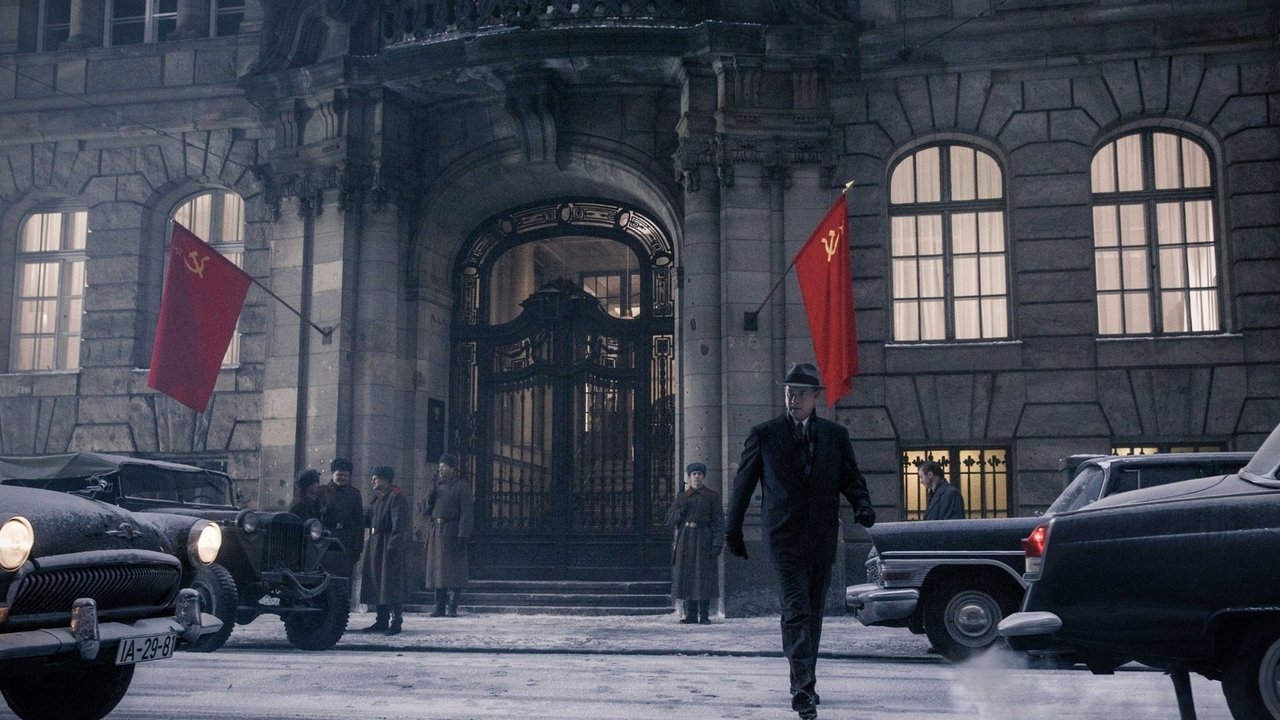
The secret sauce here is the screenplay, which received a heavy polish from Ethan Coen and Joel Coen. You can feel their fingerprints in the dry, acidic wit that peppers the dialogue. There is a rhythmic absurdity to the scenes in East Berlin—Donovan dealing with various "officials" who may or may not exist, wandering through snowy, bombed-out streets, and getting his overcoat stolen by a gang of youths.
The middle act shifts from a courtroom drama to a Cold War procedural as Donovan heads to Berlin to negotiate a two-for-one swap: the Soviet spy Abel for the captured U-2 pilot Francis Gary Powers (Austin Stowell) and an American student, Frederic Pryor, who was just in the wrong place when the Wall went up. The depiction of the Berlin Wall's construction is harrowing; Janusz Kamiński’s cinematography drains the color out of the frame until the world looks like a bruised lung. It’s grim, it’s cold, and it captures that specific 2015-era cinematic trend of "dad movies" that actually respect the audience's intelligence.
The Scale of the Deal
While Bridge of Spies feels intimate, its production was anything but. This was a significant commercial win for a mid-budget adult drama, a genre that was already starting to feel the squeeze of franchise dominance in the mid-2010s.
The Power of the Coens: The script was originally written by Matt Charman, but Spielberg brought in the Coen Brothers to inject their signature dark irony into the Cold War gloom. A Massive Return: Despite its talky nature and 141-minute runtime, the film grossed over $165 million against a $40 million budget. In today’s streaming-heavy landscape, a film like this would likely struggle to find a theatrical window, but in 2015, it was a certified "prestige hit." Authentic Locations: Much of the film was shot in Berlin and Potsdam, including the actual Glienicke Bridge where the real-life prisoner exchange took place in 1962. Standing on the historical site adds a weight to the finale that CGI simply can't replicate. The Hanks-Spielberg Streak: This marked the fourth collaboration between the duo (following Saving Private Ryan, Catch Me If You Can, and The Terminal), cementing their status as the modern industry's most reliable "quality" brand. * The Mark Rylance Effect: Mark Rylance was largely unknown to American film audiences before this, being primarily a titan of the London stage. His casting was a gamble that paid off, proving that a quiet, understated performance could still dominate a film filled with veteran stars like Alan Alda and Amy Ryan.
Bridge of Spies is a reminder that tension doesn't always require a high-speed chase or a digital explosion. It’s a film about the moral courage required to treat an enemy like a human being, even when the rest of the world is screaming for blood. Spielberg manages to find the warmth in the Cold War, and while the ending leans into his trademark sentimentality, the journey there is as sharp and cold as a shard of ice. If you’re looking for a thriller that treats your brain like an adult, this is the exchange you want to make.

Keep Exploring...
-
The Accountant
2016
-
It
2017
-
Along with the Gods: The Two Worlds
2017
-
Once Upon a Time... in Hollywood
2019
-
The Post
2017
-
Conclave
2024
-

Room
2015
-

Nocturnal Animals
2016
-
Patriots Day
2016
-
Snowden
2016
-

Detroit
2017
-
Dark Waters
2019
-
Hotel Mumbai
2019
-
The Lighthouse
2019
-
Uncut Gems
2019
-
Promising Young Woman
2020
-
10 Cloverfield Lane
2016
-
The Shallows
2016
-
Glass
2019
-
Munich
2005