Eye in the Sky
"The war room is the new battlefield."
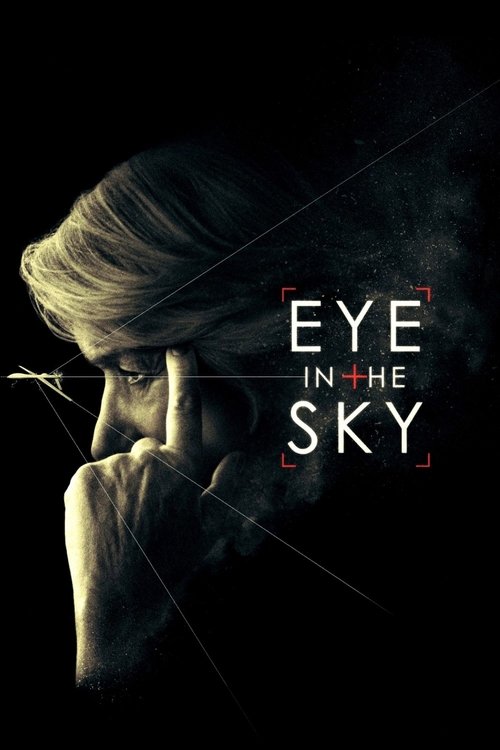
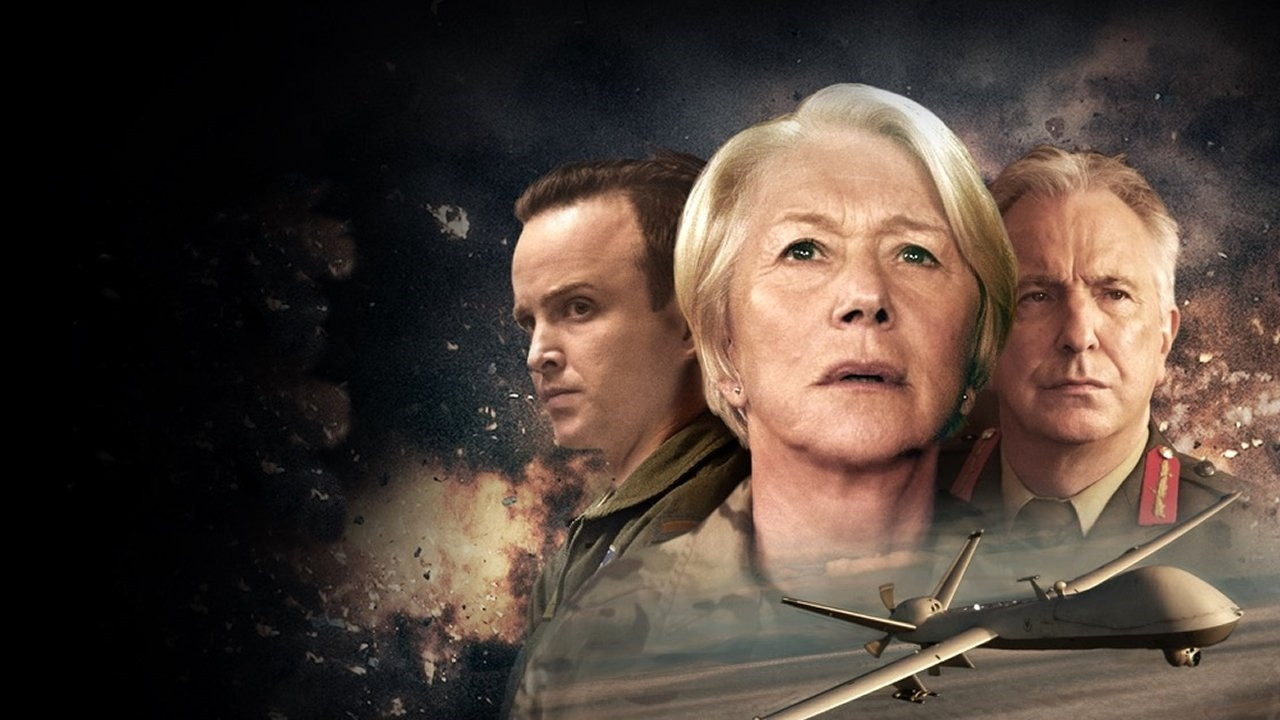
The most unsettling thing about Eye in the Sky isn't the sight of a suicide vest being prepped in a dusty Kenyan safehouse; it’s the sound of middle-aged politicians in wood-paneled London rooms arguing over "legal clearance" while a nine-year-old girl sells bread in the middle of a target zone. This is a film that operates like a pressure cooker with a broken valve. It takes a global military operation and shrinks it down to the size of a laptop screen, making the vast distance of modern warfare feel claustrophobically intimate.

I first sat down with this movie on a Tuesday night when I couldn't sleep, drinking a cup of lukewarm peppermint tea that I’d forgotten to finish. By the forty-minute mark, the tea was cold, and I was sitting so close to my monitor that I could see the individual pixels on Aaron Paul’s tear-streaked face. It’s that kind of movie—it doesn’t let you breathe, mostly because it refuses to give you the easy out of a "good guy" or a "bad guy" solution.
The High-Stakes Math of Human Lives
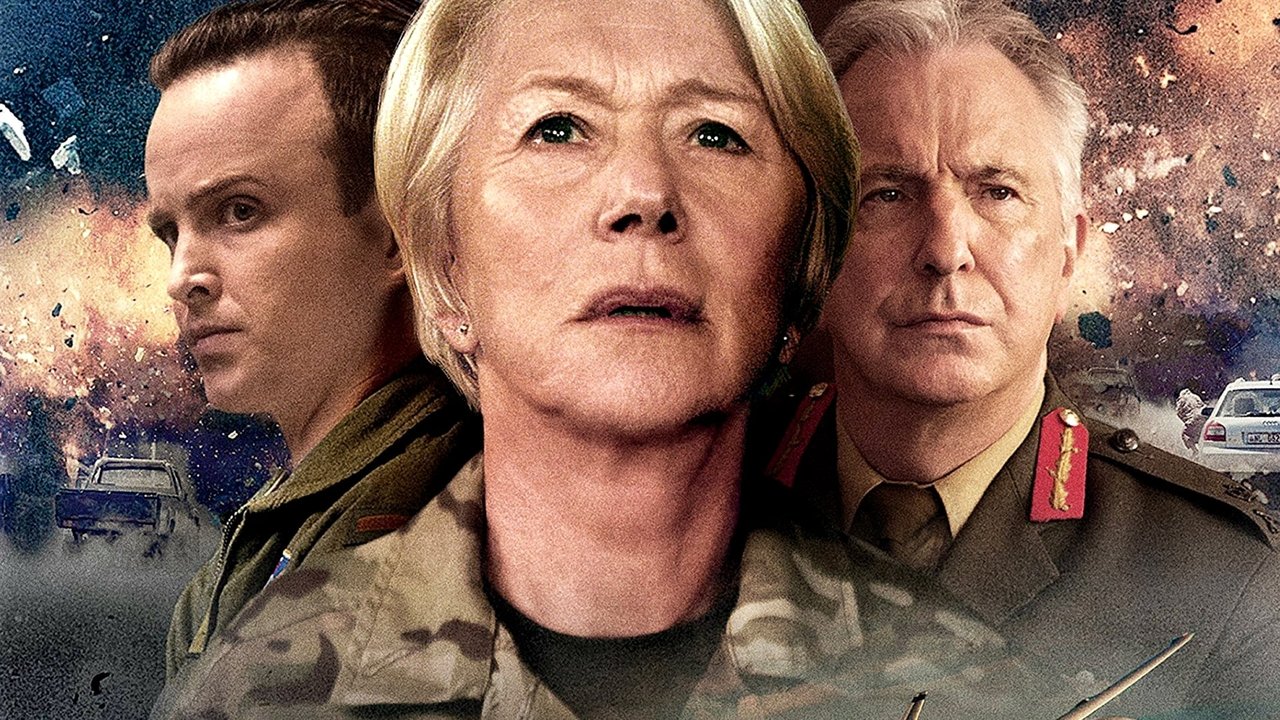
Directed by Gavin Hood, the film functions as a real-time moral exercise. It’s the "trolley problem" for the drone age. Helen Mirren, playing Colonel Katherine Powell, is the driving force. She’s cold, efficient, and utterly convinced that the ends justify the means. She’s tracked a group of high-level terrorists for years, and now that she has them in her sights, she isn't about to let a "collateral damage" projection stop her. Mirren plays the role with a terrifyingly sharp focus; you get the sense she hasn't slept since the late nineties.
Opposite her, Aaron Paul as Steve Watts—the pilot actually holding the joystick in a trailer in Nevada—serves as the film's conscience. If you’ve seen Breaking Bad, you know Paul is the king of the "moral crisis" look, but here he’s even more stripped down. He’s just a guy who wants to follow orders but can't stomach the idea of being the one to pull the trigger on a child. The politicians in this movie are more terrifying than the terrorists, primarily because they treat life-and-death decisions like they’re debating a zoning ordinance for a new parking garage.
Technology and the Disconnect of Distance
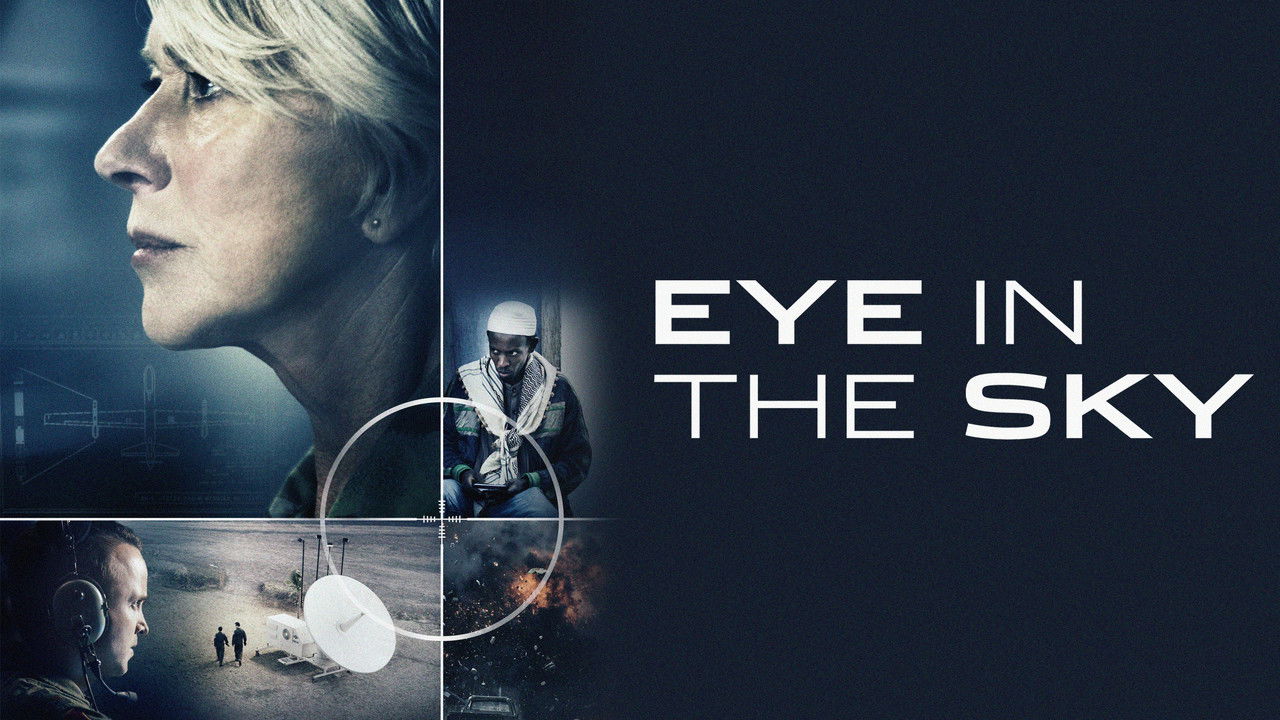
What makes Eye in the Sky feel so relevant to our current moment is how it depicts the "democratization" of surveillance. We see bird-drones and beetle-sized cameras operated by Barkhad Abdi (the breakout star of Captain Phillips), who provides the film's most grounded and nerve-wracking sequences. He’s the one actually in the dirt, risking his life to get the "positive ID" that the people in London and D.C. demand before they authorize a strike.
The film leans heavily into the technological disconnect of the 2010s. We see the world through grainy thermal feeds and satellite imagery, a visual language we’ve become desensitized to through news cycles and video games. By forcing us to look at these images for 102 minutes, Gavin Hood re-sensitizes us. He makes the pixels feel like flesh. The cinematography by Haris Zambarloukos captures the sterile, fluorescent-lit interiors of the command centers in stark contrast to the vibrant, chaotic heat of the Nairobi streets. It’s a jarring shift that perfectly mirrors the mental disconnect of a pilot who can kill someone in Africa and then drive home to a suburban Vegas dinner ten minutes later.
A Final Bow for a Legend
It’s impossible to discuss this film without talking about Alan Rickman. This was his final live-action role, and he plays Lieutenant General Frank Benson with a weary, dry wit that only Rickman could provide. Watching him navigate the spinelessness of the British cabinet is a joy, even in such a grim context. There’s a specific scene involving the purchase of a doll for his daughter that feels incredibly poignant now—a reminder of the mundane lives these "architects of war" lead when the monitors are turned off.
Rickman gets the final word in the film, and it’s a line that lands like a gut punch. It’s a moment of pure, righteous indignation that serves as a fitting end to a career defined by gravitas. He reminds the audience (and the sniveling bureaucrats on screen) that while the technology has changed, the human cost of a bullet—or a Hellfire missile—remains the same.
While Eye in the Sky might have slipped under the radar for some amidst the noise of bigger franchise blockbusters in 2015, it remains one of the most vital explorations of modern conflict. It doesn't offer the comfort of a hero’s journey; it offers the cold, hard reality of a ledger where the numbers never quite add up.
This is a thriller that treats your intelligence with respect. It doesn't rely on explosions to create tension; it relies on the agonizing silence between a question and an answer. If you missed it during its initial release, find the biggest screen you can and turn off your phone. You’ll want to be fully present for the most uncomfortable 5-minute bread-selling sequence in cinematic history. It’s a film that stays with you long after the credits roll, making you question every "clean" headline you read about remote warfare.
Keep Exploring...
-
Official Secrets
2019
-
The Siege of Jadotville
2016
-

Son of Saul
2015
-
13 Hours: The Secret Soldiers of Benghazi
2016
-
Beasts of No Nation
2015
-

Land of Mine
2015
-
Suburra
2015
-

Suite Française
2015
-

Brimstone
2016
-

Miss Sloane
2016
-

A Bag of Marbles
2017
-

Detroit
2017
-
See You Up There
2017
-

The Zookeeper's Wife
2017
-
22 July
2018
-
Т-34
2018
-

Burning
2018
-
An Officer and a Spy
2019
-
Hotel Mumbai
2019
-

The Professor and the Madman
2019