High-Rise
"The higher you go, the lower you sink."
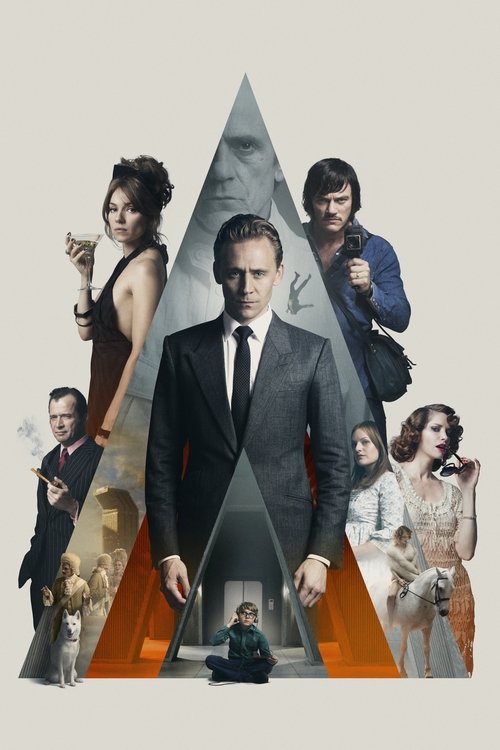
There is a specific kind of 1970s grime that only the British can truly perfect—a mix of stale cigarette smoke, damp concrete, and the lingering scent of a failed social experiment. When I sat down to watch Ben Wheatley’s adaptation of High-Rise, I felt that grime through the screen. I watched this while eating a slightly stale bag of salt-and-vinegar chips, and honestly, the stinging on my tongue felt oddly appropriate for the onscreen cruelty. It’s a film that wants to make you uncomfortable, and for 119 minutes, it succeeds with a grim, polished efficiency.
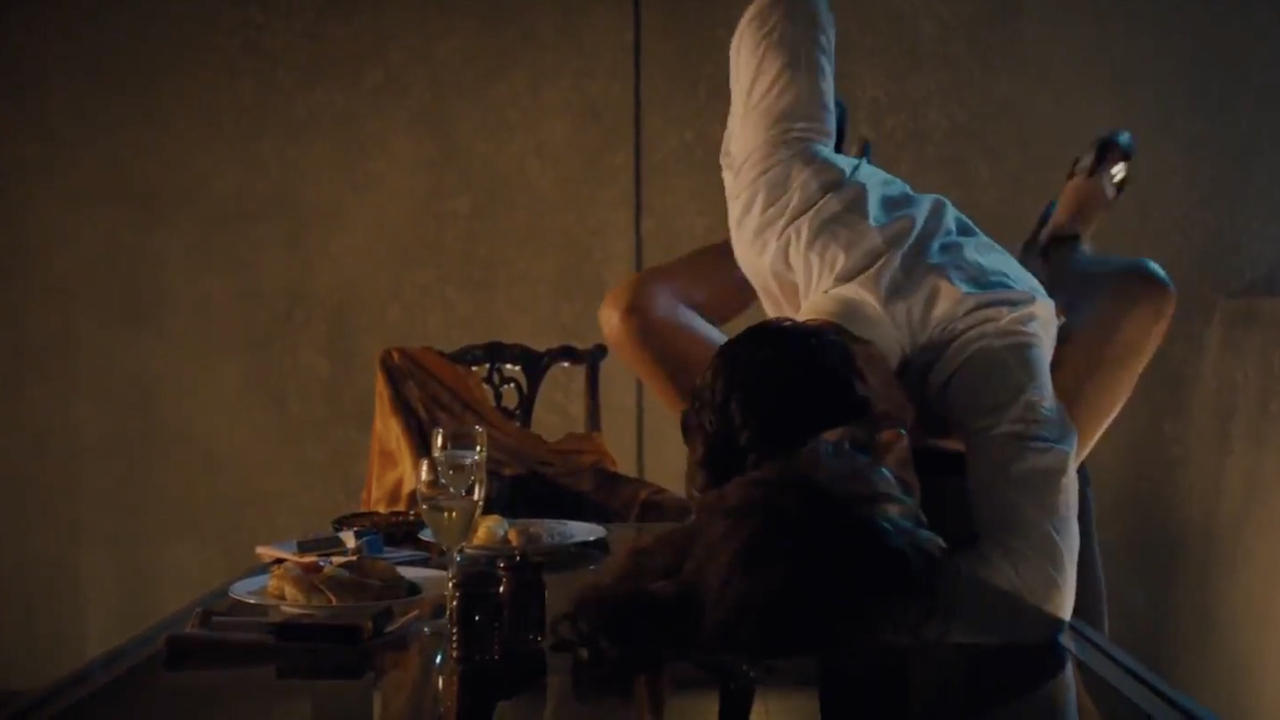
A High-End Horror Show in Polyester
The setup feels like a fever dream of mid-century modernism. Tom Hiddleston plays Dr. Robert Laing, a pathologist who moves into a luxury tower block that promises total self-sufficiency. You’ve got the supermarket on the lower floors, the swimming pool in the middle, and the elite living like royalty at the top. It’s a literal manifestation of the class ladder, and because this is based on a J.G. Ballard novel, we know that ladder is about to be set on fire.
What I love about Tom Hiddleston’s performance here is his absolute, chilling detachment. He plays Laing as a man who watches his neighbors descend into tribalism with the same clinical interest he uses to peel back a human scalp in the opening scene. He isn't our moral compass; he’s just a guy trying to keep his grey suit pressed while everyone else starts eating the neighborhood dogs. It’s a bold choice for a lead, and it’s one of the reasons I think the film struggled to find a wider audience in 2015. People wanted a hero, and instead, they got a guy who’s basically Lord of the Flies for people who shop at Waitrose.
The Doctor, The Architect, and The Animal
The building itself is the real star, a brutalist monolith designed by Anthony Royal, played by the eternally regal Jeremy Irons. Jeremy Irons (who was so good in Dead Ringers) brings a weary, god-complex energy to the role of the architect. He lives in a penthouse with a literal rooftop garden and a white horse, seemingly oblivious to the fact that the garbage chutes are backing up and the power is flickering below him.
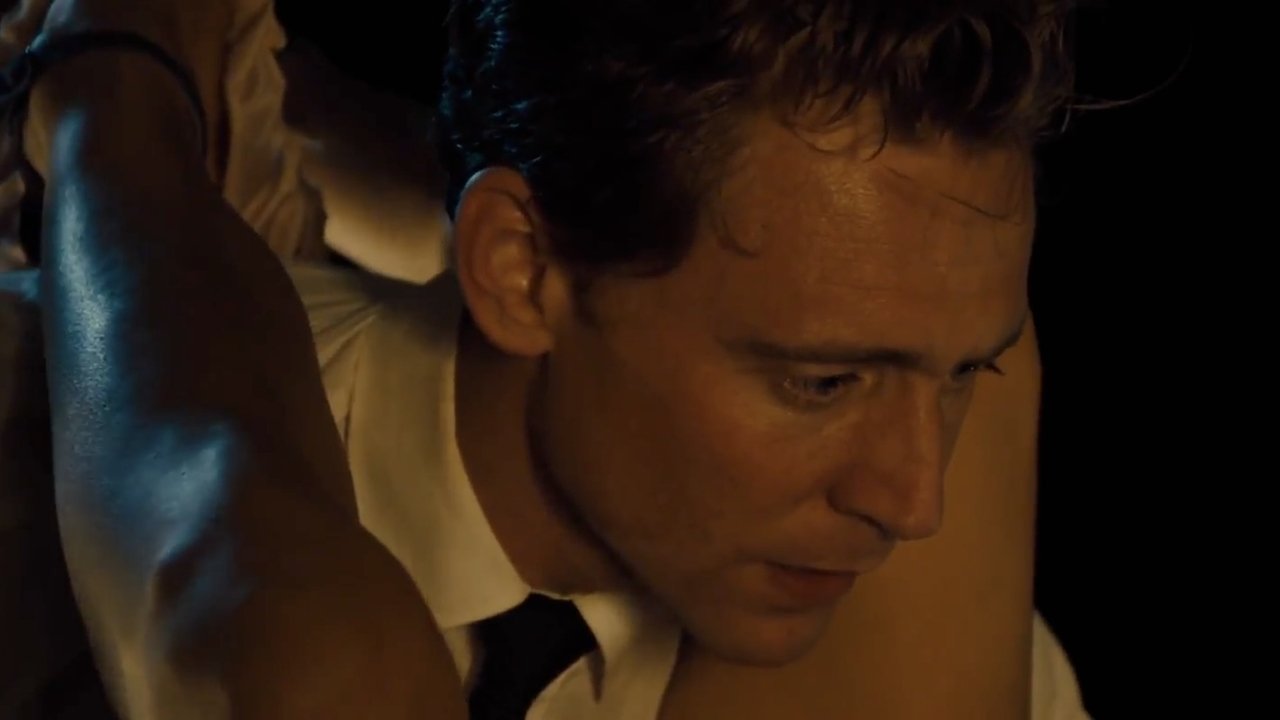
As the infrastructure fails, the social veneer thins out. This is where Luke Evans comes in as Richard Wilder, a documentary filmmaker from the lower floors. Luke Evans is the "id" of the movie—loud, sweaty, and increasingly violent. His performance is a massive contrast to Hiddleston’s stillness. While Laing tries to ignore the chaos, Wilder dives headfirst into it. Watching them is like watching two different species of animal reacting to the same cage. Then you have Elisabeth Moss and Sienna Miller, who provide the only glimpses of actual humanity in a script that otherwise treats people like chess pieces. Elisabeth Moss, known for The Handmaid’s Tale, plays Helen Wilder with a tragic vulnerability that makes the surrounding insanity feel much heavier.
The screenplay by Amy Jump (who worked with Wheatley on Free Fire) captures Ballard’s dry, satirical bite perfectly. It doesn’t over-explain why the residents don't just leave the building when things get bad. It understands that our social status and our "stuff" are often the very things that trap us.
Stuck in the Elevator of History
It’s fascinating to look at High-Rise now, nearly a decade after its release. In an era of Parasite and Squid Game, we are used to "eat the rich" cinema, but Ben Wheatley’s take is much more nihilistic. It’s not a call to revolution; it’s a shrug at the inevitability of human selfishness. The film was a bit of a "forgotten oddity" almost the moment it left theaters, grossing only about $4 million. I suspect that’s because it’s a movie that is deeply, proudly, and intentionally annoying. It refuses to give you a cathartic ending or a character to root for.

One of the coolest details—and something that really earns its place in the 5-minute bus ride conversation—is the music. Clint Mansell, the genius behind the score for Requiem for a Dream, commissioned the band Portishead to record a cover of ABBA’s "SOS." Hearing that slowed-down, haunting version of a disco classic while the residents of the tower block beat each other over a tin of peaches is a stroke of brilliance. It perfectly encapsulates the "party’s over" vibe of the entire 1970s setting.
Apparently, this project was in "development hell" for over thirty years. Producers like Jeremy Thomas (who did The Last Emperor) had been trying to get it made since the 70s, with directors like Nicholas Roeg once attached. It’s a miracle it got made at all, especially with such a high-caliber cast attached to such an experimental, jagged piece of storytelling.
Ultimately, High-Rise is a gorgeous, repulsive, and highly stylish mess. It captures the feeling of a society in freefall without ever losing its sense of dark humor. It might not be the kind of movie you want to watch every weekend, but for those who appreciate seeing a talented director like Ben Wheatley take a big, weird swing with a studio budget, it’s an essential watch. It reminds me that sometimes the most interesting films are the ones that don't quite know how to behave. If you’re in the mood for a cocktail of concrete and chaos, step into the elevator. Just don’t expect it to stop on your floor.


Keep Exploring...
-
Rebecca
2020
-
Free Fire
2017
-
Live by Night
2016
- No Image Available
Return
2015
-

Aftermath
2017
-
Ghost Stories
2018
-

The Informer
2019
-
His House
2020
-

Dark Places
2015
-
Entourage
2015
-
Equals
2015
-

Heist
2015
-

Love the Coopers
2015
-
Macbeth
2015
-
Mr. Holmes
2015
-

One Wild Moment
2015
-
The 33
2015
-

The Gunman
2015
-
While We're Young
2015
-

Z for Zachariah
2015