Insidious: Chapter 3
"The dead don't like to be ignored."
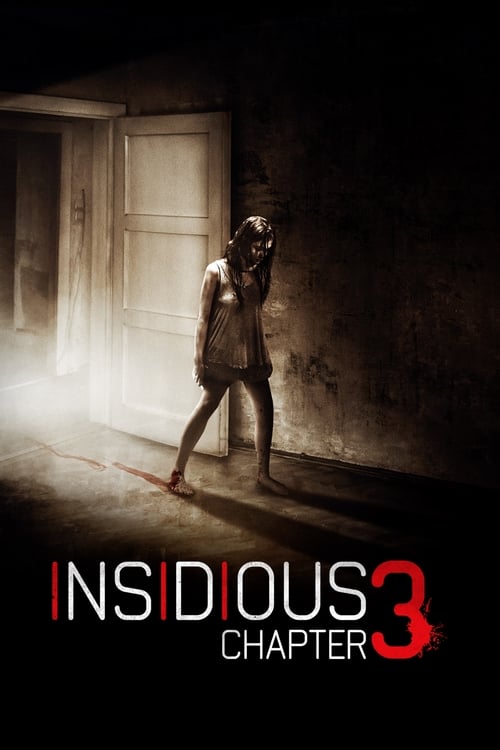
I watched Insidious: Chapter 3 while my neighbor was power-washing his driveway right outside my window, and the rhythmic thrum-thrum-thrum of the water actually blended perfectly with Joseph Bishara’s screeching violin score. It was a bizarrely immersive 4D experience that no theater could provide.

By 2015, the "Blumhouse Era" of horror was in full swing. We were neck-deep in a decade defined by low budgets, high-concept ghosts, and the kind of jump scares that make you bite your tongue. James Wan, the architect of the first two entries, had stepped away to play with fast cars in Furious 7, handing the keys to his long-time creative partner Leigh Whannell. This wasn't just a sequel; it was a prequel, a directorial debut, and a massive gamble on whether a franchise could survive without its original captain.
A New Architect for The Further
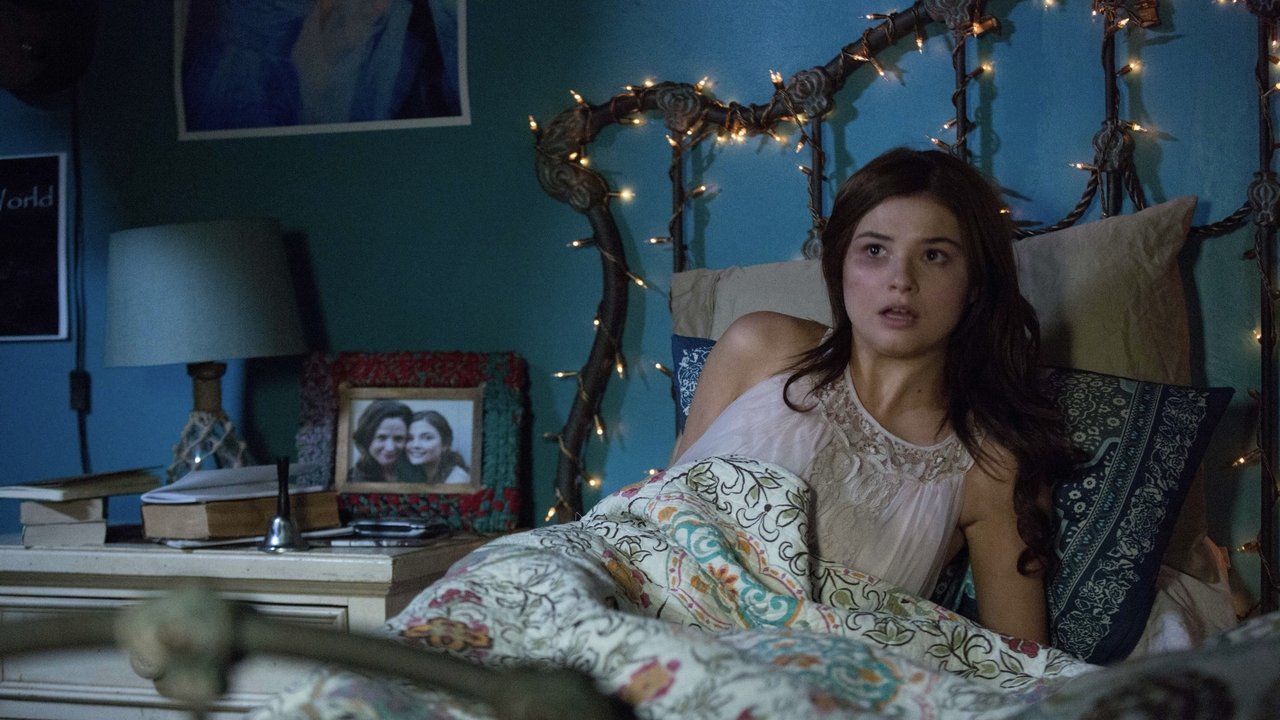
Usually, when a screenwriter steps behind the camera for the third installment of a franchise, it smells like a "straight-to-DVD" disaster. But Leigh Whannell isn’t just some guy; he’s the man who helped birth Saw. In Chapter 3, he ditches the convoluted family tree of the Lamberts from the first two films and focuses on a fresh victim: Quinn Brenner, played with a grounded, relatable vulnerability by Stefanie Scott.
The setup is classic 2010s horror: a girl thinks her dead mom is trying to reach her, but she accidentally taps into the wrong frequency. Instead of Mom, she gets "The Man Who Can't Breathe," a decrepit entity in an oxygen mask who leaves slimy footprints on the floor. While the "Man Who Can't Breathe" sounds like a middle-aged guy trying to finish a 5K, he is genuinely one of the most unsettling designs in the series. Whannell understands that horror works best when it’s tactile. The sound of the oxygen mask wheezing is far more effective than a CGI monster screaming in your face.
The Unlikely Action Hero
The real stroke of genius here is the decision to center the film on Elise Rainier. In an industry that usually shunts actresses over 60 into "concerned grandmother" roles, Lin Shaye is essentially treated like the Rick Deckard of the spirit world. She is the soul of this franchise. We get to see a younger, more fragile Elise who is terrified of her own gifts, mourning her husband, and hiding from the "Black Bride" entity that haunts her.
Shaye brings a gravitas that the material probably doesn't deserve on paper. When she finally squares her shoulders and enters "The Further" to kick some spectral ass, it feels earned. Watching her team up with the bumbling tech-geeks Specs (Leigh Whannell) and Tucker (Angus Sampson) provides the necessary levity that keeps the movie from drowning in its own gloom. It’s basically a ghost-hunting therapy session with occasional punching.
The Mechanics of the Scare
Whannell’s directing style is less operatic than Wan’s, but it’s arguably meaner. There’s a sequence involving Stefanie Scott in bed with two broken legs—a cruel bit of writing that turns a protagonist into a stationary target—that plays with spatial tension beautifully. You know something is coming, you know she can’t run, and Whannell just lets the camera linger until your skin crawls.
However, the film does fall into the trap of the "Blumhouse bang." You know the one—where the volume spikes to 110% just to tell you that you should be scared. It’s a trope of the 2015-era that hasn't aged particularly well. We’ve become a bit more sophisticated now, favoring the "elevated" dread of an A24 flick, but there’s still something undeniably fun about a movie that knows its only job is to rattle your cage like a bored zoo animal.
The $120 Million Punch

From a business perspective, Insidious: Chapter 3 was a masterclass in the Blumhouse model. Produced for a lean $10 million, it raked in over $120 million globally. It proved that "The Further" was a brand that didn't need the original cast to print money. In the context of 2015, this was the peak of franchise-building, where every hit was scrutinized for "Cinematic Universe" potential.
The film also serves as a bridge. It moves the series away from the specific "haunted family" trope and toward an anthology-style "Case Files of Elise Rainier" vibe. It lacks the weird, psychedelic puppet-theater energy of the first Insidious, but it makes up for it with a more coherent emotional arc. Dermot Mulroney does what he can as the stressed-out dad, though his main contribution seems to be looking confused while wearing various flannels.
Ultimately, Insidious: Chapter 3 is a solid, meat-and-potatoes horror flick. It doesn't reinvent the wheel, but it keeps the wheel spinning with enough craft and heart to justify its existence. It’s the kind of movie that reminds you why we go to the cinema in the first place: to sit in the dark and feel that collective jolt of adrenaline when something jumps out of the shadows. It might not be "prestige horror," but it’s a damn good time with a bowl of popcorn—especially if your neighbor isn't power-washing his driveway at the time.
Keep Exploring...
-

Insidious: The Last Key
2018
-
Insidious: Chapter 2
2013
-
Insidious
2011
-
Insidious: The Red Door
2023
-
Wolf Man
2025
-
The Invisible Man
2020
-
10 Cloverfield Lane
2016
-
Don't Breathe
2016
-
The Purge: Election Year
2016
-
The Shallows
2016
-
It
2017
-

Halloween
2018
-
The First Purge
2018
-
Escape Room
2019
-
Scream VI
2023
-
The Mummy
2017
-
It Chapter Two
2019
-
Halloween Kills
2021
-
Halloween Ends
2022
-
Evil Dead Rise
2023