Land of Mine
"The war is over, but the sand is hungry."
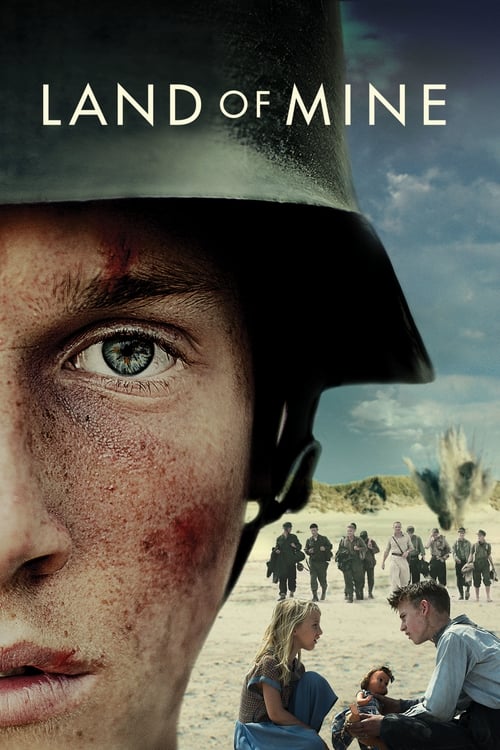
There is a specific kind of silence that only exists when you’re waiting for something to explode. It’s a heavy, airless vacuum that makes your own heartbeat sound like a drum. I first felt it while watching Land of Mine on a Tuesday evening, specifically when my neighbor decided to start their leaf blower right outside my window. Normally, that would’ve annoyed me, but the sheer, nerve-shredding tension of the film was so absolute that the mechanical roar outside actually blended into the industrial dread on screen. I didn't even get up to close the window; I was too busy staring at a teenage boy’s trembling fingers as he tried to unscrew a detonator.
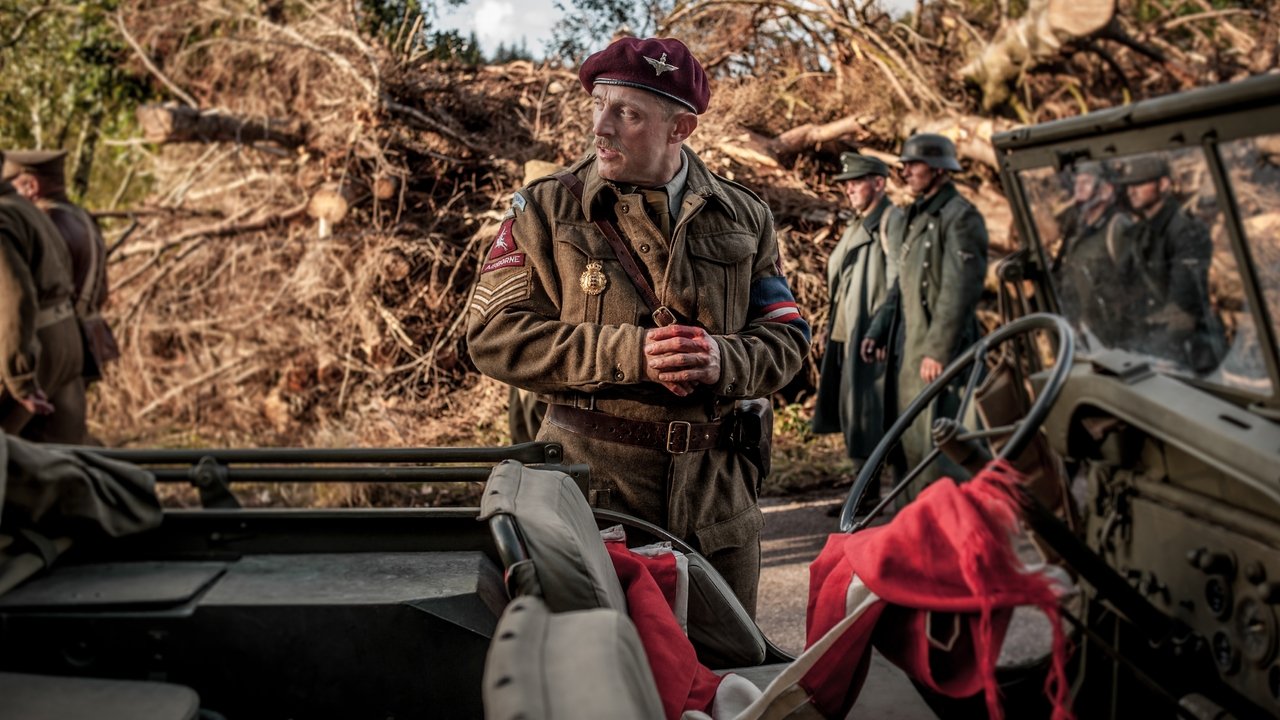
Land of Mine (or Under sandet) is a film that takes the "aftermath" of World War II and turns it into a claustrophobic thriller set in the wide-open spaces of the Danish coast. It’s 1945, the Nazis have surrendered, and the Danish army is left with a massive problem: two million landmines buried along their western beaches. Their solution? Use German prisoners of war—mostly teenagers who were recruited in the desperate final months of the conflict—to dig them out by hand.
The Face of the Enemy
At the center of this moral quagmire is Sgt. Carl Rasmussen, played by Roland Møller. If you’ve seen him in Atomic Blonde or Papillon, you know he has a face that looks like it was carved out of a granite cliffside. He starts the film as a man possessed by a very understandable, very ugly rage. He beats a German prisoner in the opening minutes for the crime of simply existing. He views the group of boys assigned to him not as humans, but as the remains of the machine that occupied his country.
But then the work begins. These aren't the jackbooted monsters of propaganda; they are children. Louis Hofmann, who many of you might recognize as the lead from the mind-bending Netflix series Dark, is incredible here as Sebastian Schumann. He’s the de facto leader of the boys, possessing a quiet dignity that slowly starts to erode Roland Møller’s hatred.
The film does something very brave: it asks you to empathize with the side that lost. It doesn't do this by forgiving the Nazi regime, but by highlighting the cruelty of punishing children for the sins of their fathers. The Danish Lt. Ebbe Jensen (Mikkel Boe Følsgaard) is essentially a walking war crime with a polished uniform, representing the cold, bureaucratic side of vengeance that feels even more repulsive than the Sergeant's initial outbursts of violence.
The Physics of Dread
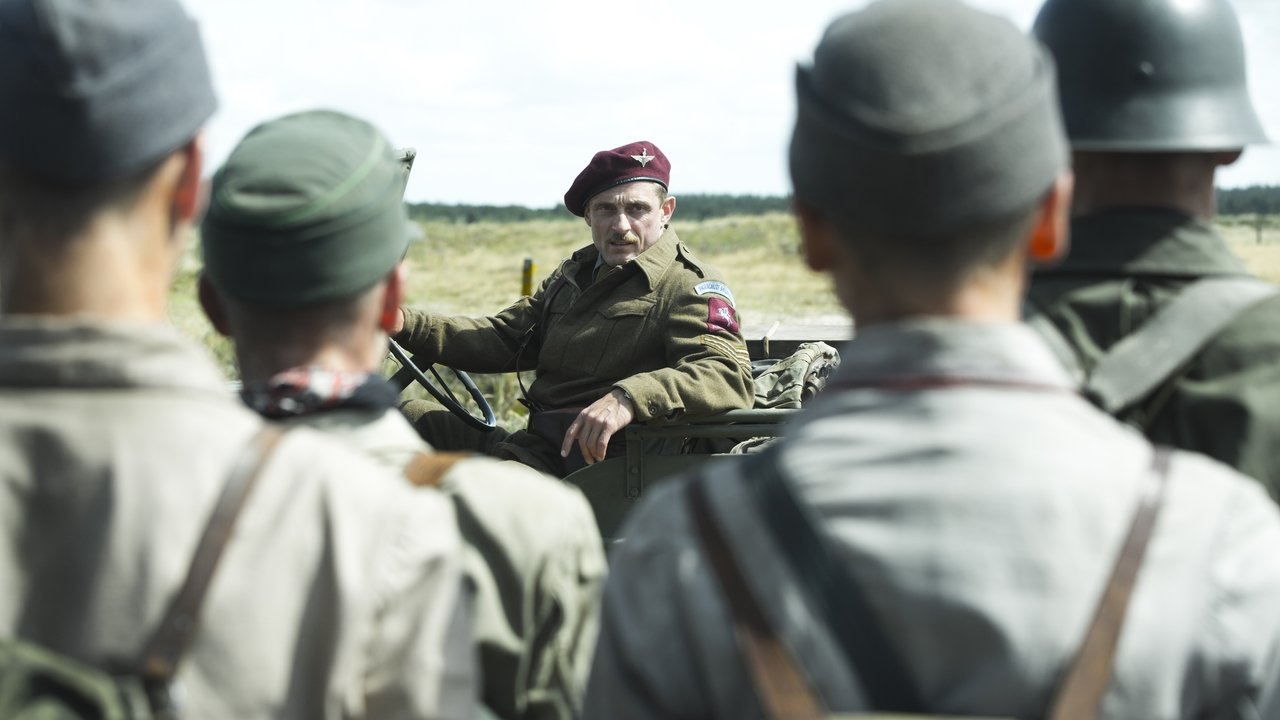
Director Martin Zandvliet makes a brilliant choice with the cinematography. Usually, war movies are desaturated, grey, and muddy. Land of Mine is gorgeous. The beaches are white, the water is a shimmering blue, and the sun is bright. It makes the horror of what’s happening in the sand feel even more intrusive. Every time a boy lays his chest against the dunes to prod for metal, the beauty of the landscape feels like a lie.
The sound design is where the movie really lives, though. The metallic tink of a probe hitting a mine casing is the scariest sound I’ve heard in a theater in years. There’s a scene involving a "cleared" beach where the boys have to walk hand-in-hand to prove it’s safe, and I found myself physically leaning back in my chair, waiting for the inevitable. Zandvliet treats the audience like they’re the ones holding the detonator, and he isn't afraid to let the tension simmer for ten minutes before a sudden, sharp payoff.
It’s worth noting that Roland Møller wasn't a classically trained actor when he started; he was a songwriter who had spent time in prison before finding his way to the screen. That history brings a layer of authentic, jagged grit to his performance that you just can't fake. You can see the internal gears grinding as he moves from wanting these boys dead to sneaking them bread and trying to keep them alive.
A Forgotten Chapter of the Cleanup
Despite being nominated for an Oscar, Land of Mine feels like one of those films that slipped through the cracks for many casual viewers, likely because it’s a Danish-language production dealing with a very specific niche of history. It’s a shame, because it’s far more engaging than your average "prestige" war drama. It’s a survival horror movie disguised as a historical period piece.

Interestingly, the film was shot on location at Oksbøl, which was one of the actual sites where this mine-clearing took place in 1945. Apparently, the crew found a few live mines during production that had been missed for seventy years, which probably helped the actors nail those "I’m about to die" expressions. It also sparked a massive debate in Denmark upon release, as many Danes weren't aware that their country had essentially used child labor and ignored the Geneva Convention in the wake of the liberation.
In the current era of cinema, where we’re often bombarded with massive CGI explosions that mean nothing, Land of Mine gives us small, practical explosions that mean everything. It’s a film about the impossible task of finding your humanity again after the world has spent years trying to strip it away.
This isn't an easy watch, but it’s an essential one. It’s the kind of movie that stays with you long after the credits roll—every time you step onto a beach, you’ll find yourself looking at the sand a little differently. It manages to be both a harrowing suspense film and a deeply moving character study without ever feeling like it’s lecturing you. If you can handle the intensity, it’s one of the best dramas of the last decade.
***
Martin Zandvliet’s screenplay keeps the dialogue sparse, letting the landscape and the actors' eyes do the heavy lifting. While it occasionally leans into a few familiar tropes of the "tough mentor" genre, the historical weight and the sheer technical execution elevate it into something truly special. It’s a stark reminder that even after the treaties are signed, the war is never truly over for those left to sweep up the glass.


Keep Exploring...
-

The Zookeeper's Wife
2017
-

Т-34
2018
-

Hacksaw Ridge
2016
-
Emancipation
2022
-

The Outpost
2020
-
13 Hours: The Secret Soldiers of Benghazi
2016
-

1917
2019
-

The King
2019
-
Beasts of No Nation
2015
-

Eye in the Sky
2015
-

Suite Française
2015
-

A Bag of Marbles
2017
-

Detroit
2017
-

See You Up There
2017
-
22 July
2018
-

An Officer and a Spy
2019
-

Hotel Mumbai
2019
-

The Professor and the Madman
2019
-
All Quiet on the Western Front
2022
-
The Zone of Interest
2023