Pixels
"High scores, heavy voxels, and Happy Madison mayhem."
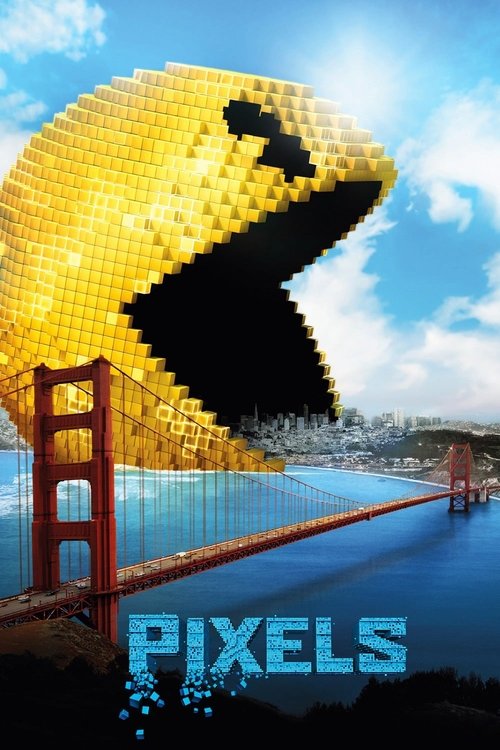
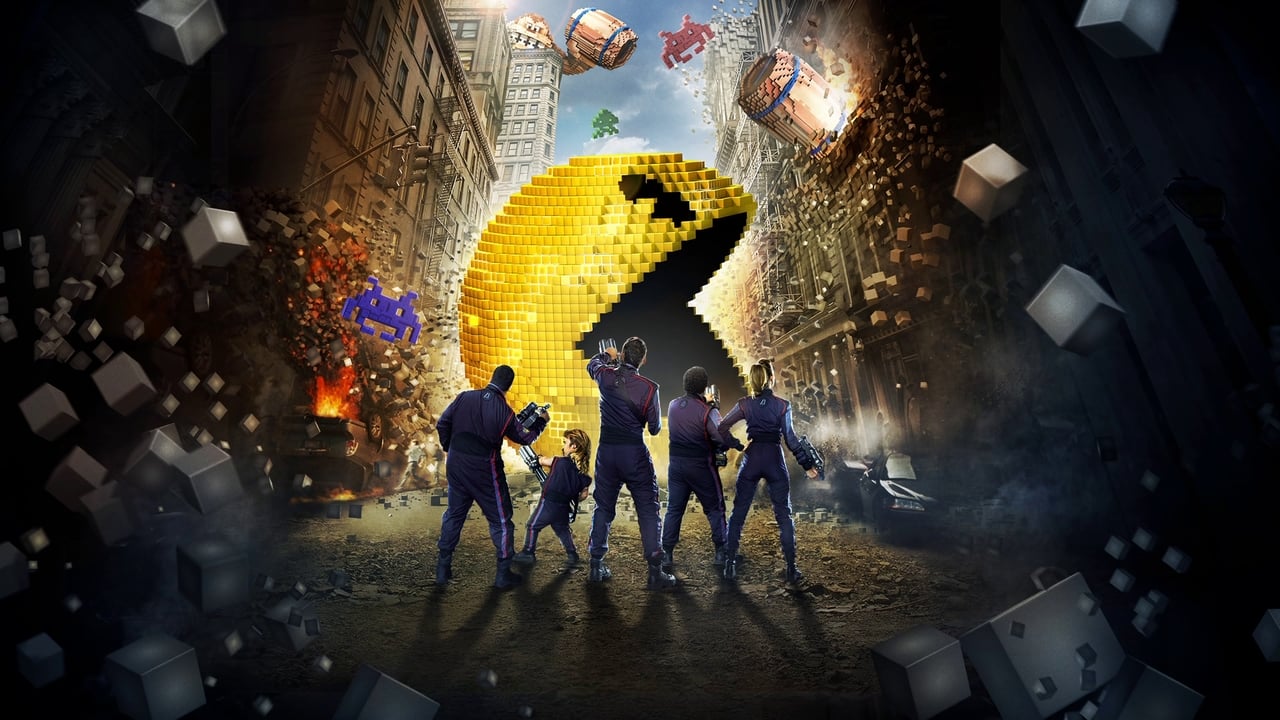
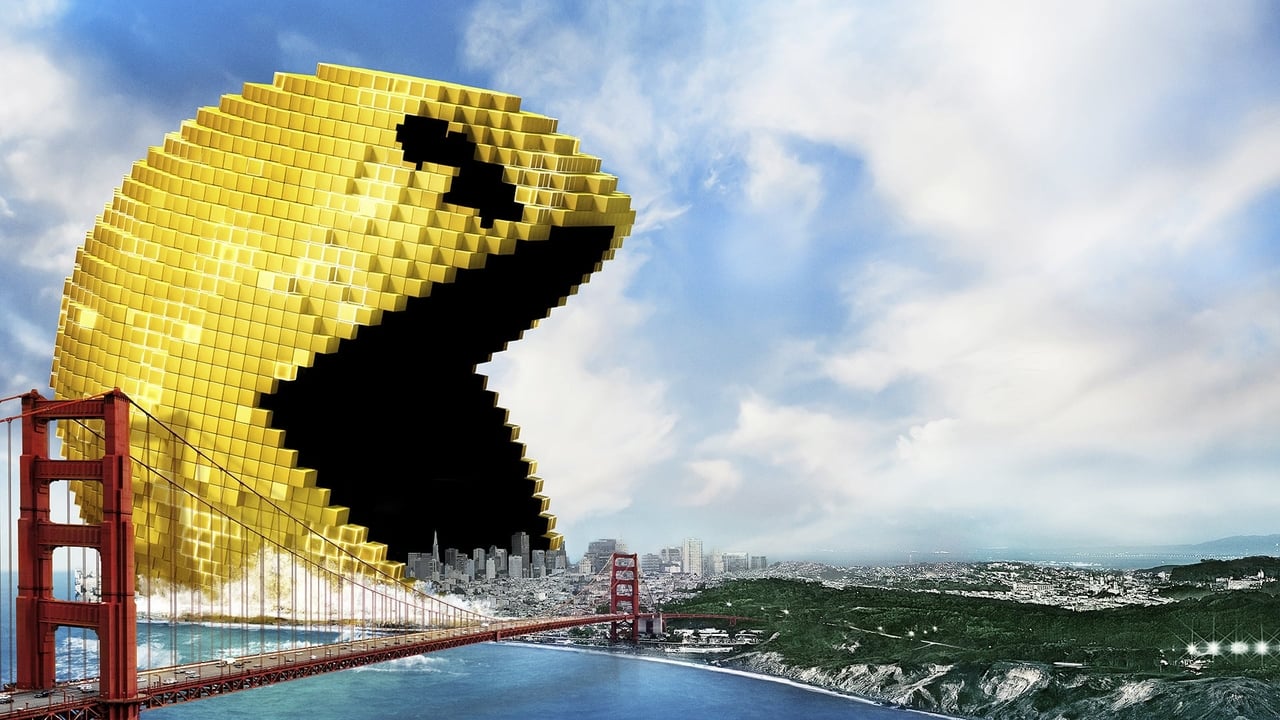
I remember sitting in a theater in 2015, nursing a massive blue Icee that had already begun to turn my tongue an unnatural shade of cerulean, and watching a giant, glowing Pac-Man munch through a New York City bus. At that moment, I realized Pixels was exactly the kind of beautiful, expensive disaster that contemporary cinema produces when a director tries to bridge the gap between "80s nostalgia" and "Sandler-brand chaos." It’s a movie that feels like it was written on a cocktail napkin during a particularly intense round of Galaga, and honestly? I don't hate it for that.
Released during a peak era of "IP mining"—where every toy, game, and board game was being looked at for franchise potential—Pixels feels like a fascinating artifact. It’s a film that arrived just before the "video game movie curse" was truly broken by the likes of Sonic the Hedgehog or The Super Mario Bros. Movie. Instead, it treats the history of gaming as a colorful arsenal of weapons for a standard alien invasion plot.
High-Definition Glow and Practical Chaos
While critics were busy sharpening their knives for Adam Sandler, I found myself mesmerized by the sheer visual audacity of the thing. Chris Columbus—the man who gave us the cozy warmth of Home Alone and the magical scale of the first two Harry Potter films—knows how to frame a spectacle. He treats the pixelated invaders not as flat sprites, but as "voxels"—three-dimensional cubes of light that shatter and glow with a tangible, tactile energy.
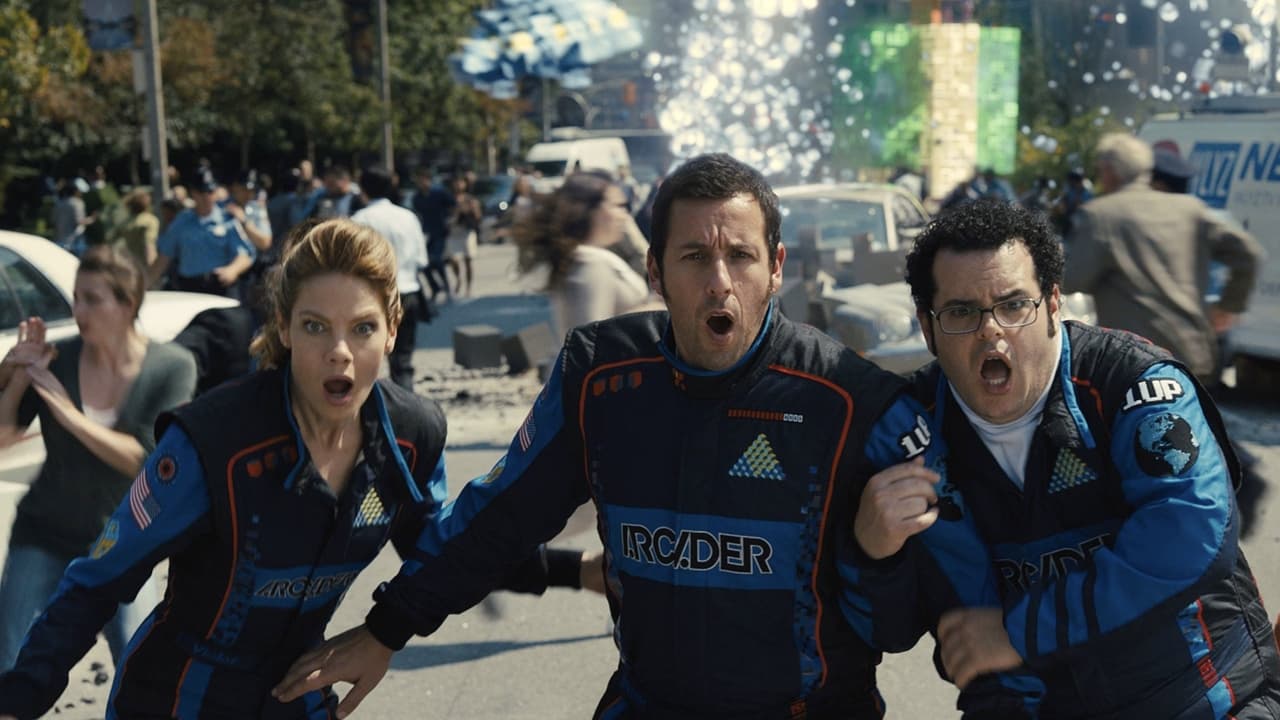
The "Centipede" sequence in London is a genuine blast. The way the glowing segments snake through the sky while our heroes (the "Arcaders") try to blast them apart has a rhythm that feels pulled directly from the arcade floor. It’s colorful, it’s loud, and the cinematography by Amir Mokri (Man of Steel) gives the neon invaders a weight that most CGI monsters lack. When a car gets "pixelated," it doesn't just disappear; it breaks into thousands of glowing cubes that bounce off the pavement. It’s a specific, high-budget aesthetic that looks like a neon sign exploded in a dark alley, and I’m a total sucker for it.
The Arcaders and the President
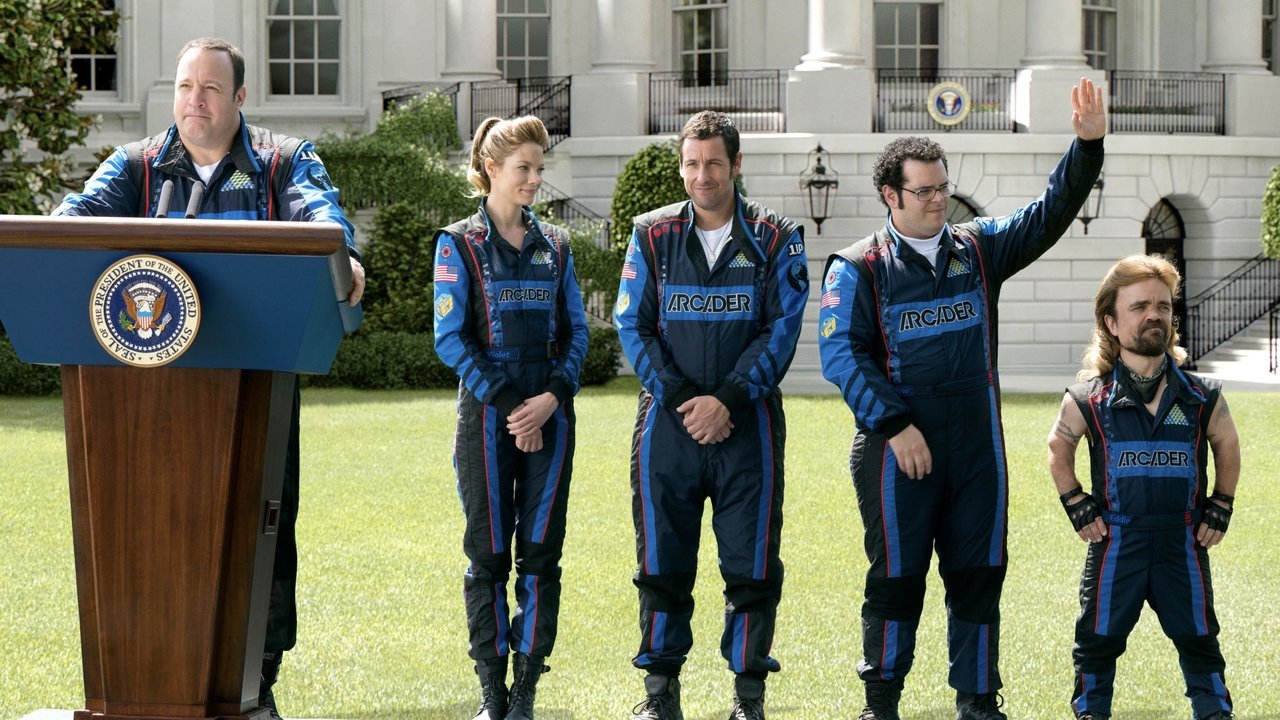
The casting is where Pixels becomes a bit of a "Sandler and Friends" variety hour, which is either a feature or a bug depending on your tolerance for the Happy Madison vibe. Adam Sandler plays Brenner with a muted, "I’m too old for this" energy that actually works for a guy whose life peaked in 1982. But the real scene-stealer is Peter Dinklage as Eddie "The Fireblaster" Plant. Fresh off his Game of Thrones gravitas, Dinklage is clearly having the time of his life playing a mulleted, trash-talking gaming legend inspired by real-life arcade villain Billy Mitchell. Every time he’s on screen, the energy level spikes; he brings a competitive nastiness that the movie desperately needs.
Then there’s Kevin James as the President of the United States. In our current era of political polarization, there’s something strangely soothing—and deeply hilarious—about a world where Kevin James as the President is the most believable part of the movie. He isn't playing a statesman; he’s playing a guy who’s stressed out because he can't read and his approval ratings are tanking because he doesn't know how to deal with a giant Donkey Kong. Josh Gad rounds out the trio as Ludlow, a conspiracy theorist who is obsessed with Lady Lisa (played by Ashley Benson). While Gad can be a lot to handle, his "high-energy screaming" fits the frantic pace of the action set-pieces.
The Cult of the Pixel
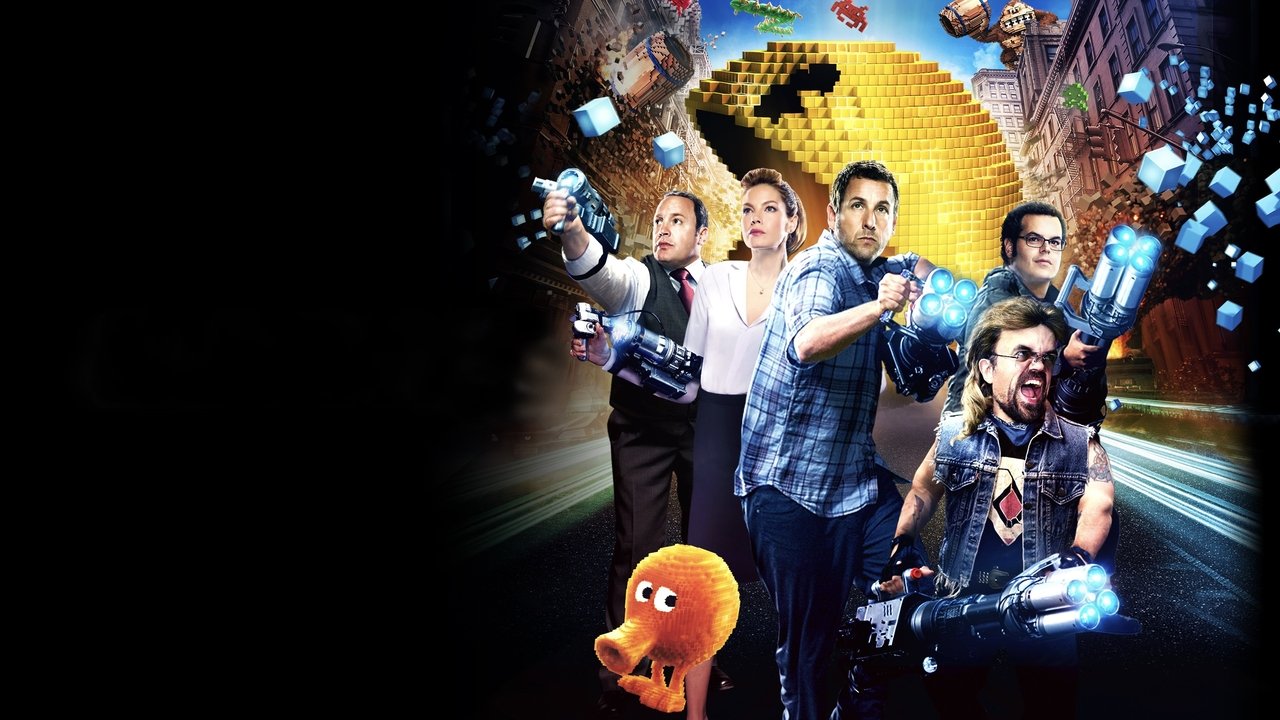
Why does Pixels still spark conversation? Because it’s a cult classic in the making for a very specific demographic: people who grew up with these games and can forgive a few fart jokes for the sake of seeing Qbert hang out on a couch. Behind the scenes, the production was a logistical nightmare of licensing. Getting Nintendo, Namco, and Atari to all play nice in one sandbox was a feat of legal strength that we rarely see outside of Wreck-It Ralph*.
Interestingly, the film was based on a 2010 short film by Patrick Jean, and you can feel the DNA of that short in the way the city is dismantled. The trivia nerds among us will love that the actual creator of Pac-Man, Toru Iwatani, makes a cameo (though the "Professor Iwatani" who gets his hand bitten off in the movie is played by actor Denis Akiyama). It’s these little nods to gaming history that keep the film afloat when the screenplay by Tim Herlihy and Timothy Dowling leans a bit too hard into generic romantic subplot territory with Michelle Monaghan.
I’ll admit, the scene where they chase a giant Pac-Man through the streets of Manhattan in color-coded Mini Coopers is the kind of cinematic candy I can’t turn down. It’s ridiculous, it’s vibrant, and it captures that "5-minute test" energy perfectly. You don't need deep lore to understand the stakes; you just need to know that if the ghost touches the car, the car is toast.
Pixels isn't going to win any awards for intellectual depth, and it certainly doesn't bridge the gap between high art and low comedy. However, in an era of franchise fatigue where every blockbuster feels like a three-hour homework assignment, there’s something refreshing about a movie that just wants to show you a giant gorilla throwing digital barrels. It’s a loud, neon-soaked mid-summer dream that serves as a reminder that sometimes, the best way to save the world is to remember the patterns of a 30-year-old computer chip. If you can stomach the Sandler-isms, there’s a genuinely fun action flick buried under the voxels.
Keep Exploring...
-
Teenage Mutant Ninja Turtles: Out of the Shadows
2016
-

The Christmas Chronicles: Part Two
2020
-

Murder Mystery
2019
-

Day Shift
2022
-

Monster Trucks
2016
-
Justice League vs. Teen Titans
2016
-
Home
2015
-
The Dark Tower
2017
-
Pacific Rim: Uprising
2018
-

Men in Black: International
2019
-
Rim of the World
2019
-

Fatman
2020
-

Trolls
2016
-

Mary Poppins Returns
2018
-

6 Underground
2019
-

Dolittle
2020
-

The Do-Over
2016
-

Underworld: Blood Wars
2016
-
Thor: Love and Thunder
2022
-
A Minecraft Movie
2025