Return
"The mind is a haunted house."
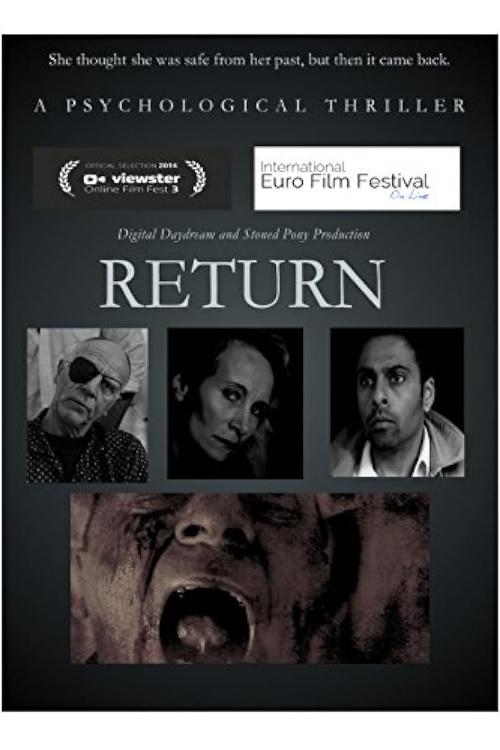
Some movies don’t just sit on a shelf; they hide in the cracks of the internet, waiting for someone to stumble over them like a loose floorboard. I found Haqi Ali’s Return (2015) while falling down a rabbit hole of British micro-budget indies on a Tuesday night. My radiator was doing this weird, rhythmic clicking sound that perfectly matched the mounting tension on screen, and honestly, that mechanical heartbeat made the whole experience significantly creepier than it probably had any right to be.
Clocking in at a lean 45 minutes, Return exists in that awkward cinematic purgatory—too long to be a standard short, too short to be a feature. In the streaming era, we’re used to "episodes" or "specials," but back in 2015, a 45-minute drama was a hard sell. It’s a shame, because while it clearly struggles with its shoestring resources, there’s a raw, uncomfortable sincerity here about how we treat—and mistreat—mental illness.
A Flat Full of Shadows
The story follows Cathy Reed, played with a fragile, wide-eyed intensity by Julie Thursham. Cathy has spent most of her life institutionalized for Schizophrenia. As a child, her father (Gary Durrant) and a group of priests (Roger Camden) decided her symptoms weren't medical, but diabolical. They chose exorcism over escalating the dosage. Decades later, Cathy is "reintegrated" into society, placed in a lonely flat, and told to be independent.
The film thrives on that specific brand of British bleakness. It’s not the stylized, neon-soaked "elevated horror" we see today from studios like A24; it feels more like a social realist drama that’s being haunted by its own shadow. Director and writer Haqi Ali uses the cramped confines of the apartment to mirror Cathy’s mind. The wallpaper looks like it smells of damp cigarettes and regret, which provides a perfect backdrop for Cathy’s deteriorating grip on what’s real and what’s a lingering echo of her childhood trauma.
The Weight of the Performance
Everything in this movie rests on Julie Thursham. If she doesn't sell the vulnerability, the whole thing collapses into a student film exercise. Thankfully, she’s fantastic. She plays Cathy not as a "crazy person" trope, but as someone who is deeply, profoundly tired. You can see the weight of the years she lost in the way she holds her shoulders.
The supporting cast, including Dave Kukadia as Steve and Predentia Dixon as Dr. Price, do what they can with limited screen time, but the film is essentially a one-woman show. The drama comes from the terrifying realization that for Cathy, there is no "safe" space. The doctors represent a system that failed to protect her from her parents, and the priests represent a faith that tried to beat the "demon" out of a sick child. The priests in this movie have the bedside manner of a circular saw, and those flashback sequences are genuinely distressing, not because of jump scares, but because of the sheer betrayal of trust.
Why It Vanished into the Digital Void
It’s not hard to see why Return didn’t become a breakout hit. Released right as the streaming landscape was becoming a congested highway, a 45-minute psychological drama without a massive marketing budget is destined to be "content" rather than a "film." It also lacks the polished CGI or high-end cinematography that contemporary audiences often demand. Some of the transitions feel a bit clunky, and the sound mix can be uneven—standard hurdles for an indie project of this scale.
However, its obscurity is also what makes it interesting. It’s a snapshot of a moment where filmmakers were realizing they didn't need a two-hour runtime or a theatrical distributor to tell a complete story. Haqi Ali, who has since worked on projects like The Long Goodbye (2020), shows a real knack for building dread through silence. It’s a "what-if" piece of cinema—what if this had been a 6-part limited series on a major platform? With more room to breathe, the relationship between Cathy and her doctors, specifically Sarah Gordon’s Dr. Webster, could have been a fascinating exploration of medical ethics.
Cool Details
Director Haqi Ali is primarily known as an actor, appearing in everything from Casualty to The Mourning of Michael Hashim. You can tell a director is an actor-first when they give their lead so much room to just exist in a scene without cutting away. The film was shot on a very tight schedule, often relying on natural light or practical lamps within the flat to create that oppressive, yellowed atmosphere. Unlike many 2015-era horror-adjacent films, Return* avoids the "found footage" gimmick that was still lingering in the zeitgeist, opting for a more traditional, voyeuristic camera style.
Return is a difficult watch, not because it’s bad, but because it’s intentionally lonely. It’s a film about the gaps in our social safety nets and the scars left by religious extremism. While the production values are undeniably "indie-budget," the heart of the story is heavy and real. If you’ve got 45 minutes and an interest in how cinema handles the intersection of trauma and the supernatural, it’s worth a look—just make sure your radiator isn't clicking.
---
Keep Exploring...
-

High-Rise
2015
-
Suffragette
2015
-

Woman in Gold
2015
-
Aftermath
2017
-
Goodbye Christopher Robin
2017
-
Mary Shelley
2017
-
Official Secrets
2019
-
The Informer
2019
-
Rebecca
2020
-

Batman vs. Robin
2015
-
Colonia
2015
-

Dark Places
2015
-
Entourage
2015
-
Equals
2015
-

Fathers and Daughters
2015
-
Heist
2015
-

Love the Coopers
2015
-

Max
2015
-
McFarland, USA
2015
-
One Wild Moment
2015