Son of Saul
"One man seeks a sliver of grace in hell."

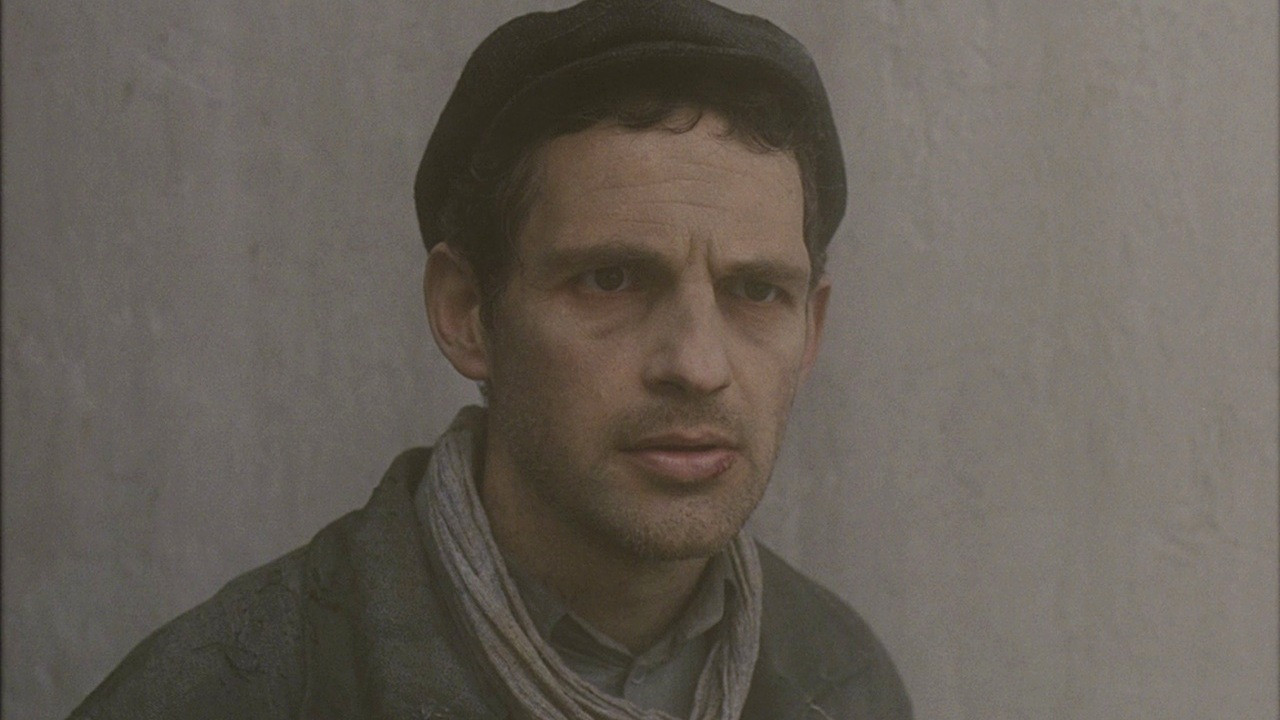
The first thing I noticed wasn't a face, but the back of a head. Specifically, the weathered, salt-and-pepper hair of Saul Ausländer. For nearly the entire 107-minute runtime of Son of Saul, the camera stays locked to him—either peering over his shoulder or staring directly into his hollowed-out eyes. The rest of the world, the actual horror of Auschwitz-Birkenau in 1944, exists primarily in a suffocating blur just beyond the edges of the frame.
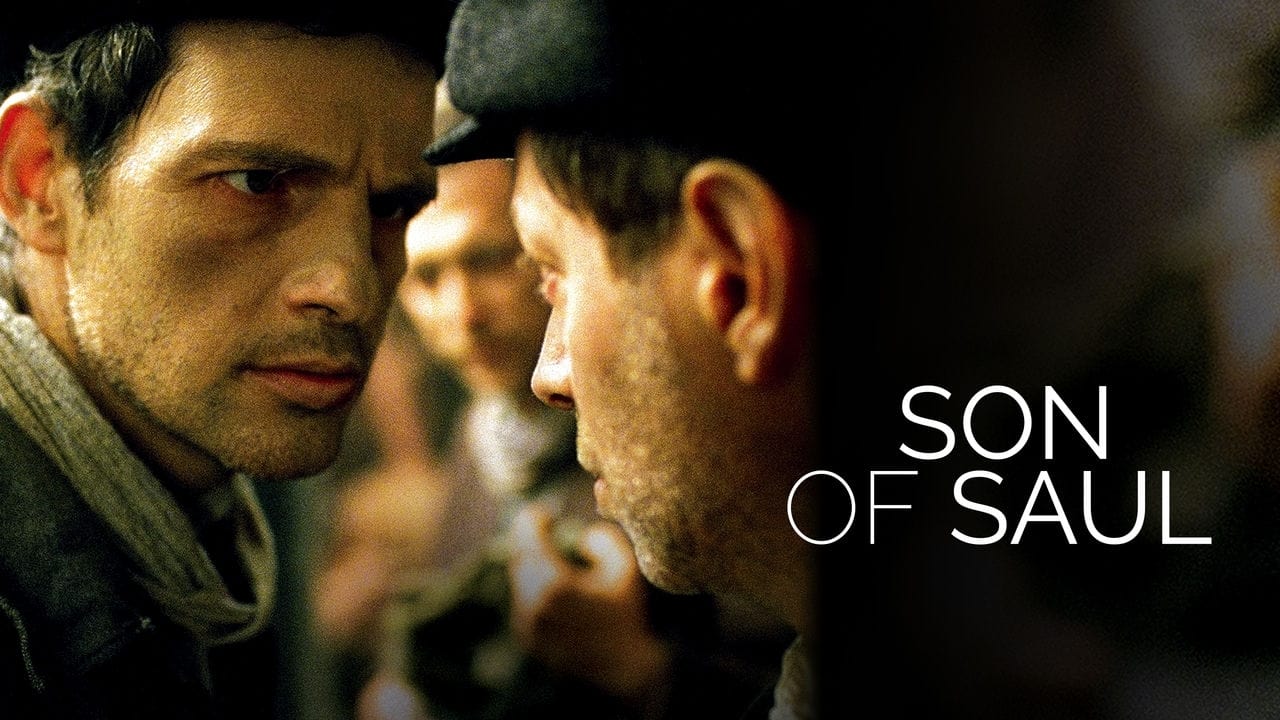
I remember watching this for the first time on a rainy Tuesday afternoon while my neighbor was loudly power-washing his driveway. Usually, that kind of suburban drone would ruin a movie for me, but within ten minutes, the industrial shriek of the power-washer blended so seamlessly into the film’s hellish soundscape that I forgot it was coming from outside. I didn't move until the credits rolled, and by then, my tea had gone completely cold and developed that weird oily film on top. I didn't care.
The Geometry of a Nightmare
Director László Nemes made a radical choice for his debut feature. In an era where digital cameras allow for infinite clarity and sweeping, epic shots, he opted for a boxy 4:3 aspect ratio and shot on 35mm film. This isn't just a stylistic quirk; it’s a narrative chokehold. By narrowing the field of vision, Nemes forces us to experience the Holocaust not as a historical event viewed from a safe distance, but as a frantic, claustrophobic present.
Saul is a member of the Sonderkommando—Jewish prisoners forced by the Nazis to assist in the machinery of extermination. He moves through the "labor" of the camp with a terrifying, mechanical efficiency. He’s already dead; he just hasn't stopped breathing yet. That is, until he sees the body of a young boy who survived the gas chamber for a few flickering moments before being smothered by a Nazi doctor. Saul decides, with a sudden and irrational ferocity, that he must find a rabbi, steal the body, and give the boy a proper Jewish burial.
Watching this movie on a phone should be a punishable offense. The power of Son of Saul lies in its sensory overload. Because the visuals are often out of focus, your ears do the heavy lifting. You hear the shouting in multiple languages, the metallic clanging of oven doors, and the muffled, rhythmic thumping of those trapped inside. It is a masterpiece of sound design that proves what we imagine is always more haunting than what a special effects team can render.
A Poet in the Ash
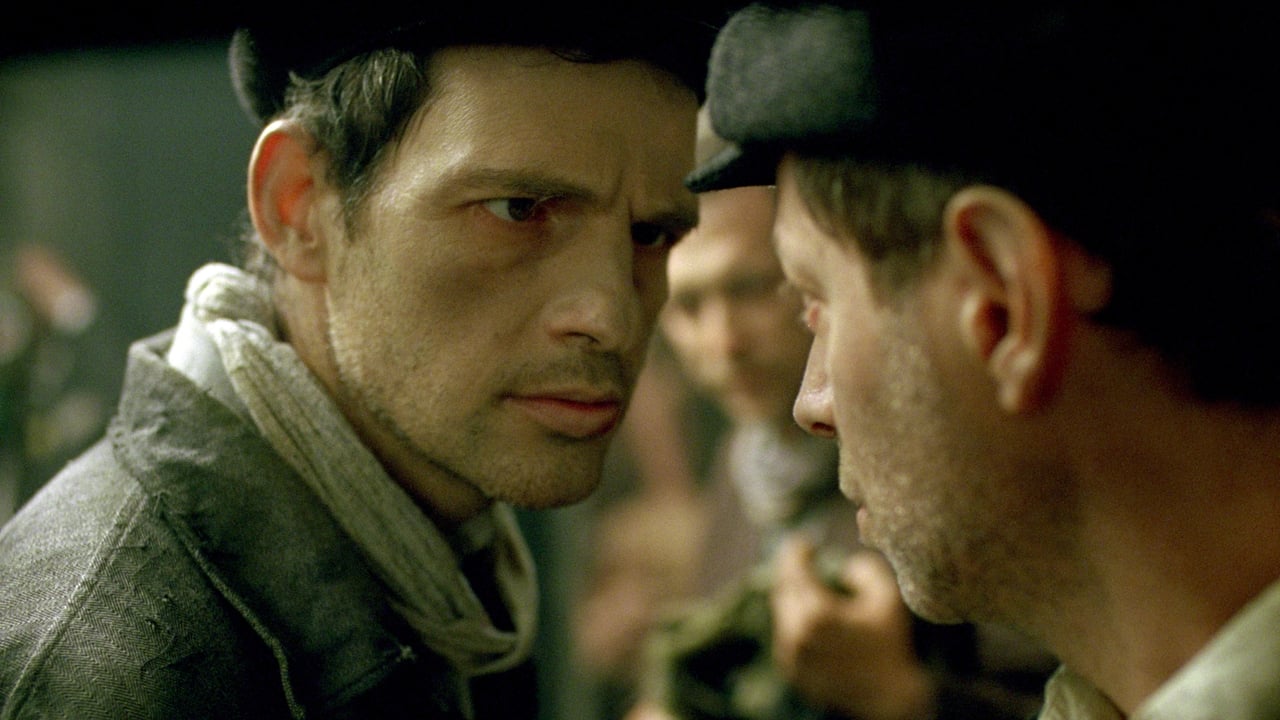
The performance by Géza Röhrig is nothing short of a miracle. Interestingly, Röhrig wasn't a professional actor at the time; he was a poet living in New York. That lack of "theatricality" is exactly why he works. He doesn't "act" sad or "act" brave. He simply is. His face is a mask of survival, only cracking when he encounters Levente Molnár (playing Abraham) or searches for the Rabbi Frankel (played by Jerzy Walczak) amidst the chaos of a planned prisoner uprising.
The film perfectly captures a specific contemporary tension: the struggle to find individual meaning in a world defined by mass atrocity. Saul’s quest is arguably insane. He puts himself and others at risk for a corpse. He ignores the very real, practical stakes of the camp rebellion to pursue a religious rite. But in the context of 1944, Saul’s obsession is the only thing that makes him human. It’s a middle finger to a system designed to turn people into "pieces" (Stücke).
The Indie Hustle

It’s easy to forget now that it has an Oscar on its shelf, but Son of Saul was a massive gamble. Nemes spent years trying to get the project off the ground, eventually securing a tiny $1 million budget from the Hungarian National Film Fund. For context, that’s less than the catering budget on a mid-range Marvel movie.
Nemes, who previously worked as an assistant to the legendary Béla Tarr (the man behind the seven-hour-long Sátántangó), clearly inherited his mentor’s love for long, unbroken takes. However, where Béla Tarr is slow and philosophical, Nemes is frantic and breathless. The film feels like a thriller, even though we know the historical ending. It’s a "passion project" in the truest sense—a film that exists because its creators refused to let it be anything other than what it is: a brutal, uncompromising, and deeply necessary piece of art.
Son of Saul is not an easy watch, nor should it be. It’s a film that demands your full attention and rewards it with an experience that lingers in your peripheral vision for days after. It bypasses the sentimental tropes of the genre and goes straight for the jugular. By focusing on one man’s desperate attempt to perform a single act of decency, Nemes reminds us that even in the darkest corners of human history, the soul—however damaged—remains a stubborn thing. This is a vital milestone in modern cinema.
Keep Exploring...
-
Eye in the Sky
2015
-
13 Hours: The Secret Soldiers of Benghazi
2016
-
The Siege of Jadotville
2016
-
Good Time
2017
-
The Killing of a Sacred Deer
2017
-

Searching
2018
-
Les Misérables
2019
-
Run
2020
-
The Beasts
2022
-

The Wall
2017
-

The Invisible Guest
2017
-
Allied
2016
-
Slow West
2015
-
The Platform
2019
-
Batman vs. Robin
2015
-

Beasts of No Nation
2015
-

Bridge of Spies
2015
-

Land of Mine
2015
-

Room
2015
-
Suburra
2015