Steve Jobs
"He built the future, but forgot the manual for humans."
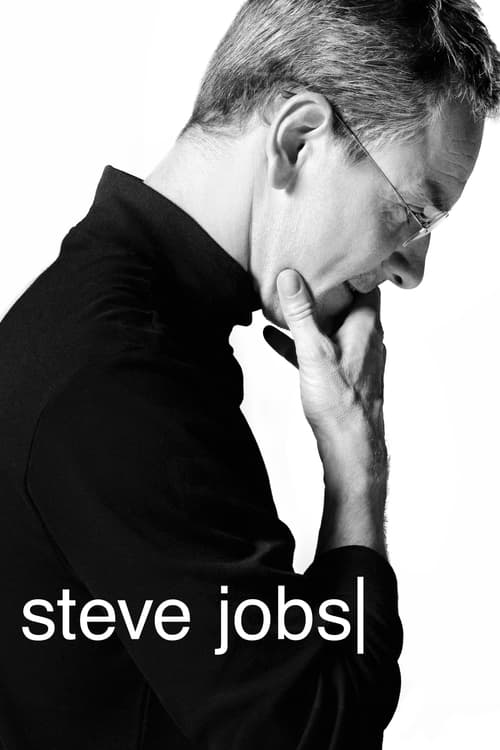
If you walk into Danny Boyle’s Steve Jobs expecting a "cradle-to-grave" biopic that explains how a garage startup became a trillion-dollar fruit company, you’re going to be hopelessly lost. This isn't a history lesson; it's an interrogation. Written by Aaron Sorkin with the velocity of a Gatling gun, the film ignores the typical Wikipedia-style storytelling of the genre. Instead, it traps us in the claustrophobic backstage hallways of three iconic product launches: the Macintosh in 1984, the NeXT Cube in 1988, and the iMac in 1998.
It’s a daring structural gamble that turns a corporate biography into a three-act opera. I watched this for the third time last Tuesday while trying to figure out why my own MacBook’s "S" key keeps sticking, and the irony of watching a man demand perfection while I picked a crumb out of my keyboard with a toothpick was not lost on me.
The Rhythm of the Insufferable Genius
The movie lives and breathes through the sheer, unrelenting pace of Sorkin’s dialogue. If you’ve seen The Social Network (another Sorkin joint), you know the vibe, but Boyle adds a frantic, visual energy that keeps the movie from feeling like a filmed play. Michael Fassbender (who you might know as Magneto in the X-Men films) doesn't actually look much like the real Jobs. He lacks the iconic lanky frame and the specific hawk-like nose. Yet, within ten minutes, you completely forget that. He captures the terrifying, cold intensity of a man who views human emotions as bugs in a software program.
Michael Fassbender plays Jobs as a man who is simultaneously the smartest person in the room and the most emotionally stunted toddler in the building. He is flanked by Kate Winslet as Joanna Hoffman, the "work wife" and marketing chief who serves as the only person capable of standing up to him. Their chemistry is the heart of the film. While everyone else is scurrying around trying to fix a voice demo or a cooling fan, Hoffman is trying to fix Jobs’ soul. Winslet brings a weary, Polish-accented groundedness that balances out the high-flying ego on display.
A Tech-Infused Shakespearean Drama
The supporting cast is equally stacked. Seth Rogen gives arguably his best dramatic performance as Steve Wozniak. Seeing Rogen—usually the king of stoner comedies—deliver a heartbreaking plea for Jobs to just "acknowledge the guys who built the Apple II" is a highlight. Then there’s Jeff Daniels as John Sculley, the Pepsi executive turned Apple CEO. Their confrontation in the rain-slicked second act is high drama, feeling less like a board meeting and more like a King Lear standoff.
Boyle and his cinematographer, Alwin H. Küchler, did something brilliant that most viewers might miss on a first watch: they shot each of the three acts on different film stocks to match the era. The 1984 segment is grainy 16mm, the 1988 segment is lush 35mm, and the 1998 finale is shot on sleek, high-definition digital. It’s a subtle touch that makes the passage of time feel physical. You feel the world getting sharper, cleaner, and more "Apple-fied" as Jobs claws his way back to power.
The Cult of the Flop
When Steve Jobs hit theaters in 2015, it bombed. Hard. It pulled in a measly $34 million against a $30 million budget plus marketing. People seemed "Jobs-ed out" after the mediocre Ashton Kutcher movie a few years prior, and the unconventional structure confused mainstream audiences. But in the years since, it has morphed into a genuine cult favorite among cinephiles and tech nerds.

Part of the film's "cult" appeal comes from the sheer density of the script. It’s one of those movies you have to watch with the subtitles on just to catch the insults. Apparently, the actors spent weeks in rehearsal just to get the timing right, which is rare for a modern Hollywood production. This wasn't a "show up and see what happens" shoot; it was a precision-engineered machine, much like the computers it depicts.
The behind-the-scenes stories are just as legendary. Did you know Michael Fassbender supposedly didn't even know how to use an iPhone when he took the role? Or that the real Steve Wozniak was so impressed by Seth Rogen that he sat with him for hours to help him nail the technical jargon? It’s these layers of craft that have allowed the film to outlive its box office failure. It’s a movie that rewards the obsessive, which is exactly the kind of person Steve Jobs was.
Ultimately, Steve Jobs works because it refuses to worship its subject. It’s a scathing, funny, and occasionally moving look at the cost of "changing the world." It asks if you can be a great man and a good man at the same time, and it’s brave enough to suggest the answer might be "no." If you missed this during its blink-and-you'll-miss-it theatrical run, do yourself a favor and stream it. Just make sure your keyboard is clean first.

Keep Exploring...
-
The Trial of the Chicago 7
2020
-
T2 Trainspotting
2017
-
The Walk
2015
-

Eddie the Eagle
2016
-
Hail, Caesar!
2016
-
Patriots Day
2016
-
Silence
2016
-
Snowden
2016
-
The Founder
2016
-
The Lost City of Z
2017
-

12 Strong
2018
-
BlacKkKlansman
2018
-
The Favourite
2018
-
Richard Jewell
2019
-
Black Mass
2015
-

Brooklyn
2015
-

In the Heart of the Sea
2015
-
True Story
2015
-
13 Hours: The Secret Soldiers of Benghazi
2016
-
Hostiles
2017