Straight Outta Compton
"Their voices were the weapon. The world was the target."
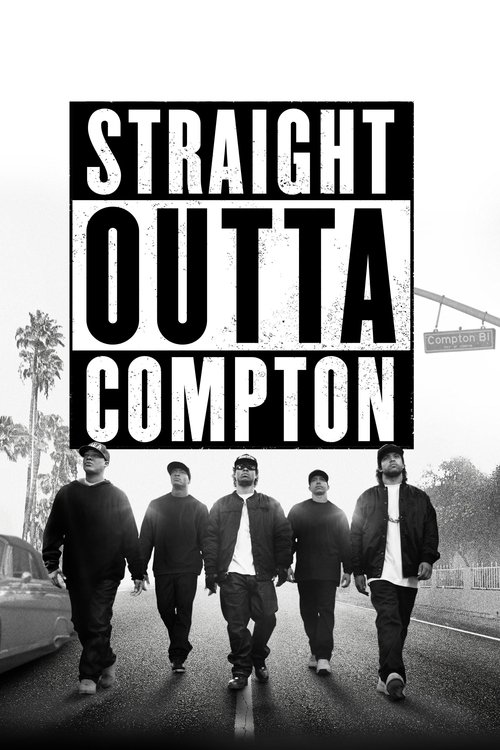
When the lights dimmed for Straight Outta Compton back in 2015, there was a palpable electricity in the room that you just don’t get with your average mid-August release. I caught it at a late-night screening where the air conditioning was cranked so high I had to wrap my arms around myself, but within ten minutes, the sheer heat radiating from the screen made me forget I was shivering. This wasn't just a movie; it felt like a pressure cooker finally whistling.
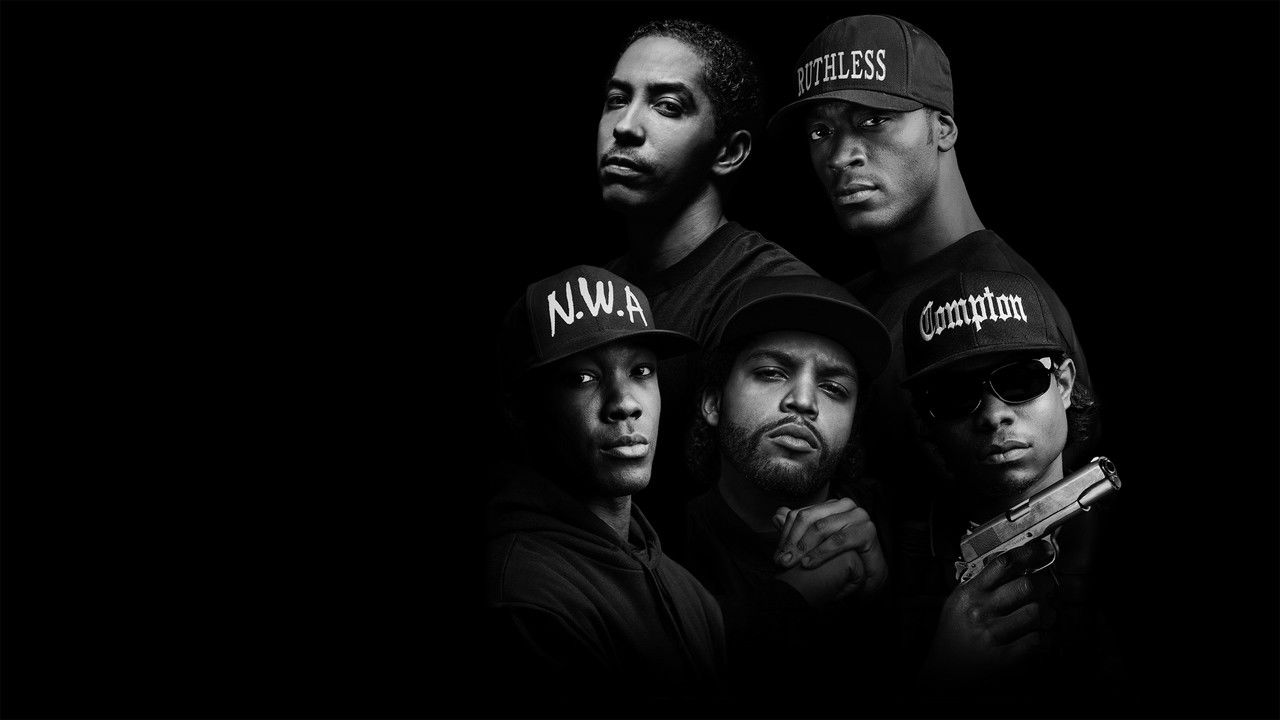
Most musical biopics follow a tired, VH1-sanctioned "Behind the Music" template: the rise, the drugs, the fall, and the inevitable redemption montage. But F. Gary Gray (who previously gave us the cult classic Friday and the slick The Italian Job) decided to treat the origin story of N.W.A. like a sprawling Shakespearean tragedy set against the backdrop of a war zone. It’s a film that demands you pay attention not just to the music, but to the environment that made the music a necessity.
The Human Cost of the Hardcore Beat
The genius of this film lies in its casting. It would have been so easy to just find lookalikes, but the "Big Three" here offer something much deeper. O’Shea Jackson Jr. doesn't just play his father, Ice Cube; he inhabits the very specific, simmering intellectual fury that made Cube the group's lyrical architect. Then you have Corey Hawkins as Dr. Dre, the perfectionist caught between his artistic ambition and the chaos of his surroundings.
But the soul of the movie—and the performance that still haunts me—belongs to Jason Mitchell as Eazy-E. Mitchell takes a figure who was often seen as a caricature and turns him into a deeply vulnerable, tragic figure. His transformation from a cocky drug dealer to a bewildered mogul, and finally to a man facing his own mortality, is the emotional anchor that prevents the movie from becoming a mere highlight reel. I’ll go on record saying Jason Mitchell was robbed of an Oscar nomination, and frankly, his performance is the reason the final act carries such a heavy, mournful weight.
Watching this again, I’m struck by how Matthew Libatique (the cinematographer who worked on Black Swan) shoots Compton. It isn’t just "the hood"; it’s a character. The way the police lights cut through the California haze creates this sense of perpetual surveillance. It makes you understand why these kids felt like they were living in an occupied territory.

The Architect and the Antagonist
No drama is complete without a complicated villain, and Paul Giamatti delivers exactly what you expect: a masterclass in "sleazy-with-a-smile" as Jerry Heller. The chemistry—or lack thereof—between Giamatti and Mitchell creates a fascinating subtext about the exploitation of Black art. It’s a cerebral tug-of-war. The film asks: is Jerry a savior or a parasite? It’s a question that resonates loudly in our current era of "creator economy" discourse and debates over ownership.
Speaking of contemporary relevance, the film landed in 2015 right as the Black Lives Matter movement was gaining national momentum. When the group performs "F* tha Police" and the Detroit riot erupts on screen, the line between 1989 and the present day completely vanishes. It felt like a movie that wasn't just documenting history, but actively engaging with the news cycle. Interestingly, the film was a massive "prestige" success, earning an Academy Award nomination for Best Original Screenplay for Andrea Berloff and Jonathan Herman**. It’s a bit of an industry irony that the story of N.W.A. was shepherded to the Oscars by two white writers, a point that sparked plenty of social media debate at the time.
Behind the Beats and the Beefs

If you’re looking for the "how-it-was-made" magic, the trivia is as wild as the movie. Apparently, O’Shea Jackson Jr. had to audition for two years to prove to his father and the studio that he could actually act, eventually losing 15 pounds to match Cube’s 1980s frame. It paid off; his performance is the most successful case of "nepo-baby" casting in cinematic history.
Then there’s the Dr. Dre of it all. Dre was on set almost every day, reportedly coaching Corey Hawkins on how to work the turntables with actual 80s-era technique. And while the film glosses over some of the darker parts of the group's history (the omission of the Dee Barnes incident was a major point of criticism during its release), it succeeds in capturing the feeling of being young, talented, and dangerous to the status quo.
The production wasn’t without its own real-world drama, either. During filming, the notorious Suge Knight (played with terrifying stillness by R. Marcos Taylor) was involved in a fatal hit-and-run near the set, a grim reminder that the world N.W.A. rapped about hadn't entirely disappeared.
Straight Outta Compton manages to be both a crowd-pleasing blockbuster and a serious piece of historical drama. It’s long, sure, but it moves with the rhythm of a classic double album—full of energy, ego, and unexpected moments of grace. It’s a film that recognizes that while music can make you a millionaire, it’s the truth behind the lyrics that makes you immortal. Whether you grew up with a "Parental Advisory" sticker on your CD walkman or you’re just discovering the history of West Coast rap, this is essential viewing that proves some stories are too loud to be kept quiet.
Keep Exploring...
-
Spotlight
2015
-
Little Women
2019
-
Ford v Ferrari
2019
-
Amadeus
1984
-
The Trial of the Chicago 7
2020
-

Hidden Figures
2016
-
Green Book
2018
-

A Taxi Driver
2017
-
Loving Vincent
2017
-
Portrait of a Lady on Fire
2019
-

Clouds
2020
-
Sound of Metal
2020
-
Society of the Snow
2023
-

Captain Fantastic
2016
-

Wonder
2017
-
Love, Simon
2018
-

Five Feet Apart
2019
-
Hacksaw Ridge
2016
-
Bohemian Rhapsody
2018
-
1917
2019