Suburra
"Seven days to the end of Rome."
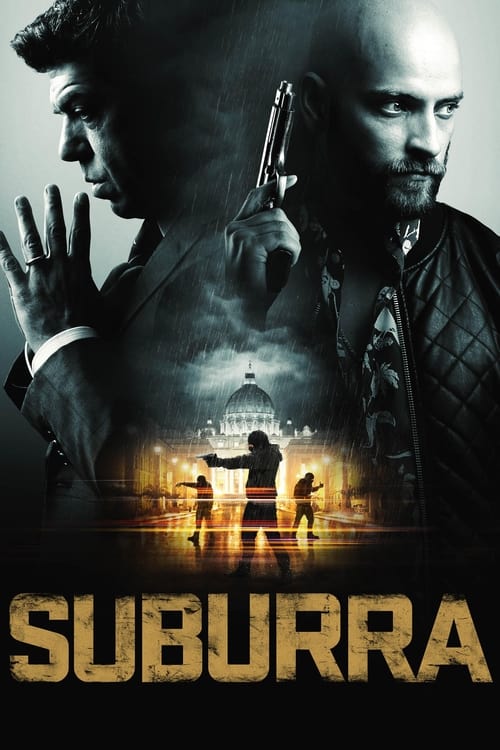
The sky over Rome doesn’t just rain in Stefano Sollima’s Suburra; it weeps a thick, oily grime that seems to coat every marble statue and corrupt politician in the city. Released in 2015, just as the prestige TV boom was beginning to swallow international cinema whole, this film feels like a final, defiant stand for the big-screen crime epic. It’s a sprawling, nihilistic, and gorgeously shot descent into a modern Gomorrah where the Pope is resigning, the government is collapsing, and the mob is trying to pave over the past to build a miniature Las Vegas.
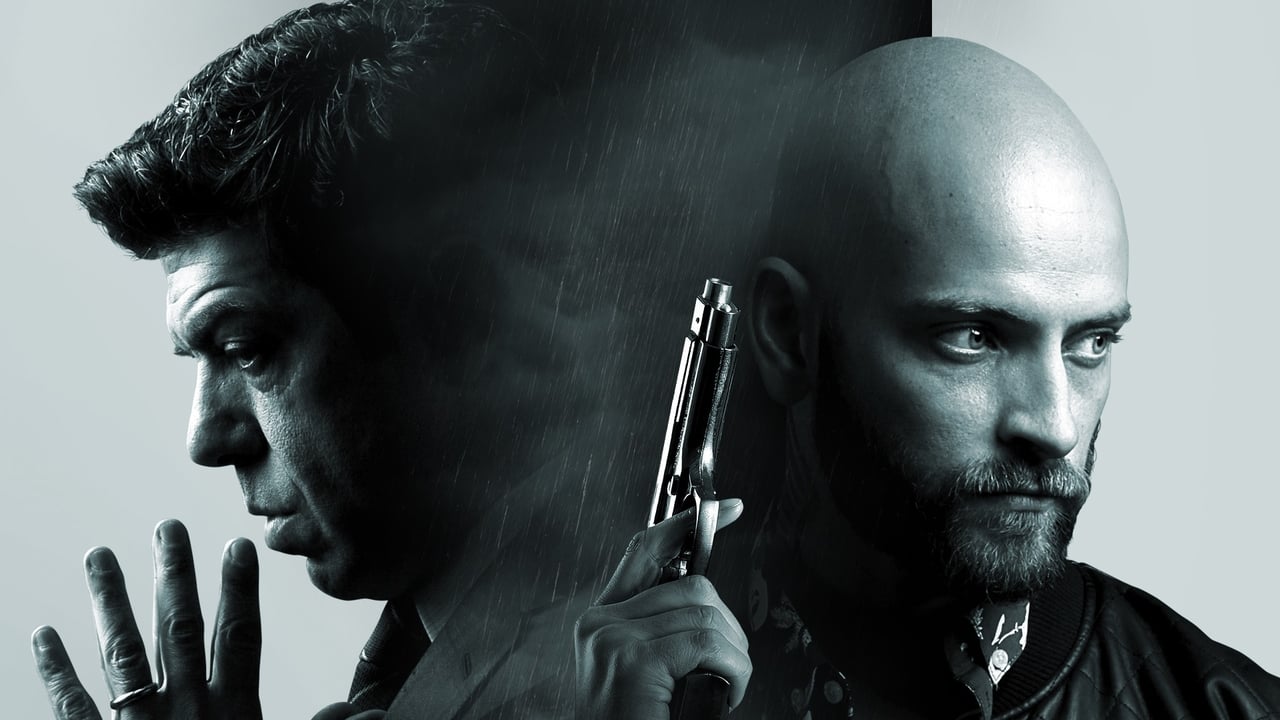
I watched this while trying to fix a leaky faucet in my kitchen, and the constant drip-drip-drip of my plumbing ended up syncing perfectly with the film’s countdown to the apocalypse. It made the experience far more immersive than I intended. Sollima, who previously honed his craft on the Gomorra series, brings a sense of impending doom that makes the 130-minute runtime feel like a timed sprint toward a cliff.
A Tangle of Suits and Scumbags
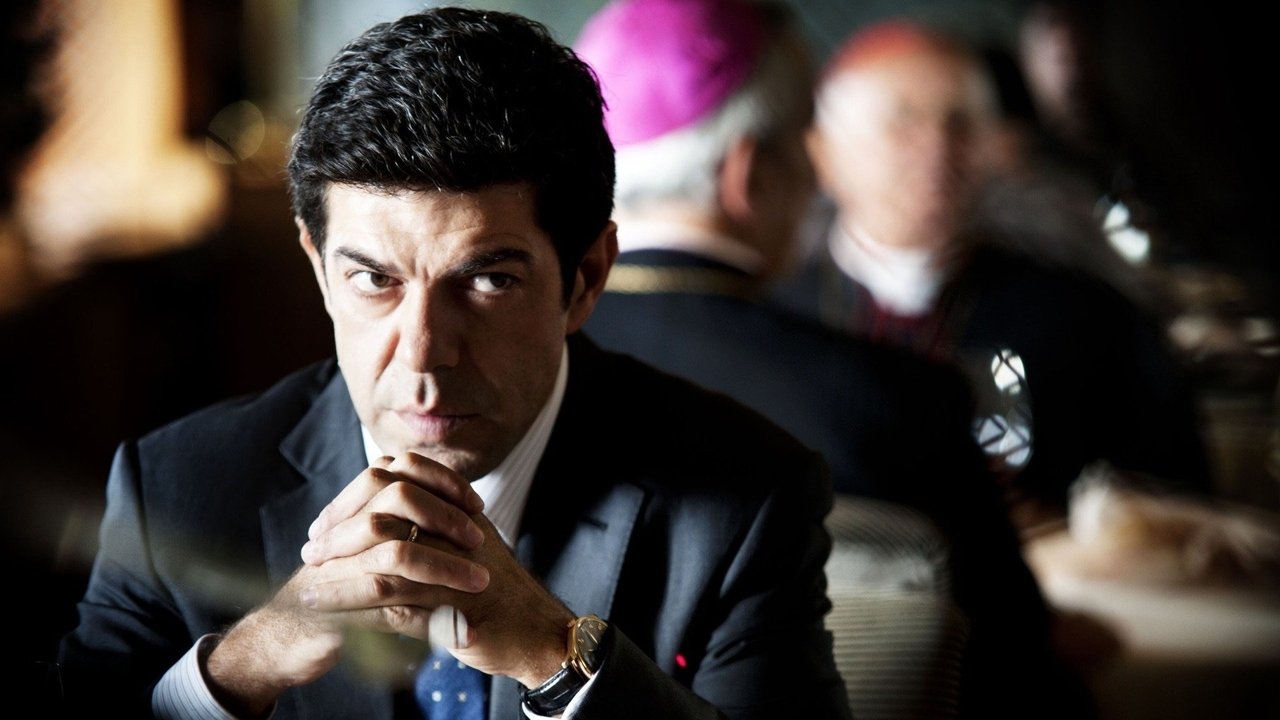
At the center of this rot is Filippo Malgradi, played with a frantic, sweating desperation by Pierfrancesco Favino (who you might recognize from World War Z or The Traitor). Malgradi is a member of parliament who kicks off the film’s domino effect by getting involved in a hotel room tragedy involving an underage girl and too much cocaine. It’s a classic noir setup, but Sollima expands the scope to include every layer of Roman society.
We see the fallout hit Sebastiano (Elio Germano), a weak-willed event organizer drowning in debt, and Numero 8, played by a feral Alessandro Borghi. This was the role that put Borghi on the map, and for good reason—he carries himself with a terrifying, unpredictable energy, like a stray dog that’s finally decided to bite back. His chemistry with Greta Scarano, who plays his fiercely loyal girlfriend Viola, provides the film’s only real heartbeat, even if that heart is beating with pure malice.
Then there is "Samurai," played by the legendary Claudio Amendola. He is the bridge between the old world and the new, a former neo-fascist militant who now moves through the halls of power like a ghost. Amendola gives a masterfully restrained performance; he doesn't need to shout to be the most dangerous person in the room. He represents the systemic corruption that doesn't just break the law but rewrites it to suit its own needs.
The Neon Apocalypse

Visually, the film is a knockout. While most crime dramas of this era opted for a desaturated, handheld "realism," Sollima and cinematographer Paolo Carnera lean into a lush, neon-noir aesthetic. The waterfront of Ostia is transformed into a graveyard of half-finished concrete and rain-slicked asphalt.
The score, provided by the French electronic band M83, is perhaps the film’s secret weapon. It’s an unconventional choice for a gritty Italian crime flick—usually, you’d expect something operatic or somber—but the pulsing, synth-heavy tracks give the movie a futuristic, almost sci-fi feeling. It reinforces the idea that we aren't just watching a mob war; we’re watching the death of an era.
Interestingly, the film’s production hit a strange bit of luck with reality. The plot involves a "Mafia Capitale" scandal involving the intersection of the mob and the state, and as they were filming, a massive real-life investigation with the exact same name broke in the Italian news. It’s the cinematic equivalent of watching a building burn down while the fire marshal is still arguing about the blueprints.
Why the Movie Beats the Series
Most people today probably know Suburra as the first Italian original series on Netflix. While the show has its fans, the 2015 film is a much tighter, more cynical beast. Because it’s a self-contained story, it doesn't have to worry about keeping characters alive for future seasons or dragging out plot points. It has a definitive, bone-crunching ending that the TV format just can't replicate.
The film arrived at a pivotal moment in the "Streaming Era" transition. It’s a big-budget, stylish production that feels like it belongs in a theater, yet it became the blueprint for the high-end international content that would soon dominate our living rooms. If you’ve only seen the show, the movie will feel like a concentrated shot of espresso after a long, watery Americano.
What sticks with me most is the film’s refusal to offer a traditional "hero." Everyone is compromised. Everyone is looking for an angle. It’s a bleak worldview, certainly, but in Sollima’s hands, it’s also strangely beautiful. He captures the tragedy of a city that has survived thousands of years only to be sold off for parts by the very people sworn to protect it.
Suburra is a rare breed of crime thriller that manages to be both intellectually stimulating and viscerally intense. It demands your full attention as it weaves its complex web of characters, but the payoff is a haunting, atmospheric ride that lingers long after the credits roll. If you can handle the subtitles and the unrelenting darkness, it’s one of the most rewarding international films of the last decade. Just make sure your kitchen sink isn't leaking before you press play.


Keep Exploring...
-

The Traitor
2019
-

Miss Sloane
2016
-
22 July
2018
-
Batman vs. Robin
2015
-
The Guilty
2018
-
Dogman
2018
-
November
2022
-
The Outfit
2022
-
Don't Be Bad
2015
-
Patriots Day
2016
-
Snowden
2016
-
The Accountant
2016
-
The Book of Henry
2017
-
The Place
2017
-

The House That Jack Built
2018
-
Uncut Gems
2019
-

Promising Young Woman
2020
-

STRAW
2025
-
The Infiltrator
2016
-
Roman J. Israel, Esq.
2017