The Boy and the Beast
"To find your strength, first find your beast."
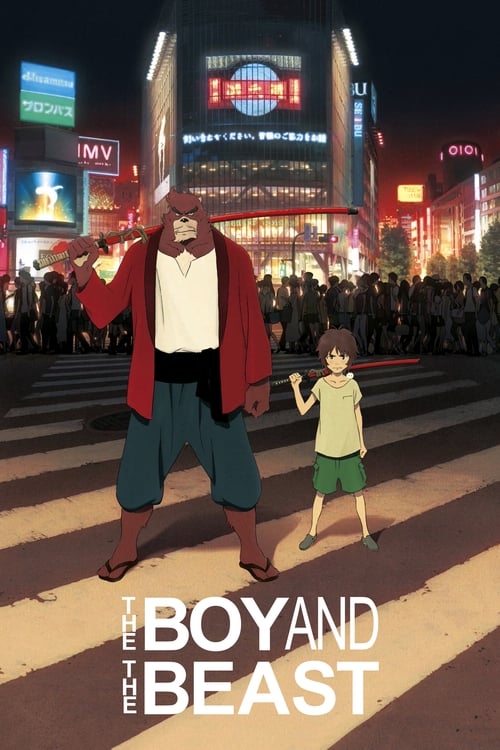
The Shibuya crossing is a place where you can be surrounded by thousands of people and still feel like the only person on the planet. It is the architectural peak of modern loneliness. In 2015, while the rest of the world was gearing up for the return of Star Wars, director Mamoru Hosoda (the genius behind Summer Wars and Wolf Children) looked at that sea of commuters and saw a portal. He didn't see a sci-fi wormhole, but a narrow, grimy alleyway leading to a world where a bear-man with a short fuse could teach a runaway boy how to hold a sword—and how to hold a life together.
I first sat down with The Boy and the Beast while nursing a particularly nasty case of the flu, wrapped in a blanket that smelled faintly of eucalyptus rub, and let me tell you: there is no better way to experience a film about a chaotic, hairy father figure than when you are at your most physically disheveled.
The Art of the Haphazard Hug
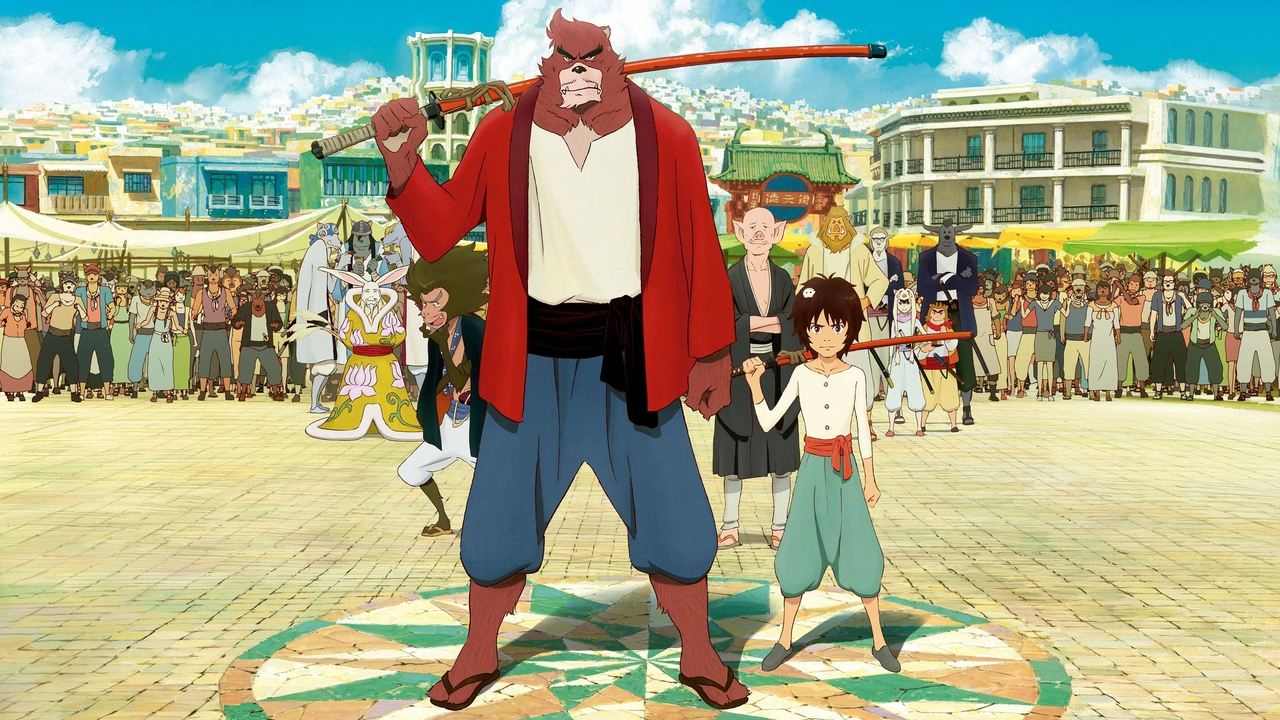
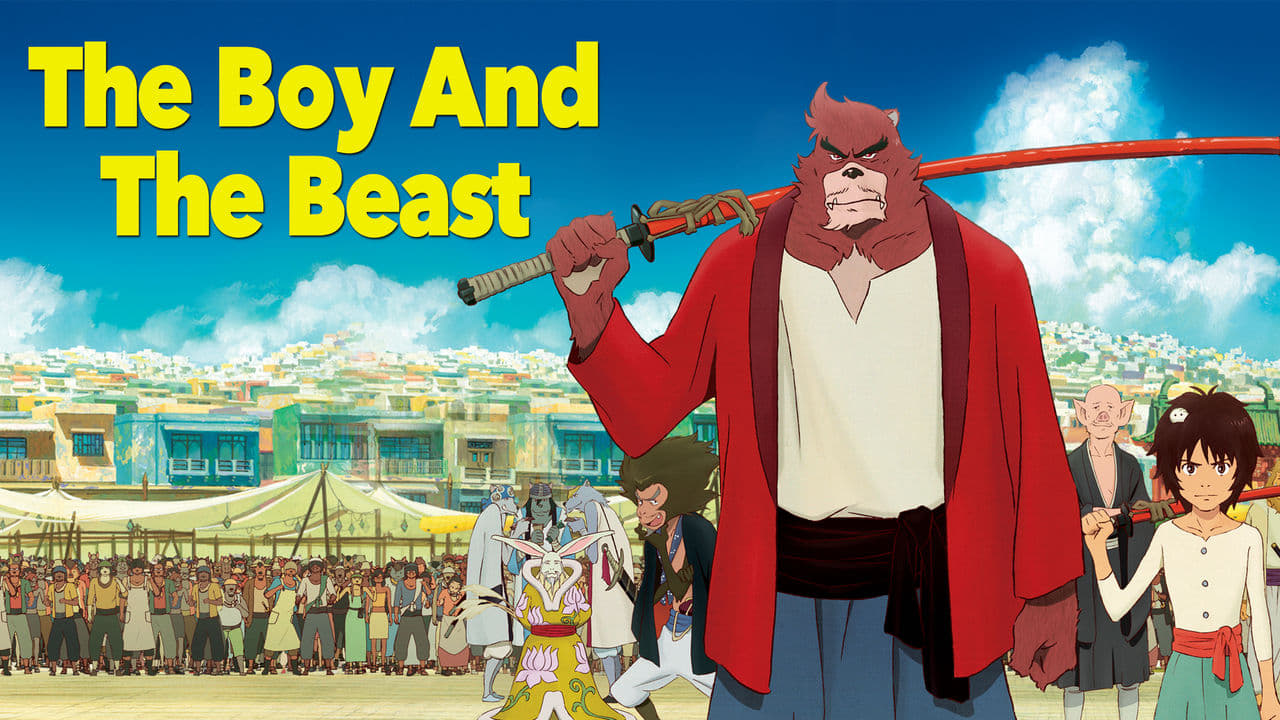
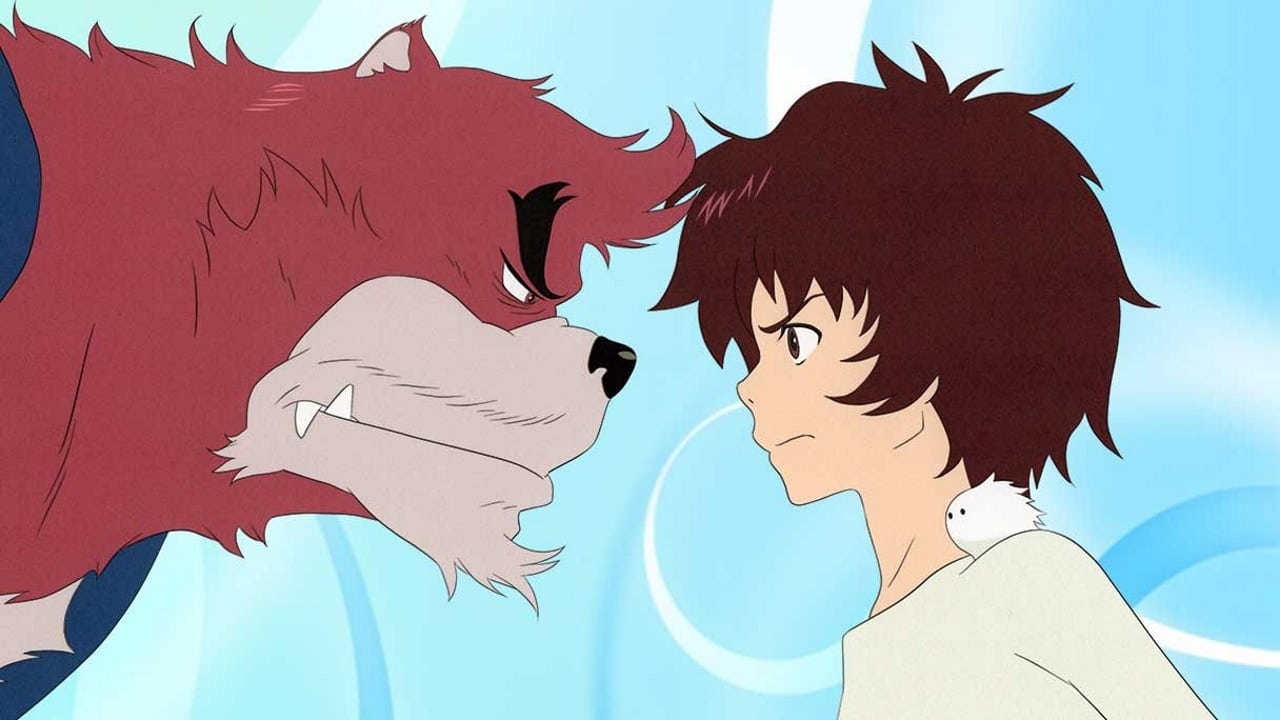
At its heart, this is a "found family" story, a trope that has become the bread and butter of the contemporary streaming era. We see it everywhere now, from The Mandalorian to The Last of Us, but Hosoda approaches it with a messy, domestic sincerity that feels uniquely grounded despite the talking animals. Kyuta (voiced by Aoi Miyazaki as a child and Shota Sometani as a teen) is a boy who has lost everything and refuses to be "handled" by well-meaning relatives. Kumatetsu (Koji Yakusho) is a beast-warrior who is physically powerful but socially a disaster.
Their relationship isn't a graceful master-and-student dance; it’s a series of shouting matches. They are both stubborn idiots who use combat as a substitute for a therapy session. Watching them spar is where the film’s action credentials really shine. Hosoda doesn’t lean on the "shaky cam" chaos that infected so many live-action blockbusters of the mid-2010s. Instead, the animation offers a crisp, rhythmic clarity. You feel the weight of Kumatetsu’s feet hitting the dirt and the desperate, flapping energy of a kid trying to mimic a master who doesn’t even know how to explain what he’s doing.
Action with an Intellectual Pulse
As the story shifts into Kyuta’s teenage years, the film asks a very "2015" question: in a world of infinite choices, how do we decide who we are? Kyuta starts sneaking back into the human world, discovering libraries and a girl named Kaede (Suzu Hirose), who introduces him to the daunting world of academia. This is where the film gets cerebral. It’s not just about who can swing a sword harder; it’s about the "hole in the heart"—that nagging sense of void that many of us feel in a hyper-connected, high-pressure society.
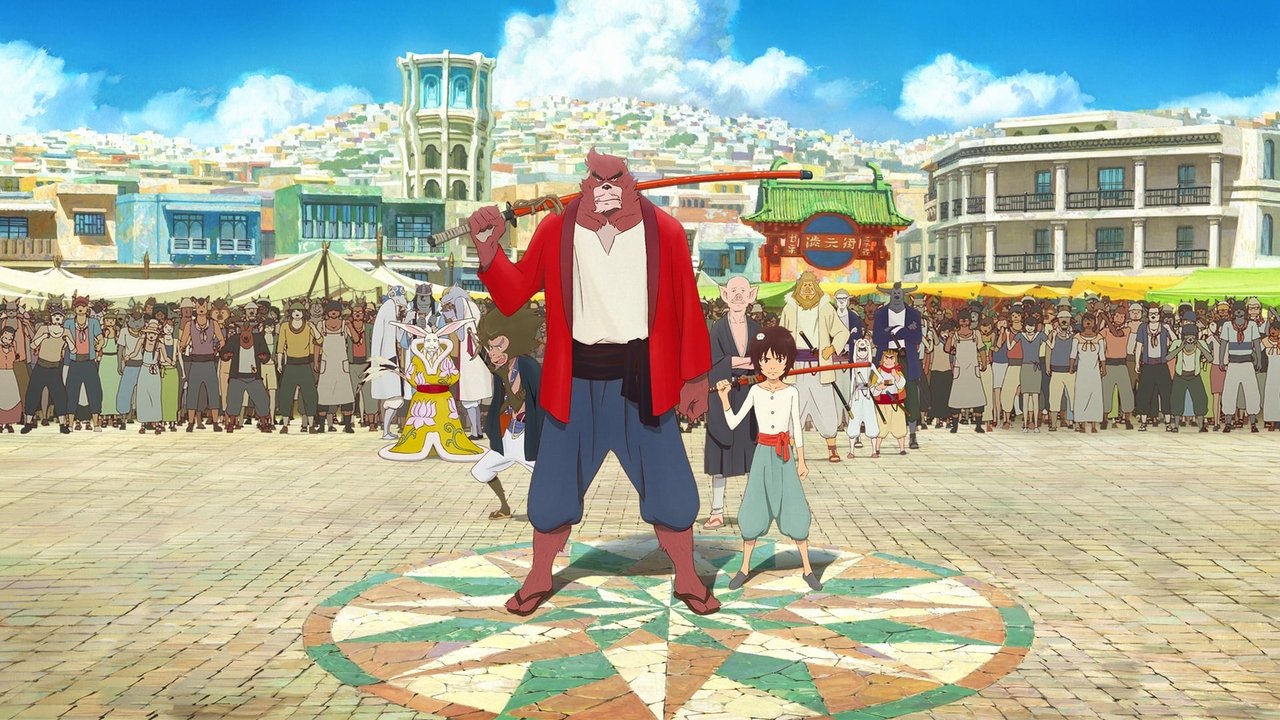
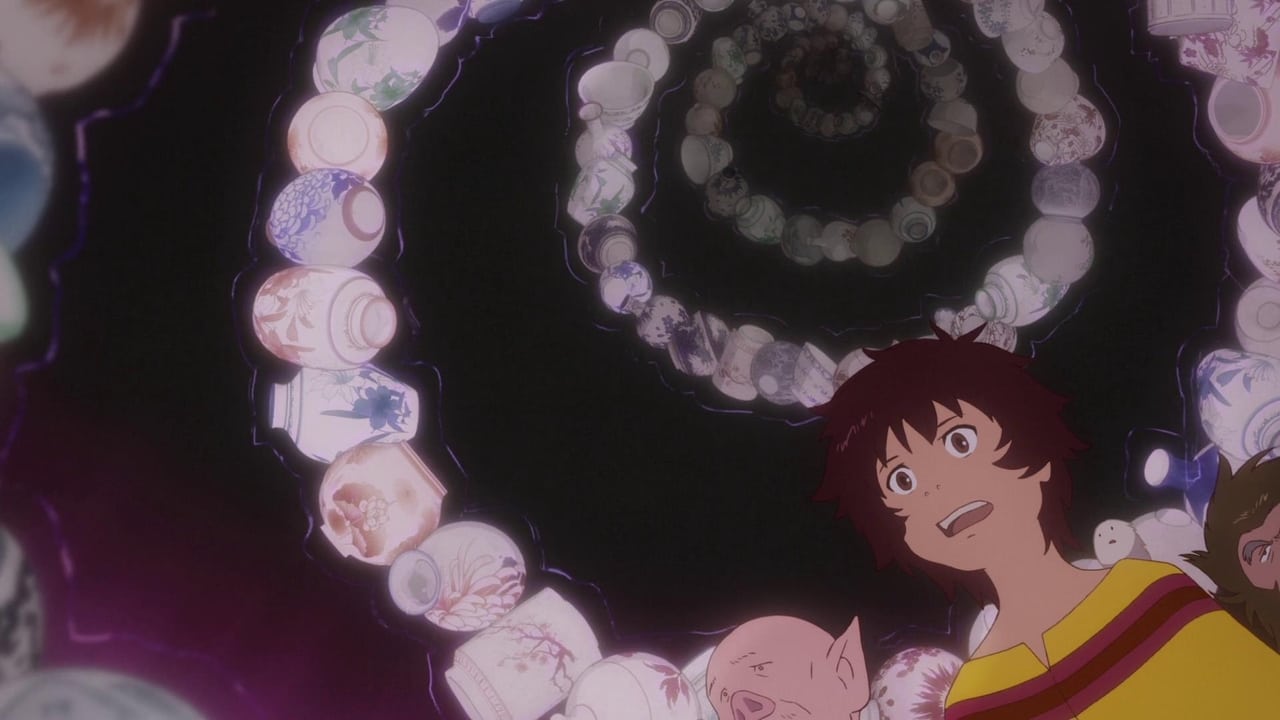
The action choreography evolves along with this internal conflict. The fights in the beast realm of Jutengai are grand, bright, and public, resembling a high-stakes wrestling match. But the final confrontation—which involves a massive, spectral manifestation of a whale in the middle of Tokyo—is something else entirely. It’s a sequence that makes the average MCU sky-beam finale look like a PowerPoint presentation. It’s visually ambitious and emotionally heavy, dealing with the literal "darkness" that stems from suppressed resentment.
Why This Gem Isn't in Every Collection
Despite being a box-office hit in Japan, The Boy and the Beast often gets tucked away in the "if you liked Ghibli" recommendations without being given its own pedestal. Part of this is the timing. It arrived just a year before Your Name would go on to break every global record imaginable, shifting the conversation toward Makoto Shinkai’s brand of cosmic star-crossed lovers. Hosoda’s work is more muscular and grounded in the friction of daily life, which sometimes lacks the "viral" aesthetic of his contemporaries.
Production-wise, this was a massive undertaking for Studio Chizu. They used a blend of traditional hand-drawn animation for the expressive character work and CG for the massive crowds in Shibuya. It’s a technical marvel because you never feel the "seam." The transition between the vibrant, dusty, Mediterranean-style architecture of the beast world and the cold, blue-lit convenience stores of Tokyo is seamless. It mirrors the protagonist's own fractured identity—a boy caught between two worlds, belonging to both and neither.
There’s also a delightful bit of trivia involving the voice cast: Koji Yakusho, who voices the gruff Kumatetsu, is one of Japan’s most decorated actors (you might recognize him from Babel or the recent Perfect Days). He brings a gravelly, lived-in humanity to a giant bear that would have been lost if they’d gone for a more typical "cartoony" voice.
The Boy and the Beast is the kind of movie that reminds you that "action" isn't just about the impact of a fist; it's about the force of a personality. It’s a loud, proud, and occasionally tear-jerking look at what it means to grow up when you don't have a map. While the third-act shift into a supernatural thriller might feel a bit jarring for those who preferred the domestic bickering of the first half, the emotional payoff is massive. If you’ve ever felt like a beast trying to navigate a human world—or vice versa—this one is for you.
Keep Exploring...
-
Wolf Children
2012
-

My Hero Academia: Two Heroes
2018
-
The Seven Deadly Sins: Prisoners of the Sky
2018
-

My Hero Academia: Heroes Rising
2019
-
Batman vs. Robin
2015
-
Justice League vs. Teen Titans
2016
-
Suzume
2022
-
How to Train Your Dragon: Homecoming
2019
-
Justice League Dark: Apokolips War
2020
-
Wolfwalkers
2020
-
Raya and the Last Dragon
2021
-
The Sea Beast
2022
-
Nimona
2023
-
Miraculous: Ladybug & Cat Noir, The Movie
2023
-
Boruto: Naruto the Movie
2015
-
Mary and The Witch's Flower
2017
-

The Little Prince
2015
-
One Piece Film Red
2022
-
The Boy and the Heron
2023
-
A Whisker Away
2020