The Hateful Eight
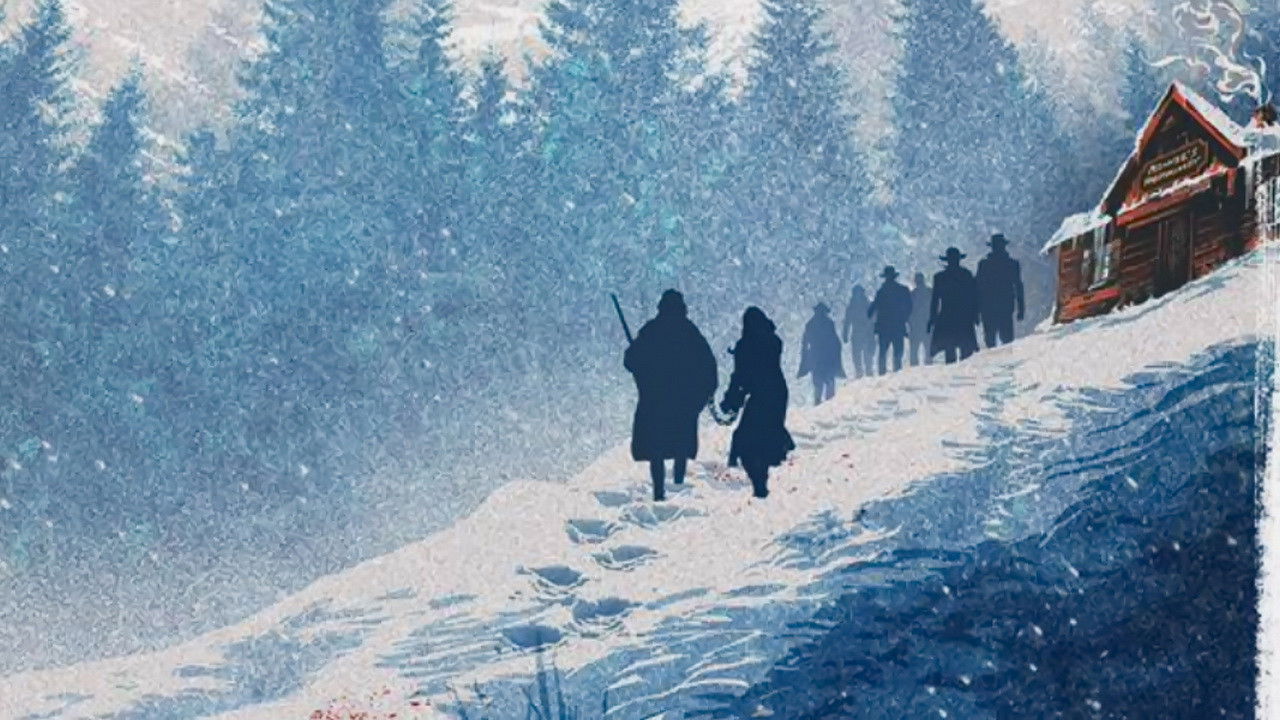
"Eight strangers. One blizzard. No mercy."
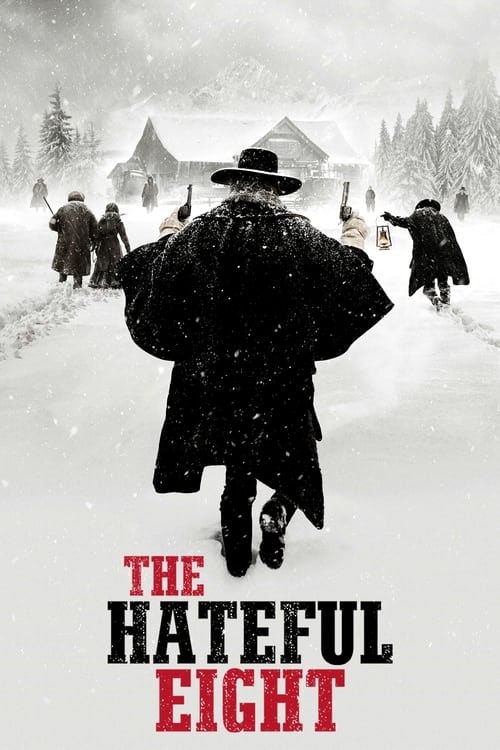
The first thing you notice about The Hateful Eight isn’t the blood or the bravado; it’s the cold. Even through a screen, you can feel the sub-zero bite of the Wyoming wilderness. Quentin Tarantino chose to shoot this film in Ultra Panavision 70mm—a wide, sweeping format historically reserved for massive epics like Ben-Hur—only to spend ninety percent of the runtime trapped inside a single, drafty room called Minnie’s Haberdashery. It’s a move of pure cinematic arrogance, and I absolutely love it. I watched this for the third time last Tuesday while my apartment radiator was clanking like a ghost in a Victorian novel, and the immersion was almost too effective.
Released in late 2015, this was Tarantino’s "Roadshow" experiment. In an era where streaming was already starting to nibble at the edges of the theatrical experience, he insisted on a traveling exhibition with overtures, intermissions, and souvenir programs. It was a defiant middle finger to the digital shift, an attempt to make going to the movies feel like an event again. Looking at it now, in a post-pandemic world where the "theatrical window" is a constant battleground, The Hateful Eight feels like a stubborn, beautiful relic of a director demanding your undivided attention for three full hours.
A Pressure Cooker with a Racial Fuse
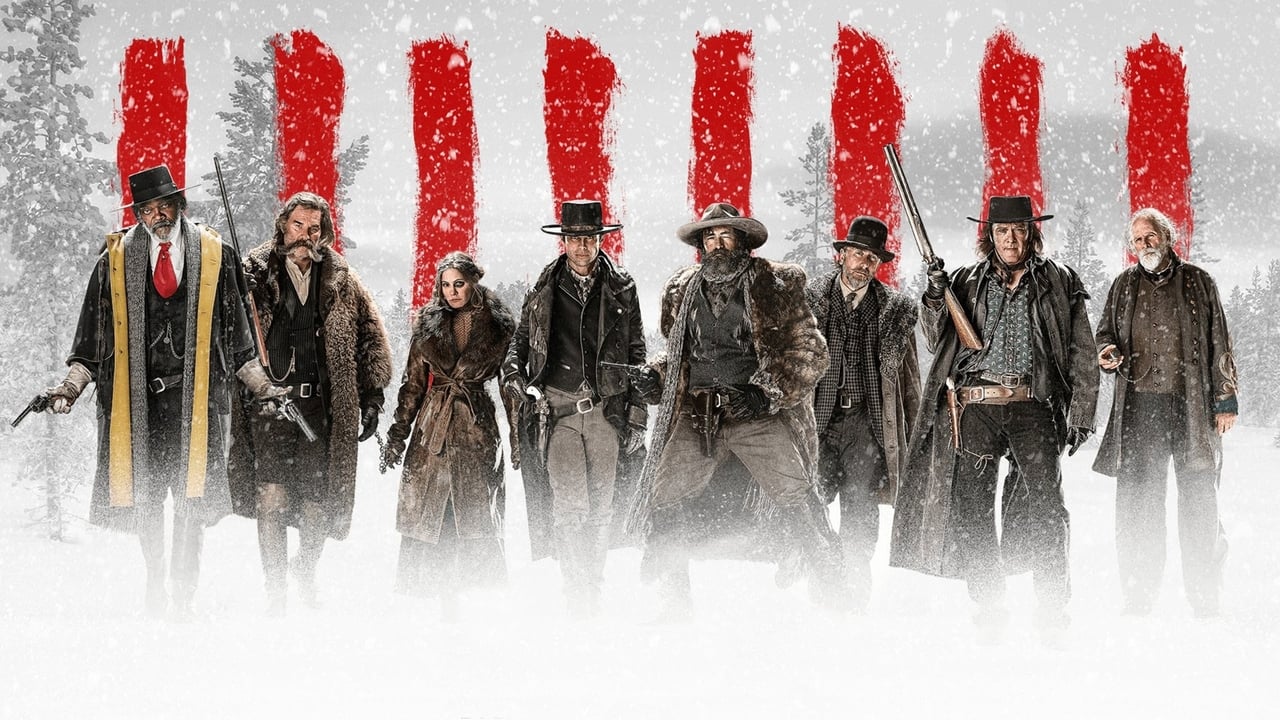
The setup is classic mystery: a stagecoach carrying bounty hunter John 'The Hangman' Ruth (Kurt Russell) and his prisoner Daisy Domergue (Jennifer Jason Leigh) picks up two hitchhikers—Major Marquis Warren (Samuel L. Jackson) and the supposed new Sheriff of Red Rock, Chris Mannix (Walton Goggins). They seek refuge from a blizzard at a mountain pass stopover, only to find the "owners" are gone and replaced by four suspicious characters.
What follows isn’t just a "whodunit," but a "who-are-they." Tarantino uses the drama of the post-Civil War landscape to turn the room into a microcosm of American tension. Every line of dialogue is a barbed wire fence. Samuel L. Jackson delivers a performance that is simultaneously terrifying and hilarious; he’s the smartest person in the room, and he knows exactly how to use the racial animosity of his captors against them.
The film doesn’t care if you like these people. In fact, it's right there in the title. They are hateful. Kurt Russell plays Ruth as a blustering, paranoid brute, and Jennifer Jason Leigh is a revelation as Daisy. She spends most of the movie bruised and chained, yet she remains the most dangerous presence in the room without ever picking up a gun. Walton Goggins, however, steals the entire show. His transition from a dim-witted racist caricature to something far more complex is the film’s secret weapon. Tarantino spends 90 minutes setting the table just to kick it over, and it's Walton Goggins who holds the pieces together.
The Sound of Dread and 70mm Dust
The prestige here isn't just in the acting, but in the score. Tarantino finally convinced the legendary Ennio Morricone (The Good, the Bad and the Ugly) to write an original score for one of his Westerns. Ironically, it’s not a sweeping "cowboy" soundtrack. It’s a horror score. It’s ominous, repetitive, and deeply unsettling. Morricone eventually won the Academy Award for Best Original Score for this, his first and only Oscar in a competitive category, which felt like the industry finally correcting a decades-old oversight.
The cinematography by Robert Richardson (who also shot JFK and Casino) is equally masterful. Even in the dim light of a cabin, the 70mm format captures every bead of sweat and every splinter of wood. It gives the drama a weight that standard digital filming just can't replicate. Apparently, during the "Roadshow" tour, many projectionists had to be specially trained to handle the rare lenses and massive film reels. It was a high-wire act of technical nostalgia that probably shouldn't have worked, but it gave the film a texture you can practically taste.
One of the more infamous bits of trivia involves a scene where Kurt Russell smashes an acoustic guitar. Unfortunately, a mix-up on set meant he smashed a 145-year-old museum-piece Martin guitar instead of the prop duplicate. The look of genuine horror on Jennifer Jason Leigh’s face in that scene is real; she was the only one who knew it wasn't a fake. It’s a moment of accidental destruction that perfectly mirrors the film's own nihilistic energy.
The Contemporary Reckoning
Rewatching this today, the political subtext feels sharper than it did in 2015. The way characters lie about their pasts, the way they weaponize "frontier justice," and the deep-seated distrust between the Northern and Southern archetypes—it all feels uncomfortably relevant. Tarantino isn't interested in a "we all get along" ending. He’s interested in how a common threat (and a lot of coffee) forces people who hate each other into a temporary, bloody alliance.
Some find the film too long or too cruel. It’s certainly a talky endurance test. But there is a craftsmanship here that is becoming increasingly rare. In a cinema landscape dominated by "safe" franchise entries, a three-hour R-rated mystery about eight terrible people screaming at each other in the snow feels like a miracle. It’s an ensemble drama where the dialogue is the primary action sequence, and the gore, when it finally arrives, feels like the inevitable bursting of a boil.
The Hateful Eight is a brutal, darkly funny, and impeccably shot chamber piece that rewards patience with a staggering amount of tension. It’s a film that demands to be seen on the largest screen possible, if only to appreciate the way Samuel L. Jackson can turn a simple monologue into a weapon of mass destruction. While its cynicism might be a bit much for a casual Friday night, its dedication to the "old ways" of filmmaking makes it an essential watch for anyone who still believes in the power of a theatrical experience. Just make sure you have a warm blanket nearby.

Keep Exploring...
-
Django Unchained
2012
-
Once Upon a Time... in Hollywood
2019
-
The Ballad of Buster Scruggs
2018
-

The Invisible Guest
2017
-
Inglourious Basterds
2009
-
Arrival
2016
-
Hell or High Water
2016
-
Wind River
2017
-
Bad Times at the El Royale
2018
-
Suspiria
2018
-
Midsommar
2019
-
News of the World
2020
-
Bone Tomahawk
2015
-
The Dressmaker
2015
-
The Revenant
2015
-

Brimstone
2016
-
A Ghost Story
2017
-
Hostiles
2017
-
Loving Vincent
2017
-
Burning
2018