ARQ
"The future is stuck on repeat."
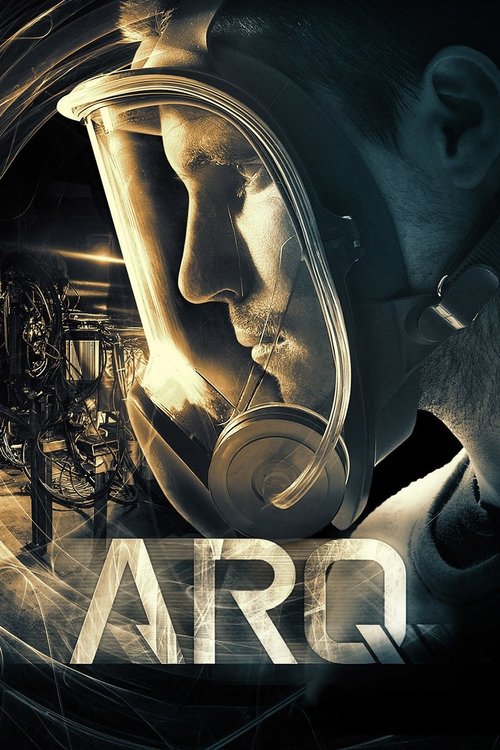
The first time I watched ARQ, I was nursing a spectacular Sunday morning headache while waiting for a pizza delivery that was forty minutes late. Every time Robbie Amell’s character woke up gasping at 6:11 AM, it felt like a personal attack on my own nervous system. There is something uniquely masochistic about watching a time-loop thriller when your own internal clock is malfunctioning, but maybe that’s the best way to experience Tony Elliott’s scrappy, claustrophobic debut.

By 2016, the "Groundhog Day" mechanic was already becoming a bit of a cinematic trope. We’d seen it done with comedy, with slasher tropes, and with Tom Cruise-sized budgets in Edge of Tomorrow. But ARQ arrived at a very specific moment in the streaming timeline. It was part of that early, experimental wave of Netflix Originals—before the algorithm took over and everything started looking like a shiny car commercial. This was back when the "Big Red N" was hunting for high-concept, low-budget indie scripts that could thrive in a vacuum.
The Beauty of the Budgetary Box
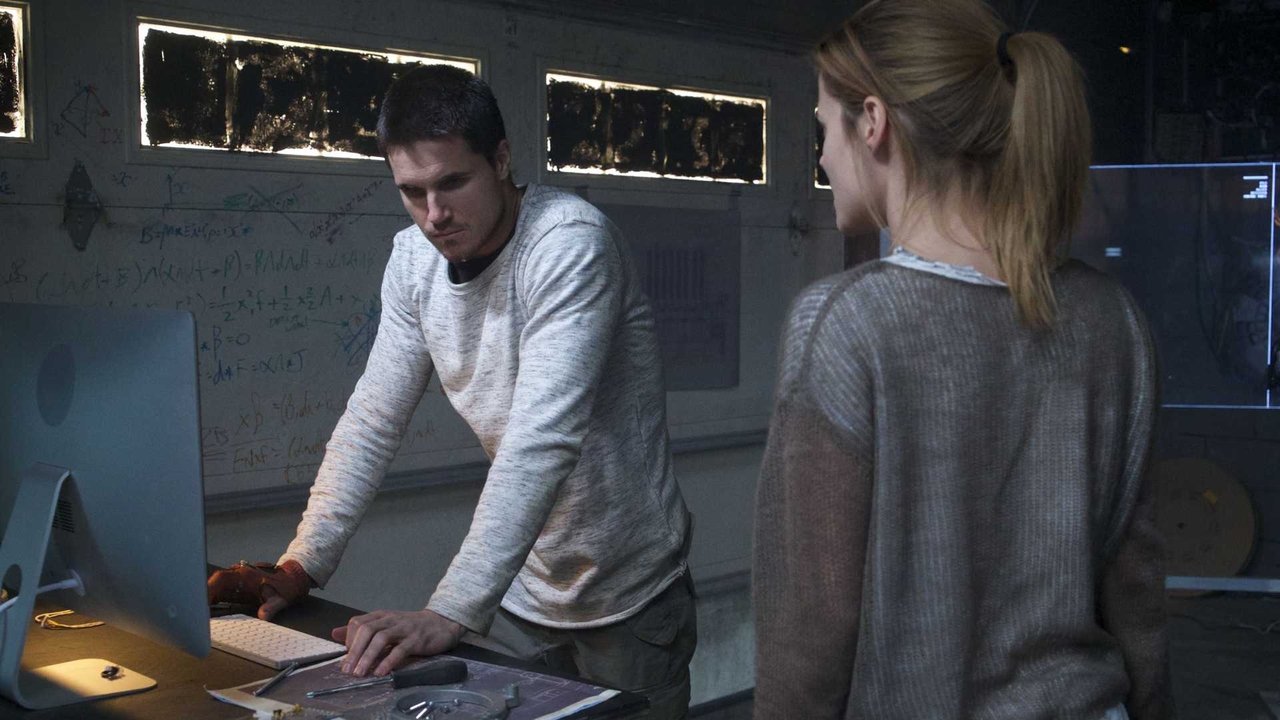
With a lean $2 million budget and a 19-day shooting schedule, ARQ is the ultimate "bottle film." Aside from a few hazy, desaturated flashbacks, the entire story takes place inside a fortified lab-slash-house. Robbie Amell (who I’ve always felt has a great "confused but determined" face, later perfected in Upload) plays Renton, an engineer who has invented a perpetual motion machine. He wakes up next to his former flame, Hannah (played with a weary intensity by Rachael Taylor), only for a group of masked "Z-men" to burst in and kill them.
Then, it happens again. And again.
What I love about this film’s approach to the loop is how quickly it moves past the "what’s happening?" phase. Renton is a scientist; he figures out the mechanics of his predicament with a pragmatism that feels refreshing. The film doesn't waste forty minutes on him trying to convince people he's a psychic. Instead, it turns into a high-stakes logic puzzle. It’s basically an escape room where the penalty for failing to find the hidden key is a lead sandwich.
The ARQ machine itself—the "Atmospheric Return Quadrant"—is a gorgeous piece of tactile sci-fi design. It’s not a sleek, Apple-designed monolith; it’s a whirring, sparking hunk of metal that looks like it was scavenged from a junkyard. This reflects the world outside: a dystopia where the air is toxic and a corporation called Torus battles a rebel group known as the Bloc.
Scrappy Vision Over Studio Polish
Because this is an indie gem, the limitations actually serve the tension. Tony Elliott, who cut his teeth writing for the brilliantly twisty Orphan Black, knows how to make a small space feel cavernous through information reveal. Just when you think you understand the power dynamic between Renton and the intruders (led by a menacing Gray Powell and Shaun Benson), the loop resets and reveals a new piece of the backstory that flips your loyalties.
I’ve always been a sucker for the "resourceful engineer" archetype, and Robbie Amell sells the exhaustion of the role perfectly. By the tenth loop, he doesn’t look like a hero; he looks like a man who hasn’t slept in three lifetimes. There's a genuine sense of "loop fatigue" here that bigger blockbusters often skip in favor of cool montage sequences.
The trivia behind the scenes is just as scrappy. Tony Elliott reportedly wrote the script with the specific goal of keeping costs down, focusing on a single location to ensure he could maintain creative control. It’s the kind of "calling card" filmmaking that I wish we saw more of today. In an era where every sci-fi pitch seems to require a $100 million "cinematic universe" attached to it, there is something deeply satisfying about a movie that is essentially three people and a vibrating turbine in a basement.
A Relic of the Discovery Era
Watching ARQ now, it feels like a postcard from a different era of digital distribution. In 2016, we were still "discovering" movies on streaming services through word-of-mouth and Reddit threads rather than being bombarded by TikTok marketing campaigns. It’s a film that respects your intelligence; it doesn't over-explain the science, and it trusts you to keep up with the shifting motivations of the characters.
Is it perfect? No. The final act gets a little tangled in its own temporal logic, and there are moments where the dialogue feels a bit "Dystopia 101." But the core hook—the idea that the very machine meant to save the world is actually trapping it in a feedback loop—is a fantastic metaphor for our own technological anxieties. We keep trying to "innovate" our way out of problems, only to find we’ve just created a new, more complicated version of the same mess.
If you’re looking for a tight, 88-minute thriller that proves you don't need a Marvel budget to build a compelling world, ARQ is still the gold standard for "the little sci-fi that could." Just maybe don't watch it while you're waiting for a late pizza. The repetition might get to you.
ARQ remains one of the most effective uses of a single location in modern sci-fi, proving that a strong concept beats a massive budget every time. It’s a gritty, smart, and relentlessly paced thriller that manages to find new life in a well-worn genre. If you missed it during the initial Netflix surge, it’s well worth a reset.
Keep Exploring...
-
Circle
2015
-
The Endless
2017
-

Freaks
2019
-
The Platform
2019
-

Vivarium
2019
-

Possessor
2020
-

Subservience
2024
-
Infinity Pool
2023
-
Jurassic World
2015
-
Maze Runner: The Scorch Trials
2015
-
Project Almanac
2015
-
Self/less
2015
-
Terminator Genisys
2015
-

Victor Frankenstein
2015
-
10 Cloverfield Lane
2016
-

Morgan
2016
-
Spectral
2016
-

Underworld: Blood Wars
2016
-
2:22
2017
-

Alien: Covenant
2017