Café Society
"Dream in gold, wake up in gray."
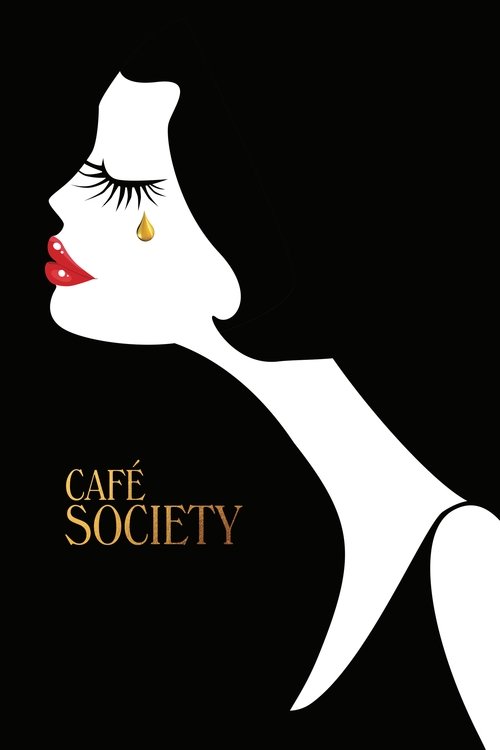
Vittorio Storaro shot Café Society on a Sony F65, and the result looks like someone melted down a thousand vintage Cartier watches and smeared them across the sensor. It’s the kind of golden, honey-drenched 1930s that only exists in the dreams of people who have never actually had to live through the Great Depression. I watched this while trying to eat a particularly stubborn pomegranate, and I’m pretty sure I missed three plot points because I was wrestling with a seed, yet the visuals were so intoxicating it didn't even matter.
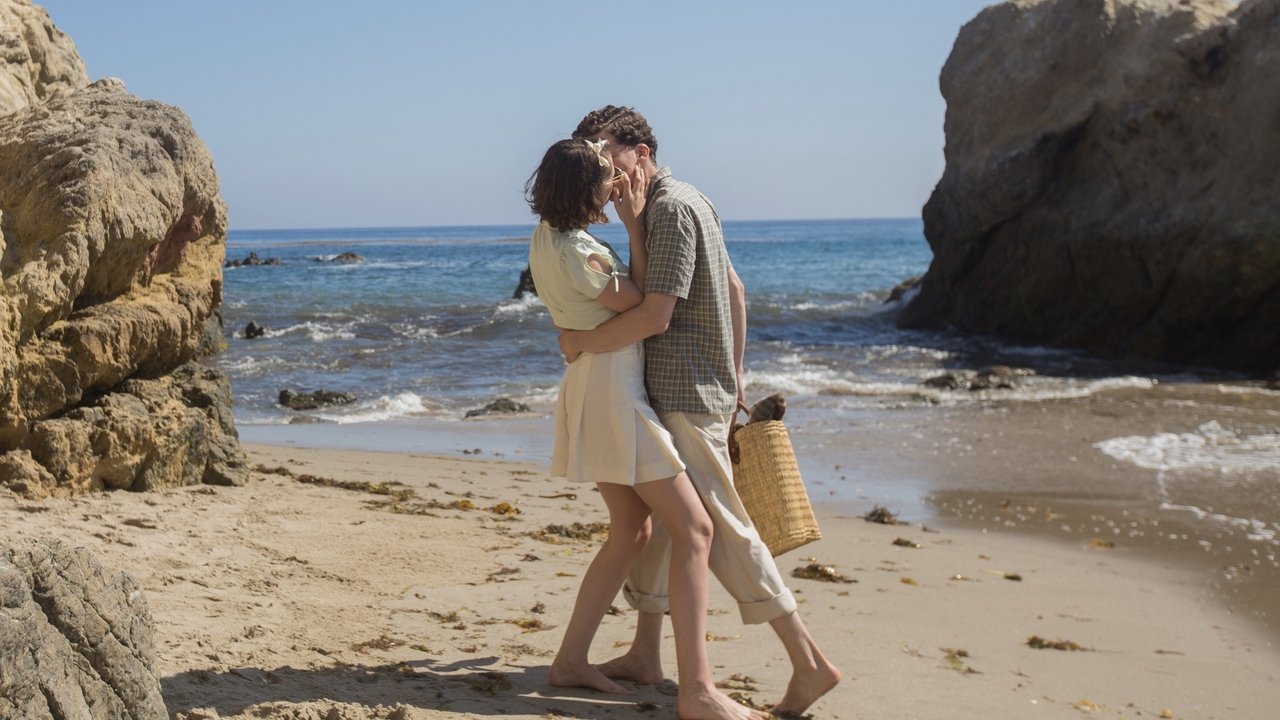
This is late-period Woody Allen, released in 2016 during that strange, transitional window when Amazon Studios was tossing money at prestige directors to legitimize their streaming platform. It arrived just before the cultural conversation around Allen shifted from "prolific auteur" to "industry pariah" for many, making it a fascinating artifact of a specific, pre-reckoning moment in contemporary cinema.
Digital Gold and Hollywood Ghosts
The plot is a familiar Allen shuffle. Jesse Eisenberg plays Bobby Dorfman, a twitchy New Yorker who moves to Hollywood to work for his powerhouse agent uncle, Phil Stern (Steve Carell). Bobby falls for Phil’s secretary, Vonnie (Kristen Stewart), only to find out she’s having an affair with a married man—who, in a classic "small world" script contrivance, turns out to be Uncle Phil.
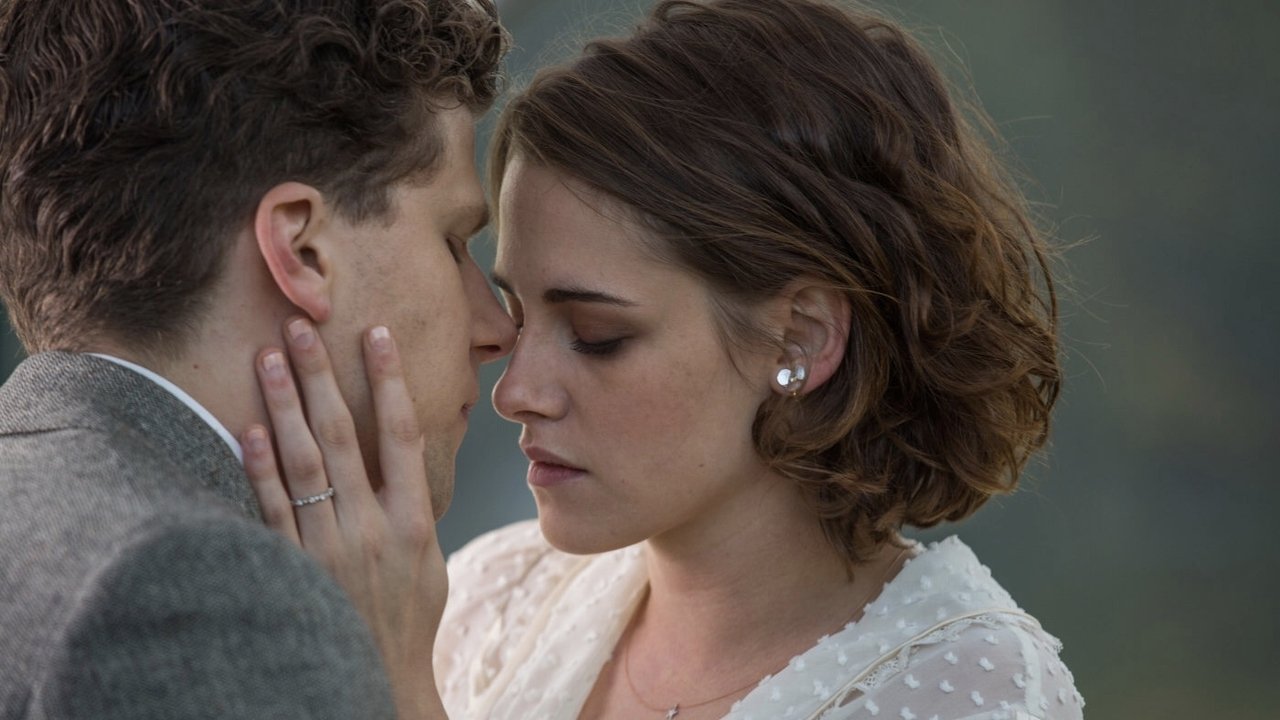
What makes this more than just another retread of Annie Hall tropes is the sheer technical audacity. Vittorio Storaro—the man who gave Apocalypse Now its shadow and The Last Emperor its scale—convinced Allen to finally ditch film for digital. Usually, digital looks clinical, but here, it’s lush. The Los Angeles scenes are bathed in a permanent sunset, while the New York nightclub scenes are cool, sharp, and silver. It’s a movie for people who think jazz is a personality trait, but it’s so beautiful you forgive the pretension.
Jesse Eisenberg is doing his best "Woody surrogate" impression, but he adds a layer of genuine anxiety that feels more modern. However, the film belongs to Kristen Stewart. At this point in 2016, she was fully shedding her Twilight skin and becoming the arthouse darling we know today. She plays Vonnie with a grounded, slightly cynical edge that cuts through the whimsical fluff. When she's on screen, the movie feels like a high-stakes drama; when she's off, it feels like a very expensive stage play.
The Bruce Willis "What If" and Other Oddities
The production of Café Society is almost more famous for what didn't happen. Bruce Willis was originally cast in the Steve Carell role and was even photographed on set in full 1930s gear. Then, abruptly, he was gone. The official story was "scheduling conflicts" with his Broadway debut, but the rumor mill—the lifeblood of contemporary film discourse—suggested he couldn't remember his lines and was fired. Steve Carell stepped in at the eleventh hour, and honestly, his brand of "sad-sack authority" works much better for a man having a mid-life crisis over a secretary.
Then there’s the "cult" factor. While Allen’s films usually target a specific Manhattan-adjacent demographic, this one has gained a second life among cinematography nerds and K-Stew devotees. It’s often cited in "Digital vs. Film" debates as the gold standard for how to make 4K look like a dream.
Some cool details for the trivia hunters:
This was the first film to open the Cannes Film Festival that wasn't shot on physical film. The costumes were heavily supported by Chanel; they actually raided their archives to dress Kristen Stewart and Blake Lively. Corey Stoll, playing Bobby’s gangster brother Ben, provides a violent, dark-comedy subplot that feels like it wandered in from a different movie entirely, yet it’s the only thing keeping the film’s sugar levels from becoming diabetic. The budget was a whopping $30 million—huge for a talky drama—thanks to the period costumes and the massive Amazon deal.
A Tragedy in Tuxedos
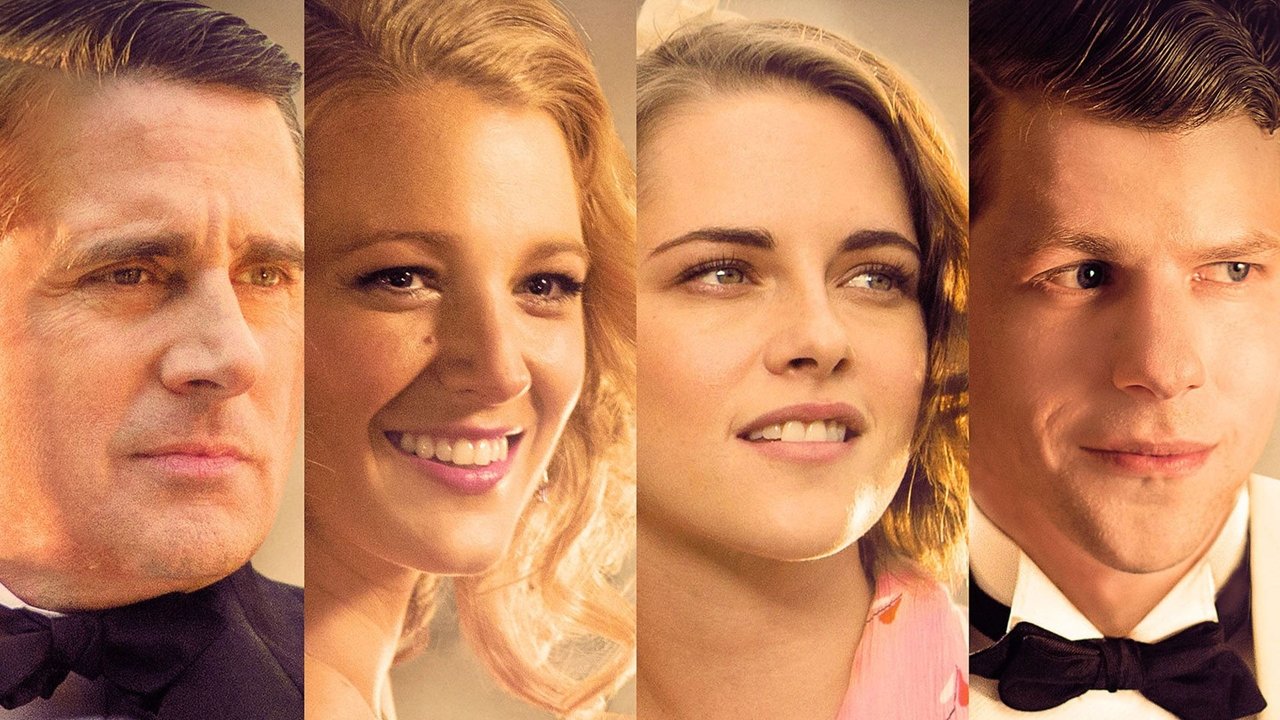
For all its champagne bubbles, Café Society is surprisingly bleak. It’s a drama about the choices we make and the "what ifs" that haunt us at 3 AM. The ending is one of the most haunting images in recent cinema—a dual-location New Year's Eve party where the two leads look off into the distance, realizing they are living the lives they chose, but not the ones they wanted.
Blake Lively shows up in the second half as a different Veronica, and while she’s lovely, she’s essentially playing a plot device meant to show Bobby’s "perfect" life. The film treats her like a beautiful piece of furniture, which is a bit of a waste, but it serves the cynical point: Bobby has everything, and it still isn't enough. Jesse Eisenberg looks like he's constantly apologizing for his own skeleton, and that nervous energy makes the final realization of his character’s unhappiness feel earned.
In an era of franchise dominance and CGI explosions, there’s something quietly defiant about a 97-minute movie where the biggest "action" sequence is a man choosing between two women and two cities. It doesn’t try to be an instant classic, and it doesn’t try to change the world. It just wants to show you a very pretty version of a very sad story.
The film doesn't quite reach the heights of Allen's top-tier work, but as a visual experience, it's unparalleled. It’s a bittersweet cocktail that goes down easy but leaves a slightly metallic aftertaste. If you’re a fan of Kristen Stewart’s transition into a serious powerhouse or if you just want to see what $30 million worth of lighting looks like, it’s a journey worth taking. It’s a reminder that even in the streaming era, a simple drama can still feel like a grand event if you have the right cinematographer.


Keep Exploring...
-
Irrational Man
2015
-

A Rainy Day in New York
2019
-
Magic in the Moonlight
2014
-
Wonder Wheel
2017
-
To Rome with Love
2012
-
You Will Meet a Tall Dark Stranger
2010
-

Aloha
2015
-
The Big Sick
2017
-
Licorice Pizza
2021
-
Manhattan
1979
-

We Are Your Friends
2015
-
Youth
2015
-
Paterson
2016
-
The Ballad of Buster Scruggs
2018
-

Match Point
2005
-

Vicky Cristina Barcelona
2008
-

Anora
2024
-

Adventureland
2009
-
Anomalisa
2015
-
Home Again
2017