Dangal
"Wrestling with destiny, one hair-cut at a time."

I remember watching Dangal in a theater where the air conditioning was cranked so high I felt like I was shivering in the Himalayas, yet by the final match, I was sweating right through my shirt. There is a specific kind of magic in a movie that can override your physical environment and lock you into a wrestling pit in rural Haryana. It’s the kind of film that makes you want to do a hundred push-ups immediately after the credits roll, only to realize you’ve been eating a large tub of buttered popcorn for two hours and should probably just take a nap instead.
The Metabolism of a Megastar
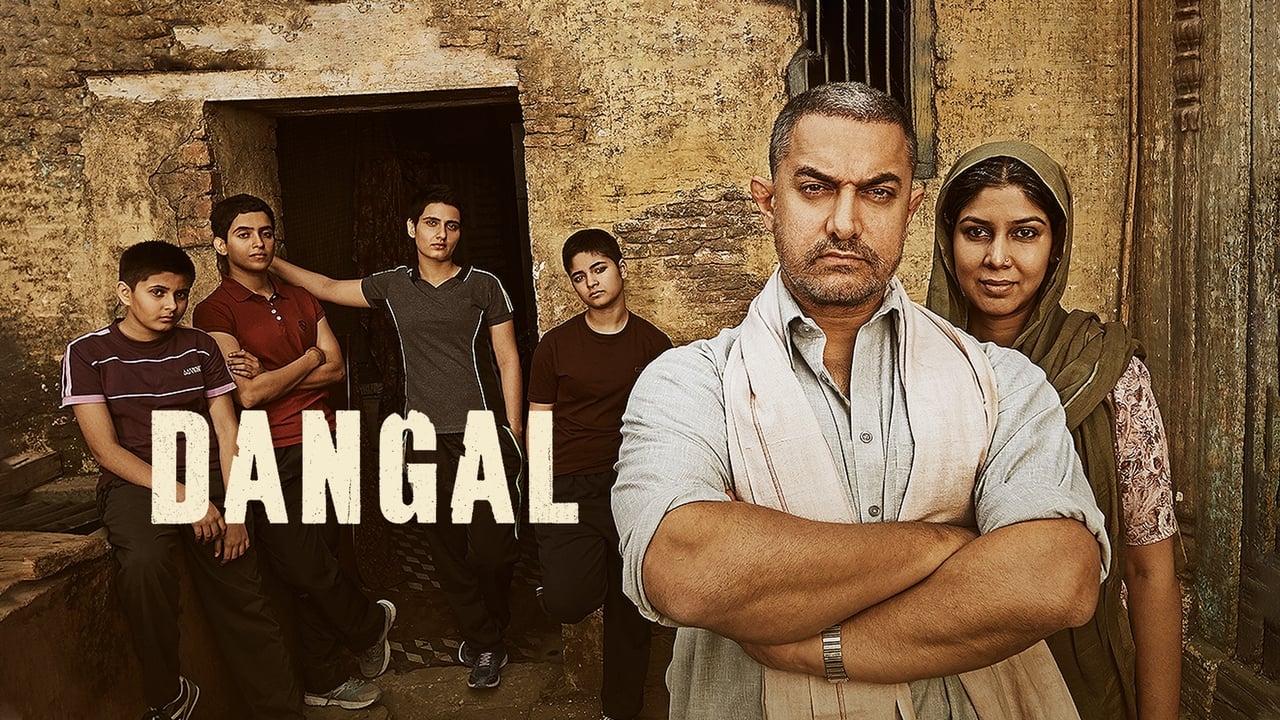
In the current era of cinema, we’re used to seeing actors undergo "transformations." Usually, that means a Marvel actor ate nothing but boiled chicken and broccoli for six months to look like a CGI action figure. But what Aamir Khan (the man behind Lagaan and 3 Idiots) did for Dangal felt different. It felt heavy. He plays Mahavir Singh Phogat, a former wrestler who failed to win gold for India and decides his unborn sons will do it for him. When he keeps having daughters instead, he nearly gives up—until his girls beat up a couple of neighborhood boys.
The genius move here was Khan’s insistence on filming the "old, fat Mahavir" scenes first. He ballooned up to 97 kilograms, sporting a belly that looked like it had its own gravitational pull. Watching him lumber around with that realistic, heavy-breathing middle-aged gait made the subsequent flashback scenes—where he looks like a chiseled bronze statue—feel like a miracle. He looked like he’d swallowed a tractor tire, and yet his eyes never lost that terrifying, singular focus of a man who sees his children as biological vessels for his own unfulfilled dreams.
Parenting or Prison Guarding?
Let’s be honest: for the first forty-five minutes, Mahavir Phogat is essentially a sports-obsessed supervillain who accidentally did something good. The film walks a tightrope between being an inspirational sports flick and a dark comedy about a father who treats his household like a Spartan boot camp. The comedy comes from the sheer absurdity of the girls' plight. The narrator, their cousin Omkar (played with a brilliant, weary charm by Aparshakti Khurana), frames the tragedy of the Phogat sisters with the kind of "better him than me" wit that keeps the movie from feeling too oppressive.

The sequence where the young Geeta (Zaira Wasim) and Babita (Suhani Bhatnagar) are forced to trade their dresses for shorts and their long hair for buzzcuts is genuinely heartbreaking, yet the film handles it with a light touch. The haircut scene is the most terrifying moment in 21st-century cinema for anyone who values their vanity. It’s the moment the movie stops being about a father’s whim and starts being about the girls’ survival. Director Nitesh Tiwari manages to make us root for the result while occasionally side-eyeing the methods. It’s a very "contemporary" conversation—the idea of the "Tiger Parent" is dissected here through a lens of national pride and gender defiance.
The Global Grappling Phenomenon
One thing that still boggles my mind is how Dangal became a cultural juggernaut not just in India, but in China. It raked in over $190 million there, becoming the highest-grossing non-English foreign film in Chinese history at the time. Why? Because the themes of crushing parental expectations and the grit required to break out of a predetermined social class are universal. It’s a blockbuster that didn't need explosions or a multiverse; it just needed a dusty wrestling pit (an akhada) and the sound of skin hitting dirt.
The production trivia is just as grueling as the movie looks. The four lead actresses—Fatima Sana Shaikh, Sanya Malhotra, Zaira Wasim, and Suhani Bhatnagar—trained for nine months under a real wrestling coach, Kripa Shankar Bishnoi. They weren't just learning choreography; they were learning the sport. Apparently, Fatima Sana Shaikh actually fractured her leg during training and kept going. That level of commitment translates to the screen. When the older Geeta and Babita finally hit the mat at the Commonwealth Games, the cinematography by Satyajit Pande captures the tension with a clarity that puts most modern action movies to shame. You actually understand the points system. You understand the stakes. You aren't just watching a montage; you’re watching a chess match played with muscles.

Dangal is the rare "mega-hit" that actually earns its runtime. It avoids the typical Bollywood trap of unnecessary romantic subplots or jarring musical numbers that break the tension. Instead, the music by Pritam Chakraborty stays grounded, using Haryanvi folk influences to drive the rhythm of the training. It’s a film that respects its audience's intelligence while unashamedly aiming for their tear ducts in the final act.
If you haven't seen it, watch it for the performances of the four girls who carry the emotional weight of the film. Watch it for Aamir Khan’s belly and his bravado. Most of all, watch it to see how a story about two girls in a small village became a global rallying cry for anyone who’s ever been told they weren't meant for the "gold." Just maybe don't try the "Dangal" diet at home—trust me, the samosas will win every time.


Keep Exploring...
-

A Dog's Purpose
2017
-
Inside Out
2015
-

Cars 3
2017
-
Soul
2020
-
Shaun the Sheep Movie
2015
-
Ballerina
2016
-

Paddington 2
2017
-
PAW Patrol: The Movie
2021
-
Finding Dory
2016
-

Kung Fu Panda 3
2016
-
Moana
2016
-
Sing
2016
-

Zootopia
2016
-

The Lego Batman Movie
2017
-

Ralph Breaks the Internet
2018
-

Frozen II
2019
-
Toy Story 4
2019
-
Sonic the Hedgehog
2020
-
The Croods: A New Age
2020
-

Sing 2
2021