Demolition
"To fix your life, first break everything."
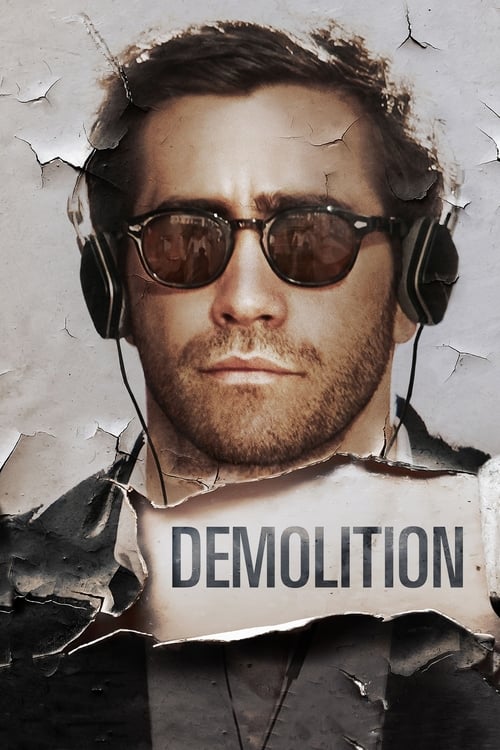
The movie starts with a vending machine malfunction. Most of us would kick the glass, maybe mutter a curse word, and move on with our day. But Davis Mitchell isn't most of us—or at least, he isn’t anymore. After watching his wife die in a car crash he walked away from without a scratch, Davis becomes obsessed with a bag of M&Ms that got stuck behind a metal coil. It’s the kind of trivial grievance that acts as a lightning rod for a total psychological collapse.

Released in 2016, Demolition arrived at a strange crossroads for "The Sad Man Movie." We were moving away from the stoic, silent grief of the 2000s and into something more chaotic and absurdist. Directed by the late Jean-Marc Vallée (who would later give us the sharp, rhythmic editing of Big Little Lies and Sharp Objects), the film is a fascinating, messy study of what happens when the "correct" way to grieve simply refuses to click into place. I watched this for the first time on a Tuesday night while wearing one damp sock—I’d stepped in a rogue puddle in my kitchen—and that minor, nagging discomfort actually felt like the perfect headspace for this film.
The Art of Taking Things Apart
Jake Gyllenhaal plays Davis with a terrifyingly blank slate. He’s a high-flying investment banker who realizes he never actually loved his wife, or at least, he can’t remember the feeling. Instead of crying at the funeral, he starts noticing squeaky doors and leaking refrigerators. He takes the advice of his father-in-law, played by a perpetually exhausted and excellent Chris Cooper (Adaptation), a bit too literally: "To fix something, you have to take it all apart."
What follows is less of a traditional drama and more of a $10 million instructional video on how not to handle an HR meeting. Davis begins dismantling everything—his computer, his designer bathroom, and eventually, his entire suburban home. There is a deep, primal satisfaction in watching Gyllenhaal swing a sledgehammer. In an era where we are constantly told to "lean in" or "find closure," there’s something incredibly refreshing about a character who just wants to see how a capacitive touch-screen works from the inside out.
A Customer Service Connection

The film takes a turn into the quirky when Davis starts writing long, overly personal letters to the vending machine company’s customer service department. This leads him to Karen Moreno (Naomi Watts), a pot-smoking rep who is just as lost as he is. While their relationship could have easily veered into "Manic Pixie Dream Girl" territory, Naomi Watts (Mulholland Drive) keeps it grounded in a sort of weary, working-class reality.
The real breakout, though, is Judah Lewis as Karen’s son, Chris. He’s a rebellious kid questioning his identity, and his chemistry with Gyllenhaal provides the movie's beating heart. There’s a scene where the two of them just go into the woods to shoot things and talk about the word "fuck" that feels more honest than any of the high-gloss mourning scenes we usually get in Hollywood awards bait. It’s a reminder that sometimes, the best way to bond with another human is through shared, constructive destruction.
The "Bomb" That Found Its People
Despite the pedigree, Demolition was a certified box office dud. It pulled in less than half its budget and left critics divided—some found it whimsical, others found it annoying. But in the years since, it has carved out a dedicated cult following. Why? Because it captures a very specific, modern brand of numbness. In our current era of "main character energy" and social media curation, Davis is a character who refuses to perform. He doesn't post a black square; he pulls a light fixture out of the ceiling because it’s annoying him.

The film is packed with the kind of trivia that fans of Jean-Marc Vallée obsess over. For instance, the famous scene where Gyllenhaal dances through the streets of New York with headphones on? That was largely improvised. Vallée just let the camera run while Gyllenhaal lost himself in the music, capturing the genuine stares of confused commuters. Also, that house Davis destroys? The production actually bought a real house and let the actors go to town on it. Gyllenhaal reportedly insisted on doing as much of the physical demolition as possible, leading to a few real-world scrapes and bruises that made it into the final cut.
The script itself was a legendary "Black List" entry—the annual list of the best unproduced screenplays in Hollywood—for years before it finally got made. You can feel that "written for the love of the game" energy in the dialogue. It’s sharp, weird, and occasionally it’s about as subtle as a brick to the forehead, but it never feels like it was written by a committee.
Demolition isn't a perfect movie, but it’s a memorable one. It’s for anyone who has ever felt like they were watching their own life through a thick pane of glass. It’s a film that argues that "moving on" isn't about finding a missing piece, but about clearing away the rubble so you can see the foundation. If you’re in the mood for a drama that isn’t afraid to be a little bit ugly and a lot bit strange, give this one a spin. Just maybe check your socks for puddles first.


Keep Exploring...
-

Cars 3
2017
-

Irrational Man
2015
-

Café Society
2016
-

Eddie the Eagle
2016
-

Hail, Caesar!
2016
-

The Edge of Seventeen
2016
-

I, Tonya
2017
-

Lady Bird
2017
-

Logan Lucky
2017
-

The Big Sick
2017
-
The Disaster Artist
2017
-

BlacKkKlansman
2018
-

Instant Family
2018
-
The Favourite
2018
-

Licorice Pizza
2021
-
The French Dispatch of the Liberty, Kansas Evening Sun
2021
-

Southpaw
2015
-

Joy
2015
-

Me and Earl and the Dying Girl
2015
-

We Are Your Friends
2015