Hidden Figures
"The genius you didn't see, the history you can't forget."
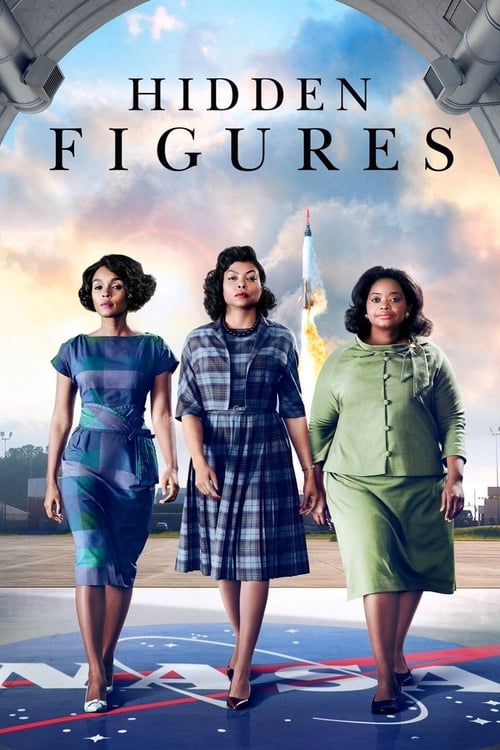
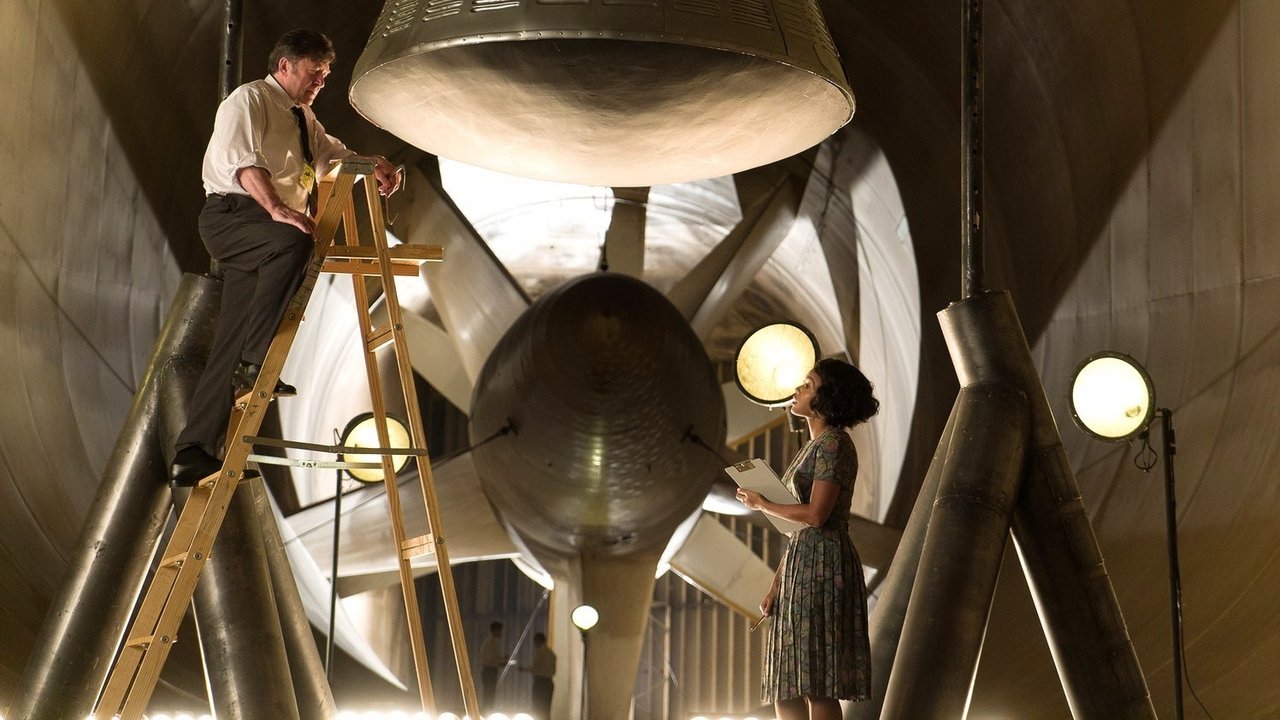
Most people think of "computers" as humming grey boxes or the glowing rectangles in our pockets, but in the early 1960s, a computer was a person. Specifically, at NASA’s Langley Research Center, a computer was often a woman in a floral dress with a mechanical pencil behind her ear. Hidden Figures takes the glossy, Mercury-era space race mythos—the one we’ve seen in a dozen "Great Men in Silver Suits" movies—and shifts the lens about forty-five degrees to the left. I remember watching this for the first time while nursing a lukewarm cup of Earl Grey that had gone completely cold because I was too busy staring at the screen, and honestly, the cold tea was a fair trade for the heat this movie brings.
The Power of Three
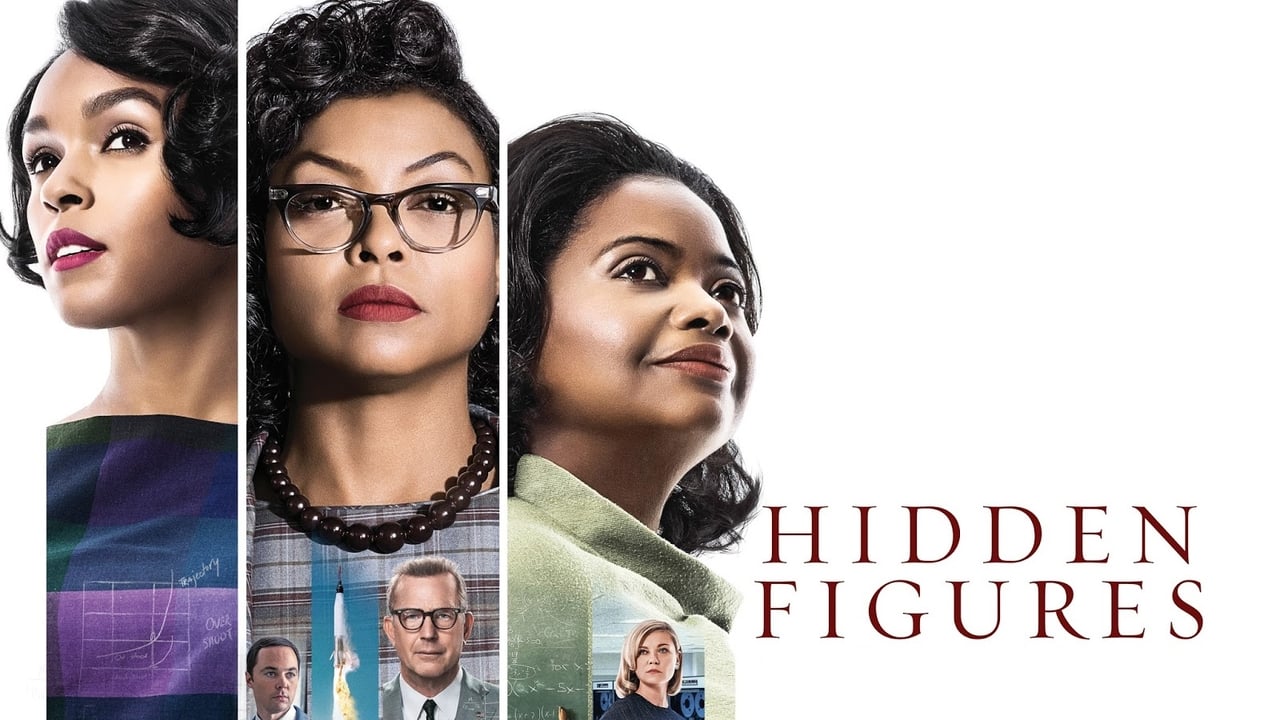
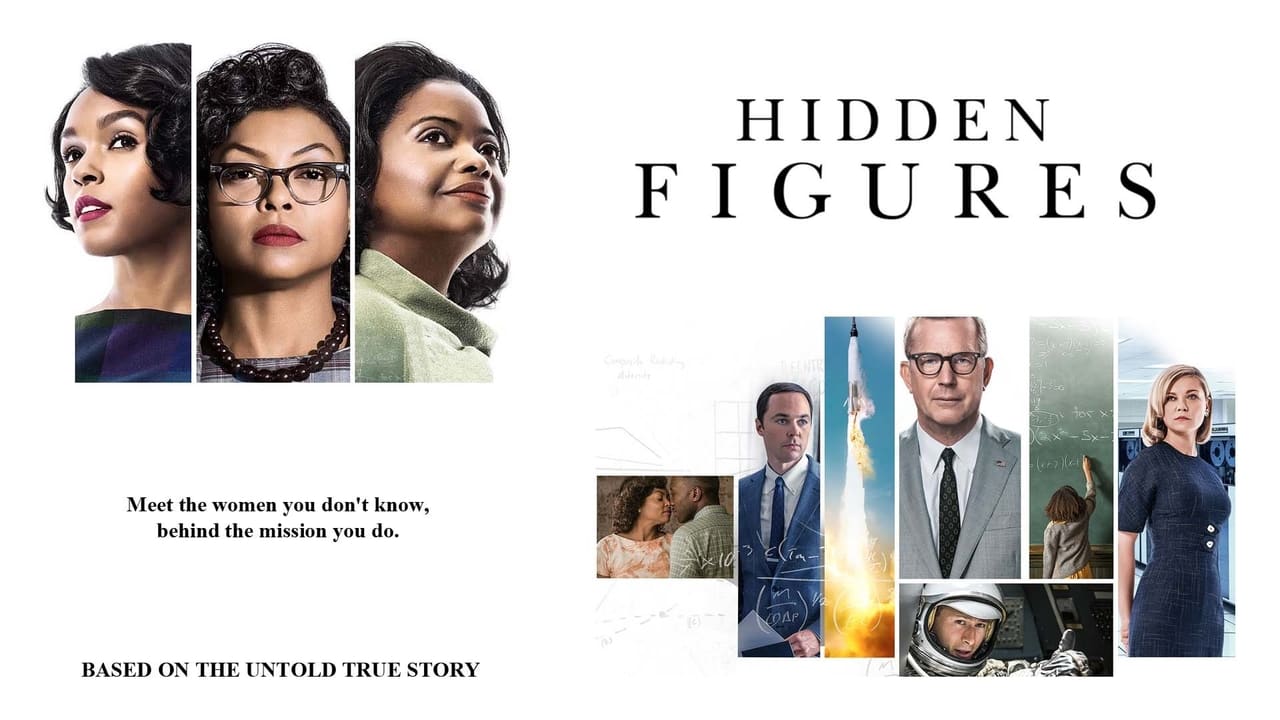
The film succeeds primarily because it refuses to be a dry history lesson. At its core, it’s a character study of three women who were essentially playing a game of chess against a society that didn't even want them at the table. Taraji P. Henson (known for her powerhouse energy in Empire) delivers a remarkably restrained, internalized performance as Katherine G. Johnson. You can see the equations literally scrolling behind her eyes. When she finally snaps about the "colored" bathroom situation—a half-mile round trip she has to run in heels just to relieve herself—it feels like a pressure cooker finally blowing its lid.
Next to her, Octavia Spencer (fresh off her success in The Help) provides the film’s tactical spine as Dorothy Vaughan. She sees the IBM 7090 coming—the literal machine that will replace her human "computers"—and instead of fearing it, she sneaks into the server room to teach herself Fortran. It’s a brilliant subplot about labor and technology that feels incredibly relevant today as we all stare down the barrel of the AI revolution. Then there’s Janelle Monáe as Mary Jackson, who brings a vibrant, defiant spark to the role of the aspiring engineer. Monáe has this incredible screen presence that makes you wonder why she isn't in every movie ever made.
The "Prestige" Polish and the White Savior Trope
In the landscape of contemporary cinema, Hidden Figures arrived as a vital piece of the #OscarsSoWhite conversation. It’s a "prestige" film in the truest sense—handsomely shot, impeccably acted, and designed to make you feel something profound. However, as a film enthusiast, I have to acknowledge the mid-2010s tendency to sprinkle in some "White Savior" seasoning to make the medicine go down easier for a general audience.
Kevin Costner plays Al Harrison, a composite character who represents the "good" NASA leadership. There’s a famous scene where he takes a crowbar to the "Colored Ladies Room" sign. It’s a great, cathartic cinematic moment, but Kevin Costner’s crowbar scene is pure Hollywood fan-fiction. In reality, Katherine Johnson simply used the white bathrooms for years because she refused to walk the half-mile, and eventually, the office just stopped bothering her about it. The film trades the quiet, stubborn reality for a loud, dramatic gesture. Does it work? Yes. Is it historically accurate? Not remotely. Similarly, Jim Parsons plays the exact same person as Sheldon Cooper, just with more 1960s resentment as the lead engineer Paul Stafford. He serves as the face of the petty, bureaucratic racism that the women had to navigate daily, alongside a chillingly cold Kirsten Dunst as the supervisor Vivian Mitchell.
Crafting the Mission
The technical side of this film is surprisingly lush for a "math movie." The score, a collaboration between Hans Zimmer and Pharrell Williams, is a standout. It avoids the typical "triumphant brass" of space movies and opts for something soul-infused and propulsive. It makes the act of doing geometry feel like a high-stakes heist. Director Theodore Melfi (who did the wonderful St. Vincent) keeps the pacing tight, ensuring that the 127-minute runtime never feels like a slog through a textbook.
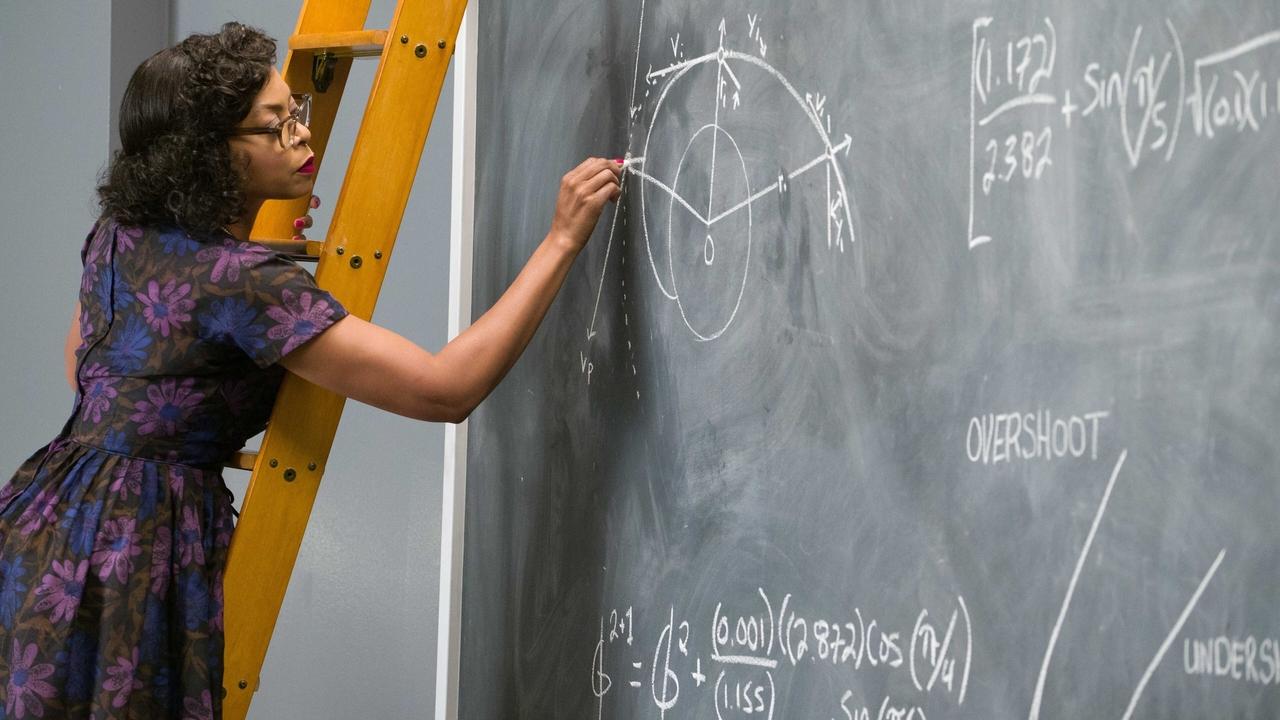
A bit of trivia for the collectors out there: the production actually used real NASA mathematicians to check the work on the chalkboards. That "Euler’s Method" Katherine uses to solve the re-entry coordinates? That’s the real deal. Also, the real Katherine Johnson actually got to see the film before she passed away at 101, reportedly remarking with typical humility, "Why would they want to make a movie about me?"
Released during a time of intense social reflection in America, Hidden Figures proved that diverse stories weren't just "important"—they were profitable. It out-earned several superhero tentpoles that year, proving that audiences were hungry for history that hadn't been whitewashed into oblivion.
Hidden Figures is the kind of movie that makes you want to go back to school and actually pay attention to calculus. It balances the heavy lifting of social commentary with the light touch of a crowd-pleasing biopic. While it leans on a few well-worn Hollywood tropes to bridge the gap between history and entertainment, the performances of the central trio are so magnetic that you’ll find yourself cheering for a slide rule. It’s a necessary, joyful correction to the historical record.
Keep Exploring...
-
Green Book
2018
-
Spotlight
2015
-

Straight Outta Compton
2015
-
Little Women
2019
-
Hacksaw Ridge
2016
-
1917
2019
-
Ford v Ferrari
2019
-
Harriet
2019
-
The Guernsey Literary & Potato Peel Pie Society
2018
-

King Richard
2021
-
Colonia
2015
-

Eddie the Eagle
2016
-
Patriots Day
2016
-
Silence
2016
-
Snowden
2016
-
The Founder
2016
-

Detroit
2017
-

Gifted
2017
-

The Zookeeper's Wife
2017
-
BlacKkKlansman
2018