Kung Fu Panda 3
"Double the dads, triple the dumplings."

I have a very specific memory of watching Kung Fu Panda 3 for the first time. I was wearing a pair of incredibly itchy wool socks that my aunt had knitted for me, and I spent half the movie trying to subtly pull them off with my toes without spilling a massive bowl of buttered popcorn. It turns out that Po’s struggle to find his true self is significantly easier to focus on when you aren't fighting a losing battle against artisanal knitwear.

By 2016, we were deep into the "trilogy or bust" era of animation. DreamWorks had already proven they could balance slapstick with genuine heart in the first two installments, but the third film faced the monumental task of closing a loop while standing out in a market increasingly crowded by Minions and the rising dominance of the MCU's formulaic storytelling. Directed by Jennifer Yuh Nelson (who gave us the strikingly darker Kung Fu Panda 2) and Alessandro Carloni, this entry decides to pivot away from the trauma of the past and lean heavily into the "Family" part of its genre tags.
The Dad-Off and the Village of Chill
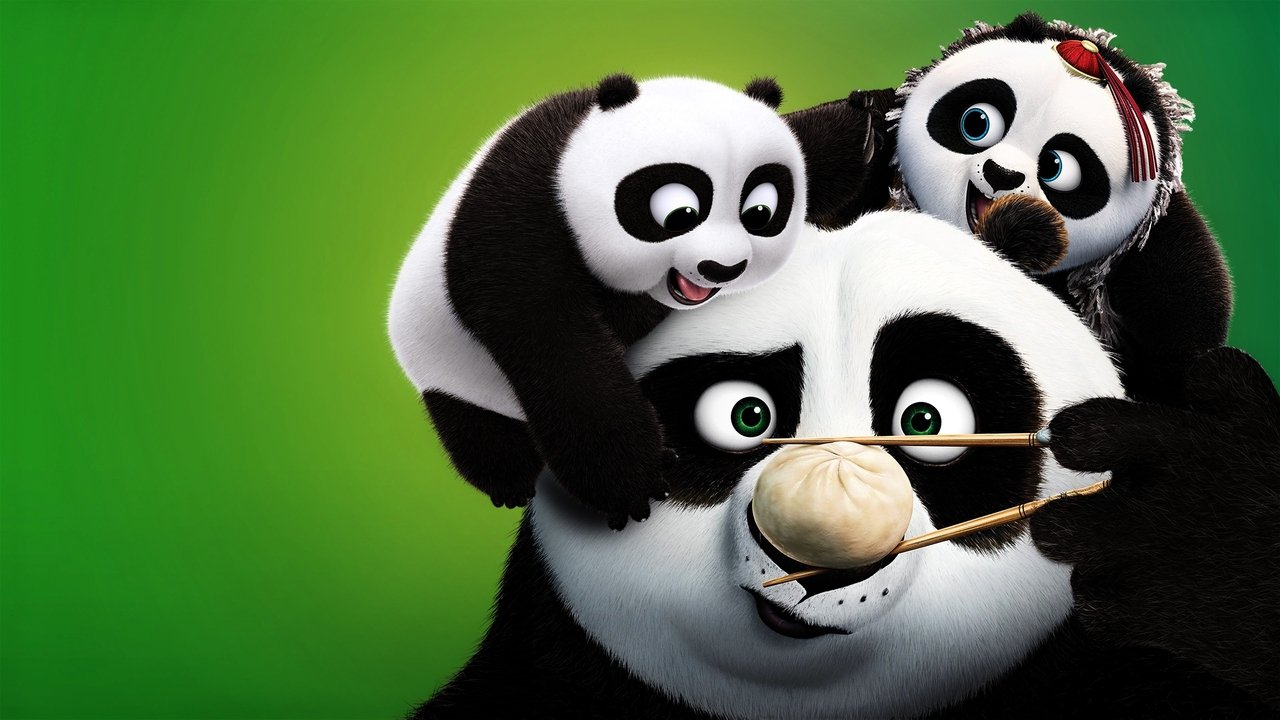
The emotional core here isn't the looming threat of a supernatural yak; it's the arrival of Li Shan, voiced with a boisterous, slightly dim-witted charm by Bryan Cranston. This was a post-Breaking Bad Cranston, and hearing Walter White voice a panda who thinks "training" involves sleeping until noon is a cognitive dissonance I will never get tired of. The tension between Po’s biological father and his adoptive noodle-slinging goose dad, Mr. Ping (James Hong), provides the film's most relatable beats.
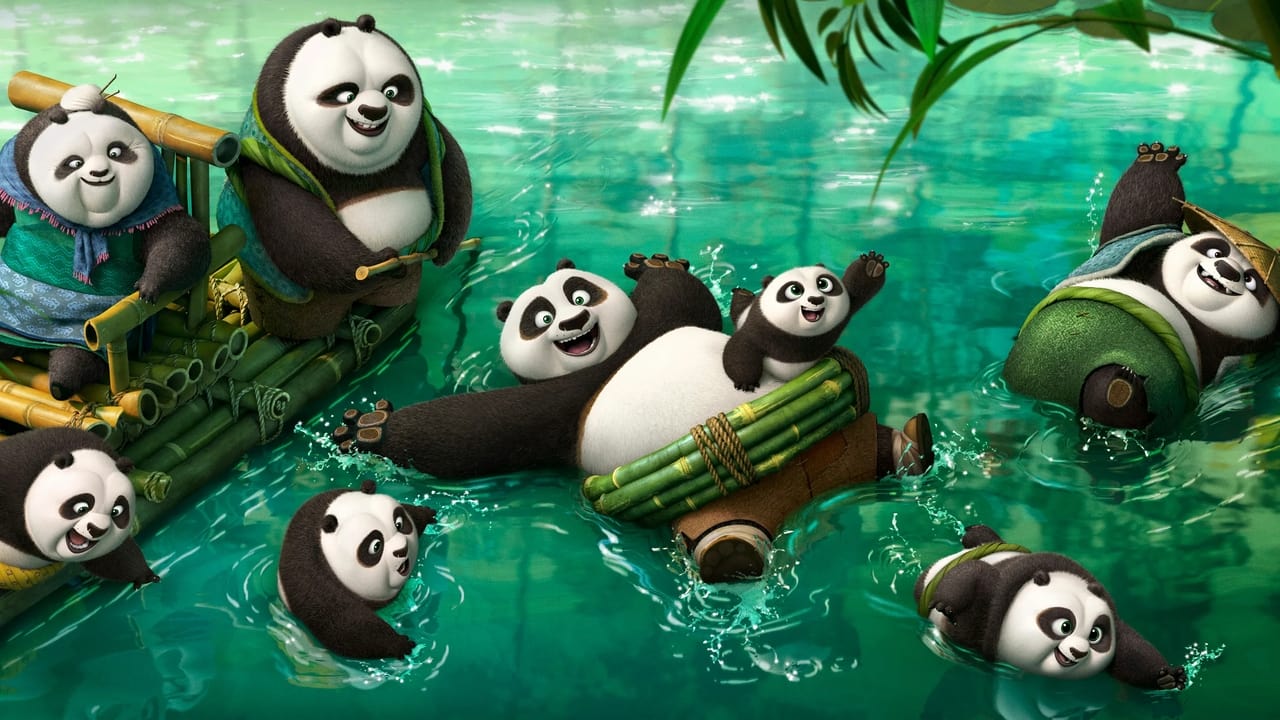
As Po (Jack Black) travels to a secret mountain village to learn the "lost art" of being a panda, the movie explodes into a color palette that I can only describe as looking like a candy store exploded inside a jade factory. It’s gorgeous. This was the first major co-production between DreamWorks and China Film Group Corporation, and you can see the influence in the art direction. Apparently, the production team traveled to the Qingcheng Mountains to study the local flora and the way mist clings to the peaks. That dedication shows. The secret village isn’t just a setting; it’s a mood.
Supernatural Bullies and Ethereal Blades
Every action franchise needs a villain who can raise the stakes, and J.K. Simmons (who had just won an Oscar for Whiplash) voices Kai with a hilarious mix of terrifying power and deep insecurity. Kai is a spirit-realm warrior who steals the "Chi" of kung fu masters, turning them into jade statues. His signature weapons—two jade blades on long chains—create a rhythmic, clattering soundscape that dominates the action scenes.
The choreography here is a step away from the grounded martial arts of the first film and a leap into the "Super Saiyan" territory of the third. We’re talking about spiritual dragons, glowing energy beams, and metaphysical fights in the Spirit Realm. While some might miss the weight of a simple punch, I found the creativity of the "Chi" battles to be a blast. The finale is basically a high-stakes game of 'stop hitting yourself' played on a cosmic scale. It’s fast, it’s funny, and it manages to give Po a satisfying conclusion to his "Who am I?" arc that started back in 2008.
The Technology of the "Pand-emic"
From a technical standpoint, Kung Fu Panda 3 was a bit of a pioneer. Because of the massive Chinese market, the filmmakers actually animated the movie twice. They used a specialized process to ensure the characters' lip-syncing matched both the English and Mandarin scripts perfectly. It wasn’t just dubbing; it was a fundamental shift in how global blockbusters are crafted.
The score, led by Hans Zimmer (the man behind the wall of sound in Inception), also leaned into this cultural bridge. Zimmer collaborated with world-renowned Chinese musicians like pianist Lang Lang and cellist Guo Gan to ensure the traditional instruments didn't just feel like window dressing. Even the casting feels like a time capsule of 2016’s "A-list" saturation, featuring Angelina Jolie, Dustin Hoffman, Jackie Chan, and Seth Rogen. It’s a lot of star power for a movie about a bear who likes dumplings, but Jack Black remains the glue that holds it all together. His earnestness is the franchise's secret weapon.
Kung Fu Panda 3 is the cinematic equivalent of a warm hug followed by a playful punch in the arm. It doesn't quite reach the emotional heights of the second film or the fresh surprise of the first, but it’s a visually spectacular and genuinely funny conclusion (well, until the fourth one showed up recently) to Po’s initial journey. If you’re looking for a film that balances high-end CGI with low-brow belly laughs, this is your ticket. Just make sure your socks aren't too itchy before you sit down.

Keep Exploring...
-
Kung Fu Panda 2
2011
-
Kung Fu Panda
2008
-
Kung Fu Panda 4
2024
-
Despicable Me 3
2017
-
The SpongeBob Movie: Sponge Out of Water
2015
-
The Lego Ninjago Movie
2017
-
The Bad Guys
2022
-
Zootopia
2016
-
Spies in Disguise
2019
-
The Lego Movie 2: The Second Part
2019
-
Minions
2015
-
Finding Dory
2016
-
Moana
2016
-
The Angry Birds Movie
2016
-
The Secret Life of Pets
2016
-

Trolls
2016
-
Smurfs: The Lost Village
2017
-
Ralph Breaks the Internet
2018
-
Frozen II
2019
-
The Secret Life of Pets 2
2019