Like Crazy
"Escape is the only sane option left."
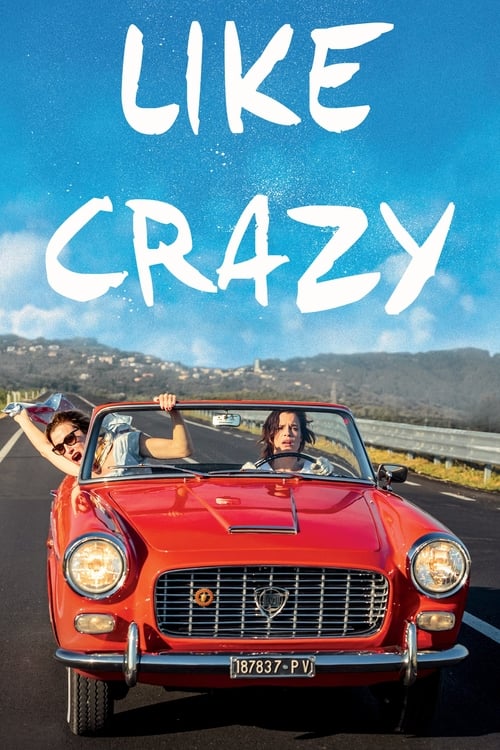
I’ll be honest: I went into Paolo Virzì’s Like Crazy (originally La pazza gioia) with a bit of a guard up. I watched it on a Tuesday night while wearing one mismatched wool sock and eating lukewarm leftover risotto, fully expecting the kind of "mental illness as a quirky superpower" trope that Hollywood usually crams down our throats. You know the ones—where the protagonist is just "too beautiful for this world" and their struggles are solved by a montage and a pop song.
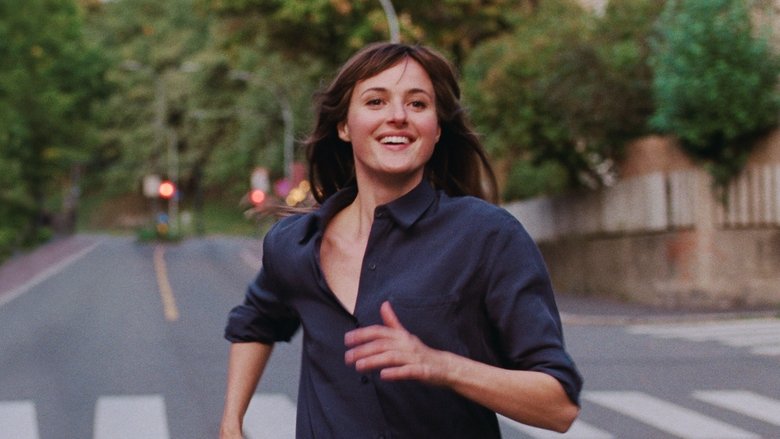
But within ten minutes, Valeria Bruni Tedeschi swanned onto the screen as Beatrice Morandini Valdirana, and I realized I was dealing with something much more volatile, funny, and deeply human. Beatrice is a motor-mouthed, self-proclaimed countess residing in Villa Biondi, a progressive psychiatric clinic in the rolling hills of Tuscany. She is essentially a high-fashion hurricane that makes you want to hide your jewelry and your secrets. She’s a pathological liar with a wardrobe of stolen silk scarves and a desperate need for an audience.
Then there’s Donatella. Played with a haunting, skeletal vulnerability by Micaela Ramazzotti, she is Beatrice’s polar opposite. Where Beatrice is fire and noise, Donatella is water and silence. She’s a woman hollowed out by a tragic past and a court system that doesn't know what to do with her grief. When the two of them hop on a bus and simply... keep going, the film transforms into a road movie that is remarkably light on its feet despite the heavy baggage in the trunk.
Tuscan Sun and Antipsychotics
What makes Like Crazy work in our current era of "important" cinema is that it refuses to be a lecture. We live in a time where every film about a social issue feels like it’s been run through a focus group of activists and HR managers. Virzì and his co-writer Francesca Archibugi (who also penned the lovely The Leisure Seeker) take a different route. They treat their protagonists not as Case Studies, but as people who are occasionally exhausting, frequently hilarious, and consistently real.
The cinematography by Vladan Radović captures Tuscany in a way that feels lived-in rather than "postcard-perfect." When the duo escapes, the world they enter isn't a magical wonderland; it’s a place of shopping malls, tacky seaside resorts, and people who are far too busy with their own "sane" lives to notice two women in crisis. There’s a specific scene involving a stolen vintage convertible that feels like a nod to Thelma & Louise, but instead of a cliff, these women are headed toward the messy reality of their own families.
The Unstoppable Force Meets the Broken Object
The chemistry between Valeria Bruni Tedeschi and Micaela Ramazzotti is the engine of the film. Bruni Tedeschi gives one of those performances that feels like she’s working without a net. She’s irritating, grandiose, and then—in a sudden shift of her eyes—absolutely terrified. She plays Beatrice like a woman who is constantly trying to outrun her own heartbeat.
Micaela Ramazzotti, who has collaborated with Paolo Virzì on several films including The First Beautiful Thing, provides the emotional anchor. Her arc is the one that really gets under your skin. As they track down the people from Donatella's past, the film stops being a caper and starts being a rescue mission. I found myself rooting for them not to "get better" in some clinical sense, but just to have one afternoon where they felt like they belonged to themselves.
Stuff You Didn't Notice
It’s worth noting that Virzì is a master of the "Comedy of Manners" within Italian cinema, and he peppers the supporting cast with faces that feel authentic to the region. The staff at Villa Biondi, particularly Valentina Carnelutti as the exhausted but empathetic Dott.ssa Fiamma Zappa, are portrayed with a refreshing lack of villainy. In most "asylum" movies, the doctors are the monsters. Here, the monster is simply a system that is underfunded and overwhelmed.
Apparently, the production actually filmed at real therapeutic communities, and many of the background actors were residents. This adds a layer of texture that you can't fake with Hollywood extras. It grounds the more theatrical elements of Beatrice’s character. Also, keep an ear out for the score by Carlo Virzì. It’s whimsical without being saccharine, punctuating the duo's frantic movements through the Italian landscape.
The film arrived in that mid-2010s sweet spot where international cinema was beginning to move away from purely grim realism toward something more tonally complex. It doesn't shy away from the fact that Donatella is severely depressed, nor does it pretend that Beatrice’s manic episodes are harmless. It’s a movie that understands that "crazy" is often just a label we put on people who have run out of ways to cope with a world that is itself pretty nuts.
Like Crazy is a rare bird: a film about trauma that manages to be genuinely life-affirming without lying to you. It’s a riotous, sun-drenched, and occasionally heartbreaking journey that reminds me why I fell in love with Italian cinema in the first place. It doesn't need a franchise or a multiverse to feel big; it just needs two women, a stolen car, and the open road. If you’ve ever felt like the world was a bit too loud or you were a bit too much, this one's for you.
Keep Exploring...
-
Human Capital
2013
-
Anomalisa
2015
-
Dope
2015
-
The Dressmaker
2015
-
Justice League vs. Teen Titans
2016
-
My Life as a Zucchini
2016
-
Battle of the Sexes
2017
-
I Don't Feel at Home in This World Anymore
2017
-
Le Brio
2017
-
The Man Who Invented Christmas
2017
-
Can You Ever Forgive Me?
2018
-
Nothing to Hide
2018
-
Sink or Swim
2018
-
Dolemite Is My Name
2019
-
The Dirt
2019
-
The Peanut Butter Falcon
2019
-
Riders of Justice
2020
-
Fatherhood
2021
-
The Hating Game
2021
-
The Worst Person in the World
2021