Rogue One: A Star Wars Story
"Hope is a suicide mission."
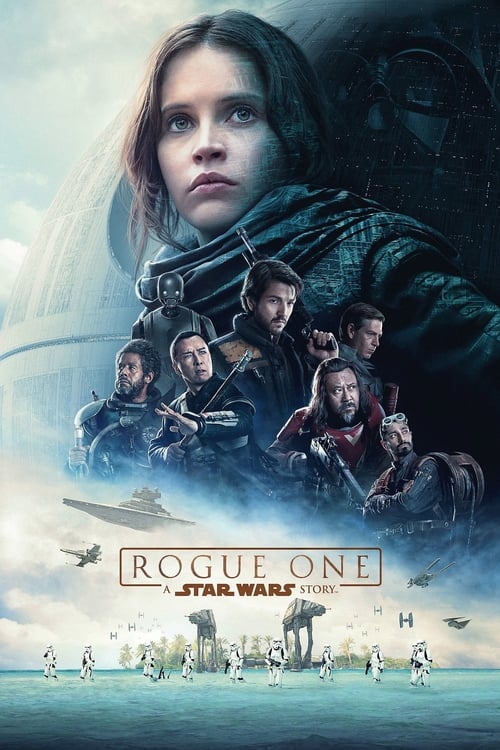
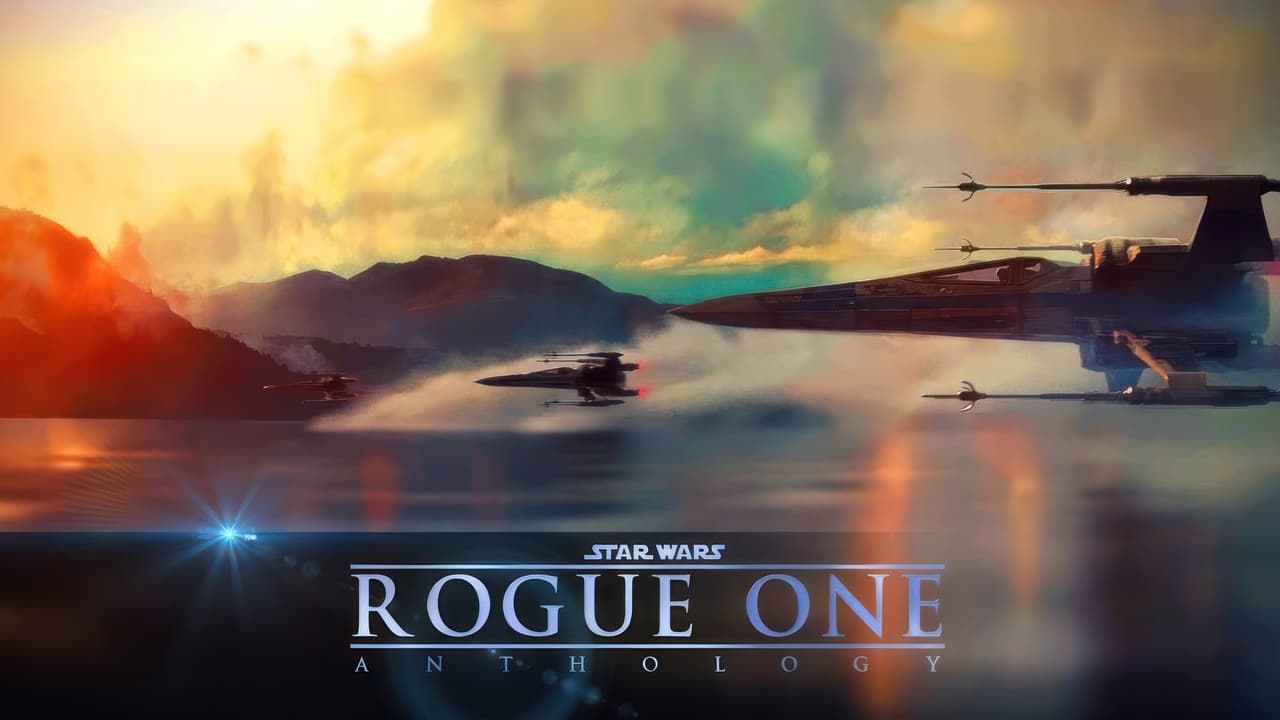
There is a specific, hollow feeling that hits you when the screen goes black and the Star Wars opening crawl simply… doesn’t happen. In 2016, sitting in a packed theater, I felt a collective intake of breath from a crowd that realized, for the first time in forty years, the rules had changed. Gareth Edwards didn't want to give us a space opera; he wanted to give us a war movie that just happened to have X-Wings in it.
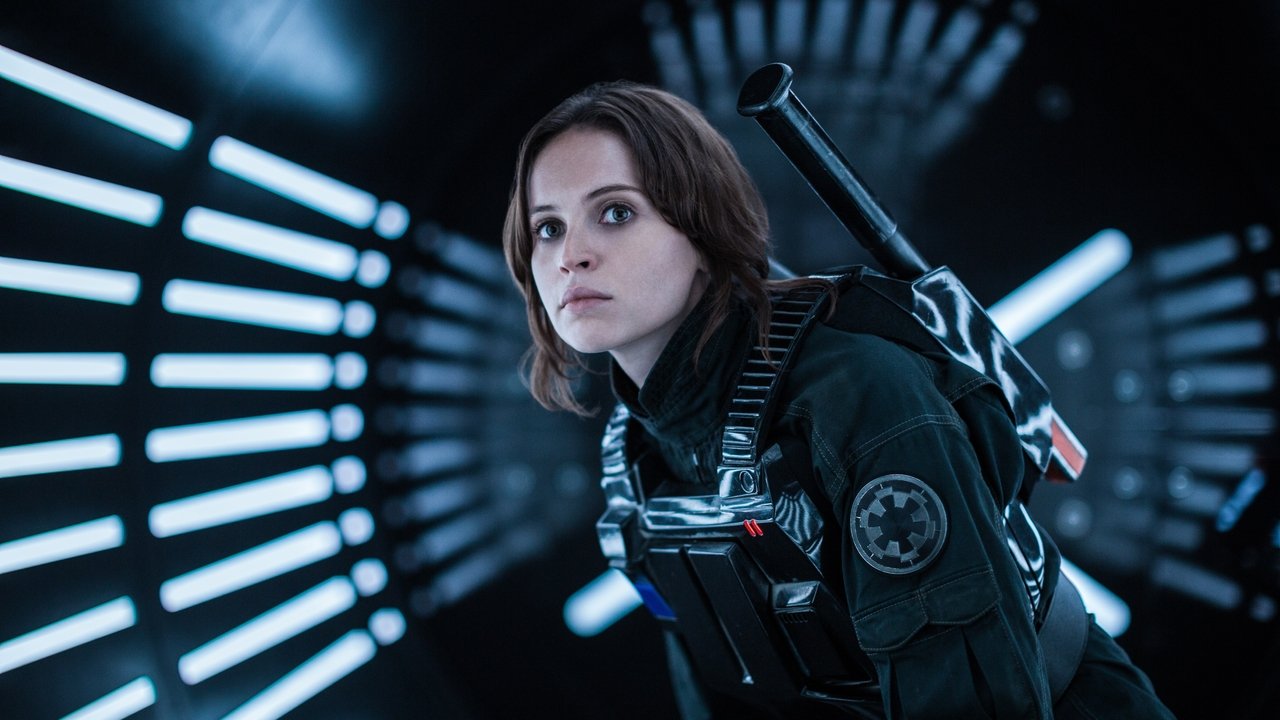
I watched this at a midnight screening next to a teenager who was trying to eat a giant pickle out of a plastic bag without making noise. He failed, but the vinegary brine smell oddly suited the swampy, rain-soaked aesthetics of the planet Eadu. It was the perfect atmosphere for a film that thrives on being the "dirty" sibling of the franchise.
The Grime of the Rebellion
While The Force Awakens (2015) was a cozy blanket of nostalgia, Rogue One arrived as a bucket of cold, grey slush. It’s a film that understands the "Wars" part of the title better than almost any other entry. Felicity Jones plays Jyn Erso with a weary, jagged edge—she isn’t a "chosen one" with a destiny; she’s a survivor of a multi-generational conflict that has already chewed her up and spat her out.
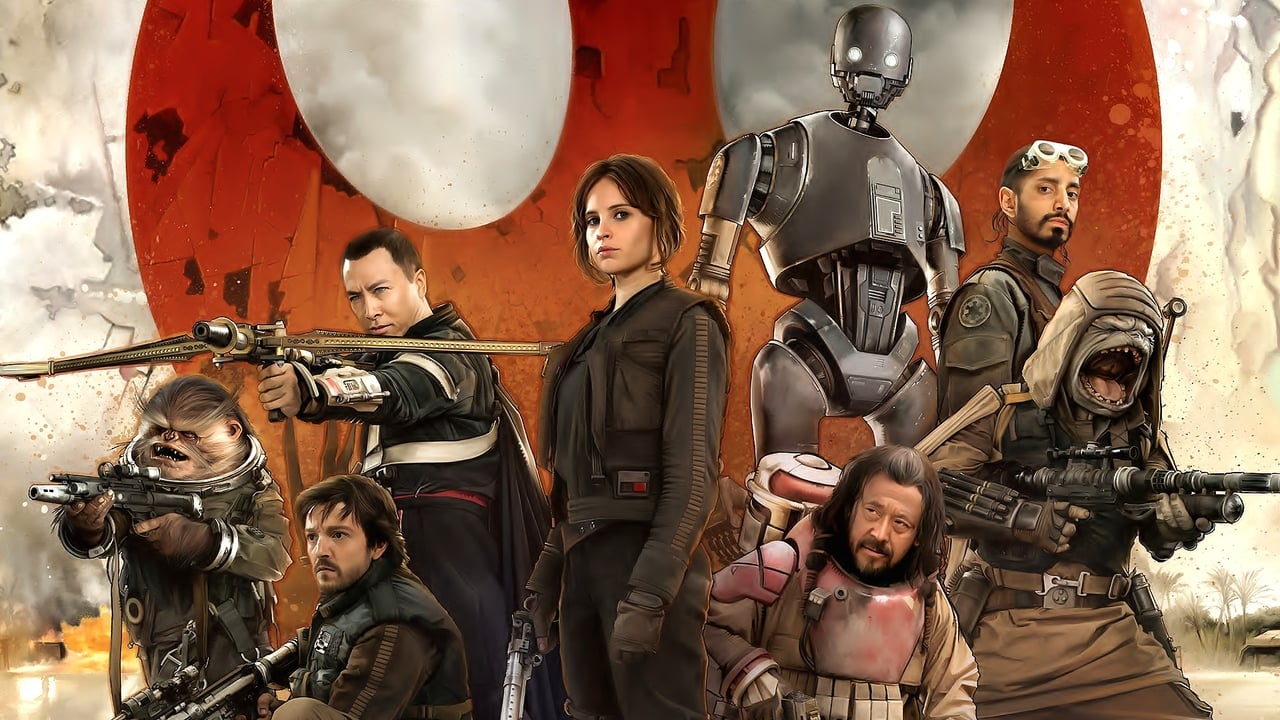
The aesthetic here is "lived-in" to the point of being decayed. The blasters look heavy. The costumes look like they’ve never seen a washing machine. This isn't the clean, plastic world of the prequels. It’s a desperate, post-pandemic style of filmmaking where every resource is scarce. Diego Luna as Cassian Andor is particularly striking here; he introduces us to a Rebellion that isn't just "good guys" in white hats, but a desperate cell of operatives doing "terrible things for a good cause." The first forty minutes are a narrative mess that only a Wookiee could love, jumping from planet to planet with the grace of a malfunctioning hyperdrive, but once the team assembles, the momentum becomes an avalanche.
Chaos on the Beach
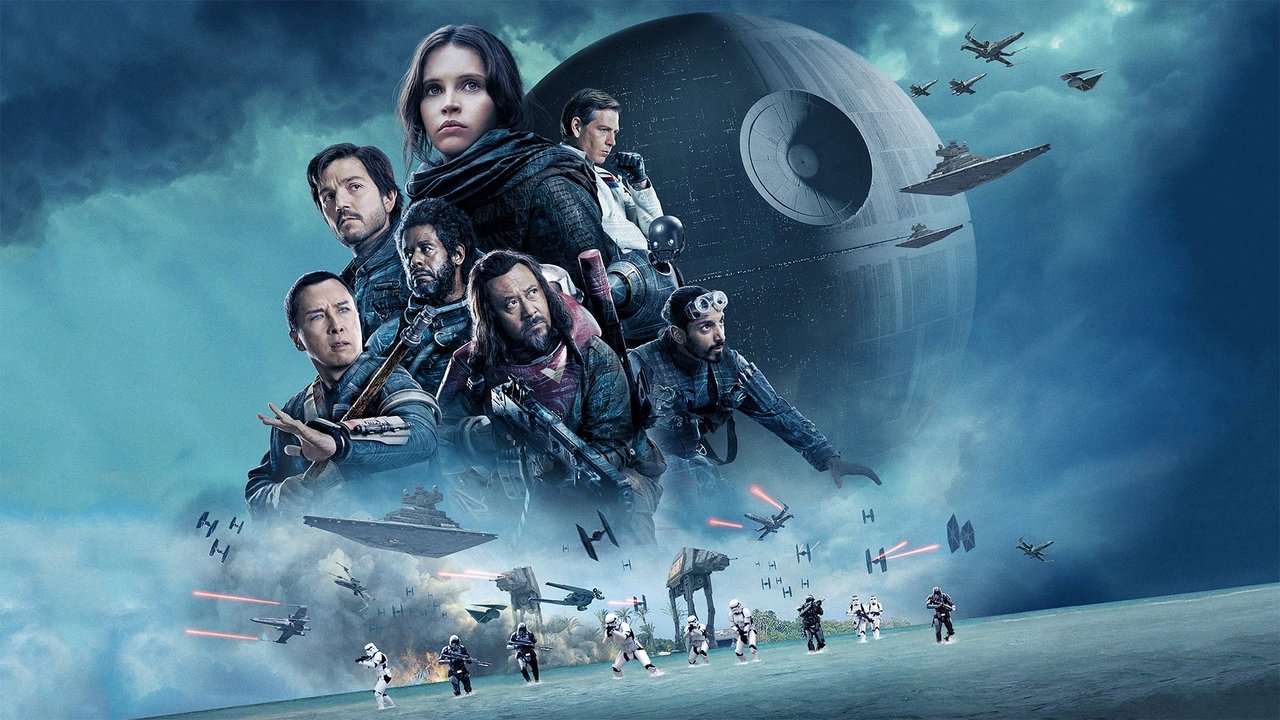
If you want to see how modern action choreography should be handled, look at the third act on Scarif. Gareth Edwards utilized his background in low-budget creature features to make the massive AT-ACT walkers feel terrifyingly huge. He often keeps the camera at eye level, making the audience feel like a foot soldier scurrying through the sand while giant metal feet crush the landscape around them.
The action isn't just "pew-pew" laser fire; it’s a rhythmic escalation of stakes. You have the ground-level grit of Donnie Yen (Chirrut Îmwe) and Jiang Wen (Baze Malbus) taking on Stormtroopers with a mix of spiritual poise and heavy artillery, mirrored by the orbital dogfights happening above. It’s a masterclass in clarity during chaos. Even when the screen is filled with a hundred moving parts, I always knew exactly who was where and why their specific button-pushing mission mattered.
A Billion-Dollar Gamble
By 2016, the "franchise saturation" we complain about today was just starting to peak. Disney was betting $200 million that audiences wanted a Star Wars movie where the main characters didn't have the last name Skywalker. It paid off to the tune of $1.05 billion. This success was a double-edged sword: it proved the "Anthology" concept worked, but it also signaled to the industry that "legacy IP" was the only safe bet in town.
The production was famously troubled. Tony Gilroy (who later gave us the brilliant Andor series) was brought in for extensive reshoots to fix the ending and tone. Rumor has it Gilroy walked away with $5 million for his "fixer" work. You can see the seams if you look closely—some characters feel a bit thin, and the CGI Grand Moff Tarkin looks like a haunted potato from a PS3 game. It’s a technological marvel that hasn't aged particularly well, highlighting the "uncanny valley" risks of the current era's obsession with digital de-aging and resurrection.
However, the "Vader Hallway" scene—a last-minute addition during those reshoots—remains perhaps the most effective piece of fan service in modern cinema. It’s a horror sequence disguised as an action beat, reminding us why the galaxy was so terrified of the man in the mask before he became a meme-able pop culture icon.
Rogue One succeeds because it dares to have an ending that sticks. In an era where every blockbuster feels like a two-hour commercial for the next sequel, this film chose to be a closed loop. It honors the 1977 original by making the stakes of that film feel retroactively heavier. It’s a story about the people who didn't get a medal at the end of the war, and that grounded perspective makes it the most essential Star Wars movie produced under the Disney banner.

Keep Exploring...
-
The Creator
2023
-

Jurassic World Rebirth
2025
-
Ready Player One
2018
-
Captain Marvel
2019
-
Ant-Man
2015
-
Avengers: Age of Ultron
2015
-
Jurassic World
2015
-
Maze Runner: The Scorch Trials
2015
-
Star Wars: The Force Awakens
2015
-
The Hunger Games: Mockingjay - Part 2
2015
-
Captain America: Civil War
2016
-
Guardians of the Galaxy Vol. 2
2017
-
Spider-Man: Homecoming
2017
-
Star Wars: The Last Jedi
2017
-
Thor: Ragnarok
2017
-
Ant-Man and the Wasp
2018
-
Avengers: Infinity War
2018
-

Black Panther
2018
-
Bumblebee
2018
-
Jurassic World: Fallen Kingdom
2018