The Legend of Tarzan
"The King of the Jungle goes corporate."
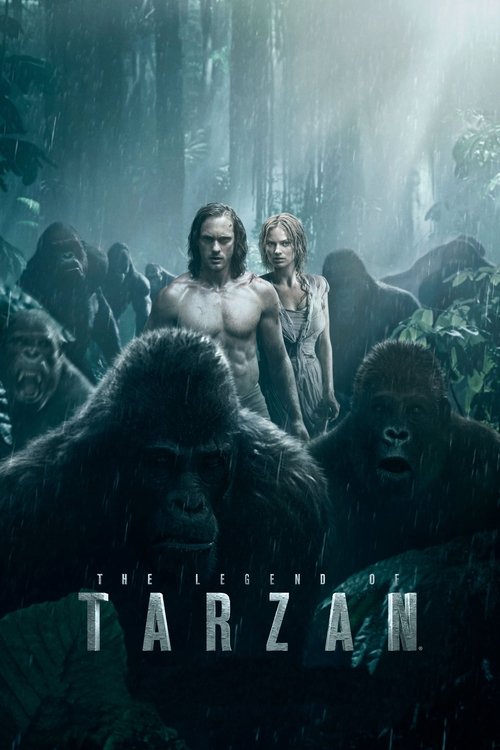
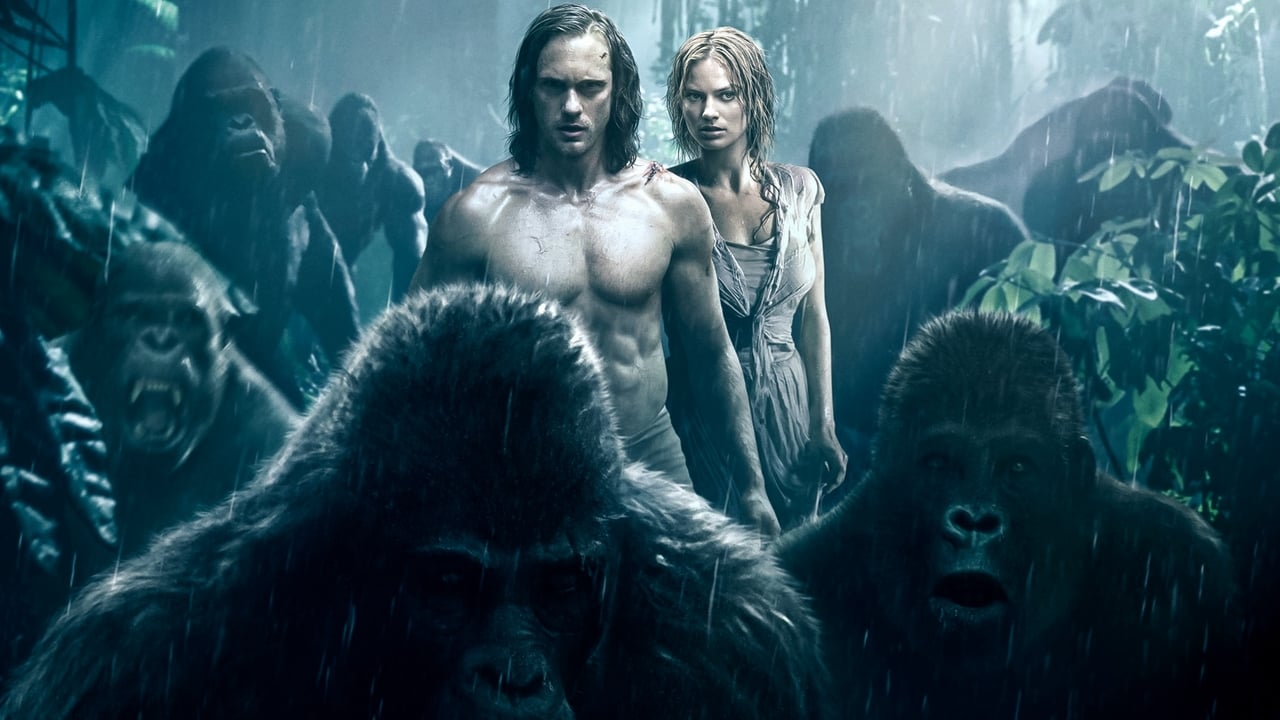
Watching Alexander Skarsgård spend an entire movie looking like he’s about to apologize for his own pectorals is a very specific 2010s blockbuster experience. By the time The Legend of Tarzan hit screens in 2016, we were already drowning in the "gritty reboot" era, where every childhood hero had to be miserable, rain-soaked, and burdened by a tragic backstory. Yet, there’s something oddly fascinating about this film’s attempt to turn a pulpy, problematic colonial relic into a somber political thriller. I watched this again last Tuesday while my neighbor was loudly power-washing his driveway, and the drone of the water strangely complemented the film’s constant, misty gloom.

The Lord of the Manor
Director David Yates, fresh off the final four Harry Potter films, brings that same desaturated, overcast aesthetic to the Congo. We don't start with a loincloth; we start with tea. John Clayton (Tarzan) is living the posh life in London, looking like a Victorian mood board with a gym membership. He’s invited back to the Congo by King Leopold II of Belgium, supposedly for a trade summit, but it’s actually a trap set by Christoph Waltz, playing Captain Leon Rom.
Christoph Waltz is essentially playing a refined version of his Inglourious Basterds villain, Hans Landa, if Landa were obsessed with rosary beads made of Madagascar silk. He’s a wonderful actor, but by 2016, Christoph Waltz could do this role in his sleep, and sometimes it looks like he is. He captures the banality of evil perfectly, but he doesn't exactly scream "physical threat" to a man who can wrestle a silverback.
The film makes a noble, if slightly clunky, attempt to address the "white savior" tropes inherent in Edgar Rice Burroughs’ books. It does this by pairing Tarzan with Samuel L. Jackson as George Washington Williams. Unlike Tarzan, Williams was a real historical figure—a Civil War veteran and journalist who actually traveled to the Congo to expose Leopold’s atrocities. Samuel L. Jackson is the best part of the movie, providing the necessary human friction and humor to balance out Alexander Skarsgård’s stoic, almost alien performance.
Physics, Vine-Swinging, and Digital Fur
When the action finally moves to Africa, the film shifts from a costume drama into a full-tilt CGI spectacle. The action choreography is a mixed bag of genuine thrills and "uncanny valley" headaches. There’s a sequence on a moving train where Tarzan and Williams have to fight their way through Belgian soldiers that is genuinely well-staged, utilizing the cramped quarters to show off Tarzan's brute strength.
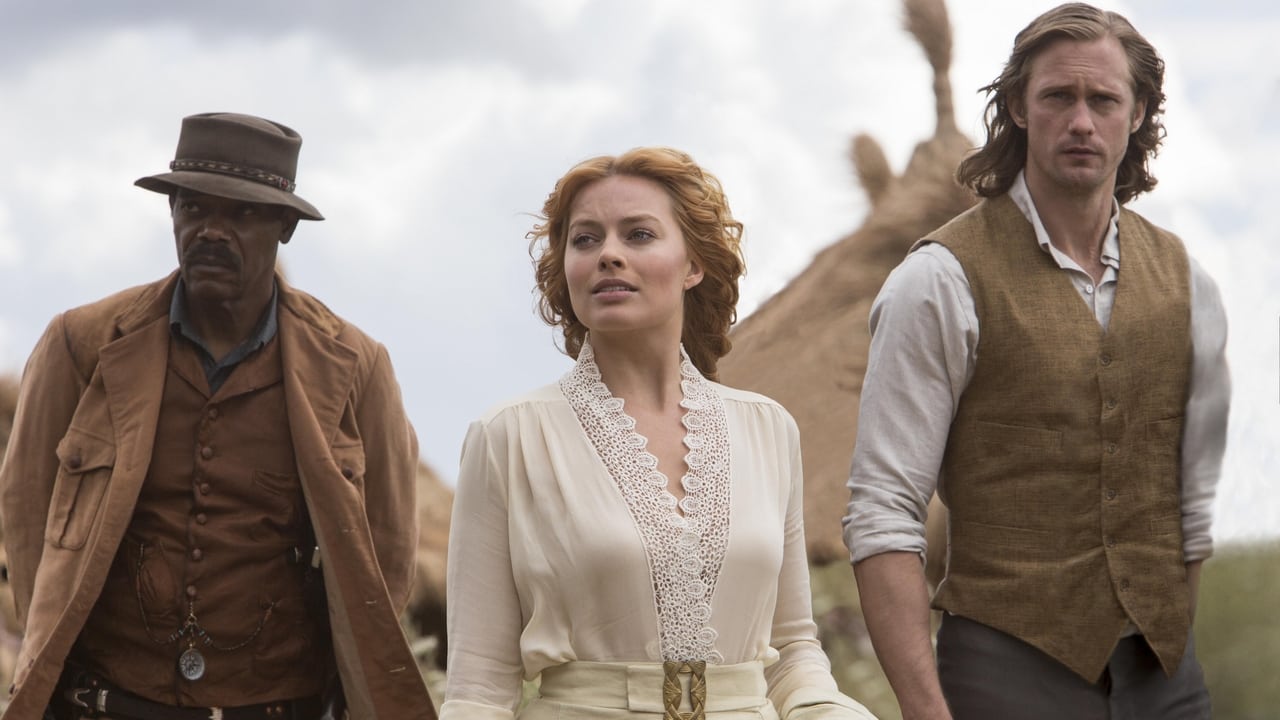
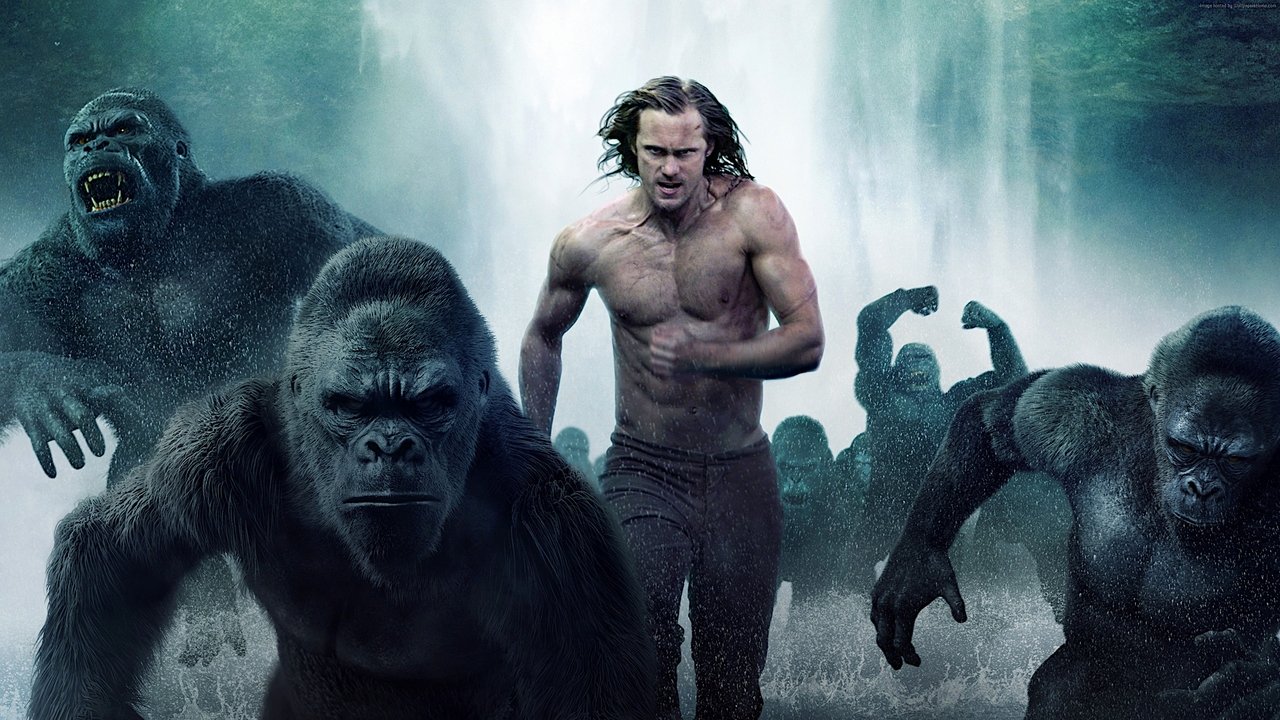
However, the vine-swinging is where the 2016 technology starts to wobble. David Yates opts for a camera that mimics a drone, swooping through the canopy at impossible speeds. It looks cool, but it lacks weight. When Tarzan launches himself off a cliff, he doesn't feel like a 220-pound man; he feels like a bunch of pixels being dragged across a screen by a cursor. The digital apes, provided by the same folks who worked on the Planet of the Apes reboots, are impressive, but they lack the soul found in Andy Serkis’s Caesar.
Interestingly, Alexander Skarsgård went through a brutal training regimen for the role, consuming 7,000 calories a day and lifting heavy weights to achieve a physique that looked "lean but lethal." Apparently, the diet was so strict that he wasn't allowed sugar or dairy for months. When he finally wrapped filming, his father, Stellan Skarsgård (of Good Will Hunting fame), reportedly made him a massive pasta dish and he just sat there and cried. You can see that exhaustion on screen; Tarzan looks like he’s carrying the weight of the entire continent on his lats.
A Cult Curiosity in the Franchise Era
Why does this feel like a cult oddity now? It’s because it’s a massive $180 million movie that feels strangely personal and weirdly paced. It’s not a "fun" adventure like Brendan Fraser’s The Mummy (1997), nor is it a deep philosophical dive. It’s a movie that spends a lot of time on the chemistry between Margot Robbie and Alexander Skarsgård.
Margot Robbie as Jane is a firecracker. Released the same year as Suicide Squad, this was the moment Robbie was cementing her status as a superstar. She refuses to be a damsel, even when chained to a steamship. In one of the more famous behind-the-scenes stories, David Yates told Robbie to punch Skarsgård during their love scene to make it feel more "animalistic." She didn't hold back, and the bruise he sported the next day was entirely real.
The film also captures a specific moment in cinema history where studios were desperate to turn old IP into "Cinematic Universes." You can feel the gears grinding, hoping for a sequel that never came. Despite making over $350 million, the massive budget meant it was a financial "meh" for the studio. But looking back, it’s a much more interesting failure than the cookie-cutter blockbusters we often get today. It has a soul, even if that soul is a bit mopey and covered in digital mud.
Stuff You Didn't Notice
Real History: George Washington Williams’ presence is the film's secret weapon. His "Open Letter" to King Leopold II was one of the first major documents to spark international outrage over the Congo Free State. The Phelps Factor: At one point, Olympic swimmer Michael Phelps was rumored for the lead role. While he has the "Tarzan" build, the producers ultimately realized they needed someone who could actually, you know, act. Leavesden Jungles: Almost none of this was shot in Africa. The lush jungles were actually massive sets built at Leavesden Studios in the UK, supplemented by CGI backgrounds and a few weeks of aerial footage from Gabon. The Rosary: Captain Rom's weapon of choice—a spider-silk rosary—was based on a real-life rumor that the historical Leon Rom used to keep the severed heads of Africans in his garden. The movie wisely went with the silk string instead.
The Legend of Tarzan is a handsome, brooding, and occasionally thrilling attempt to modernize a character that might be better left in the past. It’s saved from being a total bore by Samuel L. Jackson’s charisma and Margot Robbie’s refusal to play the victim. While the CGI animals don't always land the leap, the film works as a fascinating artifact of the mid-2010s' obsession with making everything "serious." It’s a solid Sunday afternoon watch—just don't expect it to change your life or your opinion on Victorian fashion.
Keep Exploring...
-

Fantastic Beasts: The Secrets of Dumbledore
2022
-
The Last Witch Hunter
2015
-
The Great Wall
2016
-
Warcraft
2016
-

Fantastic Beasts: The Crimes of Grindelwald
2018
-
Pacific Rim: Uprising
2018
-
Tomb Raider
2018
-
Hellboy
2019
-
Pokémon Detective Pikachu
2019
-
Mulan
2020
-
Wonder Woman 1984
2020
-

Pan
2015
-
Gods of Egypt
2016
-
Robin Hood
2018
-
Monster Hunter
2020
-
Suicide Squad
2016
-

Kong: Skull Island
2017
-
Underwater
2020
-
The Northman
2022
-
Aquaman and the Lost Kingdom
2023