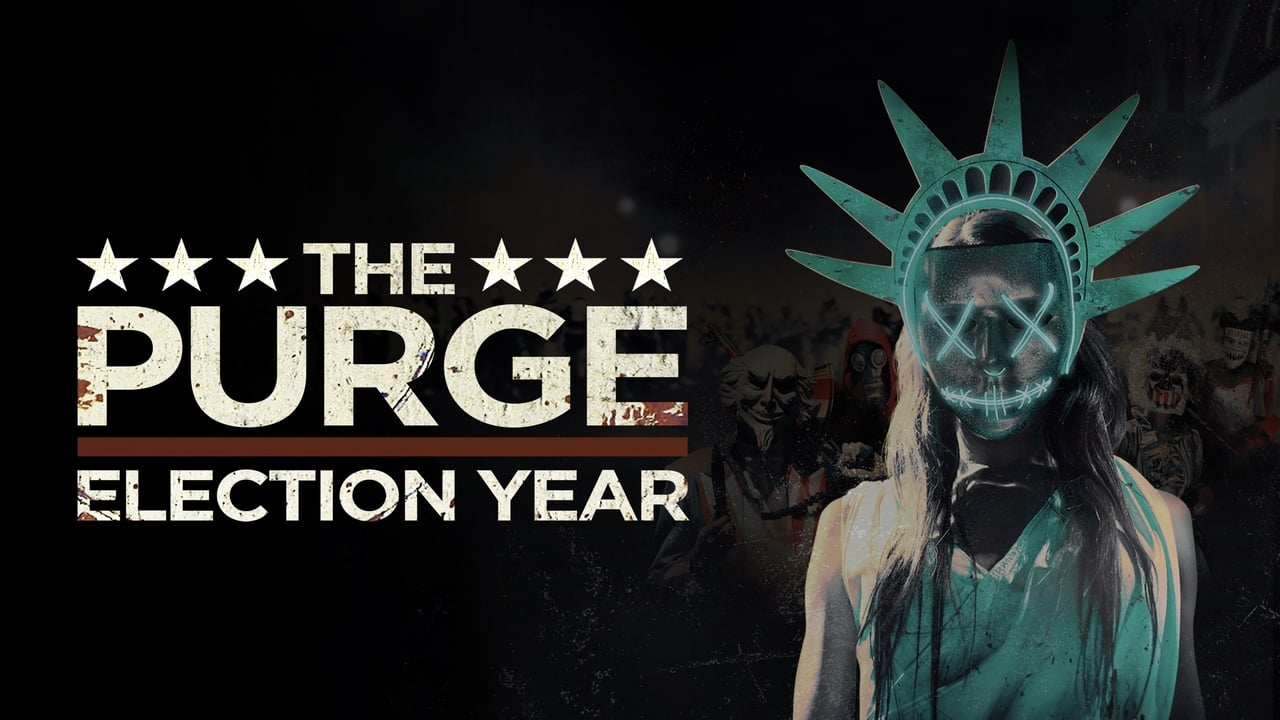
The Purge: Election Year
"The ballot is a bullet."
I walked into the theater in July 2016 with a bag of slightly-too-salty popcorn and a shoe that kept sticking to a patch of spilled Sprite. Every time I moved my foot, there was this rhythmic thwack that, weirdly enough, started syncing up with the jump scares on screen. It was a strange time to be alive, and an even stranger time to be watching a movie about a fractured America tearing itself apart during an election cycle.
When James DeMonaco first introduced us to the concept of The Purge in 2013, it was a contained home-invasion thriller. By the time we got to the third entry, The Purge: Election Year, the franchise had fully realized its destiny as a loud, messy, and surprisingly sharp political satire dressed up in a leather jacket and holding a blood-stained machete. It’s a film that doesn't just invite the "Contemporary Cinema" label; it demands it, capturing a specific mid-2010s anxiety that felt uncomfortably close to home.
The Politics of the Pavement
The story picks up with Leo Barnes (Frank Grillo), the man who spent the second film (The Purge: Anarchy) looking for revenge but finding redemption instead. Now, he’s the head of security for Senator Charlie Roan (Elizabeth Mitchell), a presidential candidate running on a platform of ending the Purge. Roan is a survivor of a past Purge (shown in a grim, effective opening flashback), and she’s the primary threat to the New Founding Fathers of America (NFFA).
The NFFA, led by the sinister Caleb Warrens (Raymond J. Barry), decides to revoke the "protection" of high-ranking government officials during the Purge, specifically to take Roan off the board. Betrayal ensues, Barnes and Roan are thrust into the D.C. streets, and the movie shifts into a high-stakes escort mission. What I love about this shift is how it expands the world. We aren't just in a suburban basement anymore; we’re in a city where "murder tourists" fly in from Europe to participate in the carnage, and where local business owners like Joe Dixon (Mykelti Williamson) are forced to defend their delis with shotguns because insurance companies hiked the "Purge premiums" at the last minute.
Grillo, Gore, and Great Masks
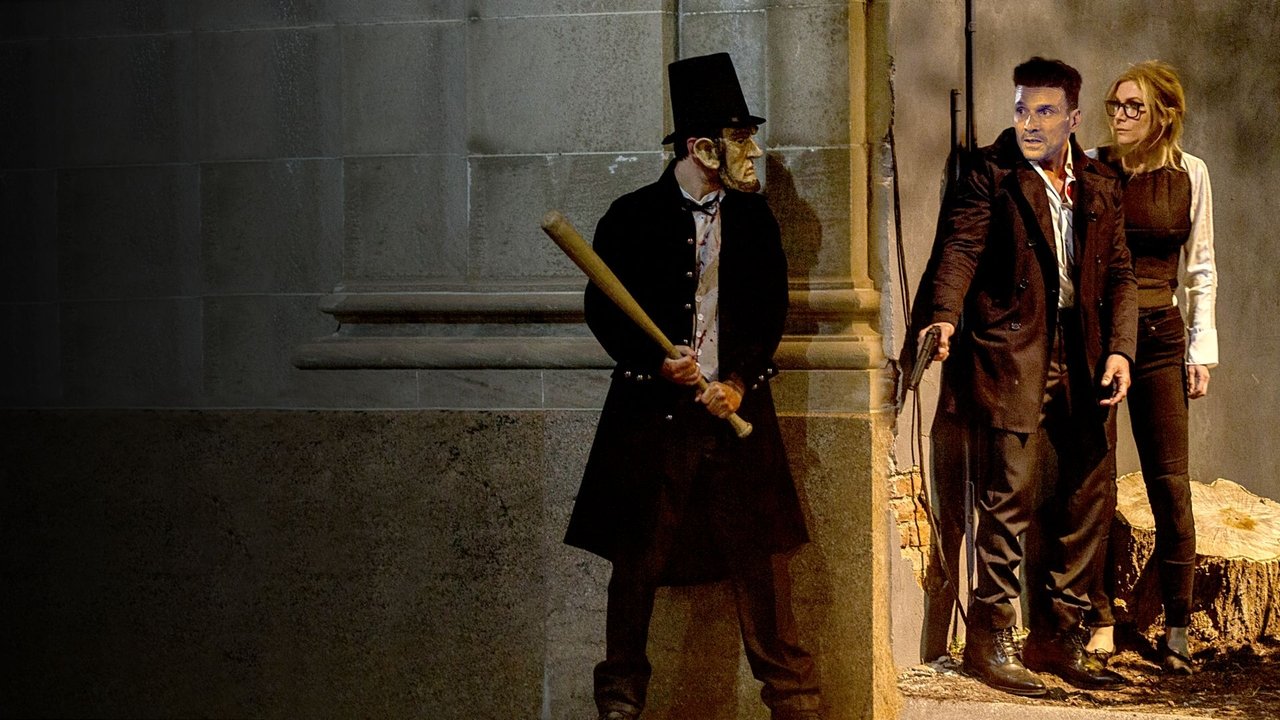
Let’s talk about Frank Grillo. The man is the closest thing we have to a 1980s action hero in the modern era. He carries himself with a weary, tactical grace that makes you believe he could actually survive a night of legalized murder. His chemistry with Elizabeth Mitchell—who brings a much-needed groundedness to the role of the idealistic Senator—gives the movie its emotional anchor.
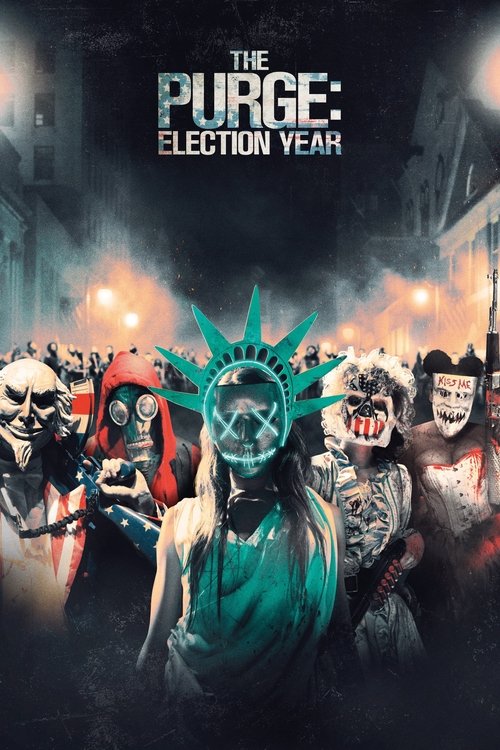
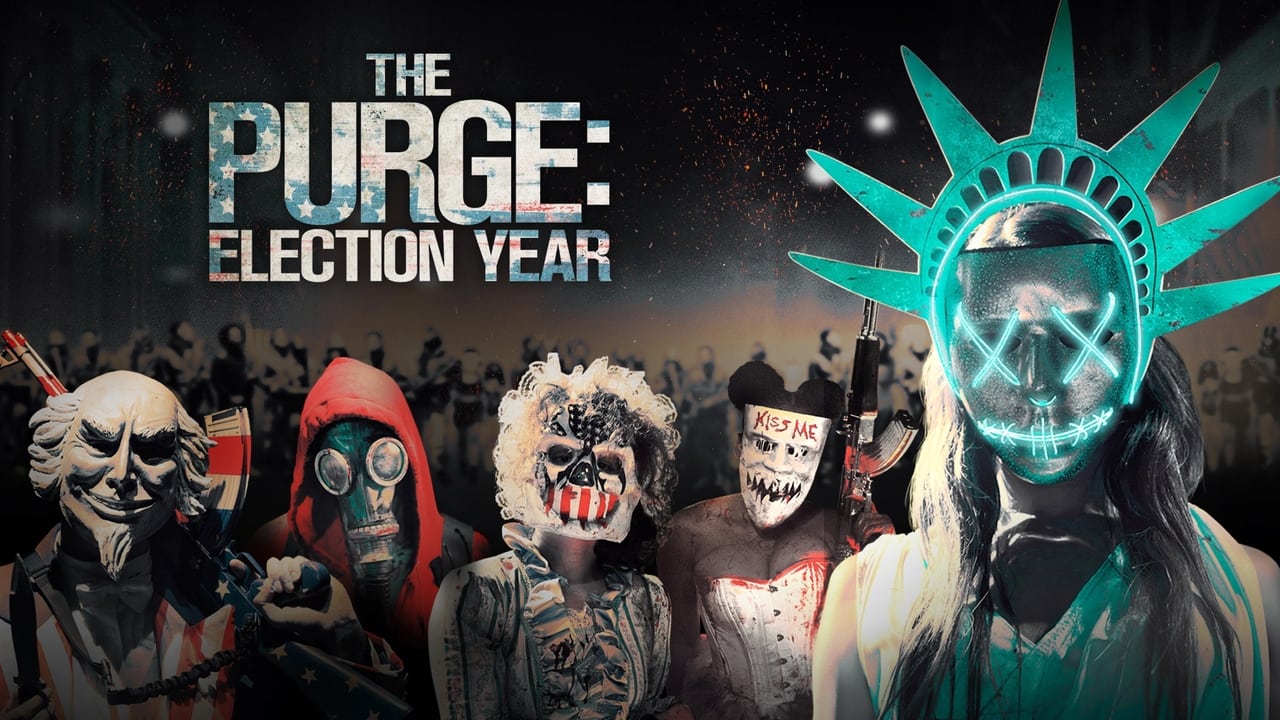
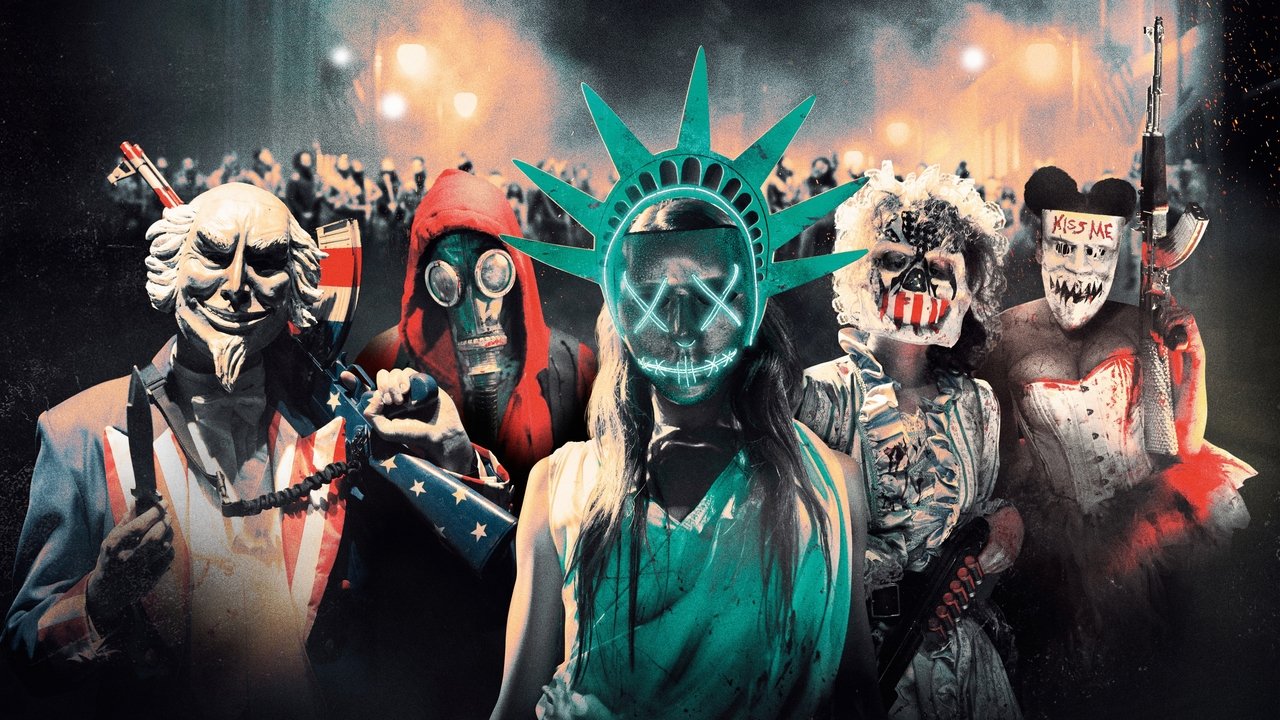
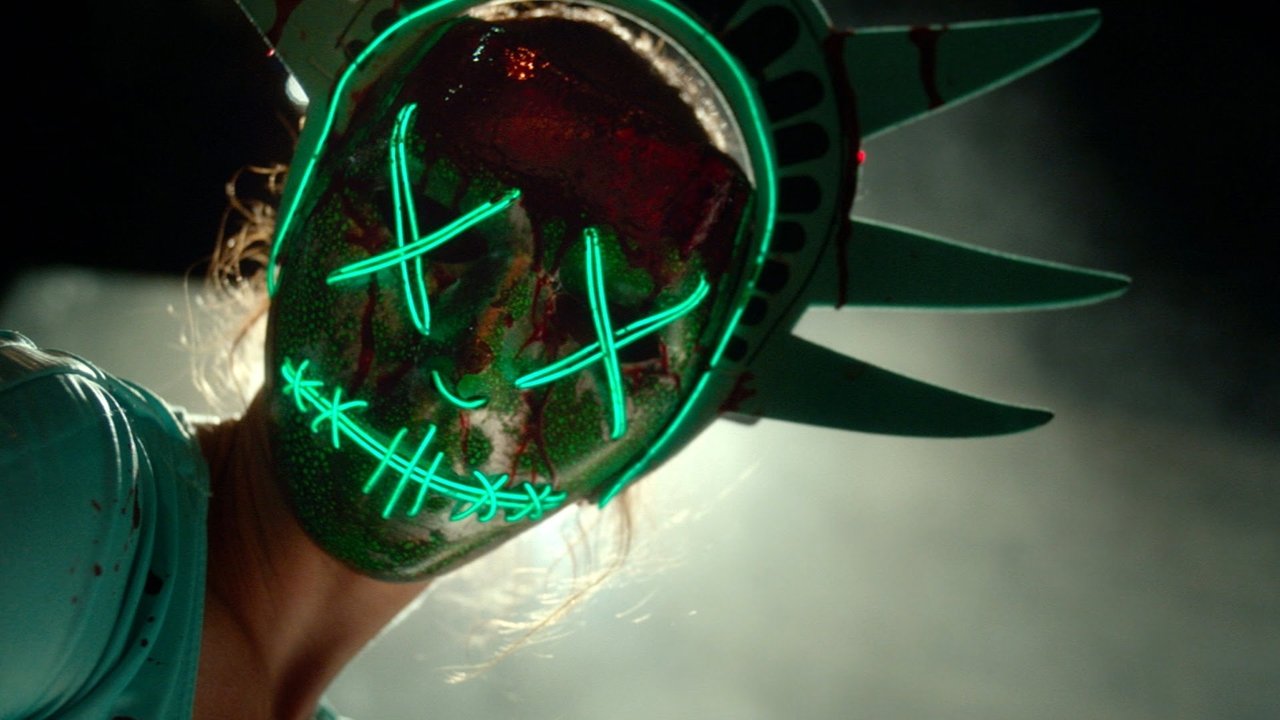
But the real stars of any Purge movie are the costumes. The production design team went all out here, giving us "Lady Liberty" and "Uncle Sam" killers that look like they raided a Spirit Halloween store on a $50 budget and a gallon of PCP. There’s a specific scene involving a group of "Candy Girls"—teenagers in prom dresses and fairy lights driving a car covered in Christmas bulbs—that is pure nightmare fuel. The way they dance around a corpse to the tune of "Party in the U.S.A." is peak Blumhouse horror: tacky, terrifying, and impossible to look away from.
James DeMonaco (who also wrote The Negotiator back in the day) knows how to pace a thriller. While some of the CGI blood looks a bit thin—a common gripe in this era of mid-budget horror—the practical lighting and the use of the D.C. architecture (mostly filmed in Rhode Island, fun fact) create a claustrophobic atmosphere despite being outdoors.
A Mirror That’s A Little Too Shiny
Critics at the time were split on whether the movie was too "on the nose." Its original tagline, "Keep America Great," was released months before it became a real-world campaign slogan, leading to some truly wild social media discourse. But looking at it now, the film feels like a time capsule of 2016 polarization. It’s not subtle. It’s basically a high-budget version of a Twitter argument where everyone has a semi-automatic weapon.
The inclusion of characters like Laney Rucker (Betty Gabriel), a legendary former Purger who now spends her night in a triage van helping victims, adds a layer of community and resistance that the previous films lacked. It’s not just about surviving; it’s about what kind of society you want to build the next morning. The movie manages to balance this "what does it mean now?" commentary with genuine B-movie thrills.
Interestingly, despite being a franchise installment, Election Year performed like a true blockbuster, turning its $10 million budget into nearly $119 million worldwide. It proved that audiences were hungry for horror that reflected their own societal fears, a trend that would pave the way for films like Get Out just a year later.
While it occasionally trips over its own soapbox, The Purge: Election Year is the peak of the franchise's original trilogy. It’s a lean, mean, and surprisingly mean-spirited action-horror hybrid that knows exactly what it wants to be. It captures that specific 2016 lightning in a bottle—the fear, the frustration, and the desperate hope for a different future—all while delivering enough jump scares and "Candy Girl" chaos to satisfy the horror hounds. If you can stomach the blunt-force trauma of its metaphors, it’s a hell of a ride through a very dark night.
Keep Exploring...
-
The First Purge
2018
-
The Purge: Anarchy
2014
-
The Forever Purge
2021
-
The Purge
2013
-
The Mummy
2017
-

Underworld: Blood Wars
2016
-
The Hunt
2020
-
Peninsula
2020
-
Unhinged
2020
-
Blood Red Sky
2021
-
Insidious: Chapter 3
2015
-
10 Cloverfield Lane
2016
-
Don't Breathe
2016
-

Mechanic: Resurrection
2016
-

Resident Evil: The Final Chapter
2016
-

The Shallows
2016
-

Atomic Blonde
2017
-

It
2017
-
John Wick: Chapter 2
2017
-
Split
2017