Battle of the Sexes
"Lobs, lasers, and the ultimate chauvinist clown."
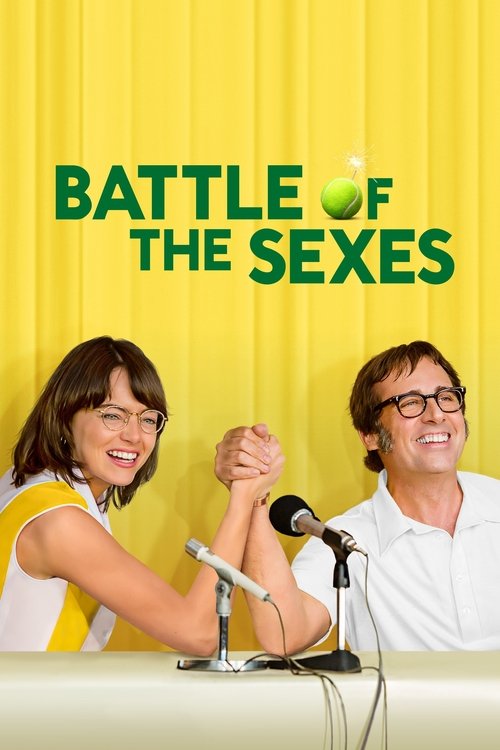
The 1970s were a fever dream of polyester, cigarette smoke in gyms, and a brand of casual chauvinism so thick you could practically stir it into your coffee. Walking into Battle of the Sexes, I expected a standard-issue sports biopic—the kind where the underdog sweats in slow-motion and the score swells right as the ball hits the line. Instead, I found a film that feels less like a dusty history lesson and more like a neon-lit mirror held up to our own messy, modern conversations about who gets a seat at the table.
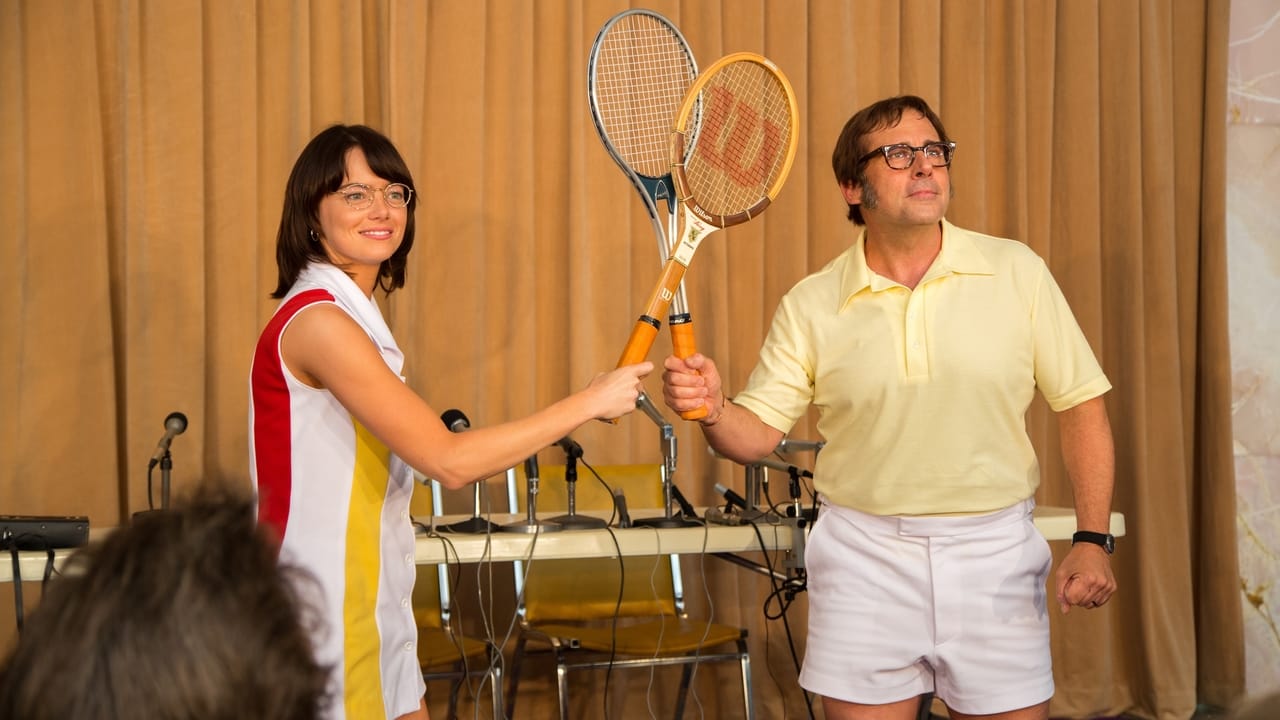
I watched this while tucked under a weighted blanket that felt exactly like a lead apron at the dentist, which made the mounting anxiety of the final set feel oddly physical. It’s a movie that knows how to hold its breath.
The Clown and the Crusader
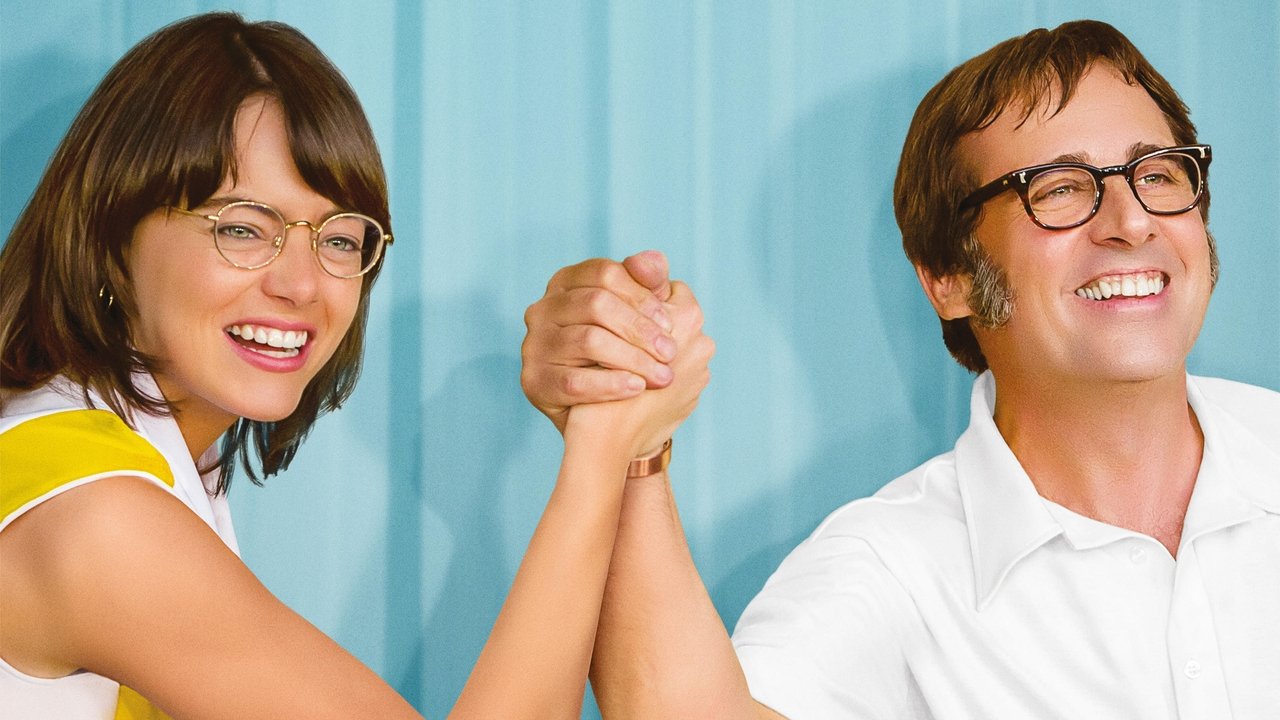
The film pits Steve Carell’s Bobby Riggs against Emma Stone’s Billie Jean King, but they aren't playing the same game. Riggs isn't a villain in the traditional sense; he’s a "tennis-pro-turned-hustler" who realized that being a loud-mouthed jerk was more profitable than being a retired champion. Steve Carell is frighteningly good at capturing the hollow eyes behind the "Macho Pig" glasses. He portrays Riggs as a man addicted to the spotlight, a gambler who bet his legacy on a joke that he didn’t realize was actually hurting people.
On the other side of the net, Emma Stone delivers what I think is her most grounded work. She ditches the wide-eyed musical theater energy for something internal and coiled. Her Billie Jean isn't just fighting for a trophy; she’s fighting for the right to exist without an asterisk. Watching her navigate the launch of the WTA while privately falling for her hairdresser, Marilyn (played with a dreamy, soft-focus intensity by Andrea Riseborough), adds a layer of stakes that the actual tennis match almost can't compete with.
A Period Piece for the #MeToo Era
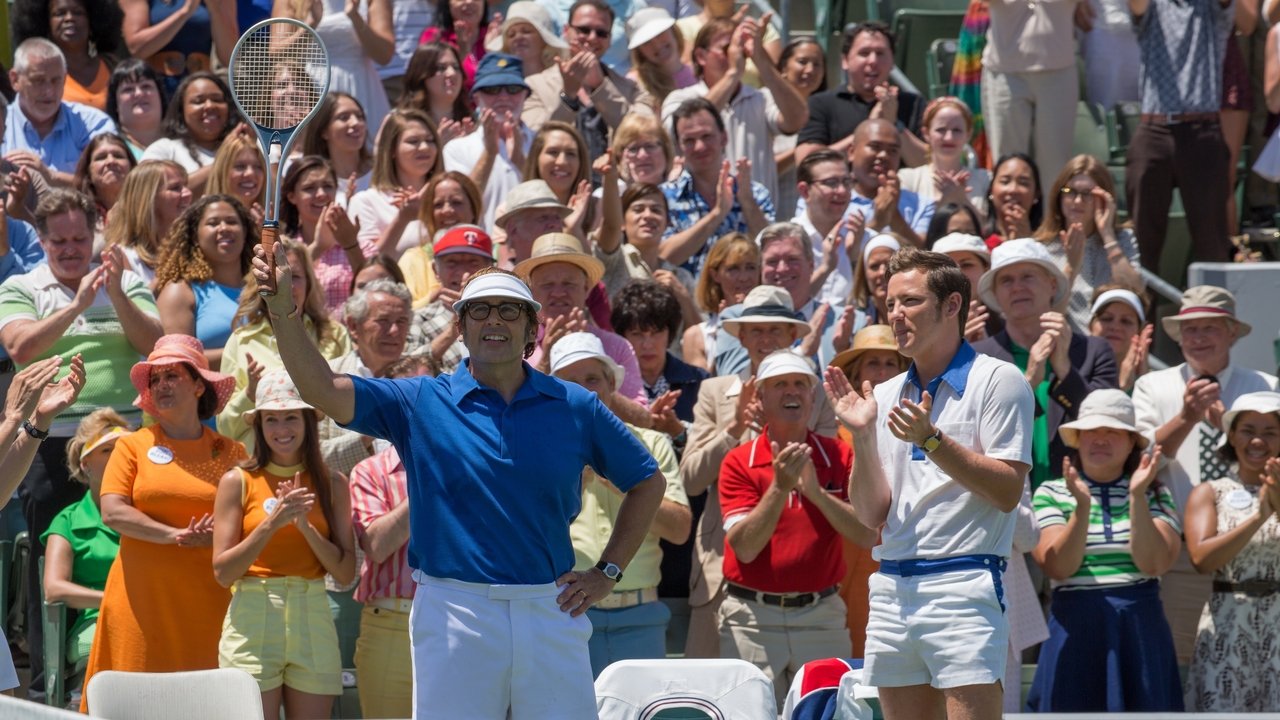
Released in late 2017, Battle of the Sexes landed right as the cultural tectonic plates were shifting. It’s impossible to watch Bill Pullman play the smug Jack Kramer—a man who genuinely believes women are genetically inferior athletes—without thinking about the "pay equity" headlines that still dominate the sports pages today. The film doesn't scream its message; it just lets the absurdity of the era speak for itself.
Directors Valerie Faris and Jonathan Dayton (the duo behind Little Miss Sunshine) make some brilliant visual choices here. They shot on 35mm film, giving the whole thing a warm, slightly fuzzy grain that feels authentic to a 1973 broadcast. It doesn't look like a shiny digital recreation; it looks like a memory. They also have a knack for making the tennis look real. Emma Stone apparently spent months training to mimic King’s specific, aggressive style of play, and while there’s obviously some editing magic involved, the physicality feels earned. The tennis court scenes actually look like sports rather than a choreographed dance-off, which is a high bar for most Hollywood biopics to clear.
The Circus and the Subtext
If there’s a weak point, it’s that the movie occasionally feels like it’s trying to play two different matches at once. One half is a technicolor comedy about the absurdity of Riggs’ media stunts—the man literally played a match with a flock of sheep on the court—and the other is a somber, lonely drama about King’s struggle with her identity and the end of her marriage to Larry King (the husband, not the talk show host).
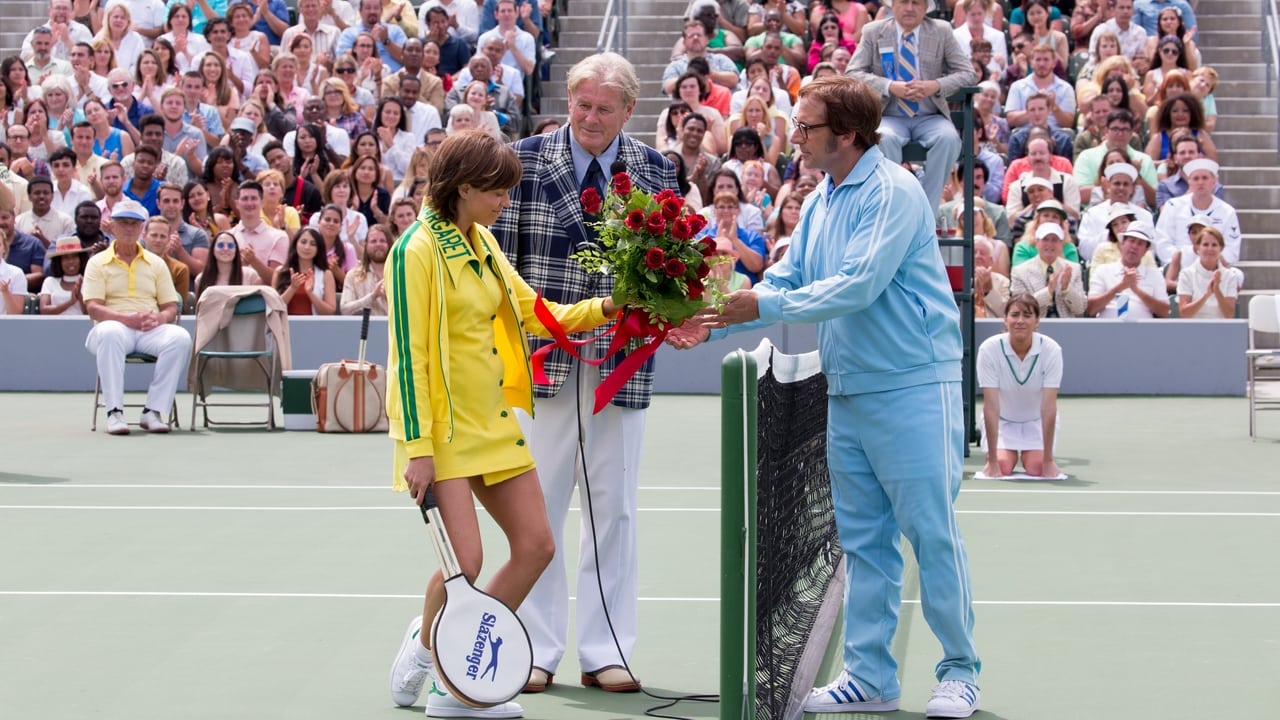
Sarah Silverman shows up as Gladys Heldman, the chain-smoking engine behind the women’s tour, and she’s a total riot. She provides the much-needed cynical edge to balance out the more earnest romantic subplots. There’s a bit of trivia I love: the real Billie Jean King was on set for much of the filming, offering pointers on everything from grip strength to the specific way she used to adjust her glasses. You can feel that specificity in the details.
For a film that cost $25 million and barely made half that back at the box office, it feels like a bit of a "forgotten" gem of the late 2010s. It likely suffered from the shift toward streaming—it’s exactly the kind of smart, mid-budget adult drama that audiences now tend to wait for on a platform rather than seeing in a theater. But seeing it on a big screen (or even a decent home setup) allows you to appreciate the costume design. The sheer amount of brown and orange on display is staggering.
The film is a vivid reminder that progress isn't a straight line—it’s a grueling back-and-forth volley. It manages to take a 50-year-old tennis match and make it feel like a live-tweeting event. While it leans a bit hard into the "prestige biopic" formula at times, the chemistry between Emma Stone and Steve Carell keeps it from ever feeling stale. It’s a movie that celebrates the courage it takes to be the first person to say "no" to a bad deal, all while wearing some truly questionable footwear.

Keep Exploring...
-
The Favourite
2018
-
The Man Who Invented Christmas
2017
-
Can You Ever Forgive Me?
2018
-
Dolemite Is My Name
2019
-

Kinds of Kindness
2024
-
BlacKkKlansman
2018
-
The Hating Game
2021
-
Amsterdam
2022
-
Anomalisa
2015
-
Dope
2015
-
Welcome to Marwen
2018
-
The Peanut Butter Falcon
2019
-

Dog
2022
-
The Dressmaker
2015
-
Justice League vs. Teen Titans
2016
-
My Life as a Zucchini
2016
-

I Don't Feel at Home in This World Anymore
2017
-
Unicorn Store
2017
-
Nothing to Hide
2018
-
The Dirt
2019