Free Fire
"Everyone has a gun. Nobody has a plan."
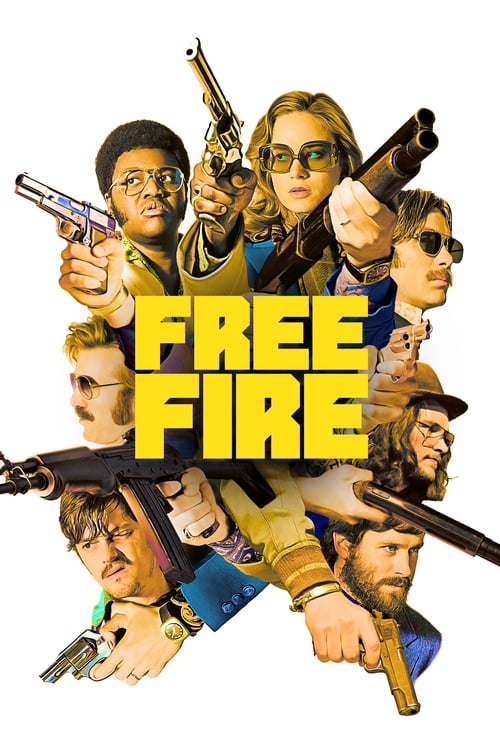
I distinctly remember watching Free Fire for the first time on a slightly cracked laptop screen while my cat, Barnaby, was aggressively trying to chew through my charging cable. Usually, that kind of distraction would ruin a movie, but for some reason, the chaotic energy of a domestic animal trying to electrocute itself felt like the perfect companion piece to Ben Wheatley’s 90-minute exercise in ballistic incompetence.
Released in 2017, Free Fire arrived right when the "elevated genre" wave was hitting its stride. We were getting these incredibly polished, neon-soaked action odysseys like John Wick: Chapter 2 or Atomic Blonde. Then Wheatley showed up, handed a bunch of Oscar winners and A-listers some bell-bottoms and rusty revolvers, and told them to crawl around in the dirt for an hour and a half. It’s a mean, loud, and surprisingly funny movie that somehow managed to vanish from the cultural conversation almost as soon as the smoke cleared.
The Art of the Missed Shot
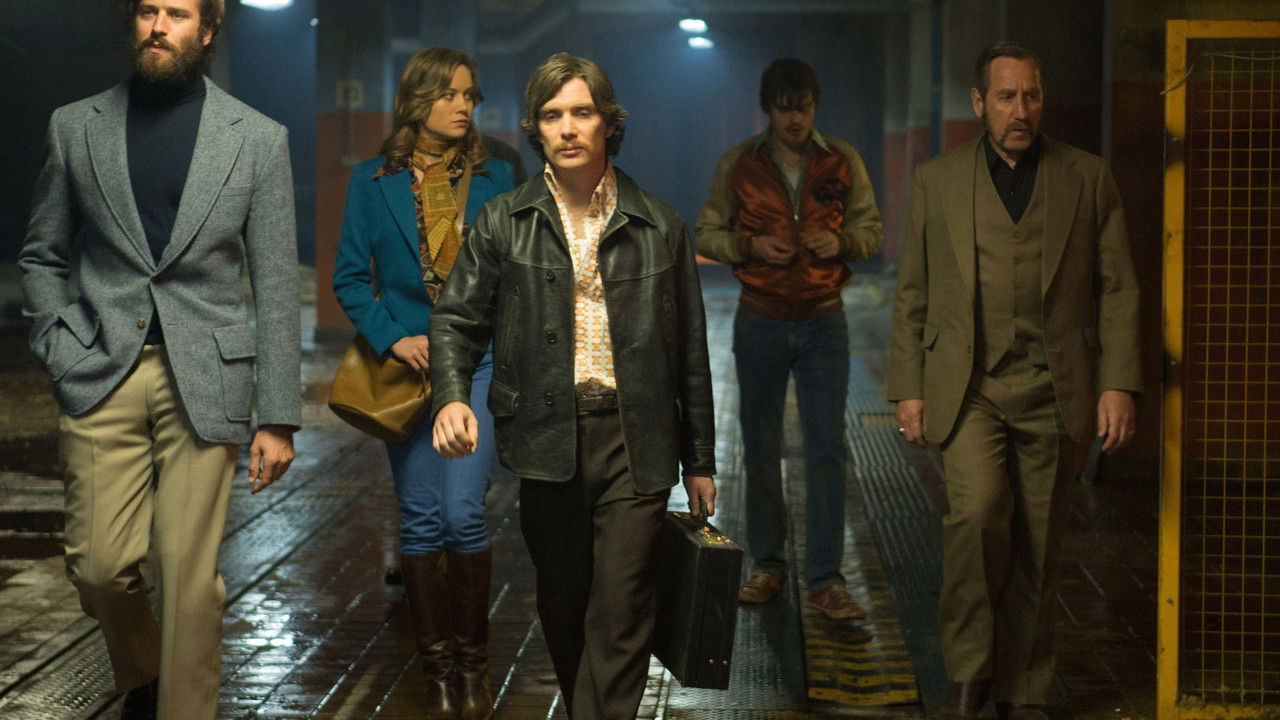
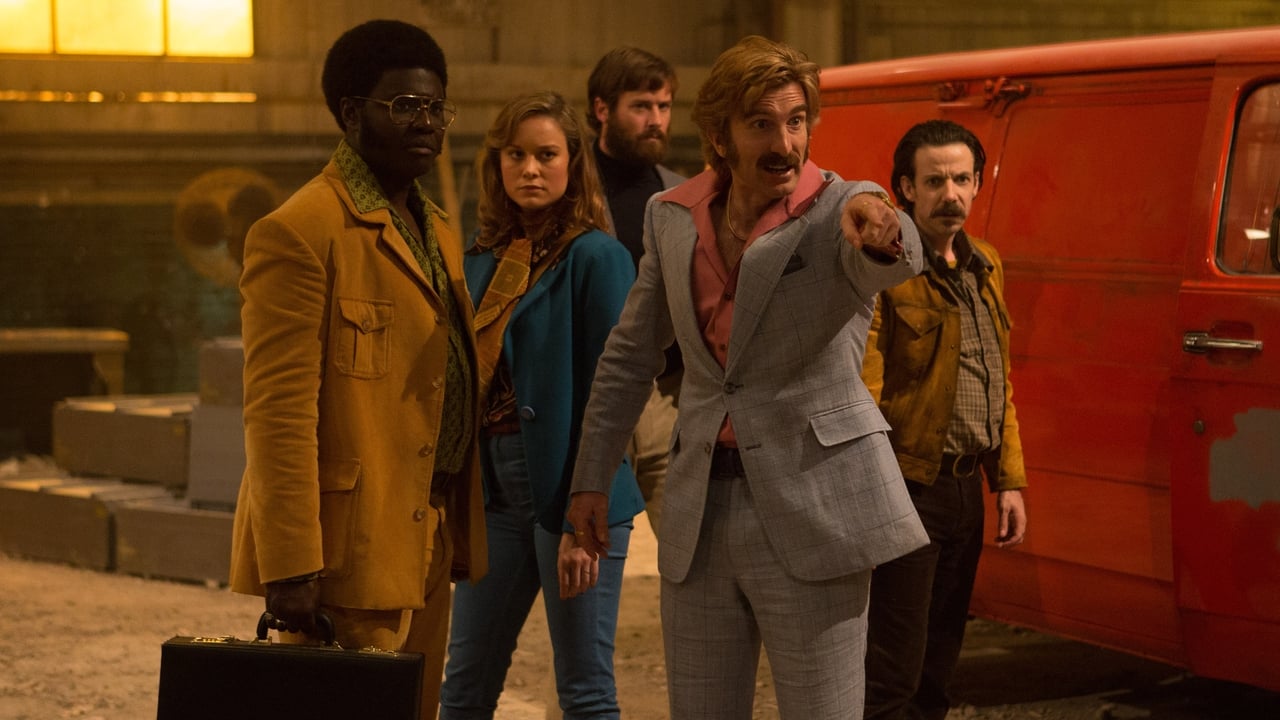
The setup is deceptively simple, almost like a stage play written by someone who just watched Reservoir Dogs (1992) and decided there weren't enough bullets. We’re in a derelict Boston warehouse in 1978. A group of IRA members, led by a cool-headed Cillian Murphy (long before his Oppenheimer stoicism became a global meme), are meeting a sleazy arms dealer played by Sharlto Copley to buy a crate of M16s. Brie Larson and Armie Hammer are there as the intermediaries—the only people in the room who seem to have a functioning brain cell between them.
Naturally, someone recognizes someone else from a bar fight the night before, a shot is fired, and the rest of the film is just one long, agonizingly slow shootout. What I love about this movie is that it’s the ultimate "anti-action" film. In most movies, characters are marksmen. In Free Fire, everyone is a terrible shot. They spend the entire second act hideously wounded, dragging themselves across filthy concrete floors, yelling insults, and missing targets from ten feet away. It’s basically a slapstick comedy where the props are lethal weapons.
Why It Got Lost in the Shuffle
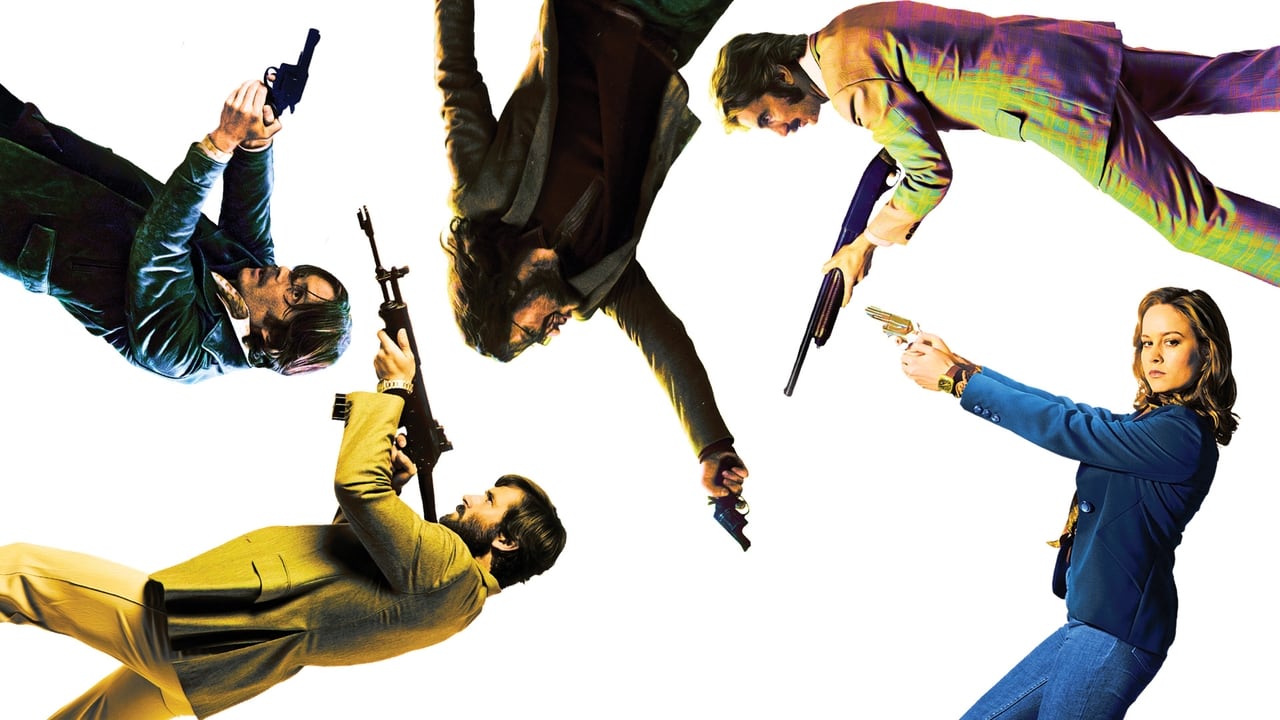
Despite having Martin Scorsese as an executive producer and a cast that would make a casting director weep with joy, Free Fire absolutely tanked at the box office. It made back about half of its $7 million budget and then quietly moved to the "hidden gems" section of streaming services.
I think the reason it didn't land is that it refuses to play by the rules of contemporary franchise cinema. In an era where every action movie needs to set up a "Cinematic Universe" or have a hero who feels like a literal god, Free Fire is refreshingly small. It doesn't care about the world outside that warehouse. It doesn't even really care if you like the characters. By the forty-minute mark, Sharlto Copley’s character, Vernon, is so insufferable that you’re actively rooting for someone to finally hit him, just to shut him up.
There’s also the "A24 effect" to consider. While distributed by A24 in the States, it didn't have the atmospheric horror of The Witch (2015) or the indie-darling status of Lady Bird. It was too gritty for the mainstream and too "B-movie" for the critics who wanted something more profound. It exists in this weird, wonderful middle ground—a high-concept experiment that prioritizes the geography of a room over the emotional growth of its leads.
Practical Mess and Period Perfection
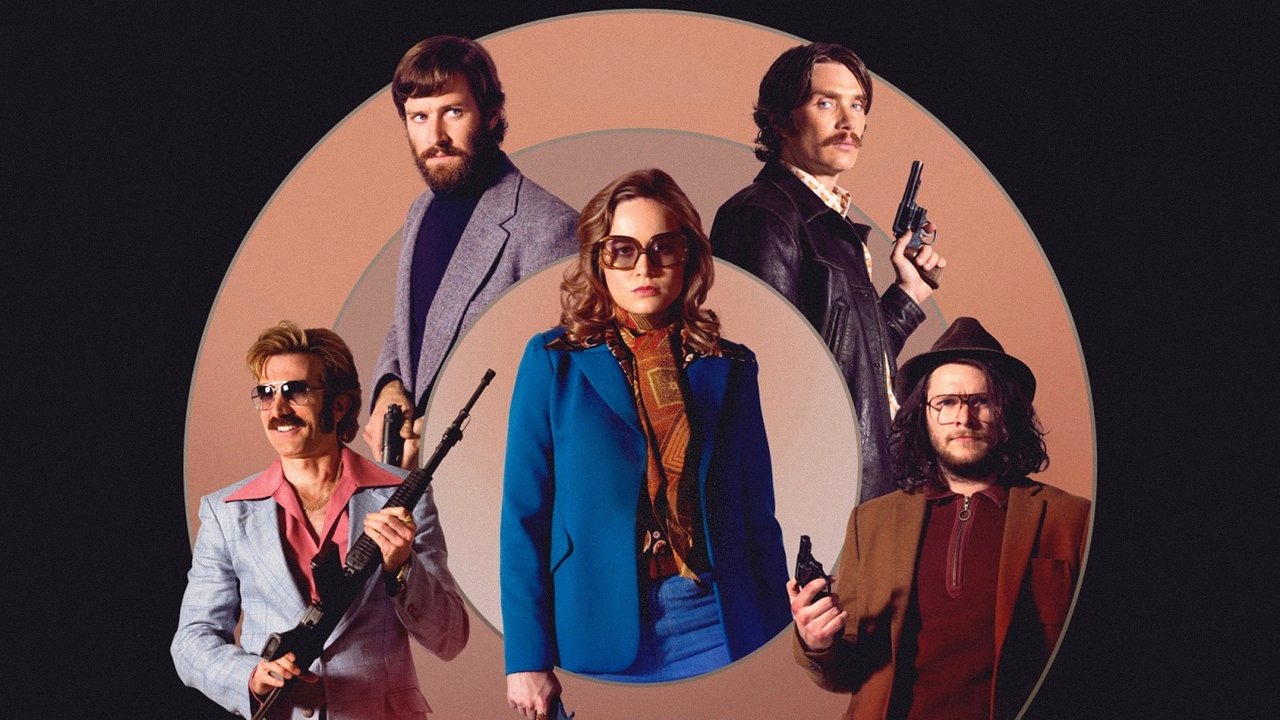
From a craft perspective, the film is a masterclass in spatial awareness. Director Ben Wheatley and his co-writer/editor Amy Jump (who also worked on the trippy A Field in England) actually built a 3D model of the warehouse and tracked where every character was at every moment. You always know exactly where Jack Reynor is in relation to Sam Riley, which is a miracle considering how much dust and debris is flying around.
The sound design is the real star here. Every gunshot feels like a physical punch. There’s no soaring orchestral score to tell you how to feel—just the rhythmic crack-bang of handguns echoing off corrugated metal and the occasional 70s needle drop. It feels tactile. When a character gets shot in the leg, they don't just limp; they spend the next thirty minutes whimpering and trying to find a piece of cardboard to stop the bleeding. The movie treats a bullet wound with the annoying reality of a persistent papercut.
It’s a shame we don't see more of this kind of mid-budget experimentation now. In the current streaming landscape, this probably would have been a "Direct-to-Netflix" title that people would scroll past on their way to a bingeable true-crime doc. But seeing it as a theatrical experience—or even on a cracked laptop—reminds you that sometimes, cinema is just about the craft of a singular, messy moment.
Free Fire isn't going to change your life, and it’s certainly not "prestige" filmmaking, but it is a hell of a lot of fun if you’re in the right mood for some nihilistic 70s-era chaos. It’s a movie that values the "ouch" over the "epic," and in a world of invincible superheroes, there's something genuinely charming about watching Cillian Murphy crawl through dirt while complaining about his suit. Give it a look if you want to see what happens when the smartest people in the room make the dumbest possible decisions.

Keep Exploring...
-
Rebecca
2020
-
Survivor
2015
-
Shaft
2019
-
Terminal
2018
-
Batman: Hush
2019
-

High-Rise
2015
-

Gunpowder Milkshake
2021
-
Hotel Artemis
2018
-
See How They Run
2022
-

Dark Places
2015
-
Heist
2015
-
Mr. Holmes
2015
-
Secret in Their Eyes
2015
-
The Gunman
2015
-

Wild Card
2015
-
Criminal
2016
-
Keanu
2016
-
Masterminds
2016
-
Risen
2016
-
Brawl in Cell Block 99
2017