Gerald's Game
"One bed, two handcuffs, and nowhere to hide."
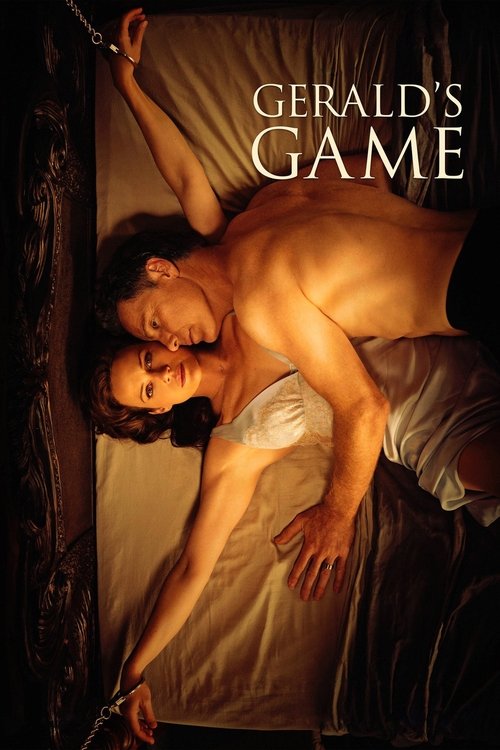
For decades, the standard wisdom in Hollywood was that Stephen King’s 1992 novel Gerald’s Game was fundamentally unfilmable. It’s easy to see why. How do you sustain a feature-length film when your protagonist is handcuffed to a bed for 90% of the runtime, with most of the "action" occurring as a fractured internal monologue between her competing subconscious personalities? It’s a premise that invites stagnation, a cinematic trap that could easily feel like a filmed stage play. But in 2017, Mike Flanagan—the man who would eventually become the architect of Netflix’s horror golden age with The Haunting of Hill House—decided to pick the lock.

Released during that mid-2010s sweet spot when streaming services were finally being taken seriously as homes for prestige genre fare, Gerald's Game didn't just break the "unfilmable" curse; it became one of the most effective psychological thrillers of the decade. I watched this for the first time while nursing a mild case of food poisoning from a questionable street taco, and honestly, the low-simmering nausea of my reality paired perfectly with the mounting dread on screen.
The Anatomy of a Nightmare
The setup is deceptively simple. Jessie, played with incredible range by Carla Gugino (who worked with Flanagan again in The Haunting of Hill House), and her husband Gerald (Bruce Greenwood, of Star Trek fame) retreat to a secluded lake house to salvage their sagging marriage with a bit of roleplay. Gerald brings the handcuffs; Jessie brings the hesitation. When Gerald suddenly drops dead of a heart attack while Jessie is still shackled to the bedposts, the film shifts from a cringe-inducing domestic drama into a claustrophobic fight for survival.
Flanagan solves the "internal monologue" problem with a stroke of brilliance: he has Jessie hallucinate a version of herself and a version of Gerald to talk to. It’s a clever narrative device that allows for exposition without it feeling like a lecture. Bruce Greenwood is fantastic here, playing a spectral, mocking version of a husband who is simultaneously the man Jessie loved and the source of her deepest resentments. But this is Carla Gugino’s show. She has to carry the emotional weight of a lifetime of suppressed trauma while physically restricted to a few square feet of mattress. It’s easily one of the most underrated performances in contemporary horror.
Practical Terror and the "Hand" Scene

While the film deals heavily with psychological scars and the "monsters" we inherit from our parents (shout out to Henry Thomas from E.T. playing a very different, much darker kind of father figure here), it doesn't skimp on the physical horror. This is a 2017 film, but it feels like it has the soul of an 80s practical effects showcase.
There is a specific moment involving a glass of water, a shard of ceramic, and a hand that has since become legendary among horror fans. If you have a weak stomach, this film will personally victimize you. The makeup effects for the infamous "degloving" sequence are so revoltingly realistic that I actually had to look away from my laptop for a second. It’s a perfect example of how contemporary cinema can use modern prosthetic tech to create something that feels genuinely dangerous and raw, rather than relying on the "safety" of CGI blood.
Then there’s the Moonlight Man. Played by the towering Carel Struycken (best known as Lurch from The Addams Family or the Giant in Twin Peaks), this character is the ultimate "is he real or a ghost?" enigma. His presence in the corner of the room is a masterstroke of lighting and shadow. In an era where many horror films over-explain their villains with lore and backstories, the Moonlight Man feels like a primal, ancient fear that just happened to walk into the wrong room.
A Modern Cult Standout

What makes Gerald's Game stick in the ribs of the cultural conversation is how it navigates Jessie’s past. This isn't just a movie about a woman escaping a bed; it’s about a woman escaping the "eclipse" of her childhood. The way Flanagan ties the literal eclipse in the flashback to Jessie’s current predicament is cinematic poetry. Interestingly, Flanagan actually pitched this movie for years, carrying a copy of King's book to every meeting, only for studios to tell him it was a "non-starter." It took the rise of the streaming model—where niche, high-concept horror can thrive without the pressure of a massive opening weekend—for this to finally see the light of day.
The "Moonlight Man" is arguably the most terrifying thing to happen to a bedroom since Freddy Krueger, but without the quippy one-liners. Despite the film’s initial digital-only release, it has developed a massive following through word-of-mouth. It’s the kind of movie you recommend to people just so you can watch their reaction when "the scene" happens.
Gerald's Game is a rare beast: a Stephen King adaptation that actually understands the source material's heart while trimming the fat. It’s a grueling, emotional, and eventually empowering experience that proves you don’t need a massive budget or a haunted mansion to terrify an audience—sometimes, all you need is a pair of handcuffs and a very long night. It’s a testament to Mike Flanagan's ability to turn internal struggle into external tension, cementing his place as a premier voice in modern horror. Just maybe skip the tacos before you press play.


Keep Exploring...
-
Hush
2016
-
Ouija: Origin of Evil
2016
-
Before I Wake
2016
-
Doctor Sleep
2019
-

Oculus
2014
-
The Visit
2015
-

Green Room
2016
-
Pride and Prejudice and Zombies
2016
-
The Boy
2016
-

47 Meters Down
2017
-

Alien: Covenant
2017
-
Bird Box
2018
-

Hereditary
2018
-
Child's Play
2019
-
Crawl
2019
-

Ma
2019
-

I'm Thinking of Ending Things
2020
-

The Hunt
2020
-
Don't Breathe 2
2021
-

Escape Room: Tournament of Champions
2021