Loving Pablo
"Power is a drug. She was the high."
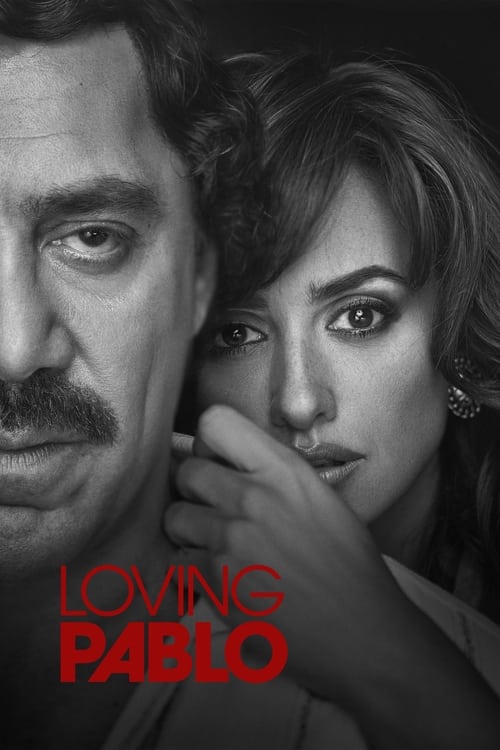
I’ve reached a point where I can recognize the silhouette of Pablo Escobar faster than I can recognize some members of my extended family. Between Narcos, Paradise Lost, and American Made, the "King of Cocaine" has become the unofficial mascot of the 2010s crime drama. So, when I sat down to watch Loving Pablo, I’ll admit I had a bit of "Escobar fatigue." My cat, Barnaby, spent the entire second act trying to chew through my laptop charger, and honestly, that low-stakes domestic peril occasionally felt more urgent than the familiar rise-and-fall beats of the Medellín Cartel.

The Accent in the Room
The most immediate thing you have to wrestle with here is the language. We are firmly in an era where audiences—largely thanks to streaming services like Netflix—have become comfortable with subtitles. We’ve seen that you don't need English to make a global hit. Yet, Loving Pablo makes the baffling decision to have a primarily Spanish-speaking cast speak English with thick accents. The English dialogue feels like a compromise that nobody actually wanted, acting as a creative anchor that drags on the performances.
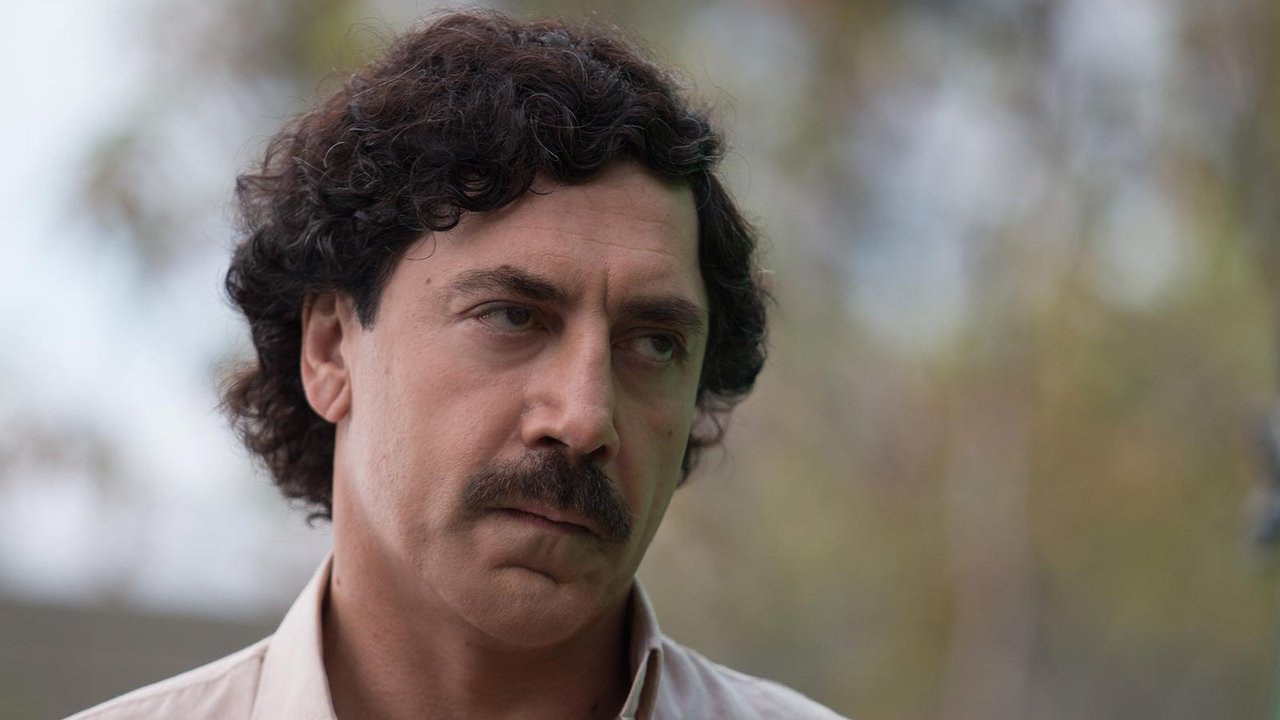
Javier Bardem (who I still maintain is one of the most terrifying people on screen since his turn in No Country for Old Men) is playing Escobar as a man who is literally and figuratively outgrowing his world. He’s bulky, sweaty, and dangerous. Opposite him is his real-life wife, Penélope Cruz, playing Virginia Vallejo, the glamorous journalist who fell into his orbit. Knowing they are married in real life adds a strange, meta-layer to their chemistry. You can see the comfort they have with each other, which makes the scenes where Pablo’s monstrosity leaks into their romance feel genuinely uncomfortable. Penélope Cruz, who was so vibrant in Pedro Almodóvar’s Volver, brings a sharp, desperate edge to Virginia, but she’s often fighting against a script that treats her more like a narrator than a protagonist.
Doing More with Less

What’s truly fascinating about this film isn't necessarily what’s on screen, but how it got there. While it looks like a sprawling, big-budget epic, it’s actually a scrappy independent production. With a budget of just $4.6 million, director Fernando León de Aranoa (who gave us the excellent The Good Boss) had to perform some serious cinematic alchemy. To put that in perspective, that’s about half the cost of a single episode of some prestige TV dramas.
The production leaned heavily on Colombian locations and local crews to stretch every dollar. Apparently, Javier Bardem spent nearly twenty years trying to get this project off the ground, serving as a producer to ensure it didn't just become another "CIA hero" story. You can feel that passion in the grit. They didn't have the luxury of endless takes or massive CGI crowds, so they relied on tight framing and the sheer charisma of their leads. There’s a scene involving a plane landing on a highway that feels remarkably tactile precisely because they couldn't afford to over-digitize the danger.
A Fragmented Perspective
Because the film is based on Vallejo’s memoir, Loving Pablo, Hating Escobar, it tries to frame the violence through the lens of a "princess" falling for a "gangster." It’s a perspective we haven't seen as much in the male-dominated world of narco-cinema. Peter Sarsgaard (the MVP of Shattered Glass) pops up as an agent named Shepard, representing the cold, bureaucratic hand of US intervention, but the movie is at its best when it stays in the room with Virginia and Pablo.
However, the film struggles with the "meaning now" factor. In a post-2015 world, we are much more sensitive to how we mythologize monsters. Loving Pablo occasionally teeters on the edge of making the carnage look like a backdrop for a tragic romance. While Bardem’s prosthetic stomach deserves its own SAG card, the physical transformation sometimes distracts from the internal rot of the character. I found myself wondering if the film would have carried more weight if it had ditched the English-language requirement and leaned into the specific, localized horror that Aranoa usually captures so well in his Spanish-language work.
Ultimately, Loving Pablo is a film caught between two worlds. It wants to be a glossy, international biopic, but its heart (and its budget) belongs to the world of independent, character-driven drama. It’s worth watching for the sheer powerhouse energy of the Bardem and Cruz pairing, but it doesn't quite manage to step out from the massive shadow cast by the other Escobar stories of the last decade. It’s a fascinating, flawed look at a relationship built on blood and ego—just don't expect it to reinvent the genre.


Keep Exploring...
-

The Exorcism of God
2022
-

Woman of the Hour
2024
-

Black Mass
2015
-

Batman: The Killing Joke
2016
-

Good Time
2017
-

American Animals
2018
-

Emily the Criminal
2022
-

Julieta
2016
-

The Platform
2019
-

Batman vs. Robin
2015
-

Dark Places
2015
-

Heist
2015
-

The Gunman
2015
-

True Story
2015
-

Imperium
2016
-

Jack Reacher: Never Go Back
2016
-

Live by Night
2016
-

Patriots Day
2016
-

Snowden
2016
-

The Accountant
2016