Suburbicon
"A perfect neighborhood for a perfect crime."

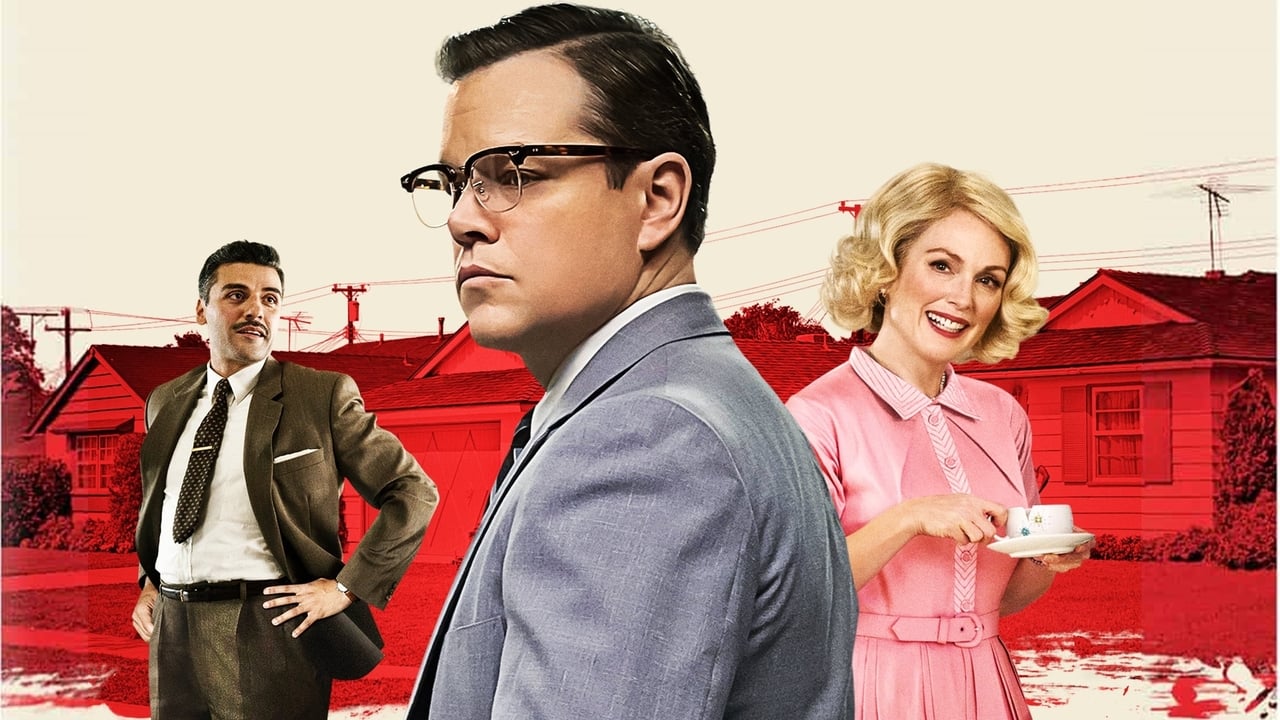
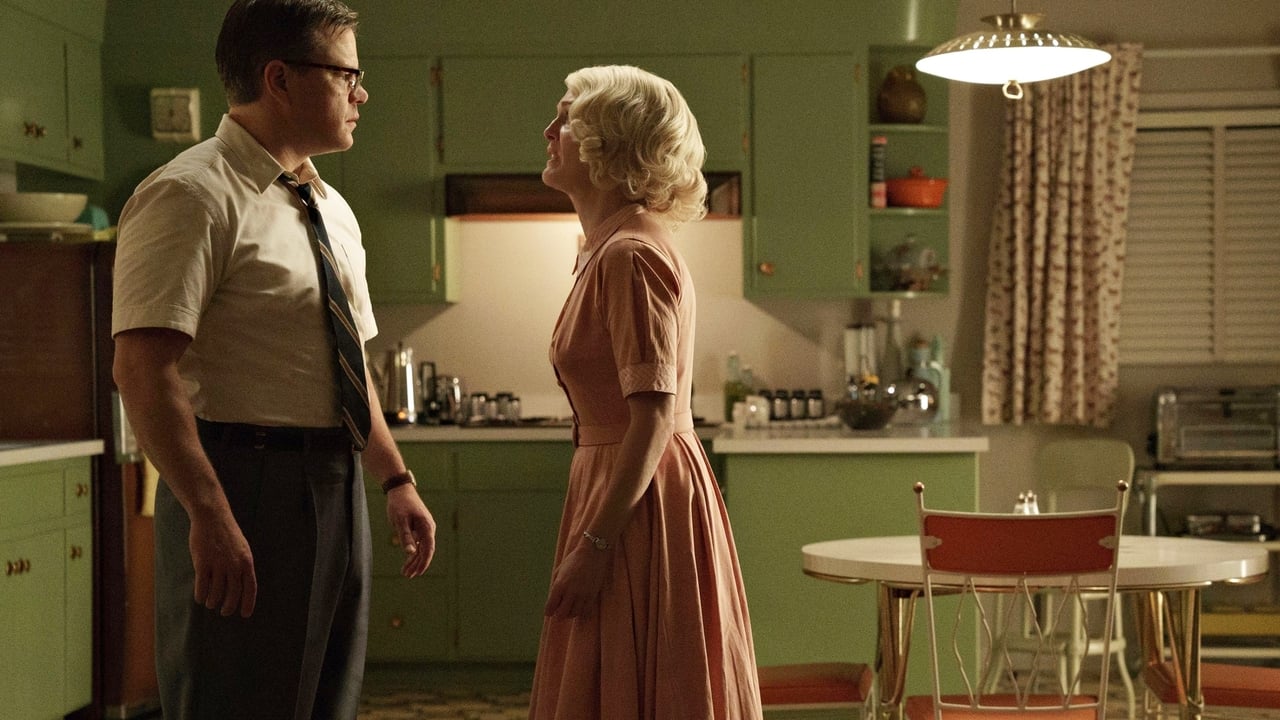
Imagine a Venn diagram where one circle is a pitch-black Coen Brothers comedy about a bumbling insurance fraud and the other is a sobering, heavy-handed drama about 1950s racial integration. In theory, George Clooney intended for Suburbicon to be the spicy intersection where these two worlds collide. In reality, the circles barely touch, leaving us with a movie that feels like two different channels fighting for control of the remote. I watched this on a Tuesday night while my cat, Barnaby, spent two straight hours staring at a moth on the ceiling—honestly, the moth had a more consistent character arc than anything I saw on screen.
A Tale of Two Scripts
The DNA of this film is fascinatingly messy. It started life as an unproduced script by Joel and Ethan Coen (the geniuses behind Fargo and No Country for Old Men) back in the 1980s. Decades later, George Clooney and his writing partner Grant Heslov dusted it off and decided it needed "relevance." They grafted a subplot based on the real-life 1957 Levittown riots, where a Black family moved into a white suburb and was met with horrific harassment.
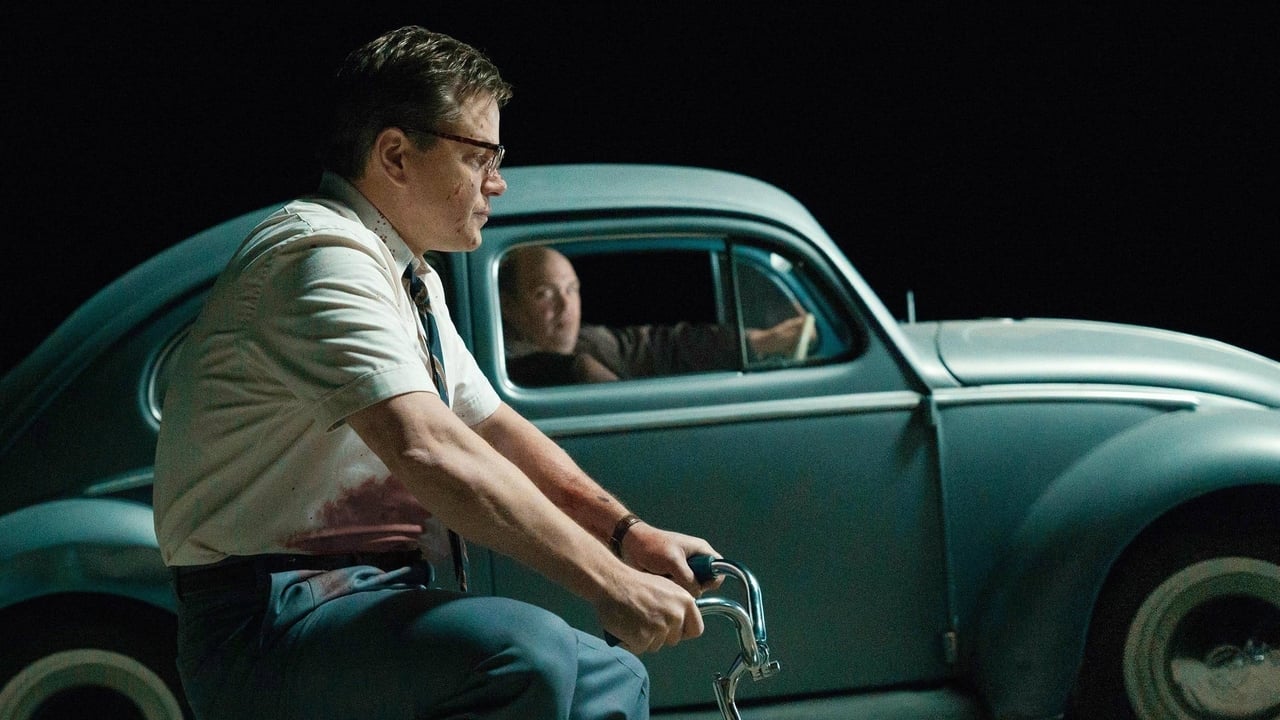
The problem is that the "Coen" part of the movie is a cartoonish, bloody farce, while the "Clooney" part is a grim history lesson. It’s the cinematic equivalent of a Turducken where the duck is made of lead and the turkey is yelling at you. One minute we’re watching Matt Damon pedal a tiny bicycle through the night like a sociopathic Mary Poppins, and the next, we’re witnessing a terrifying mob outside a neighbor's house. The tonal whiplash is enough to give you permanent neck damage.
The Man in the Blood-Stained Shirt
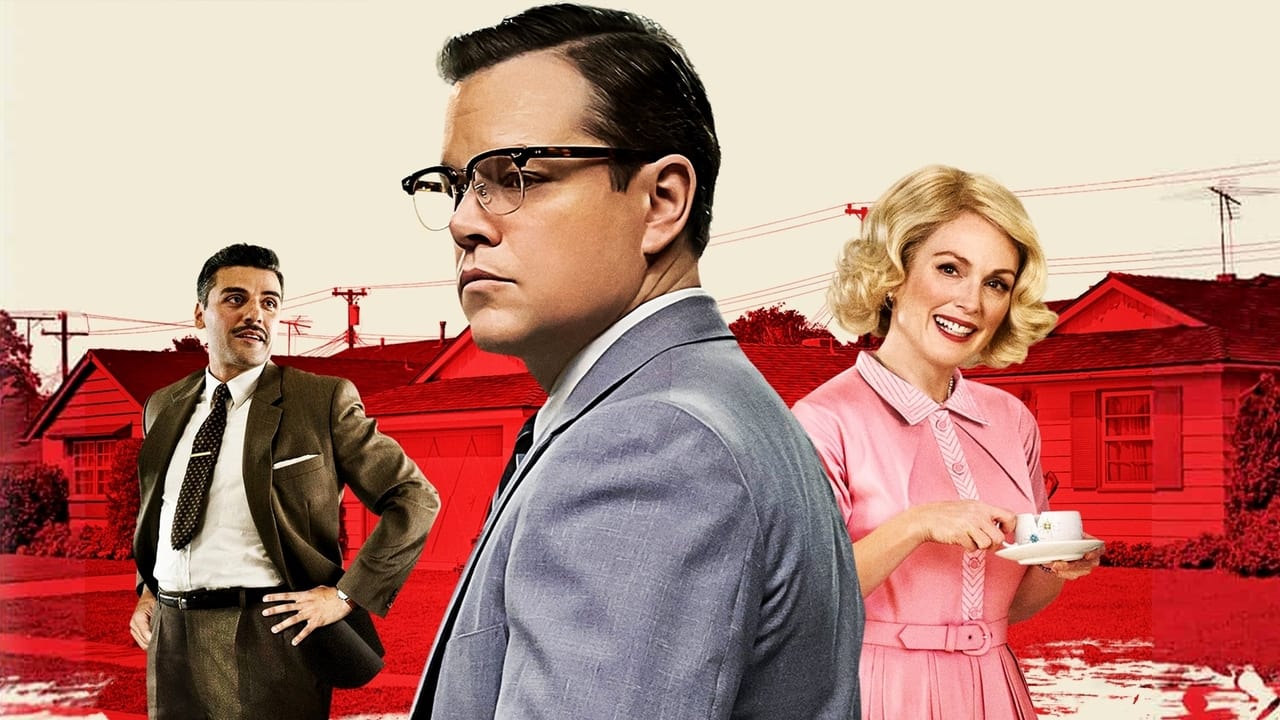
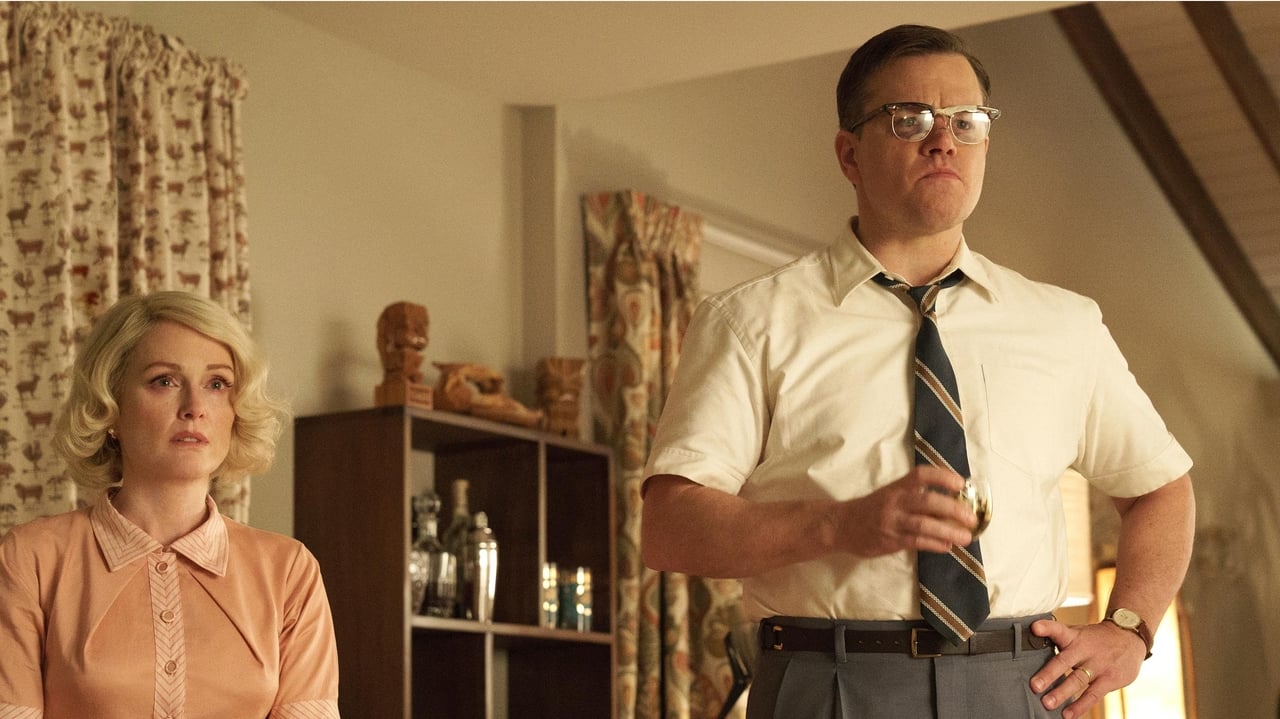
As Gardner Lodge, Matt Damon trades his usual "everyman" charm for something much more reptilian. He’s a man drowning in a swimming pool of his own making, desperately trying to maintain a facade of 1950s normalcy while bodies pile up in the pantry. Damon is great at playing "repressed," but here the script doesn't give him enough room to be anything other than a pathetic villain.
Julianne Moore pulls double duty as Gardner’s wife, Rose, and her sister, Margaret. She’s leaning hard into the "Stepford" aesthetic, all vibrant A-line dresses and poisoned smiles. But the real spark—the only thing that truly electrified my living room—was Oscar Isaac as Bud Cooper, an insurance investigator who smells a rat. Isaac is only in the movie for about ten minutes, but he devours every second of it. He brings a greasy, cynical energy that the rest of the film desperately lacks. Oscar Isaac is so good here that he makes you wish the entire movie was just a two-hour interrogation in a wood-paneled living room.
The emotional heart is meant to be Gardner's son, Nicky, played by Noah Jupe. Poor Nicky is basically the audience’s proxy, watching his father turn into a monster while the world outside goes mad. Jupe is a fantastic young actor (he’d later be brilliant in A Quiet Place), and he does a lot of heavy lifting with just his eyes, but even he can't bridge the gap between the film's disparate halves.
Why It Stayed in the Basement
When Suburbicon hit theaters in 2017, it was a spectacular box office dud, earning less than half its budget. In the current era of "message-driven" cinema, audiences are usually willing to engage with social commentary, but Suburbicon treats its Black characters—the Mayers family—as literal background scenery. They don't have lines; they just exist to be victims so the white characters can look worse. In a post-2015 landscape where we’ve seen films like Get Out use genre to brilliantly dismantle racism, Clooney’s approach feels outdated and, frankly, a bit clumsy.
There’s also the "streaming vs. theatrical" factor. Released right as Netflix was starting to dominate the mid-budget drama space, a movie like this needed rave reviews to survive in a theater. Instead, it got a shrug. It’s a gorgeous-looking film—cinematographer Robert Elswit (who shot There Will Be Blood) makes every frame look like a saturated Saturday Evening Post cover—but beauty can't hide a hollow script.
Stuff You Didn't Notice
One of the weirdest bits of trivia about the production is that Josh Brolin was originally in the movie. He played a baseball coach and reportedly filmed several scenes that were meant to provide some of the film's biggest laughs. However, during the editing process, Clooney realized the tone was already so broken that Brolin’s scenes made it even worse. He cut the actor out of the film entirely. When you’re deleting Josh Brolin to save your movie’s "vibe," you know you’re in trouble.
Despite the pedigree—the Coens, Clooney, Damon, Moore, and a score by Alexandre Desplat—the film has largely vanished from the cultural conversation. It’s a "curiosity piece" now. It’s for the folks who want to see what happens when the most talented people in Hollywood all have a collective bad day. It’s not a "so bad it's good" movie; it’s a "so confused it's fascinating" movie.
Ultimately, this is a film that wants to be about the rot beneath the manicured lawns of America, but it forgets to make us care about the people living on them. It’s a stylish, well-acted misfire that proves even a winning team can fumble the ball if they're playing two different games at once. If you're a completionist for Matt Damon or the Coen Brothers, it’s worth a look for the aesthetic alone, but don't expect it to stick with you past the credits. It’s a beautiful house with no foundation, left to crumble in the shadow of much better films.
Keep Exploring...
-

Dark Places
2015
-

Terminal
2018
-

Reptile
2023
-
Stillwater
2021
-

Secret in Their Eyes
2015
-

Survivor
2015
-
Roman J. Israel, Esq.
2017
-

Anon
2018
-

Black and Blue
2019
-
Deep Water
2022
-

Heist
2015
-
Live by Night
2016
-
Crooked House
2017
-

The Night Clerk
2020
-
Bad Times at the El Royale
2018
-

The Woman in the Window
2021
-
Rebecca
2020
-
The Outfit
2022
-

The Midnight Sky
2020
-
Kiss the Girls
1997